Bad Wildbad Festival 2026 Review: L’occasione fa il ladro
By Ossama el Naggar(Photo: Bad Wildbad Festival)
Among Rossini’s early Venetian farse, “L’occasione fa il ladro” remains one of the most irresistibly entertaining. Written when the composer was barely twenty, it already displays the dramatic flair, melodic abundance and astonishing theatrical instinct that would soon make him Europe’s dominant operatic voice. The libretto’s improbable chain of exchanged identities may stretch credulity, but Rossini’s exuberant score transforms its absurdities into an evening of irresistible comic momentum.
A Sparkling Comedy Restored to Life
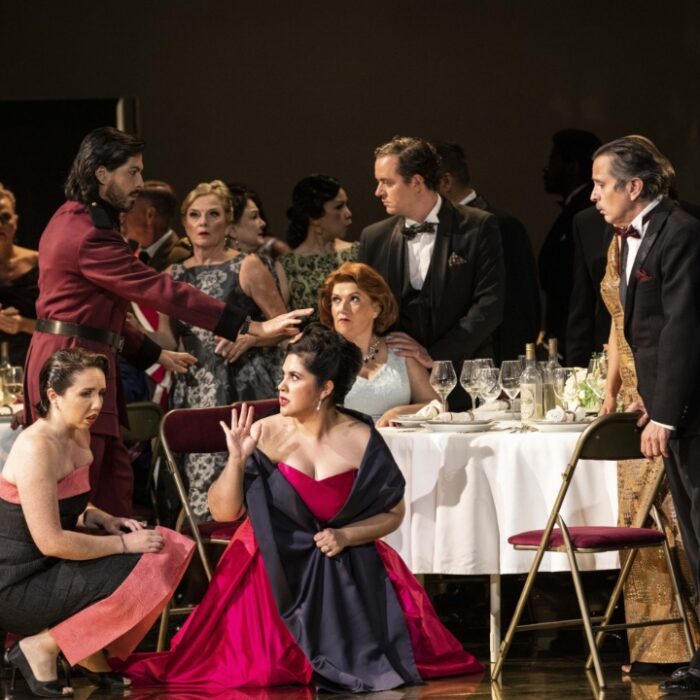
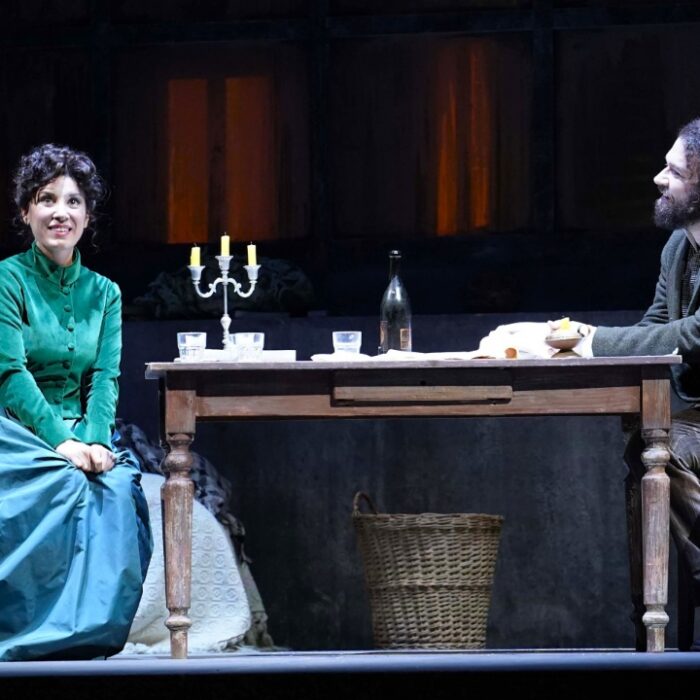
Jochen Schönleber’s production (seen July 23) wisely accepted the work on its own terms while attempting to strengthen its weakest dramatic premise. Rather than relying on chance alone, the mistaken exchange of suitcases became the handiwork of professional thieves. Don Parmenione and his accomplice Martino were presented as habitual robbers operating from the country inn, surrounded by an impressive collection of stolen luggage from which they calmly selected suitable replacements for unsuspecting travellers. Alberto, discreetly encouraged to drink rather more than was prudent, departed with the wrong suitcase, lending the opening episode a degree of plausibility often absent from productions of the opera.
Not every intervention proved equally persuasive. Schönleber’s decision to suggest an earlier encounter between Alberto and Berenice during the overture inevitably weakened the central dramatic premise, since much of the comedy depends upon the couple meeting for the first time. The revised conclusion, pairing Ernestina with Martino while allowing Parmenione to escape with yet more stolen goods, similarly departed from Rossini’s neatly balanced finale. Although dramatically defensible, it sacrificed some of the satisfying symmetry upon which the comedy ultimately rests.
These reservations, however, counted for little beside the production’s sheer theatrical vitality. Schönleber kept the action moving with admirable fluency, allowing the ensembles to unfold with buoyancy and precision while encouraging genuinely animated interaction between his singers. The comedy never descended into farce for its own sake; instead, it relied upon sharply observed characterisation and impeccable timing. Above all, the cast appeared to relish every moment on stage, their obvious enjoyment proving thoroughly infectious.
Musical & Cast Highlights
José Miguel Pérez-Sierra drew stylish, affectionate playing from the Filharmonia Szymanowskiego of Kraków. Coordination occasionally became less than immaculate during Rossini’s most exuberant concerted numbers, but the conductor never allowed brilliance to come at the expense of vocal clarity. His accompaniment remained consistently attentive, giving the singers generous freedom to shape Rossini’s elaborate vocal writing while preserving the score’s rhythmic sparkle.
The performance was distinguished by an exceptionally strong young ensemble. Ilaria Monteverdi as Berenice combined effortless coloratura with an attractive lyrical warmth and engaging stage presence. Her opening cavatina displayed elegance rather than mere virtuosity, while the sparkling confrontations with Parmenione revealed an instinctive gift for Rossinian comedy.
Opposite her, Davide Zaccherini emerged as the outstanding performance of the evening. Having already impressed elsewhere in the festival in the character role of Isaaco in “La gazza ladra,” he demonstrated an entirely different facet of his artistry in this production. His Alberto possessed the grace, refinement and vocal ease of a genuine tenore di grazia. Blessed with an unusually handsome timbre, effortless upper notes and immaculate stylistic command, Zaccherini combined elegant singing with natural comic charm, establishing himself as one of the festival’s most promising young artists.
Filippo Morace almost stole the evening as Don Parmenione. His robust bass-baritone, allied to impeccable comic timing and a delightfully narcissistic stage personality, transformed the rogue into an irresistibly entertaining scoundrel without sacrificing musical discipline. Jean-Giovanni Accardi matched him admirably as Martino, offering an alert, finely sung portrayal whose dry wit perfectly complemented his master’s flamboyant excesses.
Gaja Vittoria Pellizzari, encountered elsewhere in the festival as the formidable Lucia in “La gazza ladra,” revealed admirable versatility through her exuberant Ernestina. Her warmly colored mezzo-soprano and lively theatrical temperament made the role far more than a conventional soubrette, while Timóteo Bene Júnior made an engaging Don Eusebio, despite Rossini affording the character comparatively little to accomplish.
Rossini in Wildbad Festival
Founded in 1989 under the artistic leadership of Jochen Schönleber, the Rossini in Wildbad Festival drew its inspiration from Gioachino Rossini’s celebrated stay in the Black Forest spa during the summer of 1856, when the composer sought the restorative virtues of its mineral waters. What might easily have remained a picturesque historical footnote has instead become one of Europe’s foremost centers of bel canto scholarship and performance. Under Schönleber’s enlightened stewardship, Wildbad has acquired an international reputation for musical archaeology, exemplary critical editions, the cultivation of emerging artists, and an unwavering commitment to neglected repertoire. This year’s edition once again embodied that enterprising spirit, juxtaposing familiar masterpieces with forgotten gems while inaugurating an ambitious new strand devoted to French bel canto.
Few productions better illustrated that artistic philosophy than this delightful revival of “L’occasione fa il ladro.” Overflowing with melodic freshness, effervescent ensembles and youthful theatrical invention, Rossini’s most successful early farsa emerged not as a historical curiosity but as a comic masterpiece whose wit, elegance and irrepressible vitality remain as captivating today as they were more than two centuries ago.