Q & A: Florian Amort on Contemporary Händel-Festspiele Halle Curation
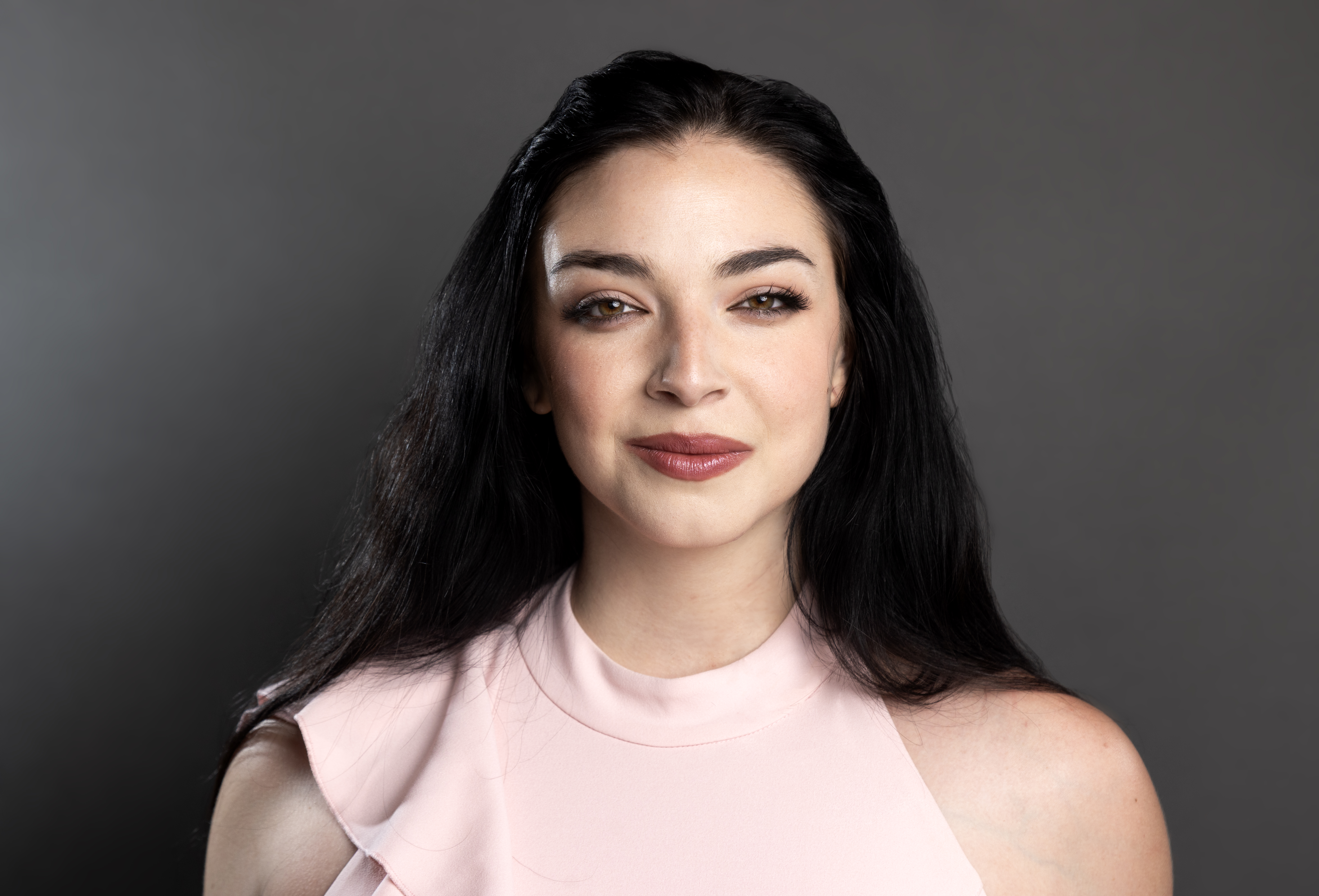
By Mengguang Huang(Photo: Anna Kolata)
Florian Amort, born in Berchtesgaden in 1992, serves as the Director of the Stiftung Händel-Haus and the Artistic Director of the Händel-Festspiele Halle. He succeeds Dr. Bernd Feuchtner, who passed away in February 2025, shortly before his planned retirement.
A former scholar of the Studienstiftung des deutschen Volkes, Amort studied musicology, art history, history, and Catholic theology at the Ludwig-Maximilians-Universität in Munich. His academic pursuits led him abroad to the Universität Wien, the Università degli Studi di Pavia, the Deutsches Historisches Institut in Rome, and the Bibliothèque nationale de France in Paris.
His professional background includes working as a research associate for the project “Cimarosas ‘Il matrimonio segreto’ zwischen Italien und dem Reich (1792–1815)” at the Institut für Musikwissenschaft of the Universität Wien, and serving as a concert dramaturg at the Brucknerhaus Linz. In 2022, he was appointed Chief Dramaturg of the Bregenzer Festspiele.
During the Händel-Festspiele 2026, OperaWire had the opportunity to talk with him on festival vision and curation.
OperaWire: This first topic is about the theme of this year, Mannsbilder: Helden, Herrscher, Herzensbrecher (Masculinities: Heroes, Rulers, Heartbreakers) and now that we’re almost at the end of the festival, can we take this opportunity to reflect more about that particular story?
Florian Amort: To be fair, the motto Männerbilder was chosen by my predecessor, Dr. Bernd Feuchtner, who unfortunately passed away last year. When I took over and was confronted with it, I wasn’t initially very inspired. Männerbilder to me conjured up these straightforward guys that I didn’t really want to identify with. But then I considered the English translation, “Masculinities,” and that changed my approach. It became about exploring images of man—different facets of masculinities, including Handel himself as an image.
This allowed us to do something highly contemporary and relevant. On social media, influencers dictate to young people how they need to act to be “truly” masculine. In politics, we see a revival of the “strongman” archetype. Concurrently, parts of the political right wing claim there is a “crisis of masculinity” and that men need to reclaim their traditional roles.
Recognizing this, I began to look at what masculinity actually meant during the Baroque period. In the 18th century, true masculinity meant controlling one’s affects and emotions. It meant being educated, maintaining proper conversation, and embodying the ideals of the courtly gentleman.
Yet, the world of Baroque opera presents a fascinating contradiction: almost all the male characters we see are completely out of their minds, driven entirely by raw emotion. When you look closely at Handel’s operas, you see men who are failing, imperfect, uneducated, or unable to communicate—rough people who are on a journey to become better individuals. Handel’s operas tend to be very long and complex. But when you view them through this specific lens, the dramaturgy becomes incredibly modern, exciting, and deeply contemporary.
OW: If we look back at contemporary 18th-century accounts, Handel is often depicted as a generous man, with a large figure. If he were to realize that we are using masculinity as the keyword today, how do you think he would react?
FA: That’s a good question. It is difficult to know how Handel would react because we know so little about how he viewed himself. He was notoriously discreet about his personal life; we know nothing certain about his sexuality, and while there are modern theories suggesting he might have been gay, there is no definitive proof.
However, if we look at the transition to his English oratorios, a fascinating gendered debate emerges from 18th-century London. At the time, critics of a more nationalist mindset dismissed Italian opera as inherently feminine due to its highly artificial nature. Conversely, the English oratorio was championed as distinctly masculine.
Handel’s oratorio music overwhelms the listener with a massive wall of sound, driving choruses, and the brilliant force of trumpets and brass. Contemporaries explicitly described this musical weight and vigor as a “masculine” style in contrast to the delicate artifice of the Italian stage.
Yet, Handel himself remained a passionate admirer of Italian opera. He continually returned to the genre, fighting to produce it even when faced with repeated financial failures. So I don’t know what he would think about all that, but I hope he would be excited.
OW: Do you believe the London audience were initially drawn to this “artificial beauty?” After all, high heroic roles were sung by castrati.
FA: Novelty certainly played a role. As the first Italian opera composed specifically for London, “Rinaldo,” naturally piqued curiosity. However, we cannot view 18th-century theatergoers as an unified audience. London’s theater scene was highly fragmented: a specific elite demographic was dedicated to opera seria, while entirely different groups preferred traditional spoken theater or parodies like “The Beggar’s Opera” and “The Dragon of Wantley.”
Handel had to navigate these shifting tastes, which became further complicated by political shifts. The coronation of the German-born King George II in 1727 triggered intense debates over national identity and whether a foreigner could be a “true” British monarch.
Handel found himself in an identical position. Even though he became a British citizen in 1727, critics questioned whether a German composer was “British enough” to write the Coronation Anthems or define English oratorio.
While systematic research into these specific audiences remains limited, we know Handel actively used his music to navigate this political spectrum. A prime example is “Judas Maccabaeus,” which was essentially royal propaganda written to celebrate the monarchy’s victory over the Jacobite rising.
OW: Could you talk about “Rinaldo” at this year’s festival? It is the fascinating dual-production approach—a traditionally staged performance alongside a puppet adaptation.
FA: These marionette productions actually have a successful history at the festival, with staging runs in 2011, 2018, and 2021 covering “Rinaldo,” “Giustino,” and “Ariodante.” The core idea was to form a trilogy that utilizes the inherent abstraction of puppetry. By cutting lengthy sections, they create highly entertaining versions that offer an easier entry point to the music without sacrificing musical quality.
The puppet format also solves certain structural and thematic problems. For instance, the original ending of “Rinaldo” involves a mass forced baptism—a plot point we cut nowadays for obvious reasons. In the marionette version, however, the narrative functions effortlessly because it is framed as a fairy tale. The audience response was overwhelming, and the shows sold out almost instantly.
OW: This year’s program also features “Talestri, regina delle Amazzoni” by Maria Antonia Walpurgis. Could you elaborate on the decision to include this rare work?
FA: I intend to feature at least one work by a female Baroque composer each season—not merely for representation, but because the musical quality is exceptional. In the context of this year’s theme of masculinities, this opera felt like the perfect choice, given that the Amazons of mythology represent the ultimate subversion of traditional gender roles. This production serves as the launch of that long-term initiative.
What makes this work uniquely fascinating is the background of the composer herself. As a Bavarian princess, she received an elite artistic education under giants like Johann Adolph Hasse and Pietro Metastasio. Remarkably, Walpurgis wrote the libretto, composed the score, and sang the title role herself.
When you look at the dramaturgy, the male characters are strikingly weak; they are driven entirely by love, relying completely on the Amazon rulers for their fate and survival. Conversely, the female characters hold all the agency. The narrative tension reaches a peak with Tamiri, the high priestess, whose son Oronde falls in love with Talestri. Tamiri is willing to sacrifice her own son for the greater preservation of the Amazon community.
I cannot think of a single opera by a male contemporary that handles these dynamics in such a manner. While we have figures like Medea, Talestri presents an entire society structurally rooted in an institutionalized distrust of men. Seeing a reigning political ruler perform this role on stage brings art and political self-representation into a rare focus. That is what makes it so thrilling to stage.
OW: Do you think she has certain self-awareness when doing so?
FA: Absolutely. I am convinced it was a highly strategic calculation. We see similar patterns with contemporary rulers like Maria Theresa of Austria; these women were acutely aware of their image. While there were other aristocratic female composers at the time, Maria Antonia stands out because she made such a bold form of self-assertion by unifying the roles of librettist, composer, and protagonist.
OW: This opera was originally staged in an exclusive court setting, is that correct?
FA: It was performed in a private court theater that no longer exists today. We know that everyone involved was intimately connected to the court—for instance, the roles of Tamiri and Antiope were sung by Maria Antonia’s sisters and cousins by marriage. As for the male leads, Oronde and Liako, they were sung by court members; while the parts are written for soprano, it remains unclear if they were sung by castrati or other voices.
What is extraordinary is that a full print of the score was published by Breitkopf in 1765, just two years after the premiere. This level of preservation was incredibly rare for the time, but it was made possible precisely because she has the resources.
OW: Can you disclose who will be the next?
FA: Next year, we will stage Camilla de Rossi’s 1709 oratorio, “Il figliuol prodigo (The Prodigal Son).” It is the familiar biblical story of two brothers, but it forces us to look closer and ask: who is truly the “lost” son? De Rossi was one of the female composers commissioned to write oratorios for the imperial court in Vienna during the early 18th century. We chose this specific piece because it ties perfectly into next year’s festival theme: Loneliness. The concept of being lost, yet ultimately welcomed back by family, resonates deeply with that motif.
It has never been commercially recorded. For a long time, the manuscript suggested she wrote the text herself. However, my colleague discovered that the libretto actually tracks back to Cardinal Benedetto Pamphili, the Roman patron associated with Handel. Because Camilla always signed her title pages as Romana (the Roman woman), and since Handel was active in Rome from 1706 to 1709, it strongly implies they moved in the very same Roman cultural circles.
It completely re-frames our understanding of the era. In the Baroque period, while female composers were certainly rare, a woman’s artistic genius was viewed as a divine gift. If you had the talent and the access to education, your skill was respected because society believed talent came directly from God—and who were they to suppress a divine gift?
OW: How would you describe the connectivity between contemporary Handel scholarship and the festival itself?
FA: The most direct link is that our institution houses the Hallesche Händel-Ausgabe (the Halle Handel Edition), which is the authoritative critical edition of Handel’s complete works. Although it is a research project under the auspices of the university, the scholarly team is embedded here.
Our most significant partnership involves staging the world premieres of their new critical scores. For example, at this year’s festival, we performed the new edition of the “Foundling Hospital Anthem” alongside the “Anthem on the Peace.” This concert was highly symbolic as it marked the release of the milestone 100th volume of the edition.
We are keeping this tradition going next season. We will feature the new scholarly volume for “Il trionfo del Tempo e della Verità”—specifically the second version Handel heavily revised in London in 1737, adding chorus movements for subsequent performances in 1739. By doing so, we ensure that the festival remains at the absolute cutting edge of historical performance practice.
OW: Last year OperaWire reviewed the Bremen festival production of John Frederick Lampe’s “The Dragon of Wantley.” Could you share the thought behind including this opera in the program?
FA: Pure comedy is the one omission in Handel’s own output. While he wrote brilliant comic characters, he never composed a true opera buffa. I wanted to show the audience how operatic parody works by completely flipping the societal and musical hierarchies of opera seria upside down.
Musically, if you close your eyes, it sounds exactly like high-stakes Handel. What makes it a parody is the sheer absurdity and vulgarity of the text and plot. You have a completely drunken hero, rival prima donnas fighting with knitting needles, and a dragon that meets a ridiculous demise. It also subverts traditional gender dynamics—though unlike “The Marriage of Figaro,” where the women are brilliant, the male characters here are just delightfully foolish.
I was happy to introduce this rarity to our audience, especially since even some of our Handel scholars didn’t know it existed. We actually have second-hand historical accounts indicating that Handel himself attended the piece and praised it as good music. Because rare works are seldom staged, we made sure to record them. This guarantees these unique productions have a lasting afterlife well beyond their festival runs.
OW: Let’s talk more about your vision as director.
FA: A festival like this must balance three pillars: world-class performances, rare repertoire, and local outreach. While we successfully attract an international tourist audience, engaging Halle’s local residents requires a different approach, as not everyone wants to sit through a four-hour opera.
To bridge this gap, we introduced three new experimental formats this year to open our doors to the city. First, Händel Lab focuses on cross-disciplinary projects, such as a speculative performance based on a fictional youth diary of Handel during his early years in Halle.
Second, our Händel Next initiative targets the younger generation. We partnered with the Neues Barockorchester Berlin for a “Playmobil Opera” production of “Rodelinda,” introducing nearly 400 school children to Handel for the first time. The feedback has been incredible, with immediate requests from schools for next season.
Finally, Händel Now includes immediate sell-outs like our botanical garden promenade concerts and riverboat performances, where Hamburg Ratsmusik juxtaposed obscure Persian Baroque music with Western classical pieces. To engage with this year’s theme of masculinities, we even moved into the city’s nightlife with a themed show tonight at the club, welcoming a younger, queer demographic into the festival’s ecosystem.
Ultimately, Handel is Halle’s proudest son. By taking the music directly to public spaces—most notably through our Musik und Wein festival on the market square, which drew 28,000 people over three days—we have successfully transformed the festival into a shared, city-wide celebration.
OW: Do you have any co-production, or have some exclusive record label?
FA: We don’t have an exclusive recording label contract. Instead, I am trying to push the festival toward a much more collaborative vision with the Franckesche Stiftungen (Francke Foundations) for a project in our Händel Lab section, alongside our ongoing collaboration with the Göttingen Handel Festival.
Meanwhile, our main Opera House here in Halle is already completely booked, as they produce two major Handel operas every season. Because they have to mount five or six performances within a tight ten-day festival window, it is physically impossible to squeeze another staged opera into their schedule.
OW: Can you share a typical daily life for your role?
FA: During the festival, literally every single day is different. My role becomes a mix of being a crisis solution-finder, supporting the artists, engaging with donors, and managing logistics. Every morning at 9:30, I meet with our small core team to review our checklist and ensure everyone is fully aligned.
Outside of the festival weeks, the focus shifts to long-term preparation. However, my responsibilities extend far beyond the event itself—I also oversee the Handel House museum, the archives, and our scholarly research department. To be completely fair, I often wish I had more time to dive back into the musicology and read deeply about our upcoming topics. But right now, my reality is highly managerial, focused on ensuring that contracts, budgets, and operations all run seamlessly.
OW: Beyond the immediate time pressure of the festival season, what are the major structural or institutional challenges?
FA: A major structural challenge is our physical home. The Händel-Haus is a 400-year-old historic building, which means we are constantly managing a delicate climate situation. We don’t have modern air conditioning, and the summer heat can threaten our historical instruments and archival objects. Finding a sustainable climate control solution is a top priority.
Additionally, the institution requires a comprehensive digital modernization. I really dislike our current website, so launching a new digital platform is our next big project.
Since we cannot expect an immediate increase in public funding, implementing modern technology is the only way to streamline our workflow, make operations easier, and free up our team to focus on artistic content.
OW: Regarding the local infrastructure, you previously mentioned the challenges facing the city’s hospitality sector.
FA: I work very closely with the city marketing team to address this, but local hospitality naturally becomes more engaged as the city itself becomes more invested in the festival’s identity. Right now, our biggest bottleneck is accommodation capacity. We are looking forward to a boutique hotel opening this November, followed by a larger hotel in 2027, but we desperately need more options.
We actually have seats available for certain concerts, but potential attendees stay away because of high hotel prices due to low supply. The audience interest is absolutely there, but the local circumstances are creating a barrier. That is a major alarm signal for me; we must find creative ways to offer affordable accommodation so people can actually come and enjoy the music.
OW: If you look at this festival purely as an individual, which specific performance are you most proud of?
FA: It will be “Talestri.” Staging it was a massive gamble—we didn’t know if the audience would buy tickets. I am thrilled by how it turned out, particularly because it is an experience you can only get here in Halle. While other magnificent productions like “Ariodante” might be seen on tour elsewhere, “Talestri” was a highly individual, exclusive for our festival.
OW: Now that we have your preliminary programming for next season, could you share a few thoughts on that?
FA: Yes, it is the launch of a planned thematic trilogy, beginning with Loneliness. It strikes me deeply that we live in a modern era where anyone can connect with anyone else via social media or email, yet more and more people feel isolated. This isn’t just a post-COVID syndrome; it impacts everyone. We see elderly people isolated by circumstance, young people experiencing only superficial connections without true friendship, and people our own age struggling to find genuine bonds.
When I looked at Handel through this lens, I quickly realized that loneliness is fundamentally tied to Handel himself. If you strip away his music and look strictly at what we know for certain about his life, he remains a mystery. Despite being constantly busy and surrounded by people, he may well have been an isolated individual.
His operas reflect this beautifully. Look at “Alcina”—the moment she strips away her magic and tries to connect with Ruggiero purely as a woman, he rejects her, leaving her abandoned. In “Solomon,” we see a different facet: the acute isolation of leadership. Next year marks the 300th anniversary of the “Coronation Anthems,” and they offer a perfect opportunity to explore how a monarch, as head of state and church, must make lonely decisions completely on their own and live with the consequences.
As a trained dramaturg, I can always find ways to connect pieces to a theme, but loneliness genuinely resonates across Handel’s world. It allows us to explore his music from an angle that is deeply human.