Q & A: Prof. Mark Tucker & Prof. Isolde Kittel-Zerer on Reviving Hasse’s ‘Artaserse’ at Hochschule für Musik und Theater Hamburg
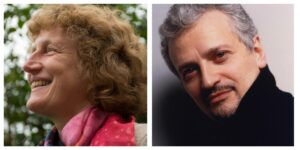
By Mengguang HuangProf. Mark Tucker is a distinguished interpreter of the Baroque repertoire with a prestigious career performing and recording under conductors such as Sir John Eliot Gardiner, Nikolaus Harnoncourt, and René Jacobs. For over 20 years, he has taught at Hochschule für Musik und Theater (HfMT) Hamburg, specializing in Italian vocal repertoire from 1600 to 1800 within the Historical Performance Practice department. He collaborates closely with Prof. Isolde Kittel-Zerer, who holds a teaching post for basso continuo and chamber music while leading the early music vocal ensemble.
OperaWire recently discussed with them at HfMT Hamburg regarding the pedagogical depths of their upcoming project of Hasse’s “Artaserse,” set to premiere on Feb. 27 & 28, 2026.
OperaWire: From Monteverdi’s “Orfeo“ to Hasse’s “Artaserse,” you have led your students across 150 years of history. Could you discuss the pedagogical objectives behind this specific choice of repertoire?
Mark Tucker: Our course for the singing department spans four semesters, covering Italian, German, French, and English repertoires from the early 17th to the 18th century, up to the Rococo.
The first objective is to trace the evolution of opera. By studying the journey from the early recitar cantando to the height of the Late Baroque, students learn to understand the specific musical and dramatic functions of Recitative and Aria. This foundation is essential for them to later approach Mozart with the right historical perspective.
The second objective focuses on declamatory skills. Modern singing education often over-emphasizes tone production, but language is the other half of the instrument. We teach students how to declaim text in relation to the basso continuo and harmonic modulations. This involves mastering pacing, breathing, and the rhetorical tradition. By studying metrical forms and figures of speech, students develop a “proto-dramatic” foundation for a more nuanced emotional delivery.
Isolde Kittel-Zerer: The structure is inherently collaborative. I bring together singing students and continuo players to bridge the gap between performance and accompaniment. For the instrumentalists, returning to the early 17th century—where the text was the master of the music—is vital. It teaches them to prioritize the word and the drama over simple melody.
OW: Given the international student body, do these four languages present a significant challenge for non-European students?
MT: While it is a challenge, it isn’t exclusive to non-Europeans; many European students also lack deep language and rhetorical training. We view our role as “remedial.” We patiently chip away at phonology, vowels, and intonation until students can successfully map the language onto the musical text. We show them the path they must continue to follow after they leave school.
OW: Given that multiple versions of this opera exist, what led you to choose the specific 1734 London Pasticcio version for this project?
MT: This is entirely my fault. It’s not just because I’m a Londoner. It started with my original concept of creating a complex production based on a single Metastasio libretto but featuring various composers. However, practicalities led me to the London version, which was historically performed as a “Pasticcio.” The London version allows us to incorporate beautiful and challenging arias by other composers, such as Riccardo Broschi (Farinelli’s brother), alongside Hasse’s music. While researching at the British Library, I realized the original version has extraordinarily long recitatives. The London (1734) version had already significantly shortened them, making the drama more compact and manageable for our students. Since no full score exists for the London version, I acted much like an 18th-century theater director. I used the London libretto as a guide to “cut and paste” the original score, ensuring that the dramatic cuts still made sense harmonically.
IKZ: This version also offered a very practical advantage regarding vocal ranges. In the London version, the part originally sung by Farinelli is actually set slightly lower than in other versions. We have a countertenor who is excellent, the Farinelli arias in this London pasticcio fit his voice perfectly.
MT: Exactly. I used the Walsh facsimiles of the “Favorite Songs” from the opera to source these specific pieces. It was a solution that balanced historical exploration with the actual vocal needs of our students.
OW: How are you handling the casting for these roles?
MT: We have created two full casts, and for some roles, we even have three singers. I’ve deliberately kept the casting fluid at this stage. It’s important for the students to learn how to “block” scenes with different partners. Regarding the music, we are using specific “suitcase arias” from the Walsh collection, including two by Broschi. However, we did have to cut one Arbace aria because the material was too challenging for our young student this semester. We also moved the role of Arbace from the original soprano range to a mezzo range to fit our countertenor.We chose to cast baritones for the role of Artabano. While the father/king figure is often the lowest voice in a libretto, our primary reason was practical—we had baritones in our Master’s class who needed a suitable role, and Artabano was the perfect fit.
IKZ: This kind of shifting and transposing was actually standard practice in the 18th century. It is a vital lesson for students to see how flexible Baroque musicians were with their material, ornaments, and even voice parts.
MT: Precisely. We are suiting the opera to our specific purposes while retaining historical authenticity in behavior. We aren’t being anachronistic; we are simply doing what they did in the 1730s: adapting the drama to the available talent. It has been a month of intense work, particularly in cutting and dovetailing the recitatives to make it all seamless.
OW: Both Metastasio and Hasse represent the peak of 18th-century Opera Seria, yet their works are rarely staged today. How are you bridging this gap and guiding students to find the contemporary vitality?
MT: It comes down to the Metastasio libretto. On the surface, the language is highly stylized, but the psychology is remarkably modern. I view these works as intense family dramas. While the characters are kings and tyrants, the core of the drama is about the relationships between parents and children, sibling rivalry, and the search for forgiveness. In “Artaserse,” characters face relatable dilemmas—like Mandane’s conflict between her murdered father and her lover, or Artabano’s struggle to hide his love for his son to fulfill an ambition. These tensions lead to emotional breakdowns that feel very contemporary. We want students to stop being “statues” on stage. By finding the humanity in these arguments and contradictions, the characters become lovable and real.
IKZ: What impresses me is that these human feelings transcend all cultural differences. Whether the students are from Europe or overseas, they immediately grasp the profound emotions involved. You don’t need to understand every word of the Italian poetry to be moved. If the human relationship on stage is clear, the audience stays engaged.
MT: Our approach is symbolized by the abstract painting we chose for our flyer, titled “Subterranean Fantasy.” It depicts a figure searching for a way out of a labyrinth toward a small light. For me, this is the perfect metaphor for the characters in “Artaserse”—they are navigating a labyrinth of dysfunctional relationships, seeking the “light” of love and reconciliation.
OW: You have had an illustrious career as a tenor. How does this specific “singer’s perspective” inform your directorial approach?
MT: I consider myself a singer first. Nowadays we have “Regie,” but I am not a Regisseur who dreams up a complicated concept to give the opera a certain “slant.” My aim is much more humble: to show students literally how to stand, move, turn, and interact so there is a visual rhetoric in the three-dimensional space, driven by the verbal record. They should sing and act as if in a conversation with each other and the audience.
OW: Much like the tradition of the Roman orator.
MT: Exactly. In Western Europe, Greek drama was unknown in the Middle Ages and only rediscovered in the Renaissance. Medieval descriptions—like those in the 14th-century Troy Book—imagined Greek drama as an orator at a pulpit reading a narration while actors mimed the action. That was drama: it was rhetoric.
Even Monteverdi’s “Il combattimento di Tancredi e Clorinda,” though structured as an Aristotelian drama, relies on a narrator rooted in this medieval idea. I’ve worked with many directors who all ask for different things, but the singer’s core job is to deliver text authentically from the body and voice. If students learn that here, they can work with a director who sets the opera at the North Pole; but if they cannot speak the text or move convincingly, they aren’t ready.
A defining lesson in my evolution was working with Pierre Audi in Amsterdam. Every move within that huge space was chiseled like clockwork. It was Baroque opera with a modernist sensibility.He showed me how Baroque rhetoric becomes modernist staging. That is what I try to do: combine modern psychology and aesthetics with this “chiseled” idea of moving.
OW: You mentioned this is a semistaged production without traditional scenery. In your collaboration with Catharina Lühr, could you provide a sneak peek into how the production will be visually presented?
MT: Yes, we invited a specialist to create a dedicated Baroque dance element for us. She trained the students specifically to perform a Minuet at the end of the opera. It serves as a celebratory closing piece—a grand finale that feels a bit like the ending of “lieto fine” in its sense of triumph and resolution.
OW: Within the HfMT training system, is the staging of Pre-Classical opera an elective for stylistic expansion, or is it considered a compulsory module for the vocal department?
MT: It was a patient, years-long process. I began with a pilot class and eventually invited Isolde to collaborate. Once it was established as a successful optional module, we integrated it into the Master’s program as an obligatory part of the Historical Performance module. Later, we reformed the Bachelor program so senior students could choose it when they felt technically ready. By the Master’s level, we expect them to handle multiple languages and complex stylistic demands methodically.
We work at a very detailed level of articulation. While students have support from IPA (International Phonetic Alphabet) classes, my focus is on the “singing formants.” Spoken positions don’t always translate to singing. For instance, you can’t truly sing a German or English schwa; you have to find a “vertical” acoustic space in the voice to equalize the vowels. We teach singers how to navigate these obstacles, such as articulating diphthongs while maintaining a consistent musical space.
IKZ: It is a huge advantage that between us, we cover these languages as native or fluent speakers. It makes the linguistic training much more fluid for the students.
OW: Is this course more like a “window” into the pre-Mozart era, or a foundation for specialization for early vocal music?
MT: Realistically, a singer must diversify to have a career. Whether they specialize in Händel or sing Britten, they need a solid foundation. My aim is global: I want them to understand that Mozart’s recitatives didn’t appear out of nowhere. By experiencing Early Baroque, they learn the vital balance of speech and song—how to pace, when to rush, and how to feel secure in the dramatic delivery of text.
IKZ: We focus intensely on the connection to the harmony and the keyboard player. Learning how the accompaniment supports different ways of “speaking” the music is entirely new to most students. The “window” metaphor is perfect—it is up to them how wide they open it, but we show them how the mechanism works.
OW: What’s the most common challenges you can feel from your students?
MT: Generally, it is the relationship with language. Students are often used to treating the voice primarily as an instrument for tone production. We teach them to use the text as the living motor that drives the singing.
The primary difficulty is not just the mechanical mastery of a language, but the mental process behind it. The magic of singing happens in the split second before the sound begins—the moment you imagine the specific emotion or color you want to convey. If you produce words mechanically, the voice works, but it lacks life. Our biggest challenge is getting students to a point of freedom of mind, where tone production and verbal intention merge. That freedom is the true beginning of drama.
IKZ: From my side, the challenge is teaching the physical sensation of flow, suspension, and resolution. This is a principle that applies from the Renaissance through Mozart and even to Brahms: the dissonance carries the accent, which must then flow naturally into its resolution.
You can explain this theoretically, but my goal is to teach students to feel it physically. It is about the sensation of “landing” on a dissonance and then flowing again into the resolution.
OW: What are the core lessons or values you hope your students take away from this project into their future careers?
MT: Ultimately, it is the love of language as the vehicle for their voices. If they learn to let the text drive their intention in 17th and 18th-century repertoire, they will carry that skill into everything they sing—whether it is the modernist declamation of a Poulenc opera or the dramatic intensity of Italian Verismo. If they can merge the driving force of language with the driving force of harmony, then we have provided them with something truly valuable that spans the entire repertoire spectrum. It’s about giving them the tools to be expressive, communicative artists in any context.
IZK: I would add the importance of preparation. You are a better performer when you have fully prepared your phrases before you even begin to sing. The result is born in the preparation.
MT: Exactly. I often use the metaphor of intentionality: when you fire an arrow from a bow, you must already know exactly where the target is. If the singer doesn’t know where the target is before they start the note, they will fire wrong. This “tension” of the bow is what ensures the voice hits its mark with sincerity and precision.
OW: What is the composition of the instrumental ensemble, particularly the basso continuo?
IZK: We will perform with about fifteen players in total. We use the resources available, starting with our fantastic strings. We provide them with Baroque bows to support the correct articulation, though the ensemble will be a mixture of modern and Baroque violins. For the winds, since we lack a Baroque oboe class, I’ve invited two former students who specialized in the instrument elsewhere. I’ve done the same for the Baroque bassoon. Our recorder students will cover the traverso parts. My research indicates the work can function without horns, so we will proceed without them.
For the continuo, we will have two harpsichords—one played by a student and one by me—plus cello and double bass. We also involve the guitar class when their schedules allow. It is a pity if we lack a theorbo, but we form a strong foundation with the keyboards and low strings.
OW: You brought in Vivica Genaux to work with the students. How did this collaboration come about, and what was its strategic purpose?
MT: Vivica is a very esteemed colleague, and we realized we share many interests in this repertoire. She is the Artist in Residence of the Hasse-Gesellschaft here in Hamburg. I first invited her for a masterclass before our “Orfeo” project, and since then, we’ve worked together on Hasse both in Berlin and here. We see eye-to-eye stylistically and linguistically; she lives in Italy and speaks the language fluently.
Strategically, I brought her in because a project like “Artaserse” is not easy. I feared the students might become demotivated by its difficulty. By bringing in a leading performer of today, they could see the work in a professional context. Vivica is a fantastic explainer of technique—specifically, how to support the voice in a rhetorical style to produce both flexibility and strength. She addresses a big gap in training: coloratura.
We see the Bel Canto tradition as one continuous line, not divided into “early” and “late” music. It begins with Monteverdi—in “L’Orfeo,” Speranza tells Orpheus he needs a “big heart and a beautiful song” (bel canto) to enter the underworld. This florid, coloratura style continues through the late Baroque, the Rococo, and right up to Rossini in the mid-19th century. I wanted the students to see this not as a specialization, but as an intrinsic part of what it means to be a classical singer.
OW: How does her focus on coloratura transform it from a technical challenge into a functional part of your rhetorical and structural teaching?
MT: The word coloratura comes from coloras, which refers to rhetorical figures. In music, these are the equivalents of rhetorical figures of speech. In Baroque opera, coloratura is always used to heighten a rhetorical idea in the text—like a storm or an emotional energy. Metastasio’s librettos are full of these metaphors, and the coloratura heightens a specific word within that metaphor. If you cannot do this, in my view, you are not truly a singer. It isn’t enough to just sing a sustained note as loudly as possible; a young voice must have the flexibility to master this before developing into heavier repertoire later.
IKZ: I noticed that even other vocal professors at the school came to hear what Vivica had to say. For me, the most important takeaway regarding coloratura is the architecture. We have been taught to think from the small notes up, building a large structure out of tiny pieces. But older music is the opposite: it starts with a big architecture, with “columns,” and then you place the ornaments and coloratura in between. We teach the students to count the bigger note values first to gain more flow.
MT: Precisely. If you don’t feel the “big pulse,” you cannot execute the coloratura. My criticism of many performances is that they slow down the coloratura and make it heavy, which kills the movement. Speed is only possible if you feel these long beats. Whether it’s Monteverdi’s “Possente Spirto” or a late Baroque aria, you need an underlying pulse so the coloratura fits inside it.
From a technical standpoint, feeling the stretch over these big pulses keeps the body open and regulates the air properly. Vivica was the ideal person to demonstrate this, especially for our female singers, as she could explain the specific challenges of the female chest register and vocal transitions with the authority of someone currently in the prime of her career.
OW: Given that “Artaserse” is so closely linked to legendary figures like Farinelli, how do you guide students to find their own voice without being overwhelmed by a “superstar aura”?
MT: This is a critical point. I never believe in overwhelming students by saying, “try to sound like this recording.” I always start from the point where it is just the student alone with the text. They have to play with it and explore it firsthand. If they listen to Spotify or YouTube too early, they are often disappointed that they can’t replicate that professional level immediately. Imitation is the wrong path. Only after you have struggled with the material yourself can you listen to another artist and truly understand why they made certain choices.
IKZ: That is the great advantage of early music. You can find pieces that haven’t been recorded at all. This forces students to read the score independently and invent their own interpretation. It is a massive challenge, but it grants them a unique liberty.
MT: Vivica Genaux and I both worked this way as young singers—moving between different conductors and directors until we built our own internal systems. Students must become autonomous, even as they remain inspired by the greats.
OW: What is next for this collaboration? Are there more projects on the horizon?
MT: I have two more years here before I retire, and I want to keep pushing. This year, we used “Artaserse” as a pilot project in my private masterclasses in Berlin. Taking them out of the school environment is vital. It breaks the “institutional” routine where they are running between classes. In a masterclass elsewhere, they can concentrate 100 percent on the music and meet students from other countries. Every project feels like a “Sisyphus-like” task— as soon as we finish, we see the students’ motivation and we start all over again.
OW: Compared to professional opera houses, what do you find most exciting about staging these works in a conservatory setting?
MT: In a professional house, the pressure is absolute. You must know your notes by heart from day one; if the conductor doesn’t like you, you’re out. Here, the students are still “protected” by the institution, but a project like “Artaserse” gives them a goal beyond just passing a final exam. It is what I call proto-dramatic training.
Many of our students are not in a formal “opera course” yet; they are in Bachelor or Master of Voice programs. This project teaches them the skills they will eventually need: declamation, body language, mental preparation, and the stamina to memorize large roles. It builds the confidence they need so that when they eventually stand in front of a professional audience or audition for an opera studio, they aren’t overwhelmed. They’ve had a taste of professional preparation in a safe environment.
IKZ: Exactly. We can work step-by-step over the entire semester. We support them through every phase, allowing them to practice “hoping” and “growing” into the roles at a manageable pace.
OW: It sounds like a roadmap for the students—showing them the toolkit they need without demanding they master everything at once.
MT: Precisely. It’s a developmental process that takes years. We make high demands, but we are realistic. For many, this is the very first time they’ve been challenged in this specific way.
IKZ: There are also the “tiny little skills” that are essential for a career: professional discipline. Learning to manage your own schedule, being on time for rehearsals, reading the rehearsal plan, and knowing exactly what will be worked on each day. These logistical habits are just as important as the vocal ones.
MT: By the time they leave us, they should possess not just a voice, but the professional autonomy to navigate the industry. We are bringing the “world” into the school so they are ready when they finally step out into it.