Q & A: Lawrence H. Levens on Recovering Will H. Dixon’s Lost Opera, ‘Maid of Chatteaulogne’
By Lois SilversteinOpera history is full of lost works. It is also missing champions with the interest and desire to find the missing pieces and give these operas a second life.
That’s not the case with Lawrence H. Levens, custodian and guardian of the Barnes/Dixon/Myers Historical Harlem Papers, who has worked tirelessly to restore a work by Will H. Dixon, a pioneering African-American musician from the era of American ragtime and early jazz.
While Dixon is well-known, the fact that he composed an opera is not and it has been Levens mission to unearth “The Maid of Chatteaulogne” (c. 1914), an opera in three acts, publish it, and bring it to the public.
OperaWire spoke to Levens about his dedication to “The Maid of Chatteaulogne.”
OperaWire: What is unique about this opera?
Lawrence Levens: At the time Dixon wrote the score and libretto, in collaboration with E. Elliot Durant, the color bar of music confined Black composers to spirituals, folk songs, and plantation-based operettas. The operas of Scott Joplin, for instance, are some of the most successful of these folk-operas. “The Maid of Chatteaulogne,” however, is none of these. It is a work that is more traditionally focussed. Its music has a more European and traditional cast, its setting is in the south of France, and it features American and French characters from a more aristocratic class with interests of a more intellectual and idealized dimension.
OW: Where did you find this opera?
LL: When clearing out a Brooklyn Heights apartment. I found a wide range of other musical compositions and memorabilia as well.
OW: Who was Will H. Dixon?
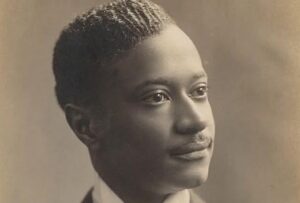
LL: Will H. Dixon was a pioneering musician during the period between American ragtime and early jazz. He was a virtuoso pianist, a composer and arranger, as well as a singer-songwriter. Dixon was a prolific composer in his own right, having been mentored by Will Marion Cook. Cook was the Oberlin-trained musician who encouraged Dixon to integrate complex European harmonies with African rhythms. He was also affiliated with Joe Jordan, his collaborator on many songs, and Cecil Mack and Leon S. Adger who, as Gotham-Attucks Music Publishing Company, aimed to ensure Black composers maintained the rights to their creations. He was from the era of the Clef Club, where his music played its part in the jazz that emerged from that venue. He helped launch and continued to work with Memphis Students Company, a prestigious African-American musical troupe who introduced Black-American music to European audiences.
OW: So, he was an important contributor to the evolution of African-American music in the 20th century.
LL: For sure. He also had a reputation for his physical movements and personality onstage, both with his own, numerous, compositions, and those of others. He used a variety of theatrical movements in his performances, which were later popularized by others such as Cab Calloway. He would dance out the rhythm while leading the band. He aimed to energize the musicians and spur them on to play with all their vitality. He was a favorite among the musicians. Because of these movements on stage, civil rights activist and writer James Weldon Johnson called him the “original dancing conductor.” He kept time with both his feet and arms while conducting, and kept his musicians animated and lively throughout every performance.
OW: Tell us more about the opera and what makes it unique.
LL: It’s a three-act opera, complete, except for a page or so missing from the third act. It’s all in his own handwriting. It is set in the south of France and focuses on a subject similar to European opera: the love and idealization of a beautiful woman. Instead of focusing on folk traditions and customs, it talks of romantic love and beauty in the style of European opera. It shifts the focus of Black composers from music that centers on “their” history to the subject-matter and style that is the center of traditional opera.
OW: So it’s a link between musical worlds.
LL: Exactly. The language is not local and particular but more literary. The focus is on a rich artist rather than marginalized people engaged in a local struggle. His characters are cosmopolitan, diverse, not local. The language is not folksy but aims to be grand and literary. It aims at literature. It is not a show with set musical numbers. Dixon’s opera is showing Black composers writing not only about struggling human beings or illustrating folk entertainments, but being interested in intellectual and other types of subject matter. “The Maid of Chatteaulogne” illustrates how Dixon wanted to pass beyond the “enforced musical color line” that kept Black composers creating and performing what has been called “race music” — spirituals, ragtime, and plantation-themed operettas. While Dixon’s opera is still of the light dramatic variety, it moved away from what was popular about African-American music at that time and expressed a more European sensibility.
OW: Who was he writing it for?
LL: Not for a local musical theater or a church hall, but for a legitimate opera house. He died before he could finish it and it was “buried” until now.
OW: How would you treat Dixon’s musical output and contribution?
LL: I would retrieve him from the marginalized position he has in music history and place him in his rightful niche. He has been called the “Architect of Manhattan Ragtime.” I want to help give Dixon a rightful place in American music history. That’s why I decided to create the archive. Many of his diverse talents show up as orchestral compositions, scores of full orchestral works composed somewhere between 1900 and 1917 — when he died. He was 37 years old. Stored away in the dark, for decades, some of these were tattered and fragile. I want to make it available to scholars and musicians. And I would like to see the opera published and produced.

Stories you may also like…
Q & A: Baritone César San Martín on the Emotional Power of Zarzuela, Returning to “La Verbena de la Paloma” & the Global Nostalgia for Our Roots

Q & A: Mezzo-Soprano Anita Rachvelishvili on Returning to Her Path, NYC, Teaching & The Importance of the Greek National Opera