Q & A: Patricia Illera on Interpreting Ástor Piazzolla’s Iconic ‘María de Buenos Aires’
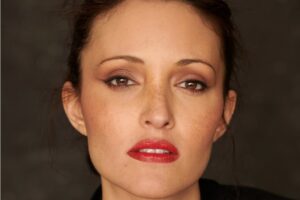
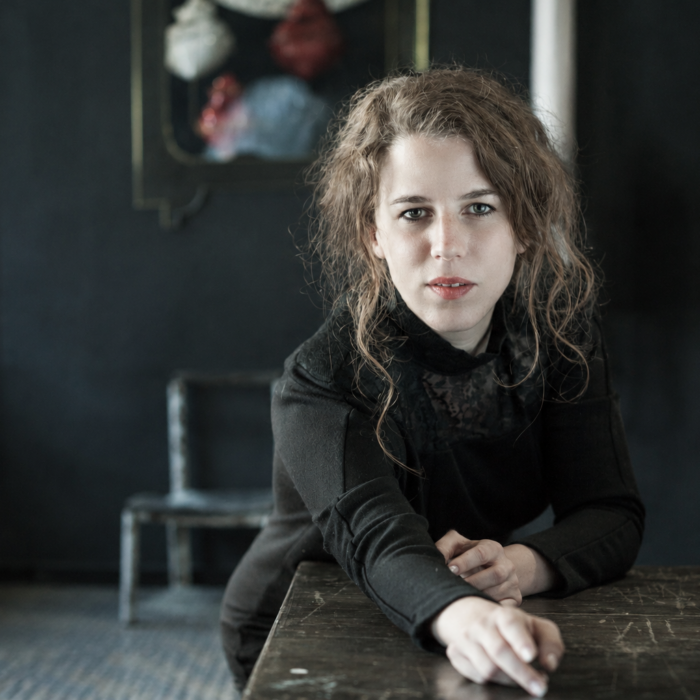
By Andréas ReyThe choice of the young Spanish mezzo Patricia Illera for the roles of María and her shadow in Ástor Piazzolla and Horracio Ferrer’s opera “María de Buenos Aires” was a wise one. After studying medicine at the UAM and singing at the Madrid School of Singing (ESCM), she has been able to alternate between oratorios such as Saint Saëns and Händel’s “Messiah” and operas as diverse as those by Massenet and Johann Strauss. Her affinity for Spanish music, with works by de Falla such as “El amor brujo,” “La vida breve” and zarzuelas, adds to her suitability for María de Buenos Aires.
OperaWire had the opportunity to speak with Illera about her take on Piazzolla’s famed tango operita, its unique challenges, and how it differs from traditional opera.
OperaWire: I looked at your website page and noticed that you have a lot of oratorios and operas. Do you think “María de Buenos Aires” is a mix between the two genres?
Patricia Illera: Maybe. I haven’t thought about it. I think it is a genre. It is not an opera; it is not an oratorio. It is something completely different. That is what we were talking about. It is something new. You know, Horacio Ferrer’s text is something that… It is a long text. Yes, it is a long text. And it is more like a… Maybe it is more like a novel, but longer. I do not know. I don’t know how to explain it. It’s a unique composition. Maybe he was influenced by Bach.
OW: It is a way of putting opera somewhere other than the opera house. Brecht with the “Dreigroschenoper” put the street into the opera, and Piazzola put the opera into the street.
PI: Yes, that is a good definition.
OW: And I also know that on your website page, you have featured many Spanish composers and works, such as De Falla, many zarzuella and Piazzolla. How do you feel about Piazzolla’s belonging with these composers?
PI: Piazzolla has a different composition, a different way of composing than Spanish composers from Spain. Of course, he is not from Spain. But you can draw a lot of parallels with that, because, for example, tango is music that comes from the street. It is music that comes from the heart. You know, it’s so exciting. And you can perhaps mix it with the idea of flamenco, which also comes from this kind of outdoor neighborhood. And yes, it is interesting. By making this parallel, you can find a way to perform tango like that. It is really… I like it, because it feels so… I do not know how to say it… so emotional. It comes from the heart. Yes, it comes from the heart. It’s pure passion, and I love it. It also shows that you see María, and that she sings that Piazzolla’s a composer from Buenos Aires.
OW: You are a Spanish singer, singing a composition from Buenos Aires. Do you feel an emotional connection to this type of music?
PI: Of course. Even though I am not from Buenos Aires, I think emotions are universal in any country. Especially in Spanish-speaking countries, where you can feel… You know, we have similar ways of expressing our emotions. The way of life in Latin American countries and Spain is… We are so… Yes, we are proud. And I think that… You know, I can use that. And I feel… I feel really connected to those kinds of emotions, to that kind of music too. And it is beautiful anyway. So, for me, the hardest part of playing María de Buenos Aires was the accent. But not the music, not the emotion. But it is something you can feel in any country.
OW: Do you feel a connection between “María de Buenos Aires” and the Angel trilogy of Piazzolla? When the angel dies, and she is reborn at the end, and at the end, in the middle of the opera, María dies, but she is reborn in the shadows and in the city itself.
PI: Yes. I had not thought about it, but I think there is something mystical here. There is something mystical. Yes. And in fact, the connection between religion and the streets, I think it also carried over into the way a city like Buenos Aires functions. You know, the way many cities around the world function. We have this Catholicism that moves the city, in a way, but at the same time, it’s linked to this kind of world that has nothing to do with it. And for me too, this connection with religion has something to do, especially with Ferrer, more than Piazzolla, it has something to do with, like, Buenos Aires, as a city, it’s probably a woman, you know, she lives like a woman, but religion is men, controlling women. And I think that connection is also important. And it’s also a question of feeling life as a cycle. Yes. Like, María may be dead, but there will be another María who will, you know, who will feel this city, who will feel this emotion, who will have a life, good or bad, who will die again.
OW: It is in the name María. It is a common name. It is not a special name; it is the name of the street. María says, “I am from the street, I am the love of Buenos Aires, and I am Buenos Aires.”
PI: And, María is the name of Jesus’ mother. So, there is this connection all the time, working and playing with religion and the streets, and mixing these two worlds together.
OW: And even the librettos, religion is very important, So, there is this kind of constant connection. This is the third time you have come to Metz?
PI: The second time.
OW: Do you have some kind of connection with this city?
PI: Actually, I love Metz. I think it is a beautiful city. It has a lot of art, and I love that. Of course, I saw the cathedral. It is a masterpiece with Chagall. I do not know the name, but I realized that there is another cathedral that has it, and I was blown away. I said to myself, this is the city, and I also love that it is so small that you can walk around and feel the city, and the people are so nice, and I also love the connection with the Germans. You can feel the history of the city, and you can see it. I love that, and the people in the theatre are so nice, which is not very common. I have been lucky because I have always found good people, but here in Metz, they are always making you feel good, and working with Paul-Emile, the stage manager, is always great. He has great ideas and does a very good job. We just talked about that.
OW: Do you like the connection between jazz, tango music, and classical music, as well as the connection between opera and oratorio?
PI: I love it, that is what makes it great, and I think music should be like that. It is a way of connecting with people. People evolve, so music must evolve, and I find that interesting. I find it necessary. I find it beautiful, and I find that also makes it easier to connect with your emotions, easier because you can… I love movies, for example, and when the music gives you everything and you do not need to do anything else, the music and the classical connect, it makes the experience of playing a role and connecting with your audience easier, that is why I do it, I want to connect with people and feel the emotion, I love that. Piazzolla’s music is perfect. It is one of the best compositions of the 20th century. It’s one of the best compositions of the 20th century. Not just for María. But when you look at her production and where it is going, it is very interesting.
OW: Do you think María’s music is more difficult than traditional opera?
PI: It is difficult because we are not approaching it correctly. It is the same thing sometimes; operetta can be difficult to do because we do not know how to speak, even though we do it every day. When we are on stage, we are not used to speaking, and that makes our work even more difficult. I have to say that for me, I think it’s easier because I do not like to worry about high notes or lines. I just like to feel and have time on stage, and for that, this kind of music is perfect.
OW: Piazzolla wrote mainly songs in milonga and tango forms. His music is not pretentious; it is music that should be played on the streets. You did it very well.
PI: Thank you, I really appreciate it. You know, you always think, I do not want to forget the lyrics because the lyrics are such an important part of this song, because it’s so poetic, it’s hard to remember everything that’s written and the words. I’m from Spain, so the Lunfardo, which is the slang of Buenos Aires, isn’t something we use, so I had to do a little research what Ferrer meant, and at first I thought it was great. I had so much fun trying to understand what was going on, and it also made me understand Piazzolla better. So I think, I don’t know, I think it’s difficult, but it really makes you connect with the piece, and also vocally, I have to say, mixing light music with lyrics can be a struggle, but I enjoyed it.
OW: There is also the second part, when you are the Shadow of María, a combination of speaking and singing. It’s very modern. Was it also very difficult in comparison with Rossini or Mozart?
PI: That’s right. It is difficult because even though you must speak and it is natural, you must put all the words into that moment when the music is going, and connect it when you must sing again, and give it the meaning. Because it is a beautiful poem, and you know, measuring that is not easy for me. It is much more difficult than just singing an opera. You go with the music and it is fine. Here, you really must be able to pay attention to a lot of things. And with the dancers on stage too, I think. I do not want to be in the other direction, but I must listen to the music so I do not spend too much time saying the words.
OW: The stage was not very large.
PI: I think it worked very well and the set design is so beautiful, I am very happy. I had also thought about the difficulty of the role because you do not get a clear narration. You must explore the lyrics to find out what happened. It was also difficult in that sense, it was difficult but it was fun for me to do, and I love that every day I find something new. It is like it is the first time I am realizing this word, this connection with the music. I think it is incredible. Not all songs have this thing, but this one especially does. It is like discovering new things every day. I find it incredible. When you listen to it again, you discover things like the part at the beginning with the scar or the tragic part where you find out how she was killed. You really must explore the lyrics to discover it. It is a beautiful piece of work. I think it made me love this piece much more than others that are perhaps easier but do not give me that motivation to work on the character.
OW: We talked earlier about the lyrics. As we said, it’s more like a very long text than a book. How do you feel about this language?
PI: I felt that those kinds of words were difficult, but in any case, I felt—I do not know—it is so beautiful that I do not care how long it takes to get there. If you have been there, that is great. I am telling you; it is one of the best I have done, and I do not think others will—how can I put it? I would say they separated it as the best piece I have done in many years because it is. We will see, but in any case, it is very special, it is a very special piece.
OW: What are your plans after María?
PI: I have a lot of oratorios, I have a Beethoven Symphony No. 9, I have a Verdi Requiem in Spain. In fact, they are all in Spain, and then I have a concert in Bayreuth. We’re going to perform pieces by different composers, I also have a few colleagues who are singing there.
Stories you may also like…
Q & A: Composer Hana Ajiashvili on Her Azrieli Award-Winning ‘Riddle,’ Finding Inspiration in Color & Music’s Omnipresence in Her Life
In Less Than Five Minutes, Get To Know Stage Director MariaLuisa Bafunno