Q & A: Director Jorinde Keesmaat on ‘SHE/HER/ME’ & the Female Perspective in Opera for International Women’s Day
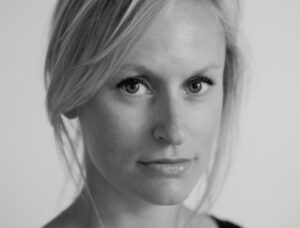
By Jennifer Pyron(Photo: Welmer Keesmaat)
Director Jorinde Keesmaat is working on the concept and staging of a new project, “SHE/HER/ME,” an opera film installation with film and dialogue by Jean Cocteau, music by Philip Glass, and new composition by Molly Joyce. Keesmaat was invited as the keynote speaker to a Women’s Leadership event, ahead of International Women’s Day, to the Consulate General of the Kingdom of the Netherlands on February 26, 2026, where she spoke in detail about her work in progress.
OperaWire attended this event and for this exclusive interview takes a behind the scenes look at “SHE/HER/ME” and Keesmaat’s creative process through the female perspective.
Production Details
“Audience and performers are taken on a journey towards the light through a dark labyrinth, where projected images of Cocteau’s archetypal characters and the live performers come together to reflect on the here and now. What do I feel? What am I allowed to become? Who am I, in relation to you? Three dysfunctional love stories, all creations of the masculine heart and brain, all paralyzed. Deconstructing Glass’ Cocteau trilogy and building a new piece with the reflective music of Molly Joyce helps me create a new “‘luidity” in the husband/wife, brother/sister, possessor/possessed relationship. I’ll remix them, creating space for the female perspective. The production re-examines how women define themselves not in relation to men, but as independent, autonomous beings. ‘SHE/HER/ME’ is an opera-video labyrinth in which our search for self-expression begins,” said Jorinde Keesmaat, initiator and stage director.
“‘Orphée,’ ‘Les Enfants terribles’ and ‘La Belle et la Bête’ are among the most fascinating cinematic works directed and/or written by the 20th-century French artist Jean Cocteau. Each film represents an ongoing search for the subconscious, which the artist is obsessively drawn towards and where reality is left for a dreamlike, magical, and symbolic underworld. The ‘zone’ which Orpheus wanders through in search of Eurydice and Death, ‘the Room’ where Paul and Elisabeth play their secret ‘Game,’ the castle of the Beast: in each of Cocteau’s films, a place is endowed with an alienating intensity in which fantasy, myth, or dream become reality. Scenes are filled with objects that convey deeper meanings, such as the mirror: by confronting the self, the mirror functions as a gateway, a magical looking glass that Cocteau conjures up using liquid mercury and early experimental filmmaking techniques such as reverse motion and slow motion. In each film, a supernatural or otherworldly character enters the ordinary world of the protagonist. It is the muse, death, the subconsciousness of the poet himself, luring the artist into another realm.”
“When American composer Philip Glass set Cocteau’s films to music, he experimented with the possible relationships of opera to film. For every film, he took a different approach, setting the entire libretto to music (‘Orphée’), introducing dance (‘Les Enfants terribles’) or, in its most radical treatment, replacing Cocteau’s entire film with new instrumental and vocal music, painstakingly synching every spoken syllable (‘La Belle et la Bête’). By doing this, Glass explored new ways of conceiving a live ‘film opera.’ Glass’s distinctive composition style makes the underlying tension in Cocteau’s works palpable to such an extent that it at times evokes a hypnotizing and even unsettling experience,” said Keesmaat.
OperaWire: When studying this work, how did you relate to it? What about it did you want to change? Was there anything you wanted to keep?
Jorinde Keesmaat: “SHE/HER/ME” consists of three works by Philip Glass based on “Orphée,” “Les Enfants Terribles,” and “La Belle et la Bête” by the French filmmaker Jean Cocteau. In these films, he plays with reflections, duality, and transformation. Cocteau portrays figures who constantly recreate their identities — not as a concept, but as a life force. That image immediately resonated with my own fascination with femininity, with fluidity, with the body as a bearer of meaning.
We focused on the three dysfunctional love stories — each originally shaped from a male perspective — and created space for:
SHE – Eurydice from “Orphée”
HER – Elisabeth from “Les Enfants Terribles”
ME – Belle from “La Belle et la Bête”
By adding music by the American composer Molly Joyce, a new fluidity emerges within relationships: man/woman, brother/sister, possessor/possessed.
I illuminate these stories in order to create space for the female perspective — for women who define themselves not in relation to another, but as autonomous beings.
OW: What have you learned so far while reworking the concept and staging of this piece through the female perspective? Any challenges?
JK: In my research, I searched for the right words for these female characters — the missing vocabulary. For every phase of life, I looked for the appropriate language and emotional tone: the young girl, the young woman, the mother. But also for the angel figure — your inner voice. What strength is still missing in order to fully unfold into yourself?
Molly Joyce builds her vocal music from a selection of poems and texts by international poets and feminist authors from the 20th and 21st centuries, amplifying the female perspective and giving space to unheard voices. For a year, I immersed myself in female literature and poetry. I searched for words for Eurydice the mother, for Elisabeth the sister, and for Belle the young girl — words that would touch them at their core and ultimately give them the strength to create their own path.
The voices of H.D. (Hilda Doolittle), Margaret Atwood, Adrienne Rich, Susan Sherman, Wisława Szymborska, and Patti Smith mark our journey and build a bridge from Cocteau’s time to our own. I have never felt such joy in finding the right words.
OW: What are you learning from Philip Glass about the music? Any room for reimagining the score?
JK: I am a great admirer of Glass. The way his music captures the inner journey is extraordinary. We have retained approximately 40 minutes of music from each of the three operas.
OW: What is it like to work with composer Molly Joyce on this project? Tell us about the collaboration and how you two met.
JK: We met when we were both artists-in-residence at National Sawdust in New York. It is a very natural collaboration, especially because she feels deeply inspired by Glass’s music while also creating a truly personal and new sound. She strongly feels the necessity of adding a new perspective.
OW: I understand you plan on utilizing a lot of different spaces for the concept and staging of this work. What is your overall vision for its premiere?
JK: Yes, the work is a labyrinth. “SHE/HER/ME” is a sensory installation built from film images, music, and live performance. The audience moves through the space. There are no chairs and no fixed seating. Together with the performers, you travel through the dark underworld of “Orphée,” moving toward the light of Belle.
OW: How will Jean Cocteau’s film and dialogue be incorporated? What is your creative process like when reimagining his work through the female perspective?
JK: The dialogues come directly from the films. They are dated texts and archetypes. By adding female poetry as a contrast, I create a passageway toward the future.
OW: How do you envision the singers and their roles? What does the role of the angel symbolize?
JK: There are three different generations and three different relationships. The angel is a non-gendered role that serves as the overarching character. The angel represents the subconscious — your inner voice, your intuition.
OW: Is there a moment in this work where you feel most connected? Tell us what draws you in and how you want to convey this moment to your audience.
JK: Three couples attempt to break free from their fixed identities. What do I feel? Who am I in relation to you? Who am I allowed to become?
Surrounded by the surreal imagery of Cocteau’s films and the hypnotic pulse of Glass’s music, they are guided by an angel figure — present in all three operas — the subconscious, the all-knowing presence, the questioner. The angel guides the women through their inner journeys.
With this work, I want to create space — literally and figuratively. Space for reflection and space for the female voice. “SHE/HER/ME” is an invitation to look and to listen — to sound, to image, to identity, and to representation.
OW: What overall message do you want to share with our readers on International Women’s Day? How has your career been impacted most as a woman? What do you hope to change for upcoming generations?
JK: Never let anyone tell you something is impossible. There is always a way. Take up the space you need. Do not be afraid when others tell you otherwise. Follow your instinct.
Stories you may also like…
Q & A: Swedish Mezzo-Soprano Alexandra Olsson Andersen on Building a Versatile Career
Q & A: Lawrence H. Levens on Recovering Will H. Dixon’s Lost Opera, ‘Maid of Chatteaulogne’