Q & A: Composer Huang Ruo & Librettist David Henry Hwang on ‘The Rift’ for China Now Music Festival’s ‘Chasing Dreams’
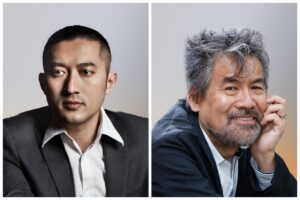
By Jennifer E. Pyron(Photo © Courtesy of the artists & the US-China Music Institute of the Bard College Conservatory of Music)
Two black granite stones, each 246.75 feet long, carve a V-shape into the earth with the names of 58,000-plus dead soldiers in chronological order. Maya Lin’s Vietnam Veterans Memorial is more than meets the eye. In 1981, the 21-year-old Yale student who had just finished a course on memorial architecture entered her model proposal to a blind jury in competition to design this exact piece.
The controversy that followed her winning the competition would then set in motion a chain reaction that inspired contemporary composer Huang Ruo and librettist David Henry Hwang for this year’s China Now Music Festival 2026: “Chasing Dreams.”
OperaWire visits with both for an exclusive interview to learn more about their opera, “The Rift.”
OperaWire: What inspired “The Rift” initially?
David Henry Hwang (DHH): Huang Ruo, you got the instructions from Washington National Opera first.
Huang Ruo (HR): The first call was before the pandemic, actually, I got a commission from the Washington National Opera. Francesca Zambello, the artistic director, talked to me about the then upcoming fiftieth anniversary of the Kennedy Center, so they were planning a celebration. Since 50 years ago, the Kennedy Center opened with Leonard Bernstein’s Mass, then 50 years later, they wanted to also have a vocal piece.
The Washington National Opera, being based in the Kennedy Center then decided to commission, four pairs of operas from four pairs of creators, composers and librettists. Each pair could pick a monument from DC. The idea came from Francesca really. She thought Washington DC has so many monuments, it’s a city full of monuments, but what are the stories behind those marbles and stones?
So I immediately talked to my long-time collaborative partner David. David suggested, what about if we pick the Vietnam Veterans Memorial, which actually was the one I would love to take on as well.
David actually knows Maya Lin personally, so that became the right fit for us. We proposed it and they loved this idea. That was the genesis of creating this opera.
DHH: I think most people know that Maya Lin, the creator of the Vietnam Veterans Memorial, was still an undergraduate student at Yale when she submitted her design, which eventually won this huge nationwide contest. The designs were kind of blind judged, so nobody knew who created them. A panel of artists and architects picked the best one. So when it was revealed that the creator of the winning design was these three things, a woman, a young woman, and a Chinese-American, it led to a sort of firestorm of controversy about whether this was an appropriate choice. Maya was 21 years old and she navigated this controversy with such eloquence and passion and commitment to her work and ended up creating a monument which is the most popular in Washington, the most visited, and one that really succeeded in bringing together many corners of the country, many different opinions after this very controversial, very divisive war.
OW: What about Maya Lin’s story informed your creative process the most?
DHH: I talked a moment ago about her resilience and the fact that she was able to create a piece of art which really made a significant sociopolitical difference in this country. So part of what drew us to this story was this notion that art can help to heal a divided country. We certainly are a divided country now and we were then at the time that Huang Ruo and I wrote the opera originally. In order to achieve this, we wanted to incorporate different points of view and experiences from the Vietnam War and its aftermath in order to show how Maya’s artwork brought these disparate elements together.
HR: To add to that, I still recall very vividly, we created the opera during the pandemic, and it was premiered in 2022 in the spring, but we spent 2020 and 2021, those pandemic years, writing this opera.
In 2020, when we first started, I remember I gave David a call. I said to David, with everything going on right now, there’s so much anti-Asian hate, so many false messages, false talking points, false accusation towards Asians and Asian Americans about the virus and such. Just seeing people in our community being attacked, I could not pick myself up to be creative, not to mention to write an opera about a war that was fought more than 50 years ago. So many years ago, which seems so far away and so irrelevant. But I remember, David, you comforted me and actually encouraged me. You said, I cannot remember the exact words, but paraphrasing, that we live in a divisive time, perhaps more so now than in the past. So the message of “The Rift” as we titled it, actually is quite relevant.
The word “rift” was from Maya directly. She described the memorial as like a rift on the earth. I asked David, we have “The Rift,” but what next? What is the antidote to that?
We decided, and David also put it into very poetic and meaningful words in the libretto, it is to heal. So we have the rift, and we have the healing process. The monument, the memorial itself is a healing process. It’s a place to bring people together, not only to mourn, but also to see one another, to see themselves, to see the past, and hopefully to see the present and the future.
So that’s why to pick this topic, to pick this memorial, to create an opera out of that, is not just random or out of nowhere, but for a very meaningful and very timely reason.
OW: Did you get to work with her? If so, how was that experience?
DHH: We did not work directly with Maya during the process, though I’ve known her for a while. We actually met when we were both in our early 20s, I think because we were both being honored at the same event. So I’ve known her for decades. She’s a genius and she tends to be sort of private personally. I have reached out to her and let her know this was happening and she’s been cool with it.
HR: She was planning to come to see our world premiere, and then it was during the pandemic, and she could not come. After we premiered the opera, we presented the aria in an event where she actually heard our opera excerpts live, and told me wonderful things about her thoughts.
Hopefully, there will be further life to “The Rift.” I often felt it so meaningful for the person we are creating the opera based on, all the family members, even, you know, to come to see, be part of it, because opera is not just a show. It is, in our case, a social event. It’s an event that, is meant to rally people together, to collectively understand, to take action. So I think with any support we could get from the inspiration, that obviously will be very helpful to our message and to our opera.
OW: How does the musical language of this opera detail Maya Lin’s design of the Vietnam Veterans Memorial?
HR: We cannot talk about music without talking about the drama, the words, and the structure of the opera. So we want to start with the structure.
DHH: Basically we have the Maya story. And then there’s the story of a Vietnam vet, someone who served in the war, who comes back and is incredibly dispirited, probably has some PTSD, and has kind of buried the experience, particularly the story of a death that happened on the battlefield. Then we have the Secretary of Defense, Robert McNamara, who is largely responsible for or became infamous for being a major architect of the Vietnam War, who later in his life repudiated the war. So there’s his story, and then also a Vietnamese woman who comes to this country and hears about the memorial and is offended because it’s only going to include the names of American soldiers and not any of the South Vietnamese soldiers who fought with the Americans. So they have these four different points of view on the war, and they all literally come to the wall and have kind of a unifying experience.
HR: So with all that, which is a lot, how to use music to bring everything together? I think that is the strength of opera. Music is the air, is the breathing, is the drama, and also is the binding block of the character. So in this sense, yes, there is one unified language for the whole opera, which is about the Vietnam Veterans Memorial, about “The Rift,” about Maya’s story.
But we diverge out into all these different characters, so when you come to see the opera, you are able to see Maya in her early 20s with her own youthfulness, her own wisdom, her own fighting spirit, and her own reflection. With a character as complex as that, how to use music to portray all that?
Not to mention this same soprano, suddenly the next second turns into a news reporter to ask very tough questions to the defense secretary. Then the music also needs to shift immediately.
And now with Robert McNamara, who at times is defiant, reassuring himself that he made the right decision, but towards the end, he also questions whether he made the correct decision to send the daughters and sons of America into this war. So that is also a turning point, a reflective moment for him. How can the music change to reflect that, or even anticipate that, even when he sings his aria sharing his reason of being the architect of the war.
In the duet, this is one of the scenes in which we created this double stage, where on one side you have the Vietnam vet, the African American soldier who heard about the memorial and his reaction to it. And on another side of the stage, at the same time, you have this Vietnamese mother with her daughter. The daughter shared this news of a new memorial which will be built honoring the Vietnam War deaths. Both of them react to the news in a similar but different way. Both of them share about their past, their haunted memory of what the war gave them, and how they came to today, who they are. And then both of them share what their opinion of the memorial is. So yes, two very different people in two very different spaces, two different races and two different ages, but there’s something commonly linking them together, and that is the Vietnam War. Also linking them together is that they lost someone close to them in the war, and they were the survivor. So, you have two different presentation of monologues for each of them, and then in between, they’re intertwining, and at the end, they sing a duet.
So in musical terms, that’s how I construct the scene. But of course, because of the drama, because of the words, then we created this musical structure to reflect on that. Those are just a few examples.
I constantly use a motif of the turbulent wave. You hear that from the beginning of the opera performed by the strings. They are like ocean waves, counter currents crashing into each other. Vietnam and the United States are an ocean away, there is an ocean to divide them, but the clashing waves also symbolize the different opinions, different divisiveness, different agendas, different vision of the country, different opinions about the war, they all clash with one another to create these clouds hanging above us, which oversees the opera. That motif was continuously used throughout the entire opera. That also symbolizes although this story happened 40 years ago or so, but it is still very relevant, still very timely, and in today, our society, our world, we are still facing a very similar situation and story.
OW: Was there anything new you learned while creating this that changed your initial ideas about the piece?
DHH: It seemed to me that musically, you should be able to do these four different points of view on the war. And then when you have them sing together at the end, when they’re visiting the Memorial, it should feel like this coming together of these disparate views and the healing of the rift of this country. It’s not something that I would say turned out differently, but I was really not clear whether this could be done. It’s one of those things where you feel like in theory that could work, and then it really becomes the composer’s job to make that happen musically. I had that question going into it, and do feel that Huang Ruo managed to actually achieve the thing that I hoped.
HR: To David’s point, what is unique about opera as an art form versus, let’s say, a play, is in a play where you have two people speaking at the same time, you might lose some words or they might just sound like they’re not talking to and not listening to each other. But in the opera world, you create a motif, a narrative for one singer, for one character. And then you continue with that and then you bring in another character with a very different motive, very different style, very different vocal line. When you merge them together, even if they are singing at the same time, different words, you can still close your eyes, tell who is who, and you can actually still hear what they are singing. It’s when words are set to music, then this magic can be achieved. This is nothing new. Verdi already, among many other composers, created brilliant quartets, trios, sextets. When you have six people singing, how could you hear one another? It’s doable.
For me, it really helped me understand the memorial in a much better sense. I visited the memorial for the first time when my parents and I made a visit to DC, just as a tourist, looking through all the famous touristic sites.
But, because I was writing this opera, I did a site visit to the Vietnam Veterans Memorial. It was a cold winter day and there were still people coming to see it. There were some people putting roses in between the stones and some notes were left there as well. Different people left different memorial items in the wall. I understood the reason Maya did not want to have an alphabetical order of all the names, but instead it was chronological. As the war got longer, drags on longer, then you see more and more people died. When you walk deeper, actually there’s more death. Then you really see the reality, almost like you are observing the war in close distance instead of being abstract just as a name and number on paper, it is really reflecting on your mind that this is something so real you can’t escape.
It helped me to understand why the design and what is the reason behind it. It helped me to create an opera after understanding the artistic reason behind the architecture.
Now I see memorials differently. Some are to glorify and some are to reflect and to memorialize. A good memorial can be so timeless, and it not only is about one particular period, but also is continuously to comfort and inspire people.
OW: How did you decide on the characters for this story and what voices would perform them?
HR: We were given a cast of four singers, and no more than four, and we actually turned this challenge into our benefit.
So then David and I were scratching our heads, how do we tell a story with only four singers? We decided to go with the route of opera theater. It’s like what we did with An American Soldier. David brilliantly combined multiple roles into one singer. In our case, although we only have four singers, they are playing many roles. I’ll give you one example. The soprano who portrays Maya Lin also is a daughter of Vietnamese refugee, and also is a reporter from some media organization, and also is the common soldier who started the opera. And same as all the other roles.
DHH: It’s something we do in the theater a lot. On Broadway or in plays, just because we never have enough money to hire so many actors. One of my plays, Yellow Face, which was on Broadway a couple seasons ago, has a cast of 6 and playing 40 or 50 parts. So it’s something I’m really used to. Therefore, when we were given the restriction of 4 singers, it seemed like we could figure out a way to have what we call tracks, which is when you have one singer playing multiple roles. We could figure out tracks where we’d be able to have more characters, have a fuller range of experiences and viewpoints incorporated into the show. Then it became Huang Ruo’s job to figure out the different musical languages for these more than four characters we’ve put on stage.
HR: Because there are four characters, we have four very different voice types. So we decided to assign soprano to Maya Lin because she is in her early 20s. So that soprano voice will show her youthfulness, but it’s a lyric soprano, so that lends some weight to the character, because Maya also is a very thoughtful, deep thinker.
We had a tenor, for the Vietnam vet. He’s in his 30s.
We have a mezzo-soprano, which we assign to the Vietnamese mother. So when you have the duet between mother and daughter, we have these two voice types that could also help to differentiate them.
We assigned the role to Robert McNamara of bass-baritone, because he is in his 60s, so he’s more seasoned and aged, and his voice sings lower. That is the supposed age of wisdom and reflection.
In his case, when you hear his aria with this deeper voice, it comes through as someone who went through a lot, who has seen a lot, coming out of that to reflect on the past. And of course, the same singer will also play the professor in Maya’s college class at Yale, who assigned Maya and other students the assignment to pretend you are designing for the Vietnam Veterans Memorial.
Lastly, we also have this chorus, the common soldier’s chorus. We have four voice types and naturally they can form a SATB chorus.
OW: Describe how this opera ties into China Now Music Festival’s mission for this year: “Chasing Dreams.”
DHH: I think one of the clearest connections between the theme and our show is the story of Maya herself chasing the dream of creating this memorial. When an artist envisions something which hasn’t yet come to life, the artist is dreaming an object, or a piece, or a show into existence. There was such a torturous and tumultuous process to actually get the memorial made, given the number of opinions and the controversy around her design, that she really had to chase this dream in order to see it become a reality. The larger dream is what she wrote about when she first envisioned it: a rift in the earth, then the earth begins to heal. That idea of healing is in every character of our show. It’s their dream and also our dream for maybe what our piece can help to achieve.
HR: Absolutely right. And I think that Chasing Dreams is a great title for this festival. Of course, we are celebrating the 250th of the founding of America.
Just recently, someone was asking the cellist Yo-Yo Ma about the 250th and he said, America is still a young country in comparison and we are still in an experiment.
I had such deep thoughts after hearing what he said, because I felt that we live here, we came here, all trying to chase our own dream, what we call American dream. In Maya’s case, being an Asian American, born and raised and growing up in the Midwest, she has her American dream as well. This memorial was one of them, for sure, but I think a lot of dreams do not come true or are in the process of being developed. But I still feel this is a very hopeful and very prosperous land full of possibility. The American dream in this country is still chasable. I hope our opera will shed a positive light, truthfully. At the end, it’s about bringing people together to heal, to move on while not forgetting. This is part of a dream as well. No matter what it is, we have that dream. Sometimes it comes true, sometimes it might not, but it is important that we have that ability to dream. That is what this country could provide us all.
OW: What can audience members expect when seeing this live?
HR: For us this is a concert version. Although all the singers will have music memorized and will involve acting, costumes, and we have engaged the wonderful director, Eric Ting, and a projection designer, Shawn Duan, it’s a concert version, semi-staged. The audience are able to feel, in the space of Carnegie Hall, Zankel Hall, they will see our stories unfold in front of their eyes and even see the Vietnam Veterans Memorial in the process of being created through technology, through the music, through the unfolding of our opera. I would say this is a very unique experience. It will be different from just a simple concert with singers standing there with score to sing. This offers a very compelling insight into the opera, into our story.
OW: What do you hope they carry forward after experiencing it?
HR: The audience will be able to take a journey with the singer, with the orchestra in our story. I hope after seeing it, they gain understanding of why this memorial was designed in this way, but also Maya’s struggle and her story. The other three characters each have their own agenda, their own challenge. They will gain understanding when they all see the memorial coming to life. What did they see in themselves? That’s my hope.
DHH: I hope audience members can be inspired by the story to think about their own role in healing our country and trying to create something that moves us forward. Yes, it’s the 250th year. Yet we’re, in my opinion, in a very precarious place as a country.
So what can we all do to try to make things better?
HR: At the end, it’s about coming together to achieve the better good. I think that is so crucial in our opera. Hopefully we can inspire people to carry that with them.