Q & A: Elkhanah Pulitzer on Directing ‘Nixon in China’ for the Washington National Opera
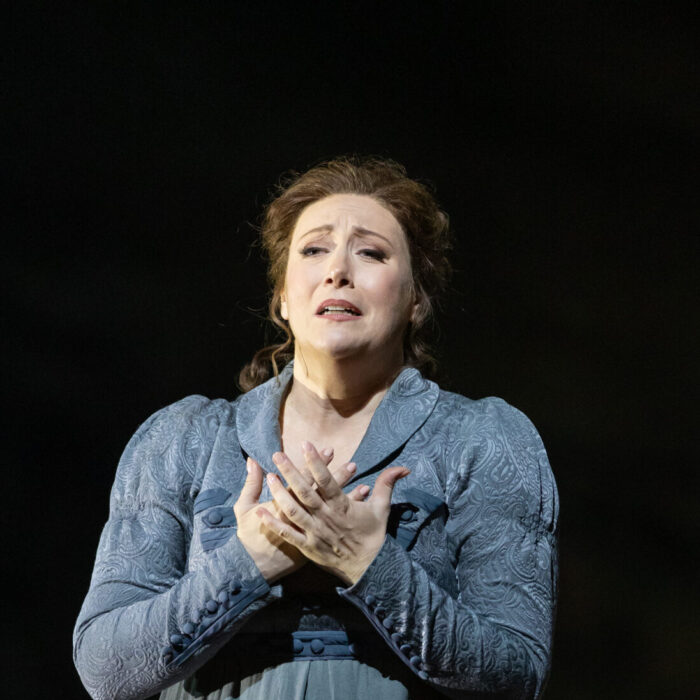
By Francisco SalazarThis week the Washington National Opera (WNO) is set to open a new production of John Adams’ “Nixon in China” starring Thomas Hampson and Renée Fleming.
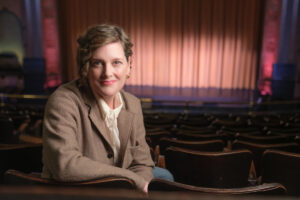
The opera will be directed by Elkhanah Pulitzer using rare archival film footage by Projection Designer Bill Morrison.
Pulitzer is a renown stage director who is worked at the San Francisco Opera, New York Philharmonic, LA Philharmonic, Los Angeles Opera, Lyric Opera of Kansas City, Boston Lyric Opera, Opera Omaha, Opera Theater of Saint Louis, and the Canadian Opera Company.
She previously directed “Nixon in China” with the LA Philharmonic.
In anticipation for production at the Washington National Opera, Pulitzer spoke to OperaWire.
OperaWire: Tell me about working with the Washington National Opera, Francesca Zambello and the artistic team?
Elkhanah Pulitzer: It’s been a really exciting opportunity. WNO has taken a leap into a new chapter, redefining what it means to engage with the city by working in different spaces depending on where each piece will most thrive. When we initially talked about me joining the Nixon in China production it was slated but then postponed because of the pandemic. So it’s very gratifying to see it back on the boards, a project that Francesca, Tim O’Leary and everyone at WNO believe in strongly enough to bring back. And it feels like an even stronger moment to present it, as part of the conversation around America’s 250th.
OW: Tell me about your concept for the production?
EP: My initial way into the piece was through old “TV Guide” and Time magazine imagery, with the understanding that Americans experienced the visit through the press, mostly through television. I was interested in that history-making coverage, as well as the tension and shift in political theater that occurred when many Americans were all collectively watching the same news on TV.
I reached out to the documentary filmmaker Bill Morrison, who found Super 8 footage at the Nixon Library shot by Haldeman and others during the trip. The footage is amazing. As a backdrop, it brings authentic color and detail to the people and places, and draws us into the events with real immediacy.
There’s also an incredible pageantry to how the story unfolds with this incredible “sugar rush” that kicks off the piece to the very public performances of these dominant world leaders. Setting it inside DAR Constitution Hall, with its rich history and huge scale, felt like an opportunity to embrace the grand scope of people who rose to such heights that they became icons. But “uneasy lies the head that wears the crown.” The work moves from leaders making choices that affect masses of people to a more reflective ending, questioning their mortality and their place in history.
OW: Cabaret-style tables at the Constitution Hall are being set up for this production. Tell me about that concept of your mis-en-scène?
EP: This was really Francesca Zambella’s vision for how DAR would be transformed into a bigger theater to hold the performances of the orchestra, chorus, and cast while drawing in the audience to a more intimate, close relationship to the story telling. In “Nixon,” the idea is to end the piece with a deeper connection to these world leaders in the existential musings of what one’s life will mean after death. We are brought face to face with the vulnerable human behind the mask, behind the icon. My hope is that as we watch from the tables as well as the other seats, that we feel like they’re just like us and we are like them, in the end.
OW: “Nixon in China” is a political opera. How does it relate to today’s world?
EP: Well, every day in the news there are stories about our relationship with China and the global impact the nation carries in the world. The race on AI, power sources, fabrication of goods, etc., continues every day. Nixon going to China was a game changer for the world stage. What I find interesting about this particular approach to the production is in sharing authentic footage from the visit, we are reminded of layers of meaning and how fractured and questionable or reliable our current images have become.
OW: What are some of your favorite parts of the work?
EP: This is one of my favorite operas from start to finish! I love Pat’s tour. Her really getting out there and seeing so much of the country, its culture, and people. I find the music of the arrival thrilling. There are so many great arias. And ultimately, I love that it goes from being a big iconic public performance to a quieter, more vulnerable human experience that ultimately asks “What is our place in the universe?” in the grandest and then most private and humble way.
OW: Tell me about working with legends Renée Fleming and Thomas Hampson?
EP: I’m really looking forward to it. Both are incredible singing actors who bring profound artistry to their work, continuously refreshing and re-engaging with their own creative process. They too are icons! I generally feel that in the end, it’s who you’re in the room with that matters when making great work. More so than whether the water is poured from cut crystal in a penthouse or plastic jug in a garage, it comes down to ideas and creative collaboration.
OW: You direct a lot of contemporary works. What brings you to these works and why do they inspire you so much?
EP: I come from theater, where, for example, the tradition of each director reinterpreting Hamlet is vast and can be liberating. But I find working on new pieces—particularly through-line composed works of the 19th century onward—especially gratifying. With a new story and music no one has heard before, you get to strike out in fresh directions, free of preconceived trappings. I also love baroque work because it is a bit like jazz in the sense that it has open, improvisational aspects, and even the scores themselves often have variations in the compilation so there is room for interpretation and editing. Ultimately, I like to play with what the audience brings to the piece – preconceived notions or images might rest in their mind’s eye – and either fulfill in unexpected, nourishing ways- or dramatically break from those expectations.
OW: Do you feel you have a signature style when directing a production?
EP: My interest lies in unraveling the DNA from within a piece to reveal what it is trying to say. As a result, my work is very driven by the text and the music and what clues I can gleam. However, as I get older, I do see certain aesthetic trends and humanist questions that I continue to gravitate towards grappling with. I’m very interested in complicated women. I’m very interested in modern and post-modern art and theater making. I’m interested in the public mask and the private self and the distances between those two, in class and power, and how we all navigate being human beings. Overall, a humanist agenda.
OW: What are you looking forward to about this production, and what can audiences expect?
EP: Authentic footage from the trip, a starry cast playing iconic leaders who shaped history…the propaganda of the red detachment original ballet Madame Mao created, and a wild ride that lands us on the shores of existential questions about our place in time and history.