Q & A: Cecilia Molinari on Her Lyric Opera of Chicago Debut, Bel Canto & ‘Così fan tutte’
By Francisco Salazar(Credit: Alina Fejzo)
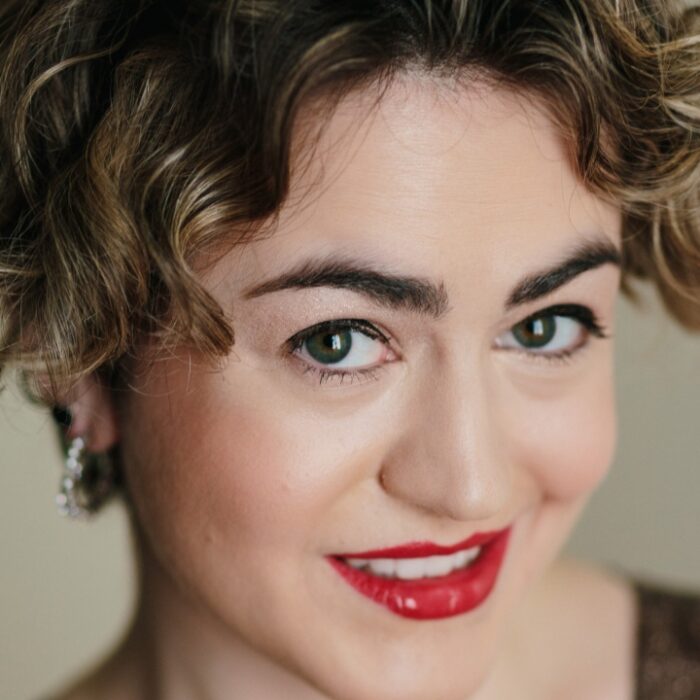
In February, Cecilia Molinari will make her Lyric Opera of Chicago debut and her U.S. debut in a production of “Così fan tutte.”
Over the years, the mezzo-soprano has become well known for her interpretations of bel canto, Mozart and baroque roles, notably in “Il barbiere di Siviglia,” “Le nozze di Figaro,” and “Ariodante.” She has performed at the Wiener Staatsoper, Opéra national de Paris, Teatro Real Madrid, Dutch National Opera, Teatro Carlo Felice Genova, Opéra National de Lyon, Deutsche Oper Berlin, Semperoper Dresden, and Teatro dell’Opera di Roma.
OperaWire spoke to Molinari in anticipation of her debut about performing in the United States and singing Mozart’s opera.
OperaWire: What does it mean to sing in the United States for the first time? Was it a dream of yours to perform in this country?
Cecilia Molinari: This is undoubtedly a major milestone in my international career. For me, singing in the United States means connecting with a completely new audience and finally experiencing a reality that I have only ever known through the lens of cinema and television. It’s a moment I’ve been looking forward to, and I am truly thrilled to be here.
OW: What does it mean to make your Lyric Opera of Chicago debut? What are you most looking forward to?
CM: Making my American debut at the Lyric Opera of Chicago is a profound honor. Knowing that I am performing on the same stage where Maria Callas made her US debut makes the experience feel almost surreal. As with every stage I step onto, my main hope is to have fun and express Mozart’s music at its best. My goal is to bring a memorable story to life for the Chicago audience.
OW: Have you ever been to Chicago before? Is there something you are excited to see besides the theater?
CM: This is my first time in Chicago. Growing up, my older brother was a basketball player, and he talked about nothing but Michael Jordan and the Chicago Bulls. So, I’ve already planned to catch a game at the arena (mostly to make my big brother green with envy!) Plus, Chicago is the setting of my all-time favorite series: the medical drama “ER.” Like many Millennials, I had a huge crush on George Clooney’s Dr. Doug Ross, and I used to make my mom record every episode on VHS tapes. Looking back, Chicago has always been in the back of my mind, and now, I finally have the privilege of truly experiencing it.
OW: You are well known for Bel Canto and Mozart. What makes this repertoire so perfect for your voice?
CM: I love the challenge of finding expressive freedom within very precise harmonic and musical rules. The ability to create something magnificent that appears simple on the surface, but hides immense technical control, is something I find truly sexy. More than just being a fit for my voice, I believe this repertoire is perfect for my mind.
OW: Tell me about Dorabella and her relationship with Fiordiligi in ‘Così fan tutte.’
CM: I see a lot of myself in the relationship between Fiordiligi and Dorabella. I also have an older sister, and certain dynamics between these two characters feel very familiar to me. I identify with Dorabella because she is driven by a fervent curiosity. She is often quickly labeled as the ‘silly’ one, or simply fickle. However, I believe she is actually the most sincere of them all. Whatever she does is always in alignment with her emotions. She is always true to herself.
OW: What is your favorite part of this work and what are some of the biggest challenges?
CM: The most beautiful part of this job is the opportunity for self-discovery, traveling not only across the world but also inward, through the stories we tell. As artists, we must make ourselves vulnerable to truly give of our art. Over time, I have understood that the greatest challenge is learning how to protect that vulnerability, taking care of myself and prioritizing my mental health.
OW: How has your interpretation changed over the years?
CM: What has changed for me over the years is the perception of my own body. I used to think the voice was enough, but the truth is, you sing with your entire body. Having gained a deeper awareness of this, I’ve learned to interpret in a more ‘three-dimensional’ way, which allows me to delve much deeper into my artistic research. From a musical standpoint, working with extraordinary colleagues and conductors over the years has sharpened my ability to distinguish different shades and nuances. It has given me the tools to ‘paint’ the music with much more detail and color.
OW: Have you worked with any of your castmates before? This is an ensemble piece. How do you create the chemistry necessary for this piece if you have not worked with your colleagues before?
CM: Fortunately, I worked with Jacquelyn Stucker just at the end of last year. We performed “Ariodante” together at the Paris Opera, where I sang the title role and she was my beloved Ginevra. I was very lucky because Jackie and I had an instant connection; we are both kind souls. When you don’t know your colleagues beforehand, music is undoubtedly the best way to break the ice. In an opera like “Così fan tutte,” which features a small cast and situations so funny they often lead to outbursts of laughter, it becomes much easier to bond and truly come together as a group.
OW: How does this role differ from other Mozart roles?
CM: In “Così fan tutte,” the cast is small, which means all the roles are almost constantly on stage. The first part of the opera is characterized by numerous ensembles. It’s only in the second act that Dorabella begins to reveal her own distinct personality, yet it’s a role that never culminates in a ‘majestic’ aria. Her arias are brief; one of fury and the other more playful. Therefore, the real challenge of Dorabella lies in creating a charismatic and magnetic character despite the brevity of her arias compared to those of other Mozart roles.
OW: Mozart’s work is sometimes called sexist in the modern context. How do you think this work can be viewed in a modern light?
CM: I am not particularly fond of the trend of judging composers and works from the past through a modern lens. Naturally, the perception of women in Mozart’s time was very different from today. However, I don’t believe this opera is about men versus women. Instead, it is a story about how young people begin to find themselves by questioning their feelings and societal conventions. It’s about gaining a deeper awareness of the choices they make in life. Viewed in this light, I believe this opera will always have something to say, even long after us.
OW: What do you most look forward to in this coming year?
CM: This coming year will be dedicated to Mozart: I have many ‘Cherubinos’ waiting for me! It is the perfect time for me to dive into the study of new roles for upcoming seasons, refine the roles already in my repertoire, and listen to as much music as possible to find new inspiration.