Q & A: William Powers on His New Position as General Director of Pittsburgh Opera
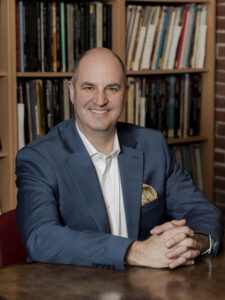
By Francisco SalazarThe Pittsburgh Opera is starting a new era under William Powers, who has been appointed its new General Director.
Powers has worked in the industry for over 30 years including 14 at the Pittsburgh Opera where he served as Director of Artistic Administration, Director of Administration and Artistic Operations, and Managing Director.
His experience has also led him to be the Executive Director of the Pittsburgh Youth Symphony Orchestra. He has also worked with such companies as The Juilliard School, The Metropolitan Opera, Berkshire Opera Company, and Aspen Music Festival.
Following his appointment, OperaWire had a chance to speak with Powers about where he sees the future of Pittsburgh Opera and broadening its audience.
OperaWire: When were you first approached by Pittsburgh Opera, or when was this consideration starting to happen?
William Powers: I worked at Pittsburgh Opera for 14 years and after departing Pittsburgh Opera, I stayed in the community. I’m still here at Pittsburgh. And so it’s a tight town, a good town, and we all know each other and we all talk to each other. Of course, outgoing General Director Christopher Hahn is a good friend of mine, and we worked very closely together and maintain relationships.
So I knew when Christopher had indicated he was going to be retiring, and therefore, obviously a transition was going to come to the organization. As far as approached, a lot of people have been talking to me about it and saying, is it something you’d be interested in?
I don’t know that there was one particular moment that said, here is the approach. It was kind of being in the community, knowing that it was going to happen and was something that I was aware of and obviously had to consider.
I know that there are challenges and obstacles, and they’re more acute in some ways than they ever have been. I know opera history enough to know that cultural, economic, military forces have always influenced the arts in communities, but now, it’s audiences and donors in a way that feels very acute. So I had to contemplate whether this was something I was interested in returning to in that sort of way.
And I certainly thought in the big picture that given my background, my experience over 25 years, my colleagues, knowing this community and having the institutional knowledge of Pittsburgh Opera, especially following someone who’d been there for 26 years. Those kind of puzzle pieces, I think, came together and forged a picture that said, you know, this is going to be right for Pittsburgh Opera, and this is going to be right for me.
So that’s maybe a little bit more of the evolution of it as opposed to the approach.
OW: In your new position, where do see the direction of the Pittsburgh Opera?
WP: What Pittsburgh Opera does is we produce opera. We take these art forms and we engage our community with it. Then we question, how we do it, the format we do it, where we do it and take all that into consideration.
We ask: Is it a full production? Is it a chamber piece? Is it a commission? Is it a concert opera? Is it a concert?
All those varied formats I think are up for consideration and continue to be up for consideration.
For me, the way I sort of think about it is kind of a curated portfolio of offerings. I think that that best represents the company and allows it to explore the breadth of repertoire and the varied breadth of repertoire from the chestnuts and the tried and true to new works and maybe even cross-genre kinds of pieces. But also, I think addresses what I see as the appetites and the patterns of the modern audience and ticket buying trends.
I see more cultural omnivores, people who are looking for different experiences and varied experiences. And I think that kind of curated portfolio is the direction I’m interested in, I think continuing to take the company.
I think if you look at the last decade or so, that’s what has been developing. It feels right to me and I think it can be expanded and I think it will best address those kind of trends.
But I think there are a few other areas that are of focus for me. First, it’s collaborations. I think there’s a lot of opportunity for collaborations, interdisciplinary within arts organizations and intradisciplinary museums and other places in town that we can work with to engage the community.
The last five years I’ve been working with the Pittsburgh Youth Symphony Orchestra and these are incredibly gifted and talented and focused and over programmed and stressed and anxious students in our community. But they’re extraordinary and it’s been profoundly eye opening to see their passion and joy of music making.
And I think there’s a lot more we can do to engage that. They’re very over programmed, but there are ways you can find to directly engage in the art form. I think there’s a lot more in this day and age we can do with content creation on online platforms.
I think a lot of the static images and so forth are fine. It gets your message out there, but it doesn’t really engage. I think about greater connections for the company in the community. I think a lot of times arts organizations, they do their thing and they expect the community to respond and they have. But I think we need to be thinking about greater, deeper and richer connections to areas of the community that make them aware of who we are, what we do and create a sense of accessibility and belonging in the theater. I want the community to have an experience that is revelatory or interesting or simply entertaining.
So those are the pillars in terms of the direction that I’m thinking about as we move into the next chapter.
OW: Because you have worked with Youth Symphony, what did you learn from working with a younger generation and how do you think you can get them into an opera house?
WP: The youth I work with is sort of 12 to 20, so it’s in that general age range. But interestingly, Pittsburgh has a vibrant ecosystem of youth music learning. There are several different youth orchestras here, so there’s a passion for it, and a lot of the schools really support it as well.
The thing I learned is there is a real joy and passion and discipline for it. They love it. So it gives me faith down the line that this is going to be something that is part of who they are for a long time. The other part is that living and raising a daughter who is 19 and going through high school and then working with these high schoolers as well is that there are certain times in their schedule that are sacrosanct. And if you can access those times, if you can create those times in their schedule, they will give you that. But they’re so programmed and the puzzle is so complex that you have to find those times and really create direct engagement with them.
We have to ask: Where are those spots? And how is it targeted?
The opera does a student matinee, which is great, but there may be other ways to do it. But it can’t be haphazard in a broad way. You really have to get to the parents, get on the schedule and be consistent. Once you’re that way, I think you’ll see how the youth responds.
OW: Pittsburgh Opera has an incredible young artist program which has developed many rising talents. How do you see that program connect with schools and outside of the opera house?
WP: I’m very intimate with that program. I have guided that program and guided many of those singers in my time. That was part of my role as director of artistic operations and the managing director there. What we provide to them in terms of resources and nurturing and guidance to get them on their feet artistically, I think is critically important. So that’s been a long and very successful focus of the program.
But how it is that we translate it now into the community, and with students a little bit more effectively, there’s opportunity there. We have not done that simply because oftentimes they’re in rehearsal or they’re doing things for their professional development. And I think there can be better utilization of the resident artists out in the community. There are a lot of discussions that have to ensue with that.
But I think they can be an inspiration for younger students, younger vocal students.
My wife is a professional opera singer and has been for 25 years. She has been on the voice faculty of Carnegie Mellon for the last decade. I talk with her and I think about those students there. Those students are at a certain stage of their career trajectory and then we have our resident artists and then we have our international professionals that are there. There’s that kind of arc of where they’re going. We need to connect that arc for everybody in a different sort of way. And I think the resident artist can be a connection for the collegiate undergraduate students in the community, and certainly for aspiring high schoolers who are singing. And we can find a better connection, and we just haven’t in the past for various reasons.
OW: You talked about collaborations. Are you thinking of co-productions with other regional companies for new works and rarely performed works?
WP: That’s something that I talked about with a lot of my colleagues. 15 or 20 years ago all we talked about were co-productions. They still exist and we certainly did them when I was there. We worked a lot with American Opera Projects and certainly put together teams with productions with Minnesota and Utah and others. And there’s still a lot of importance in doing so. I think in a lot of ways, in my mind, from both big productions and smaller productions, that combination of resources and things has to be more of a dialogue. And we need a better forum for doing it as well.
I know a lot of people in the industry, I’ve been in it for a long time and I think there’s a certain opportunity there for me to pick up the phone and say, hey, we’re thinking about this.
But I can imagine that to solely move forward in a singular, unilateral way with a new work or a new production is really feasible for any company these days. So those co-productions, those collaborations will be important. Obviously, artistic sensibilities are always one of those things that have to be taken into consideration, but I’m absolutely open to doing it. I’ve seen great success in doing it and certainly with newer works, I think it’s important.
But I do feel like there are a lot of the chestnut productions that are aging and dusty now that need these co productions to come together.
And it’s not necessarily the money making side. But in the big picture, it’s more about having them as an asset for other companies and for yourself and sharing those expenses.
OW: Funding has become a huge conversation in the industry, especially with the loss of the National Endowment for the Arts. Do you think that funding and getting people in the theater are some of the biggest challenges right now? Or do you think there is a misconception and companies are not reaching out to certain untapped audiences?
WP: Do I think that the earned revenue, the patrons, the butts in the seats, as well as the heavy reliance on donors now are the big challenges. I absolutely do. And I think most opera companies are seeing that way. I wish money, buckets of money, were showing up at the door, but they’re not.
And so it’s costing more time and money to engage them. Again, that cultural omnivore sort of idea where people are picking and choosing in a different way and wanting certain experiences when they come, you have to plan differently and you have to go after them differently.
Of course, like most opera companies now, in our unearned revenue, there’s a heavy reliance on it. Years ago, it used to be 30, maybe 40%, if you were lucky, of your budget coming from earned revenue. I think now it’s 80 to 90% in some cases. And I’m thinking globally and not talking necessarily about Pittsburgh Opera. So, when it comes to funding sources that allow you to do what you want, those are the biggest challenges.
As far as audience being out there, we’re missing them somehow. I think there is an audience out there and I think you have your main audience out there. I wish it were more robust. And I do think that to get them, it’s costing you more time and effort to do that. And so therefore it feels harder.
New people are coming to the opera. New people are trying to get that experience in terms of their overall arts experiences. So there’s opportunity there. And so we need to mine that opportunity and plan in that sort of way. But in terms of there being some sort of pool of people out there that exist, but we just don’t know about, I wish that were the case because we could focus energy on doing it, but I’m not certain that’s the dynamic.
OW: Streaming has become a big part of opera companies in the past years. Pittsburgh Opera streamed only during the pandemic. Is streaming something the company hopes to bring back?
WP: Yeah, I’ll say two responses to that. The first is that I think from our digital media standpoint and digital platforms, there’s more content creation that Pittsburgh needs to be doing. I talked a little bit about being static in the past and I think we need to focus on that. It’s how we engage the community through these platforms and what we do in a strategic, consistent way. It’s not just throwing this stuff out there and creating some storytelling with it, so people have fun with it and then hoping it guides them into the, into the theater.
That’s the idea and we hope we can create an enthusiasm for it.
As far as recordings, video or audio. We’ve certainly talked about it when we’ve done new commissions and new works and we have live streamed in the past, particularly during COVID. We did all of our productions through livestream. Obviously, there’s cost to doing that and then our union contracts govern and guide a lot of this as well, which has a financial component to it that has to be addressed. And that again comes back down to funding.
Where resources are being devoted to engaging the community as best that you can with the bucket of money you have, the idea of recordings, legacy or even engaging community with it requires an extra set of funding.
Thankfully, every year on our public radio, classical radio station, we air the last season’s audio recordings. So there’s a nice system we have for doing that.
OW: Where do you do you see opera in the next 10 years?
WP: I certainly thought about it when approaching this position because I have another 10 to 15 years in the industry. I’ve certainly spent 30 years in the performing arts, and my wife has been a professional. This has been our world, and we’ve seen the trend since 1994 into 2024. We’ve witnessed them and we’ve lived them and we’ve put bread on our table doing it. So we’re of that.
And you have to ask, what does it look like in the community moving ahead? My focus right now is Pittsburgh. I think there’s the industry and the field, which is critical. And I have many, many colleagues who I love and respect in the field as well. And believe me, I’ll be calling them up going, hey, what’s working for you? What’s not working for you? But at the same time, I think it’s important that we think locally and focus locally. And then maybe, as a result of what we do, we’re a beacon national. We shed light on some things about what’s working in Pittsburgh, and this is what seems to be happening.
At the end of the day, the kernel of what we do is we take these works, tried and true and everything in between, and we put them up to engage our community. That I don’t see stopping. The question really is, with the funds that we have and the resources that we have and the forces that are put upon them, how much can we do of that in the community? Where can we do it and how varied can we make it? If we can do that for the next 10 years, then opera in this community continues to be a vibrant part of what it offers to the people who live here.