Q & A: Carrie-Ann Matheson on Leading San Francisco Merola Young Singers & Adler Fellows Opera Programs
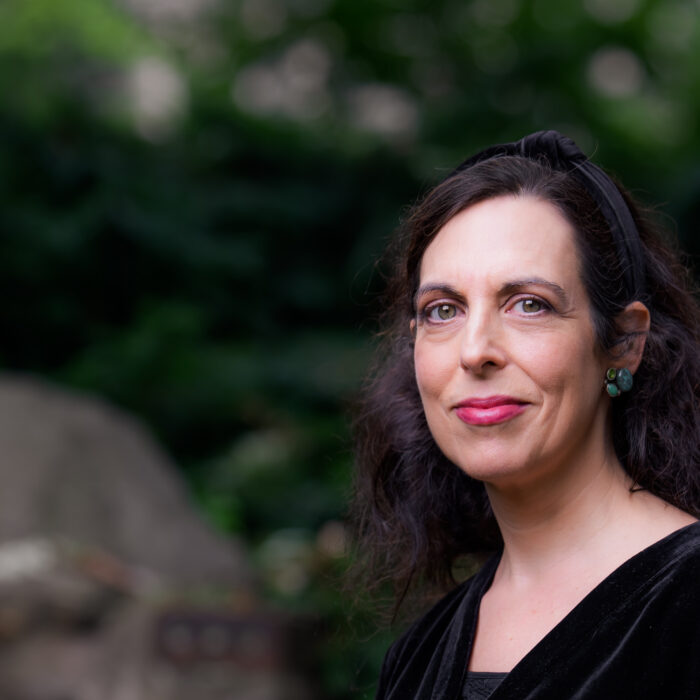
By Lois Silverstein(Photo Credit: Olivia Kahler)
What does it take to turn a gifted young musician into a first-rate opera singer? Not just a talented performer, but one who knows her craft and can sustain the life that comes with it? To find out, I spoke with Carrie-Ann Matheson, Artistic Director of the San Francisco Opera Center, a performing pianist, leadership coach, and educator who leads the Merola Opera Program and the Adler Fellowship alongside General Manager Markus Beam. What came through in our conversation was how much vitality, experience, and plain good sense she brings to the work of developing young artists.
OperaWire: What is your take on what a young opera singer needs?
Carrie-Ann Matheson: At the most basic level, an emerging musician needs to develop the natural talent she or he already has, ideally with the right mentorship. That means building a wide range of technical and performance skills and, just as importantly, learning how to live well as a working performer. It should be a slow and careful process, and that’s more important now than ever, because artists have to nurture that growth while launching a career in an unstable industry. The modern opera world is full of challenges, and artists have to be deliberate about developing both their craft and the real-world skills that performance and life on the road demand.
Which means what, in practice?
CM: It means building the skills and resilience to thrive both artistically and personally in a high-pressure, competitive field. As companies close and budgets shrink, there’s less work to go around, and the competition for roles, or for positions on music and directing staff, is fierce. Artists face a staggering amount of rejection. And if they do win the job, the challenges don’t stop: travel, long stretches away from home, isolation, fatigue, stress, financial instability. All of it can take a real mental and physical toll. The level of skill required of a top performing artist is comparable to that of an Olympic athlete. It’s nonstop development and refinement, for the rest of the career.
Getting into a top-tier young artist program is tough competition: each year we receive over 1,500 applications for the Merola Opera Program, and we have 28 spots.
OW: Tell us about the history behind the Merola and Adler programs.
CM: San Francisco’s artist training traces back to programs Kurt Herbert Adler, the company’s second general director, began in 1954. The Merola Opera Program took its name in 1957, in honor of Gaetano Merola, San Francisco Opera’s founding general director. In 1982, Adler’s successor, Terence A. McEwen, created the San Francisco Opera Center to bring these training programs under one roof. The Adler Fellowship grew out of that same impulse: to develop artists at home rather than send them abroad. Over the years, Adler alumni have included Deborah Voigt, Nadine Sierra, Ruth Ann Swenson, Pene Pati, Brian Jagde, Amina Edris, Elza van den Heever, Patricia Racette, and Aryeh Nussbaum Cohen, among many others. Markus and I joined the company in our current roles in January 2021.
OW: Would you describe the two programs?
CM: They’re distinct. Merola is an intensive 10 week summer program, open to singers, coach-pianists, and stage directors. The Adler Fellowship is a resident artist program, generally two years long. Each takes a wide ranging approach to training: vocal and instrumental technique, style, language study, diction, and movement balanced by training that people haven’t always associated with an opera program: personal leadership, life coaching, performance strategy, financial wellness, and mental and physical wellness. We take real pride in the fact that both programs put equal emphasis on artistic and personal training.
OW: You call this a “whole artist” approach. Why does that matter?
CM: An artist can’t be artistically free if their life, finances, or health is in chaos. We believe in ‘humans first’ and we provide training in tangible, practical skills that help them thrive in their lives, whatever that means for each of them. In the past, artists were often encouraged to be single-minded and only think about music. Portfolio careers were discouraged. You went for the big dream, no matter the personal cost. We think that’s backwards. Let’s develop the artist and the person in tandem, so there are more creative, grounded, healthy people in the world. This will ultimately make for better art.
We plant those seeds during an artist’s Merola summer, and with the Adlers we can go deeper, simply because we have more time. The concerns of an emerging artist, or even a working one, are real. How do you pay the rent and pay for continued training? How do you tend to your health, your marriage, your children, your friendships, your finances, all while building a career in a field that’s anything but stable? Helping our artists build the skills for a healthier life is a priority, and we weave that support directly into the training, at a pivotal moment in a career. Both our programs are widely regarded as among the foremost training grounds for aspiring singers, coach-pianists, and stage directors, and we take that responsibility very seriously.
OW: What else must young singers learn during their training years?
CM: Patience, first of all. It’s a slow, meticulous test of endurance. Everything takes time. You don’t become an opera singer, pianist, or director overnight. They have to be willing to learn to really be honest with themselves about what they really want and what they are really willing to invest in their own development. There are so many facets to the artistic personality. As one example – an artist has to be vulnerable in front of a room full of strangers, and in front of their closest friends, and it can be a real challenge to learn how to receive judgment and rejection in a healthy way, to absorb a critique without taking it as a verdict on who they are. That can be especially challenging for singers because their body is their instrument. They can hear a remark as being about themselves as a physical and emotional being, not just about their work.
CM: Tell us about your own path to the San Francisco Opera Center. How did you start out?
OW: I’m originally from Prince Edward Island, in Canada, and my musical life began at the piano. I hold a Bachelor of Music Education from the University of Prince Edward Island, a Master of Music in Collaborative Piano from the Cleveland Institute of Music, and a Professional Studies Diploma in Vocal Accompanying from the Manhattan School of Music. I’m also a proud graduate of the Metropolitan Opera’s Lindemann Young Artist Development Program. Somewhere in the middle of my studies, I realized that what drew me wasn’t a solo piano career but collaboration. Making music with another person brings me so much fulfillment. I followed that instinct, and I’m grateful it turned into an active performing career that continues today. I have many treasured musical partnerships; one of the closest is with the wonderful French tenor Benjamin Bernheim, with whom I recently recorded a very special album, “Douce France.” Since my career began, I’ve been fascinated by how opera singers grow and how their careers take shape, and I wanted to help build programs where young musicians can really start to claim ownership of their craft and their lives.
OW: You’ve worked in other young artist programs as well, haven’t you?
CM: Several. The International Opera Studio at Opernhaus Zürich, the Opera Studio at the Wiener Staatsoper, the Atkins Young Artists Program at the Mariinsky Theatre, the Lindemann Young Artist Development Program at the Metropolitan Opera, the Ryan Opera Center at Lyric Opera of Chicago, the Music Academy of the West, the Aspen Music Festival, and the International Vocal Arts Institute.
OW: It sounds like you were more than ready for San Francisco by the time you arrived in 2021. How did you get here?
CM: It’s a wonderful story about how the right opportunities, with the right people, come along when the time is right. In 2006, I stepped in as a replacement pianist at Los Angeles Opera and did two wonderful productions there. Greg Henkel, now SFO’s Managing Director, Artistic, was doing the casting in LA, and we developed a good working relationship. We kept loosely in touch over the years and managed to meet briefly when I was living in Zurich. We had about twenty minutes together, and I told him I thought my next step would be in artist training. Fast-forward a few years, and the legendary Sherri Greenawald was retiring from SFO. And here I am. I had fourteen beautiful years at the Metropolitan Opera and six wonderful years at the Zurich Opera, but I feel like I’ve always been waiting for California. I love it here, and I love both San Francisco Opera and the Merola Opera Program. San Francisco is a special place to work in opera, and to live.