Q & A: Baritone César San Martín on the Emotional Power of Zarzuela, Returning to “La Verbena de la Paloma” & the Global Nostalgia for Our Roots
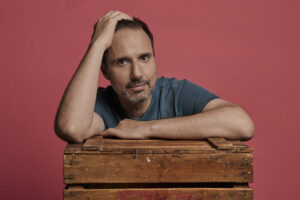
By Galina Altman(Photo:
As the 2026-27 season opens at Madrid’s Teatro de la Zarzuela, baritone César San Martín returns to one of the works most deeply connected to the city’s musical identity: Tomás Bretón’s “La Verbena de la Paloma.” San Martín appears as Julián in Nuria Castejón’s production, which returns to the stage following its 2024 presentation and forms part of a season that continues the Teatro de la Zarzuela’s exploration of the Spanish lyric tradition. The current performances feature San Martín on Sept. 24, 26, and 30, and Oct. 2 and 4, 2026.
San Martín is one of the prominent Spanish baritones of his generation, with a repertoire spanning opera, zarzuela, and concert music. He trained at the Escuela Superior de Canto de Madrid, where he received the Lola Rodríguez Aragón End-of-Degree Prize, and has been recognized at the Francisco Viñas International Singing Competition and the Ciudad de Logroño International Singing Competition.
His career has taken him to major Spanish and international stages, including the Teatro Real, Teatro de la Zarzuela, Théâtre du Capitole de Toulouse, Teatro Colón de Bogotá, Teatro São Carlos in Lisbon, Maggio Musicale Fiorentino, and Teatro San Carlo in Naples. He has worked with conductors including Alberto Zedda, Renato Palumbo, Nicola Luisotti, Eliahu Inbal, and Jesús López Cobos, and with stage directors including Robert Carsen, Peter Sellars, Mario Martone, Graham Vick, Emilio Sagi, Paco Azorín, and José Carlos Plaza.
In 2026, San Martín was nominated for the Premios Talía in the Best Male Performer in Lyric Theatre category for his performance in “El vizconde.” His return to “La Verbena de la Paloma” offers an opportunity to discuss the enduring appeal of zarzuela, its relationship with Spanish cultural memory, the challenge of performing characters such as Julián, and the ways in which this distinctly Spanish theatrical form can speak to audiences far beyond Spain.
César recently spoke to OperaWire about the inner workings of zarzuela, his approach to the genre, its emotional power, and the growing global nostalgia for cultural roots and traditions.
OperaWire: Congratulations on your nomination for the Premios Talía!
César San Martín: Thank you. It is a great honor. I did not even know about it, and suddenly everyone was writing to me, saying, “Hey, you’ve been nominated!” It was very pleasant and completely unexpected.
OW: Not only do you sing beautifully, but you also play the piano professionally. From one pianist to another, does the instrument help you in your work?
CSM: Of course! When you play, listen, and sing at the same time, it helps you express yourself better, and you understand the score more deeply. If you have never studied an instrument, it is more difficult to understand the conductor, the maestro. For me, it is more natural.
OW: World-class figures such as conductor Kent Nagano and stage director Christof Loy openly admire zarzuela, and Loy has even compared the musical and dramatic power of its finest examples with the masterpieces of Verdi and Puccini. What do you think is the mystery of this genre? Does zarzuela’s special connection with Spain help it remain a unique and distinctive art form, and does it really need to seek globalization if its greatest strength lies precisely in that unrepeatable authenticity?
CSM: Before I answer, can I ask you a question? Do you know zarzuela yourself? What have you seen? What did you like?
OW: Last season I saw “El Gato Montés” in Christof Loy’s production, although formally it is an opera. And with my friends, we had a wonderful time at “Jugar con fuego” in a contemporary interpretation in which all the passions unfold in the stands of a soccer stadium, and at “El orgullo de quererte” at Teatro Canal, a very contemporary and lively zarzuela. We laughed a lot!
CSM: And you have not seen “La tabernera del puerto”?
OW: No, unfortunately.
CSM: I was in that one too. “El orgullo de quererte” is indeed a contemporary work. It was written by my friend, the pianist Javier Carmena, who also conducts the Coro de la Comunidad de Madrid. The librettist of that zarzuela, Felipe Nieto, sings in the chorus of the Teatro de la Zarzuela. So zarzuela is like one big family, and of course I will tell you about the roots of this beautiful cultural and emotional art form.
OW: I remember how brilliant the orchestra conducted by Alondra de la Parra sounded!
CSM: Yes, zarzuela is always about emotion onstage, above all. Powerful emotion!
I think we have reached a very good moment now because, thanks to Christof Loy, a very important director for zarzuela, the genre is constantly traveling beyond Spain’s borders. The Fundación Plácido Domingo, meanwhile, is also actively working with singers, including Operalia winners, to promote zarzuela. And I know personally that there is enormous interest in it in many countries.
I sang “Luisa Fernanda” in Kraków, the so-called “last romantic zarzuela,” about the era of Isabella II, and this year they are also presenting “La tabernera del puerto” there. José Miguel Pérez-Sierra, who is the music director of the Teatro de la Zarzuela, is also the music director of the Kraków Philharmonic Orchestra. Every year, he proposes a zarzuela there with three or four Spanish artists, while the rest of the cast is local, and they perform the entire work in Spanish.
OW: How wonderful!
CSM: Speaking about our premiere, “La Verbena de la Paloma” may seem like a typically Madrid work. “Dónde vas con mantón de Manila…” and that is it: this is Madrid at the end of the 19th century, the Madrid of our grandparents and parents, and the Madrid of today! I am from Madrid, so I feel it directly. Perhaps it is genetic memory. And it is also the last zarzuela that closed the glorious history of Madrid’s Teatro Apolo. I will tell you about that now.
Zarzuela has two types of genre, if we can put it that way: the “género grande,” meaning full-length zarzuelas lasting more than an hour and consisting of more than one Act, and the “género chico,” works lasting less than an hour. “La Verbena de la Paloma” belongs to the género chico.
At the end of the 19th century, Madrid’s Teatro Apolo invented a brilliant format: performances by the hour. Every hour, a different show, like at the cinema. Precisely because this zarzuela is short, lasting about 50 minutes, a prologue written by the contemporary Spanish playwright Álvaro Tato has been added at the beginning. The audience sees a company of artists discovering at that very moment that they are giving their final performance at the theater because the Teatro Apolo had been acquired by Banco de Vizcaya, which planned to demolish it.
OW: Banco de Vizcaya bought the Teatro Apolo?
CSM: Yes, in 1929. They demolished it down to the foundations and built their headquarters there. In our production, we begin exactly that way: the company receives the news that this is their final performance at the Teatro Apolo, just as happened in reality.
OW: What a historic moment. By the way, I loved the poster for the production with the “50 grams of emotion” pill. Very Madrid. I personally like zarzuela, but I know many people who are unfamiliar with it. It would be interesting to show why it is worth going to a zarzuela and discovering this aspect of music and life. It is also such a large and fascinating part of Spanish theatrical culture and of world culture.
CSM: Yes, and by the way, the Premios Talía are our Spanish award for the performing arts, a theater award. And there is one category for opera and zarzuela together! I found out between rehearsals that I had been nominated for an adaptation of two género chico zarzuelas: “El vizconde” and “Gato por liebre.” It can be seen on the Fundación Juan March website and on its YouTube channel.
My character was an older woman, and I am a baritone, so imagine the scene. Together with her friend, a tenor who was also playing a woman, she portrayed a countess watching a soap opera called “El vizconde.” In this way, the stage director merged the two zarzuelas, “El vizconde” and “Gato por liebre.” And do you know why? Everything has a reason. Barbieri, the composer of these two zarzuelas, wrote “Gato por liebre” with cross-dressed characters as early as the 19th century. The baritone played a woman, the tenor played a woman, the soprano played a woman, and the mezzo-soprano played a man. Can you imagine how contemporary that format is, how contemporary this genre is?
In “El vizconde,” we also switched roles: the baritone, tenor, and soprano played men, while the mezzo-soprano played a woman.
OW: My God, how interesting! And how difficult, right?
CSM: It was comic. We sang with our natural voices, without using falsetto. It was very funny! I was nominated precisely because of the difficulty, as you pointed out: it is incredibly difficult to change characters every 10 or 15 minutes. You come out as a woman, then as a man, then a woman, then a man, for an hour and 15 minutes straight.
OW: That requires profound acting and an astonishing ability to switch registers!
CSM: Yes, yes, yes. And you are also completely made up. I do not know if there are photographs I can show you of how they made me up. I suppose you can find them online.
OW: I think I saw something on your Instagram. Incredible!
CSM: And continuing, so to speak, the dialogue with Maestro Nagano and Christof Loy about how fascinating zarzuela is as a genre, I want to quote another prominent figure from the opera world. When Maestro Chapí, Ruperto Chapí, the composer of “La Revoltosa,” which has zarzuela’s most famous duet, “Por qué de mis ojos los tuyos retiras, por qué…,” and Saint-Saëns heard it, he said to Chapí, “Maestro, I will give you all my works if you let me put my name to ‘La Revoltosa.’” That was the level of zarzuela and the way the international community perceived it in the 19th and early 20th centuries.
OW: Is that a true story or a musical legend?
CSM: It is completely true. And why is it not like that now? I think that everything that happened in Spain at the time, because of the Civil War and the dictatorship, directly affected the entire culture. Many zarzuelas were written as satire of the government of the time. It is a very ingenious, popular, topical, and relevant genre. But there were governments that accepted that criticism, and there were those that did not tolerate it at all, as also happened in Russia and many other countries.
OW: But there is no dictatorship in Spain now, right?
CSM: Exactly, but that flame went out, and the genre was put aside. There are more than 11,000 zarzuela scores composed in Spain alone, more than 11,000! And of those, only about 150 works are known, and even fewer are performed, not even one percent of the total body of existing repertoire.
OW: How sad. I had no idea of the scale of what we might call this national tragedy.
CSM: Just yesterday we were discussing it again with colleagues and friends, that feeling that during a dictatorship everything was somehow enclosed within the country and could not get out. Like Soviet films, for example. But what was being shown was incredibly beautiful…
OW: At least now we know the reason: zarzuela at that time was an art form very much of its moment, like cinema, and those in power cannot tolerate criticism, whether directed at themselves or at the miserable life they have imposed on the people.
CSM: Yes, zarzuela is the genre of life itself.
But I think what keeps zarzuela alive is its roots, where it comes from. It is woven entirely from popular motifs present in the musical culture of every country. In the case of zarzuela, it is folk music that was orchestrated and written for the theatrical stage, not as fragments inserted into an opera or a symphony, but as a complete form in its own right.
And I think it will experience the same thing that happened to flamenco. Flamenco was also an art form belonging to a single cultural group, the Roma, and for a long time it did not move beyond those boundaries. Today flamenco is a highly regarded art form, a discipline that everyone dreams of seeing. Many great contemporary dance creators from around the world use it. I am convinced that zarzuela will share the same destiny.
OW: There is truly a major trend toward authenticity and tradition now, in the best sense of those words.
CSM: Exactly! In “La Verbena de la Paloma,” there is a great deal of popular music. A flamenco singer appears who… Anyway, I do not want to give away any spoilers. Let us move on to the next question. I am afraid I will not be able to contain myself!
OW: All right, no spoilers! The premiere is very soon, so we will see everything onstage. So what can zarzuela offer today’s contemporary audience, especially someone who grew up in a completely different culture and is coming to the theater for the first time? A foreigner, too? What is its universal code?
CSM: For me, the connecting thread in art is always emotion. Emotional connection. I do not like to start describing it by saying, “Zarzuela has its roots deep in Spanish culture…” Of course it does. That goes without saying. As an artist, I prefer the person who comes to the theater and sees zarzuela onstage to be astonished and to feel something. For an invisible thread to be created, a connection between the stage and the audience, between the characters and the memories of every person sitting in the theater.
When you hear “Nessun dorma” for the first time, yes, it has been done to death, it is a hit, but the first time you hear it, you are amazed, you are in ecstasy. It is the same here. How do we attract new generations to zarzuela? I think the right message is not, “Come to zarzuela, you will discover something new.” No. The main message should be, “Go to zarzuela to discover and feel how your grandparents lived.”
OW: Roots full of soul. How moving and sentimental…
CSM: Exactly, roots. A young woman who left the premiere in 2024 said to her friend, “You know, I have been overwhelmed by nostalgia for a Madrid in which I never lived.” That is it!
OW: Like a time machine, where you can look into the past?
CSM: Emotion, a sense of belonging, is the only way to draw a person back. There are too many external stimuli around us: social media, television… And I think the main impulse for life and communication should not be that, but direct human contact.
And when it comes to the foreign audience, exactly the same thing works, absolutely the same. I sang the zarzuela “La rosa del azafrán” in Shanghai, which is about agricultural work and the lives of people in a village. An older Chinese woman approached me after the performance and said, “This reminded me so much of my parents working in the fields…” Because, fundamentally, all societies have developed in the same way. Zarzuela is very close to the earth, to popular life. And in villages in every country, people have always planted, danced, and raised a glass. Everywhere in the world.
I believe in that connection with other countries and cultures. When I hear the operatic lyricism of other peoples, the same thing happens to me: I catch familiar echoes and connect them with Spain and with my own life.
OW: “La Verbena de la Paloma” seems like the ultimate symbol of Madrid life and traditions. And for you as an artist, what kind of production feels closer to you: contemporary and often radical adaptations that move the action into the present day, or preserving the tradition as it is? I mean in relation to zarzuela, not opera.
CSM: I like the traditional approach. But in my view, if you are going to make a contemporary adaptation, I do not think the libretto should be touched, and the plot should not be changed. In opera, that does not happen. In opera, the text is not changed. But because zarzuela includes spoken text as well as sung text, some stage directors decide to modify the story too, in an attempt to adapt it to the contemporary world. I think that is a mistake because it distorts the original story of what happened in that period and disorients the audience about the genre. The title should indicate that it is an adaptation of that zarzuela.
So I support contemporary adaptations when they help build bridges with new audiences, but only when the original message, meaning, and plot are preserved. If you change the plot, it is already another work.
OW: Well, we colorize black-and-white films, don’t we? Or is that just technology?
CSM: I would want to preserve what the librettist and composer said. They expressed a particular idea. Why distort it? I do not like those reworkings. I accept contemporary concepts, and I like them, but only when the original impulse and meaning are preserved. And the beautiful music, of course!
OW: Like Christof Loy, for example, who created a wonderful “El Gato Montés:” the production was neither excessively traditional nor aggressively contemporary. Everything was very harmonious.
CSM: He preserved the entire original meaning! And in “El barberillo de Lavapiés,” which is coming next season, he has also preserved the complete text. That approach feels very close to me.
OW: So it is like fusion cuisine: authentic food, but presented in a way that reaches everyone. No radicalism and no ingredients that are impossible to swallow. Sometimes you really do not need to go to extremes, even in art.
CSM: I believe that too. But it seems to me that people do these things simply because they want to say, “Here I am. Look what I am capable of doing.” And that has nothing to do with the essence of art. For me, art means respecting the author.
OW: And the composer, I cannot help adding. Do you remember the first time you heard or saw “La Verbena de la Paloma?” What were your first impressions of the music and of your character, Julián?
CSM: From the time I was born until I was about three, I often stayed with my grandparents because my parents worked a lot. I would sit on the balcony, on my grandparents’ terrace, and watch my grandfather reading the newspaper and listening to music. My first conscious contact with zarzuela came when I was 28, when I began studying singing.
I started studying singing very late, unfortunately. And when I heard zarzuela again, it immediately transported me back to when I was two or three years old. It took me back to the days I had spent with my grandparents. Do you understand?
OW: A time machine…
CSM: I studied “La Verbena de la Paloma” at the Escuela Superior de Canto de Madrid, but we did not do any deep work on the character there. The first time I saw it onstage was, I think, in 2021, although I do not remember exactly. I saw it here, in this theater. I knew the material, I liked it, but when I saw this particular production, “Adiós, Apolo” and “La Verbena de la Paloma” in 2024, I fell in love! I wanted with all my heart to be there, on that stage, alongside my grandparents.
We are from different generations, different countries, and we feel the same thing! And when I saw Nuria Castejón’s version of the production in 2024, a passionate desire to take part in it was ignited in me. Exactly one year ago, I spoke to Nuria.
“César, would you like to do it?”
“Of course!” I replied.
As for Julián… The work on the character was relatively easy for me in the sense that the company was already well rehearsed, the material was ready, and everyone around me was helping me. But the character himself, my God, what an unpleasant man. Julián is an abuser and a toxic person. He is jealous, a tyrant. He is not a likable character at all, and I do not like him. The most difficult thing is embodying a character when you are nothing like him, and I am completely different. It is genuinely very difficult. I had to find a justification, an anchor that would help me build that personality.
OW: And what is that justification?
CSM: For me, the explanation lies in the fact that he comes from a dysfunctional family. He mentions his mother, he mentions his father, but they do not appear in the plot. He lives only with his aunt and uncle. I do not think that necessarily made him an abuser, but it helps me understand his situation better. I need that. I have to find some logic that will help me convey the character convincingly to the audience. And when you have no personal experience of that kind… In this case, I cannot draw on myself. That is why I do not make him relentlessly cruel. I soften his edges a little and sculpt the character with a gentler touch.
OW: Other artists have told me that you have to find fragments of your own life experience to build a character, or find something in the character that you genuinely like. What do you like about Julián? Is there anything positive?
CSM: I think Julián is a tormented man, in conflict with himself. He is poor. He has no money. Don Hilarión has plenty of money and gives Susana a magnificent Manila shawl, and Susana goes with Don Hilarión simply because Julián cannot afford it. In the end, an extremely toxic relationship develops between them. What I like about Julián is that somewhere deep in his soul, he does not want to be a bad person. In his romanza, he sings, “La gente del pueblo también tiene su corazoncito,” ordinary people can also be good… In other words, there is a luminous part in everyone. That little ray of light is what I hold on to. And I also love Julián’s melodies: “Dónde vas con mantón de Manila?”
OW: We are very much looking forward to hearing them!
CSM: The premiere is very soon. We hope to delight you!
OW: You are working under the direction of Nuria Castejón, whose productions are known for their breakneck rhythm and visual dynamism. What were the rehearsals like, and what surprises or special accents can audiences expect from this new production?
CSM: There will be surtitles, but the dialogue moves very quickly. So I strongly recommend that audience members who do not know the plot read the libretto beforehand.
Nuria began as a dancer and later became a choreographer in productions by Emilio Sagi, and “La Verbena” is her zarzuela stage-directing debut. Our 2024 production was her first zarzuela. With her background as a dancer and choreographer, she demands absolute precision. The entire show is constructed as one continuous choreography.
For the audience, it is exciting, but for the artists, rehearsals are exhausting because if a comic element or a joke arrives even one second late, the gag does not work. It is a very, very precise choreography, not only of movement but also of text. And even so, working with Nuria is a pleasure and a creative joy.
We have known each other for about 15 years, and we first worked together in 2012. Her brother, Rafa Castejón, is the company director in “Adiós, Apolo,” and in “La Verbena” he plays my uncle. He is a first-rate actor!
OW: We have already discussed how zarzuela is like one big Spanish family. And is the stage perhaps its home?
CSM: Exactly. We have artists from all over Spain: Basques, Catalans, Andalusians, and others. And Nuria is also the daughter of well-known zarzuela artists. She has it in her blood.
OW: As you open the new season at the Teatro de la Zarzuela, is there a dream role in opera or zarzuela that you have not yet performed but feel ready for?
CSM: Let me think… I have sung a great deal of zarzuela. Actually, I do not know if this should be revealed, since these are plans for next season… I am going to sing in “La rosa del azafrán.” It is the role I was never able to perform, the only time in my life that I have canceled a performance because of illness. I was supposed to sing in the Basque Country, in Irún, but I fell asleep in the hotel with the air conditioning on and lost my voice. I had to cancel the performance.
Ever since then, I have carried this little thorn in my side, the desire to complete that role, and next season I will sing it in the revived production by Ignacio García. By the way, Ignacio staged “La rosa del azafrán” in Ukraine, at the Kyiv Operetta Theatre. I do not know if you have seen the documentary about it. They rehearsed it in bomb shelters.
OW: That is incredible… No, I have not seen it. I will definitely watch it. Thank you.
CSM: Ignacio García, former director of the International Festival of Classical Theater of Almagro, never touches politics. But he made a documentary about how music gives people hope and an outlet in the middle of war.
As for opera, I would very much like to sing Rigoletto or Don Carlo. Rigoletto feels very close to me emotionally through the zarzuela “La tabernera del puerto,” which I sang in Bogotá and here at the theater under the direction of Mario Gas. The father of the protagonist is devastated by grief, believing that he has lost his daughter. The two characters resonate deeply with one another.
Before, I did not feel ready for Rigoletto, but now I feel that strength in me. And of course “Don Carlo” is absolute and pure beauty for me. I dream of those roles, although there are no concrete offers at the moment.
OW: Not yet, but there will be!
You once exchanged the piano for singing. If you had to change everything again today, what would you do? Not singing, but something radically different.
CSM: I love working with my hands. I am passionate about baking, making bread, and working with wood. Wood carving is my passion! And I also have an unusual hobby… I will show you now! Look, crochet. I crochet!
OW: My God, and it is beautiful!
CSM: I make things for my daughter and for friends… diaper covers, bags, jackets, and even a kimono that I crocheted! I love it.
And why did I start crocheting? We were in Toulouse, preparing “Don Carlo.” I had a very small role, one of the knights. I had been stuck in the apartment for a month and a half just to go onstage for two minutes. I had read piles of books, and out of sheer boredom I went out and bought a crochet hook and some yarn. And for me, it became a form of meditation.
You move the stitches like the beads of a rosary and concentrate completely on your breathing and counting. Your head empties of all thoughts. When I am stressed, or when my thoughts overwhelm me, I sit down and crochet. And I always give away what I make.
OW: Just imagine: Don Carlo singing in a handmade kimono!
CSM: In a crochet kimono, ha, ha, ha!
OW: And then they put it on display in the theater museum: “Look what the great artist used to make!”
CSM: Exactly. “Look what he made!” Yes, I really do love working with my hands, especially bread and wood. It is a return to our origins, to simple crafts.
OW: It is as if you yourself had stepped out of the pages of 19th- and 20th-century zarzuela to show and convey its living history to contemporary audiences.
CSM: I think every artist has the power to transform people. A person weighed down by problems comes to the theater and, even for an hour and a half, forgets everything. All their troubles remain on the other side of the theater doors. And when you leave the performance, something always remains inside you, a small spark of light.

Stories you may also like…
Q & A: Mezzo-Soprano Anita Rachvelishvili on Returning to Her Path, NYC, Teaching & The Importance of the Greek National Opera
Q & A: China Now Music Festival Artistic Director Jindong Cai on Celebrating America’s 250th Anniversary Through Chinese-American Experience