Opernhaus Zürich 2025-26 Review: La Scala di Seta
By Laura ServideiAt the beginning of the 19th century, a small Venetian theatre called San Moisè was dedicated to the genre of the “farsa”—short, semi-serious one-act operas performed by a small company of six or seven singers, without a chorus, and accompanied by a modest orchestra. The barely twenty-year-old Gioachino Rossini found this environment ideal for honing his compositional skills and establishing himself in the world of opera. Over three years, he composed five of these farces for the theatre, with “La scala di seta” premiering in 1812.
More Than Just an Overture
Its overture was nothing short of revolutionary for the time: it opens with a furious cascade of violins that introduces a mellifluous oboe melody, soon giving way to a breakneck theme now recognized as quintessentially Rossinian, though it was unprecedented then. While the opera itself enjoyed a modest success before fading from the repertoire, the overture has endured as a popular concert piece.
The plot is a frivolous intrigue typical of the genre: a young soprano is secretly married to a poor tenor, and the two must devise various ruses to conceal their union while avoiding the wealthy suitor her guardian has chosen for her. Yet the music is far more sophisticated than the plot suggests, featuring complex ensemble pieces, a beautiful tenor aria, and an elaborate scene and aria for the soprano—all elements that would later become hallmarks of the opera seria tradition.
Michieletto’s Clever Modern Blueprint
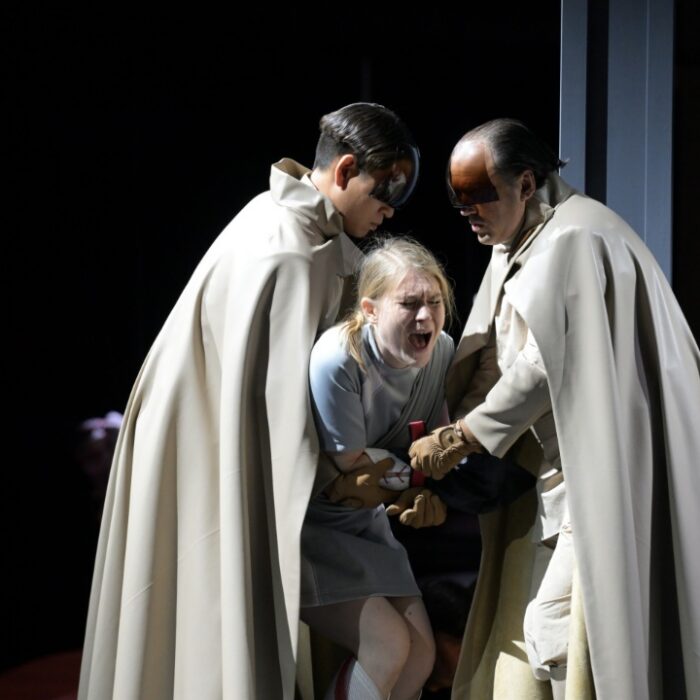
Director Damiano Michieletto transports the action to a modern-day, two-room apartment where the protagonist, Giulia, lives. The rooms are not separated by walls but are instead defined by a layout drawn directly onto the stage floor, reminiscent of Lars von Trier’s film “Dogville.” To ensure the action is clear, a gigantic mirror tilted at a 45-degree angle reflects the stage, providing the audience with an overhead view. While this device may not be entirely original, it effectively makes the story dynamic and engaging. The production also features an architect who moves about with a blueprint, directing a team of stagehands that bring in furniture and props during the overture.
The cast moves with impeccable speed and precision within this outlined space, pantomiming actions such as opening and closing invisible doors, cooking breakfast, and taking showers. The result is a fast-paced, funny, and lively performance. However, the modern setting highlights a familiar problem: the central premise—that a young woman could be forced by her guardian to marry against her will, leading her to secretly wed her true love—strains credibility in a contemporary context. While this undermines the plot’s foundation, the story is ultimately not the main focus of this opera, and the production remains highly entertaining.
Momentum Over Sparkle
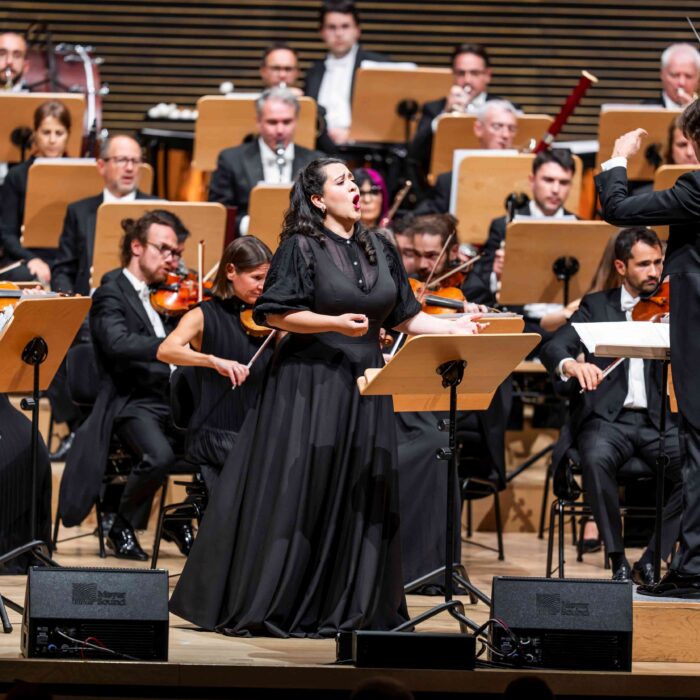
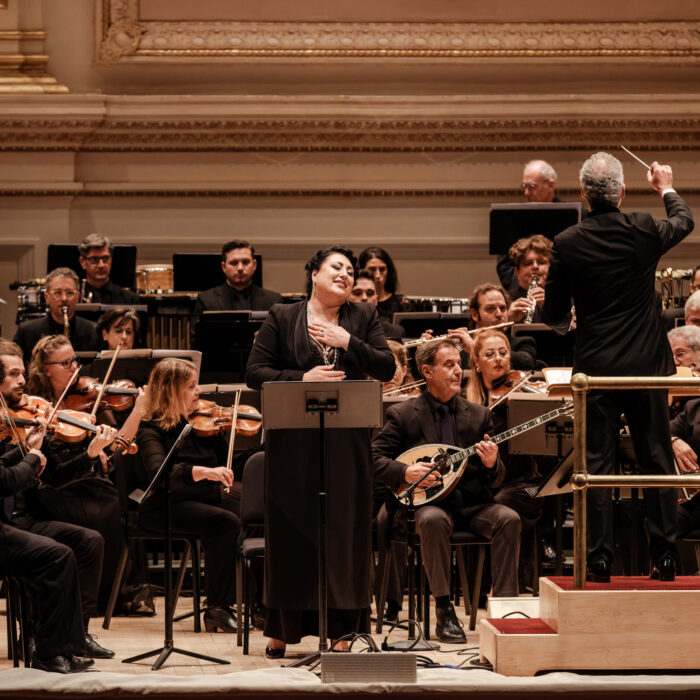
Conductor Leonardo Sini maintained a brisk pace and propelled the action with commitment, if not a truly Rossinian spark. The Zurich Opera Orchestra was at times heavier than one might have wished, lacking a certain delicacy and elegance, but the performance was nevertheless exciting and demonstrated a strong ensemble cohesion.
The protagonist, Giulia, was sung by Olga Peretyatko, a soprano with considerable experience in Rossini’s works. While her secure coloratura and precision in the ensembles showcased her beautiful, high voice, on this occasion she did not seem to be at her best; her high notes sounded somewhat forced, and her overall delivery lacked the lightness the role requires. Despite this, her interpretation was full of comedic brilliance and highly enjoyable.
The Undisputed Highlight
Levy Sekgapane performed the role of Dorvil, Giulia’s secret husband. Having had the pleasure of following this singer’s career over the years, I was delighted to hear how his voice has matured into a full-bodied, virile instrument. In his aria, “Vedrò qual sommo incanto,” he displayed impeccable coloratura, nuanced dynamics, and a confident, natural command of the Rossini style. Michieletto’s direction cast him as a trendy young biker—always making an entrance in a motorcycle jacket and helmet—a character Sekgapane embodied with great comedic flair.
An Irresistible, If Technically Flawed, Servant
Enrico Marabelli took on the part of Germano, Giulia’s manservant, a classic buffo character who plays a significant role in the plot. While his baritone was strong and well-projected, he appeared to lack the technical refinement required for such a demanding role. His coloratura was often unclear, he struggled at times with the tempo, and he did not seem fully in command of the necessary stylistic approach. That said, his performance was thoroughly committed and genuinely amusing. He was a constant, scurrying presence in the apartment—cleaning, sweeping, cooking, and perpetually eavesdropping from behind lamps or underfoot. He proved utterly irresistible.
Mezzo Seduction and Bass Stability
Lucilla, Giulia’s cousin, was performed by Siena Licht Miller, whose warm, golden mezzo-soprano was impressively well-projected. She was portrayed as a saucy and spirited young woman, single-mindedly intent on finding a husband. In her aria di sorbetto, “Sento talor nell’anima,” she executed a full seduction routine aimed at Blansac, Giulia’s intended fiancé, which included a striptease, all without missing a single musical beat.
Blansac was performed by Nahuel di Pierro, who sang with a mellow bass, delivering his lines with elegance and stylistic assurance, providing solid support in the frenetic ensembles. The cast was completed by Martin Zysset in the role of the guardian, Dormont. The evening concluded as a resounding success.