Opéra-Théâtre de l’Eurométropole de Metz 2025-26 Review: Norma
By Andréas Rey
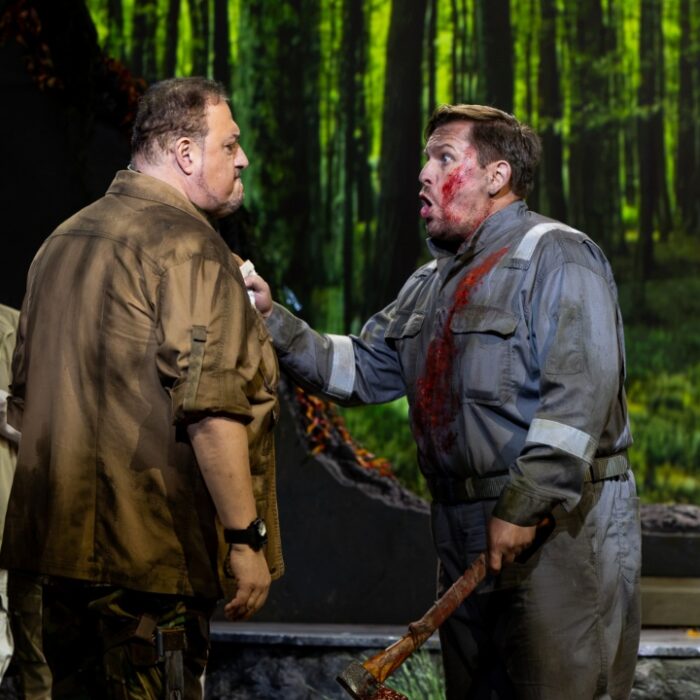
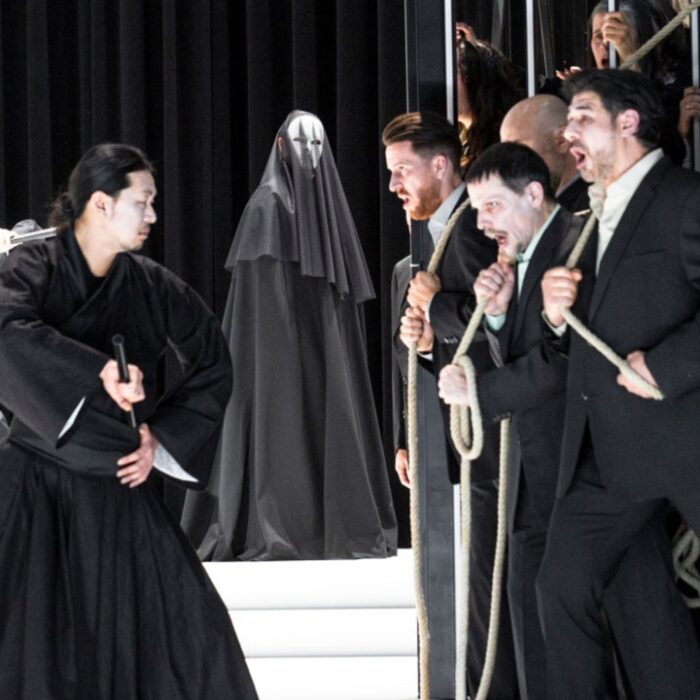
On March 6th and 8th, while the opera house was still undergoing renovations, “Norma” was performed in the main hall of the Arsenal in Metz. The grand staircases at the back of the hall, which normally serve as seats, as well as the balconies and side pillars, were used as scenery, thanks to Julien Soulier’s video and Patrick Méeüs’ lighting. The projections of forests and waterfalls during the overture and those of the Gallic temple during the drama were particularly impressive.
Musical Highlights
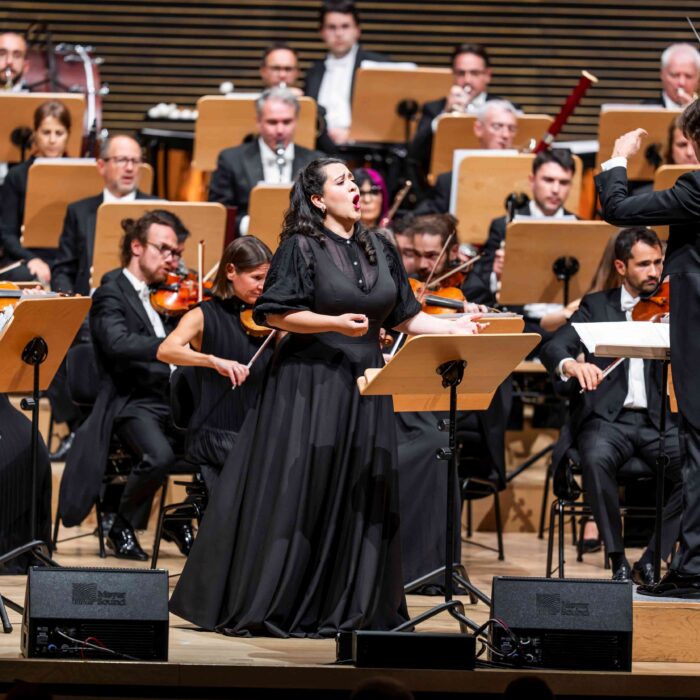
While musically the vocal ensemble was successful, and while the Orchestre national de Metz Grand Est and the Choeur de l’Opéra-Théâtre de l’Eurométropole de Metz demonstrated their quality here, music lovers must once again acknowledge that this hall, which was not designed for works with too many musicians, dried out the voices and even made them difficult to hear when the singers descended the grand staircases at the back of the hall. Fortunately, because the orchestra is modest in size, the voices still blended well with the instruments and the sounds complemented each other nicely.
Conductor Nir Kabaretti’s direction, which was a little too diaphanous during the opening night on the 6th, allowing the cymbals and percussion to dominate, gained in robustness on the 8th, almost to the point of being too loud, which is always a danger in this hall. Nevertheless, listeners appreciated the quality of flutist Claire Le Boulanger, who made her duets with voices intimate and approached her orchestral scores as if they were concertos.
In addition to the quality of the orchestra, which once again demonstrated its outstanding talent and adaptability to works of different concepts and sizes, having recently performed “Elektra,” the vocal cast did not disappoint either.
Illuminating Cast
Although Austrian tenor Nikolai Schukoff as Pollione struggled to maintain breath in the highest notes at the beginning of the opera, his voice warmed up during his later scenes and achieved beautiful expression in the last act. His duets with Na’ama Goldman as Adalgisa, while moving, leaned slightly in his disfavor. Pollione is a difficult role that requires great virtuosity especially in his aria where the tenor has to have perfect and instantaneous control of his voice. He therefore did relatively well.
Bass-baritone Nicolas Cavallier as Oroveso lacked neither presence nor charisma, despite his gaudy costume. His introductory aria “Ite sul colle. O Druidi” was memorable for its nobility while his appeal to Norma during the first act “E fino a quando oppressi” was filled with grandeur. His final exchanges with Norma were also quite emotional.
Mezzo-soprano Na’ama Goldman’s Adalgisa maintained a beautiful, fluid, and sweet upper middle register, but perhaps a little too evenly, at the risk of becoming repetitive as the performance progressed. Nevertheless, her first aria, “Sgombra è la sacra selva,” was memorable for the quality of her voice.
Claudia Pavone as Norma
But the happiest discovery in this production was undoubtedly the Norma of Italian soprano Claudia Pavone. Her colleague Lili Lehman claimed she would rather sing three Valkyries in a row than this role, which is difficult in its range of emotions, demanding in its arias, and a role in which almost the entire opera rests. One need only see how Bellini and Romani so quickly shift the druidess from one emotion to another, always with great vocal virtuosity, to lay her heart bare and make her more human. In the title role, Pavone chose to base her singing on emotion to give substance to her character. Her “Casta Diva” and her grand final farewell scene were greatly appreciated.
The duets between Adalgisa and Norma were particularly moving with Goldman and Pavone’s voices blending gorgeously. They were among the best moments of the production.
While we wait for the opera house to reopen with a real stage and all the comforts that entails, this production was well worth seeing twice.
Categories
Reviews