Opéra National de Nancy-Lorraine 2026-27 Review: Otello
Soprano Yaritza Véliz as Desdemona Gives Performance of a Lifetime
By Andréas Rey(Photo: Jean Louis Fernandez)
Lyric lovers who travelled to Strasbourg last year for “Otello” and who made it again to Nancy in late September to see this production again, must have had some reservations before entering the doors of the Nancy-Lauraine Opera House. Its stiffness and lack of sparkle remain fresh in my memories.
Production Details
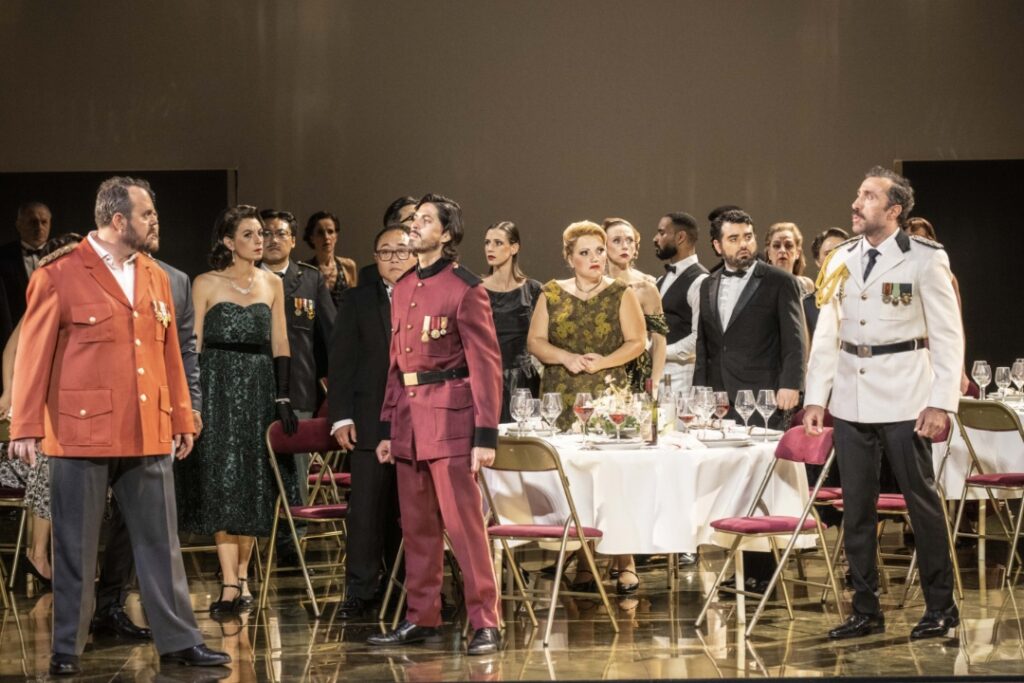
However, the renewed focus on the acting—as evidenced by Scene three of Act two, during which Iago and Otello finally rise from their chairs— brought the production to life. Nevertheless, seeing this production again and not seeing it for the first time draws the attention to its lack of polish.
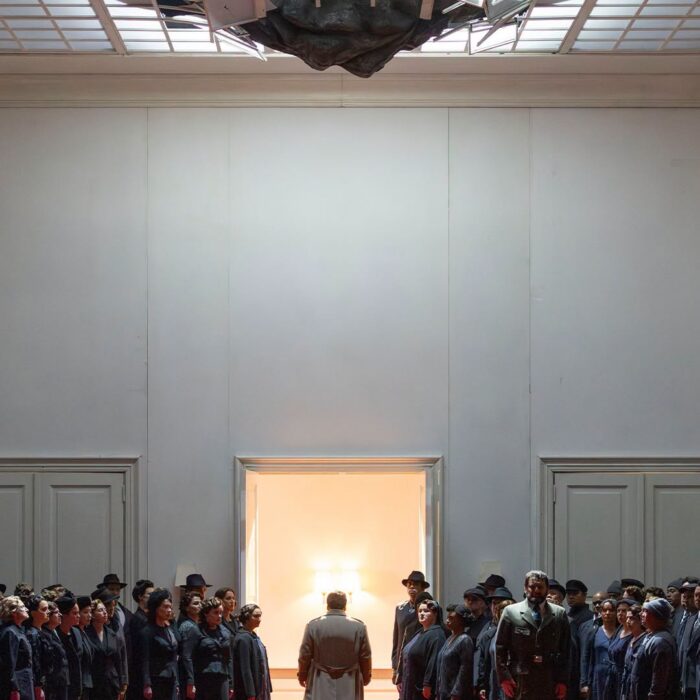
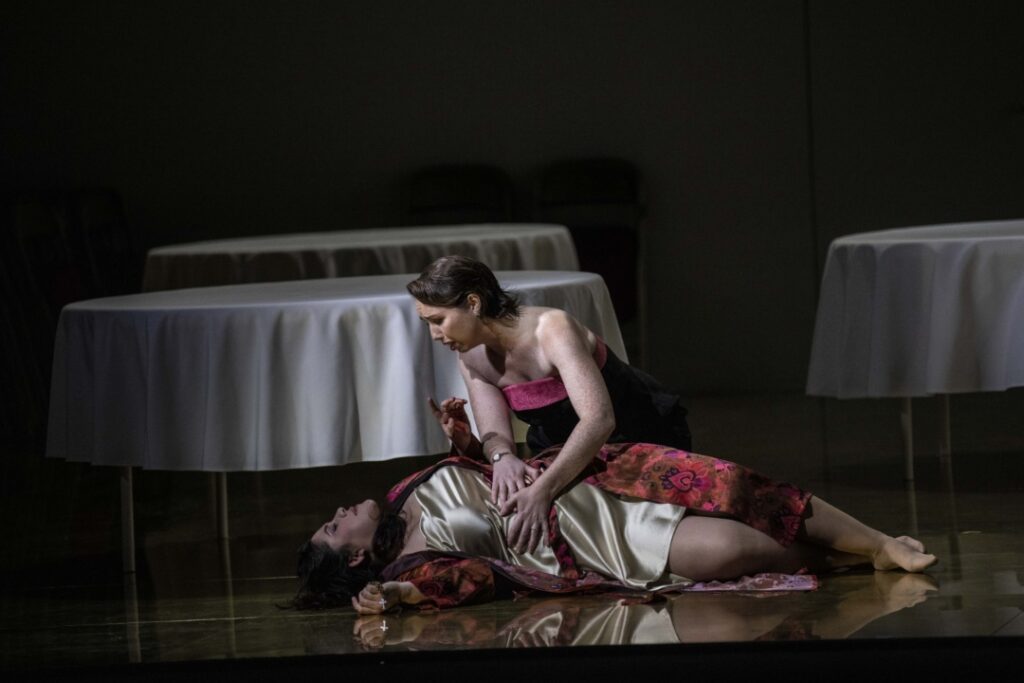
For instance, Iago’s beautiful white costume didn’t fit him properly, and Desdemona’s murder took place in a banquet hall rather than in the bedroom. Even the set design’s good ideas—such as the polished floor, which evoked the damp ground of the harbor during the opening storm and in the end the floor of the Doge’s Palace—seemed out of place during the celebration on the ramparts. The striking play of shadows during the scene between Iago and Roderigo seemed lost there too.
Yet that is not the main flaw of this production. Nor is the clumsy emphasis on femicide—with the annual number of victims killed by their assailants before the show, and the quotation from Shakespeare’s “Otello” in the middle of the third Act, which disrupts the narrative flow.
(Photo: Jean Louis Fernandez)
Vocal Performances
It seems that the opera is divided into two parts—not only narratively, but also, and above all, in quality—the first part being from the overture to the arrival of the emissaries in the third Act, and the second part spanning from the arrival of emissaries through to the end. And that is undoubtedly where things become problematic. The first part, which is predominantly male, brings together all the production’s flaws. To begin with, the male singers were not convincing.
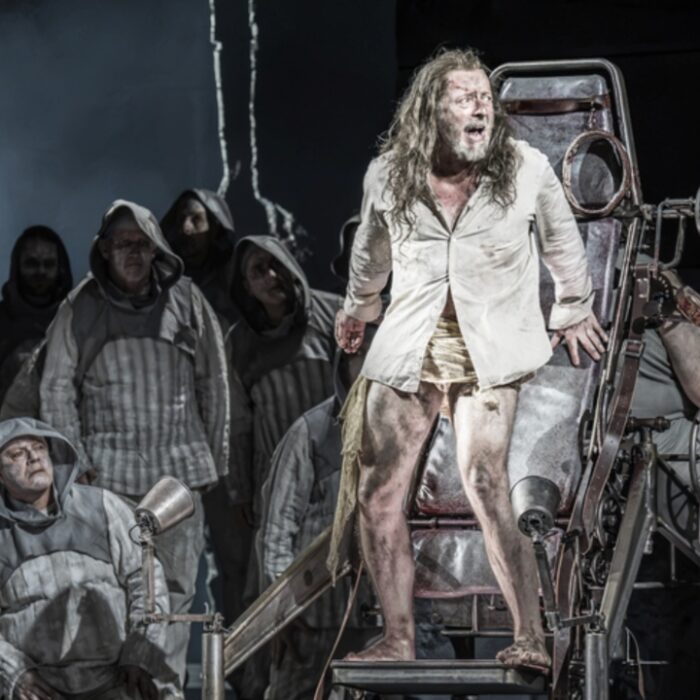
Tenor Samuel Sakker as Otello had a muffled voice, preventing him from fully expressing his role. As a result, he maintained a certain distance from the audience. This was clearly audible during “Ferito!…pel cielo.”
Baritone Daniel Scofield as Iago was no more satisfying. Very academic, almost professorial when he addressed the audience—particularly during his famous monologue “Vanne; la tua meta già vedo”—he, unfortunately, failed to send shivers down the spine. Their duet was also unsatisfying, due to the confusion and lack of harmony between their voices. And undermines the two leading male roles, and even if the orchestra was well conducted, it was still disappointing. Here, it merely accompanied—which was the easy way out for a work of this scale. It, too, must be a character, one that empathized with and conveyed the life of the drama, like in “La Traviata.” Here, its academic approach almost extinguished the work’s fire. This flatness reached its peak during “Vanne; la tua meta già vedo,” which it broke up into segments with silences, stripping it of all its venom.
You have to look to the supporting characters—such as Cassio, sung by tenor Joel Prieto, or Roderigo, sung by tenor Grégoire Mour, with his clear, bright tone—to find a satisfying voice during the first Act.
(Photo: Jean Louis Fernandez)
Soprano Yaritza Véliz as Desdemona
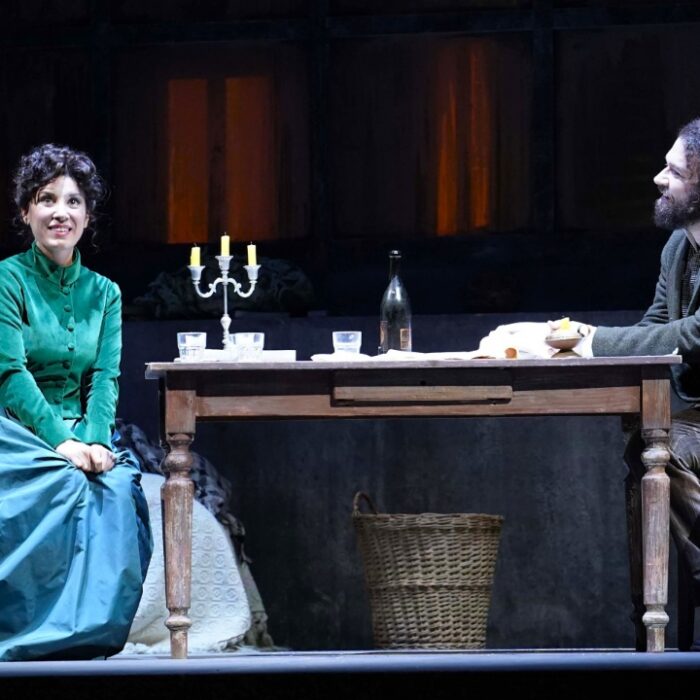
Fortunately, soprano Yaritza Véliz’s Desdemona cut through the dullness of the male voices with her clear timbre and achieved what her male colleagues failed to offer: nuances, vocal range, and colors, especially in the second part, which was mainly feminine. The Song of the Willow brought together everything she has portrayed up to that point, serving as a truly virtuosic conclusion. And the way her singing faded—as if struggling to accept her inevitable end, much like “La Traviata”—left the audience on the verge of tears. She was the one who brought color to the drama. She even brought the orchestra out of its routine way and breathed life into it, lifting it out of its stodgy, school-like rut during the final Acts.