Opera History Flashbacks Pt.2: The Year Was 1789
By John VandevertAlmost every year, a multitude of operas are premiered, some of which never really get publicly highlighted as they should due to certain operas taking the limelight, funds, and critical attention. Thus, in this three-month series entitled, Opera History Flashbacks, we’ll be taking a look at three historically important years and the operas that were premiered during those years. If you wish to follow along, click here and find the right date.
In part one, we looked at three operas from 1991, a year in history made famous around the world as the year the USSR dissolved. This part two will be dedicated to 1789, the year the French Revolution and the dissolution of the monarchical ‘Ancien régime.’ The final part will be dedicated to the infamous year, 2019, the start of the COVID 19 pandemic which uprooted cultural patterns across the board, with everything from performances to governance changing as a result. While there are many years to choose from, we’ll focus only on these three.
The year 1789 is a famous date. From the start of the French Revolution, the birth of the US Supreme Court, Wolfgang Mozart’s needed Berlin travels, and the attempted coup against Gustav III of Sweden, and the birth of Haydn’s much needed friendship with Maria Anna von Genzinger, this was a time of great change.
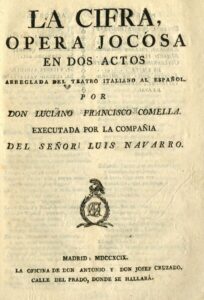
During this year, while in Catherine II’s Russia, two operas were premiered at the the Hermitage Theatre (The Woeful Knight Kosometovich/Soler and La Cleopatra/Chimarosa), interestingly at opposite sides of the year, in France, Germany, and Italy, other presentations were afoot. Among the most identifable names, Antonio Salieri had his antepenultimate opera, ‘L,a cifra,’ performed in Vienna in December, whilst lesser-known names like Johann Vogel (‘Démophon‘) had premieres. However, outside the year’s punctuation by examples of pre-Glinka Russian opera, the year should be best remembered as the true beginning of Mozart’s ‘Die Zauberflöte.’
Essentially, this year was marked by the battle between Friederike Sophie Seyler and Karl Ludwig Giesecke via the story of Oberon in their respective operas (or singspiels). The problem is that Seyler published her opera first, which was subsequently copied by Giesecke and, unfortunately, served as the inspiration for Emanuel Schikaneder’s libretto used by Mozart. It was only later realized that Giesecke had simply plagariazed Seyler’s work!
In Denmark, Oberon’s story was also rendered in opera (‘Holger Danske‘), this time by the composer, Friedrich Ludwig Æmilius Kunzen. This opera is considered to be one of the greatest gems in 18th century, Danish opera history and, historically, created what the ‘Holger feud,’ a boiling over of tensions between Danes and Germans.
Next month, we’ll be looking at 2019, a year we all remember and try to forget. Despite COVID-19, many rather fascinating occurrences happened within the realm of opera as we’ll find out together. One of those developments was digital opera, social media opera, and video opera, just to name a few! Stay tuned and look out for part 3.
Listen
Categories
Special Features