NCPA Set to Premiere ‘Red Sorghum’ by Guo Wenjing
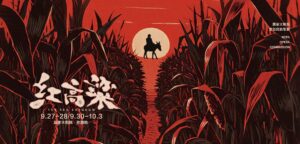
By Rudolph TangThe National Centre for the Performing Arts (NCPA) in Beijing is set to unveil its latest commissioned opera, “Red Sorghum,” which will run from 27 September to 3 October. Adapted from Nobel Prize-winning author Mo Yan’s acclaimed novel “Red Sorghum Family,” the new production marks the world premiere of a work that aims to blend literature, music, and Chinese folk culture against the backdrop of war and resistance.
The opera, composed by Guo Wenjing with a libretto prepared by Mo Yan, is directed by Wang Xiaodi. Structured in eight scenes in a duration of 160 minutes, “Red Sorghum” is set in Gaomi township, Shandong Province during the war against Japanese aggression. At its heart is the story of villagers Dai Fenglian (known as Jiu’er) and Yu Zhan’ao, whose fates intertwine with those of their community as they confront oppression, awaken to their own strength, and resist foreign invasion. The production aims to capture both the brutality of conflict and the resilience of ordinary people in times of crisis.
For Guo Wenjing, one of China’s most sought-after composers, “Red Sorghum” represents his fifth opera, following “Rickshaw Boy” (2014), “Poet Li Bai,” “The Night Banquet,” and “Diary of a Madman.” His operatic writing is often noted for its ability to fuse Western symphonic techniques with distinctly Chinese musical traditions. In “Rickshaw Boy,” a 2014 NCPA commission for example, Guo incorporated the timbres of the sanxian and suona into the score, while integrating Beijing’s urban imagery into the stage design to create what critics called a “Beijing imprint.”
With “Red Sorghum,” Guo sought to root the opera in the soil of Shandong. He travelled to Gaomi—Mo Yan’s hometown and the setting of the novel—to study the region’s folk culture. The resulting score draws extensively on local traditions, including Maoqiang opera, Liuqiang opera, Shandong Bangzi, Shandong Kuaishu storytelling, and Jiaozhou Yangge dance rhythms. Folk songs from Gaomi and traditional instruments such as the suona and banhu further enrich the sound world. “I heard a lot of local opera and storytelling there,” Guo explained, “and I incorporated elements from Liuqiang, Maoqiang, Shandong Bangzi, Jiaozhou Yangge, and more into this opera.”
Mo Yan, who received the Nobel Prize for Literature in 2012, is no stranger to musical adaptations of his works. In 2018, the NCPA staged “Sandalwood Death,” an opera he co-wrote with Li Yuntao of the Shandong University of the Arts. Earlier, Norwegian composer Geir Johnson transformed Mo Yan’s novel “Garlic Ballads” into a music-theatre work, bringing his rural narratives to international audiences.
The premiere production of “Red Sorghum” will be conducted by Lü Jia, NCPA’s music director, with the NCPA Orchestra and Chorus. Two rotating casts will feature leading Chinese singers as well as NCPA house singers, including Song Yuanming, Wu Liejie, Wang Chong, Guo Zizhao, Wang Hexiang, Zhang Yang, and Li Ao, etc.
Categories
News