Metropolitan Opera 2025-26 Review: Don Giovanni
Yannick Nézet-Séguin Leads Met Opera Orchestra & Stellar Cast in Ivo van Hove’s Brutal Production
By Jennifer E. Pyron(Photo: Ken Howard / Met Opera)
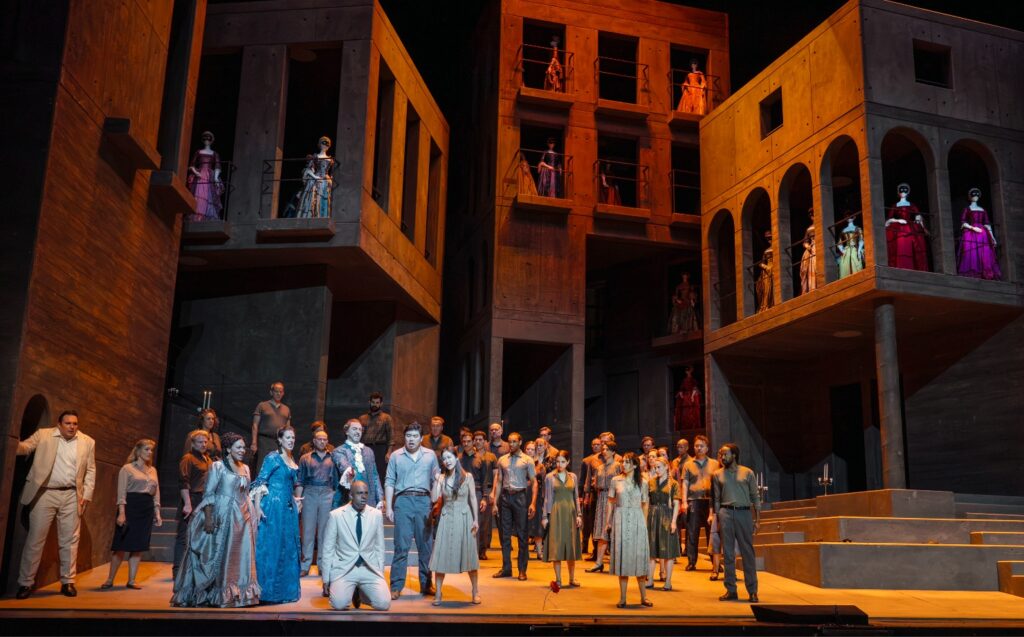
Metropolitan Opera’s season premiere of Ivo van Hove’s production of Mozart’s “Don Giovanni” took place on September 24, 2025. Van Hove’s production originally debuted at Ópera National de Paris in 2019 at the Palais Garnier and OperaWire reviewed the performance in detail, specifically highlighting the set design and overall aesthetic. It is also important to note that Operawire then reviewed Ivo van Hove’s production at Met Opera in 2023.
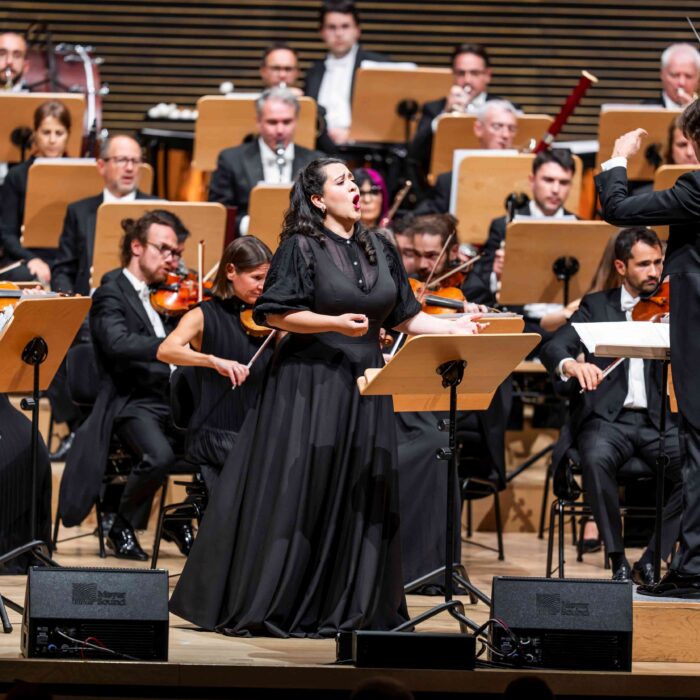
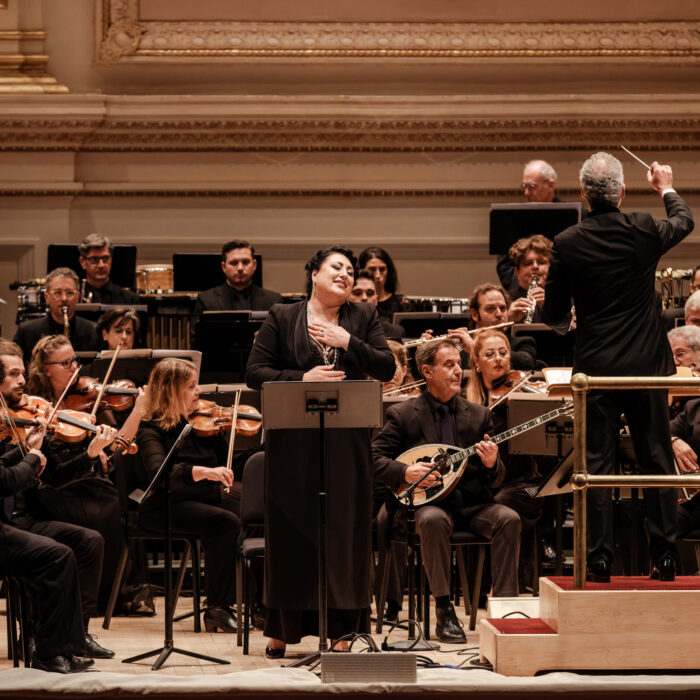
However, this season’s premiere is unlike performances before, mainly because Met Opera’s Music Director and Conductor, Yannick Nézet-Séguin, is at the helm. He leads the Met Opera Orchestra and historical lineup of cast members, including Ryan Speedo Green as Don Giovanni, Adam Plachetka as Leporello, Federica Lombardi as Donna Anna, Adam Palka as Commendatore (Met Opera debut), Ben Bliss as Don Ottavio, Janai Brugger as Donna Elvira, Hera Hyesang Park as Zerlina, William Guanbo Su as Masetto, and the Met Opera Chorus, delivering a once-in-a-lifetime combination of Mozartian genius.
(Photo: Ken Howard / Met Opera)
Yannick Nézet-Séguin Illuminates Mozart’s Score
“Don Giovanni” is perfectly timed to Mozart’s challenging and dramatic musical telling of a story about a man who delights in desperate debauchery and faces the wrath of hell in the end. His victims and means of abuses are unlimited (he is also a murderer). This is one of Mozart’s most powerful operas and to experience Music Director and Conductor of Met Opera Orchestra Nézet-Séguin’s perspective, made this season’s production of “Don Giovanni” resonate beyond all expectations.
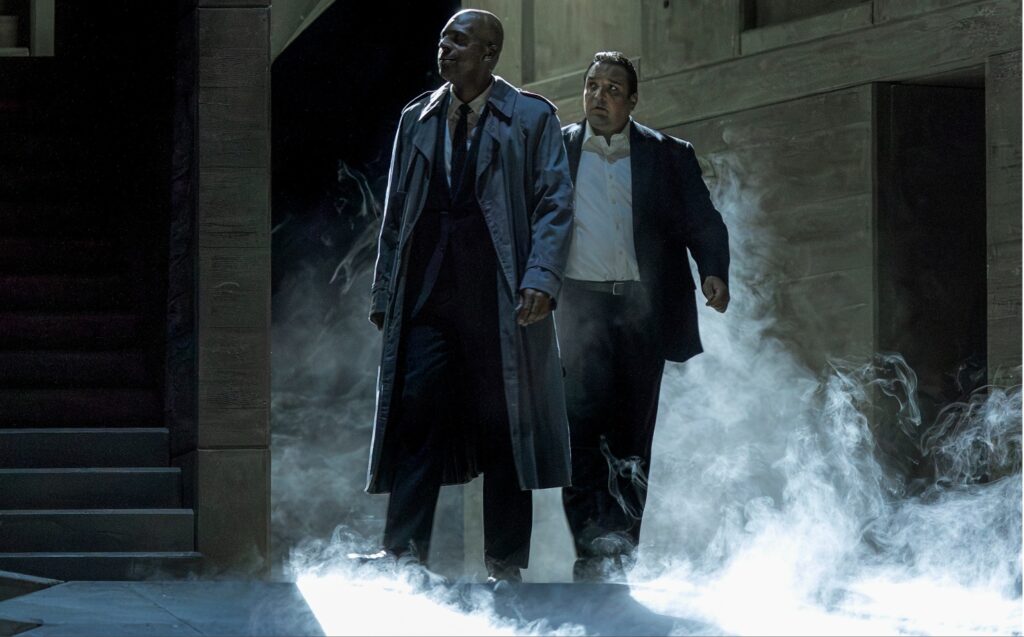
The overture’s opening D-minor cadence is both shocking and bone-chilling. I watched as several audience members sat upright immediately (some even jumped in their seat) when the orchestra played it. I knew from this point on, the night would never leave any of us in the audience the same as when we first arrived. The following D-major cadence evolved into a swirl of strings, illuminating the smoke rising from hell and calling out to Don Giovanni. Mozart begs his main character, right from the start, to change his ways before it is too late.
(Photo: Ken Howard / Met Opera)
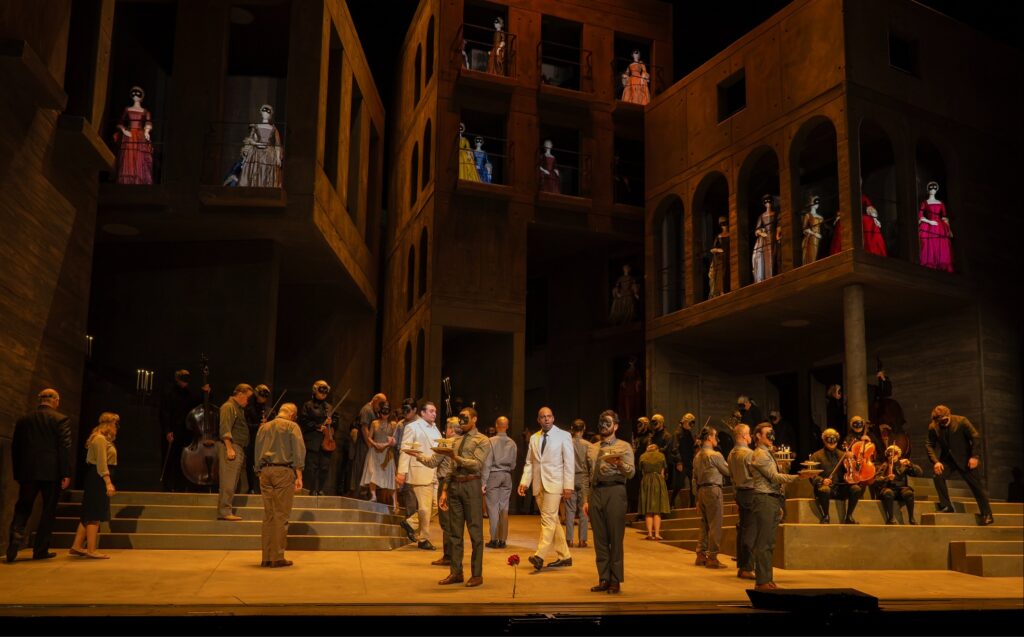
Ivo van Hove’s production came to life in this moment. The plume of smoke festering in the middle of the stage whirled about the cavernous entrances of set designer Jan Versweyveld’s brutal architecture. One could sense life hanging in the balance, captivated by the dissonance lingering in the midst. Emptiness became the greatest feeling of all. I watched as Nézet-Séguin strategically and exactly maneuvered the orchestra through this most famous overture, pacing it all in accordance to what Mozart’s score requires–perfect timing and intuitive dynamism. This set the tone for the entire night’s production. Nézet-Séguin cultivated a sense of urgency that drove the story forward in a hypnotic way. The audience was visibly entranced.
Stellar Cast Details
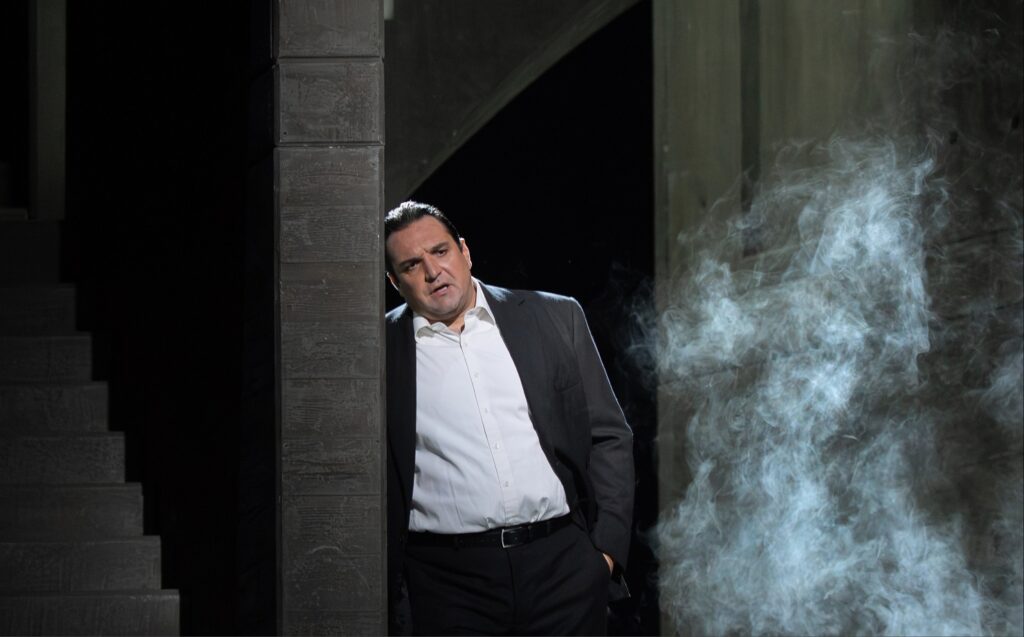
Bass baritone Adam Plachetka as Leporello wowed Met opera audiences in this role, most recently in 2023. This season’s production, however, features bass baritone Ryan Speedo Green as Don Giovanni and all throughout the opera, Plachetka notably leaned into the strength and massiveness of Green’s voice to prove the ultimate “macho factor” alongside him. His opening, “Notte e giorno faticar,” showcased his vocal prowess and humorous intonations. The audience listened as he explained his woes while working for his lordship, highlighting his desire for pitiful redemption based on his “position.”
Plachetka does something different in this role than most. He takes it upon himself to project his character’s artificial victimization in order to show how the macho factor works and can delude everyone involved. Unfortunately, this behavior is like a disease that spreads violently, deteriorating everything and everyone in its path. One can take a look at history’s worth of political behaviors and see this very clearly festering from the top to the bottom every cycle, creating a sense of impunity grounded in propaganda.
(Photo: Ken Howard / Met Opera)
Plachetka made his role as Leporello more about exposure than justification. He showed the audience clearly what Don Giovanni was up to, especially while performing “Madamina il catalogo e questo,” and what he himself was allowing (and most ardently “protecting”) all throughout his hero’s journey.
Plachetka is vocally unmatched in this role. He makes light of Mozart’s composition through his vocal agility and excellent technique that reveals Leporello’s hidden grace despite his muddled madness. The audience loved laughing and expressing their reactions when Plachetka was on stage. His acting and ability to entertain proved Mozart’s masterpiece remains timeless in its relevance and impression.
(Photo: Ken Howard / Met Opera)
Bass-baritone Ryan Speedo Green as Don Giovanni was unstoppable. Just when one thought he was at his peak vocal performance for the night, especially during “La ci darem la mano,” he revealed a new palette of tonal colors. Green’s attentiveness to his cast mates also made his Don Giovanni more intuitive than most. His seduction of Zerlina showed how Green flipped this switch easily and effortlessly, making his role feel eerily real as a stereotypical narcissistic sociopath.
His aria “Fin ch’han dal vino” featured his well-studied vocal technique and support. Green’s vocal agility and physicality were absolutely perfect. Nézet-Séguin was visibly having the time of his life during this aria. The Met Orchestra sounded joyful and resplendent. The tempo bounced along and Green’s through line made time fly by for the whole opera.
(Photo: Ken Howard / Met Opera)
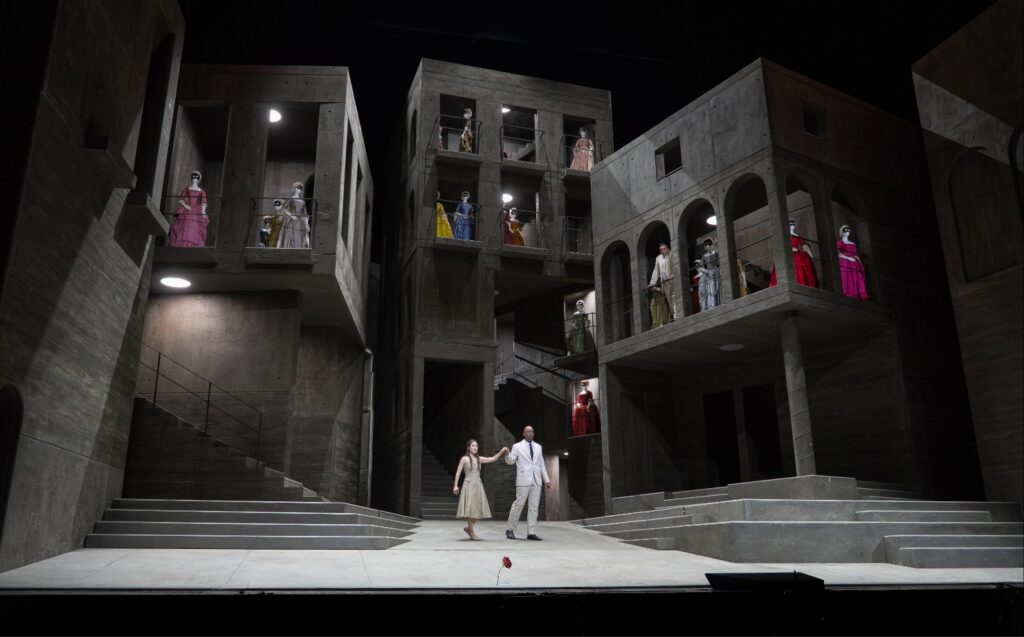
There is a call out about Don Giovanni’s aria “Deh! vieni alla finestra” in this production and how it might have been confusing for anyone unfamiliar with the opera’s synopsis. Without an instrument, and lingering almost randomly beside Jan Versweyveld’s radical architecture, this aria fell flat, for me. Green’s serenade felt unsupported in its romantic endeavor without an instrument to show what exactly he was portraying (a poetic Spanish moonlit serenade), but maybe this was intentionally left out? Either way, even if Green held an instrument when delivering this aria it would’ve played more into the opera’s dark poetic comedy and original score.
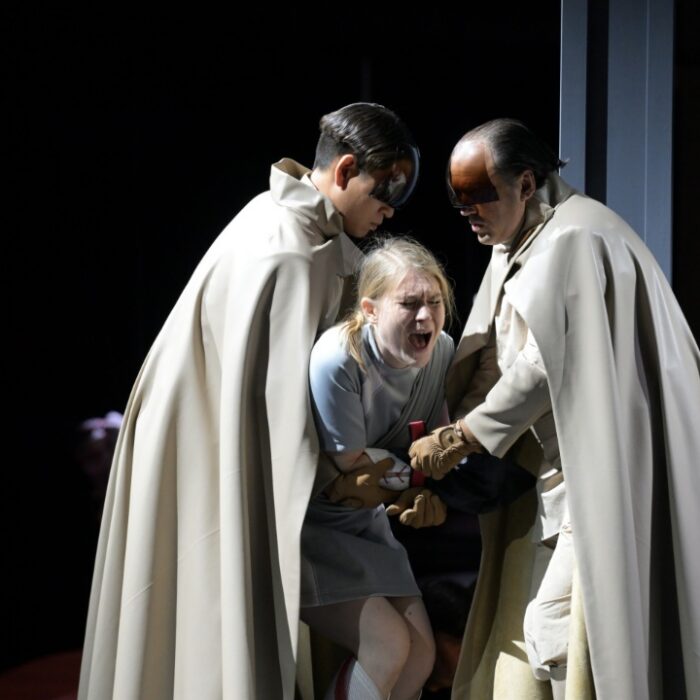
Also, with the stage lights on for most of the opera, there was really no sense of identity confusion between Don Giovanni and Leporello. Everyone could see who was who, even with the trench coat swaps. Without knowing they were disguising themselves as one another on and off, I wonder if someone new to this opera could tell what was going on? The intertwining streets of Seville are most confusing in the dark at night, not when stage lights are unchanging and the architecture remains the same.
Don Giovanni and Leporello’s duet, ‘Gia la mensa e preparata,’ was amusing and vocally astounding. Green and Plachetka performed with gusto and ardent machoism during their exchanges. Both of their voices kept building on one another’s and this was a major highlight of the night, listening to two bass baritones with excellent vocal technique really showed off Mozart’s score. Nézet-Séguin played up the orchestra in this moment too, adding an extra flare of delight and drama through the music.
The final scene with Don Giovanni and Leporello concludes with the most visually stunning moment of the whole evening. The Commendatore seeks justice for his own murder and Don Giovanni seeks fuel for his own lunacy, making this scene an open opportunity to experiment with the architecture. Projection designer Christopher Ash takes full advantage of the space and showcases a series of looping images of naked and writhing bodies, increasing in their detail over time. The bodies washed over the beige colored buildings and devoured the bodies of Leporello (cowering on the side of stage left), and Don Giovanni who was facing the Commendatore head on in a duel. Most visuals during operas take away from the focus of what’s going on, but these absolutely added to the multidimensional insanity and damnation of Don Giovanni. It was magical!
(Photo: Ken Howard / Met Opera)
More Vocal Highlights
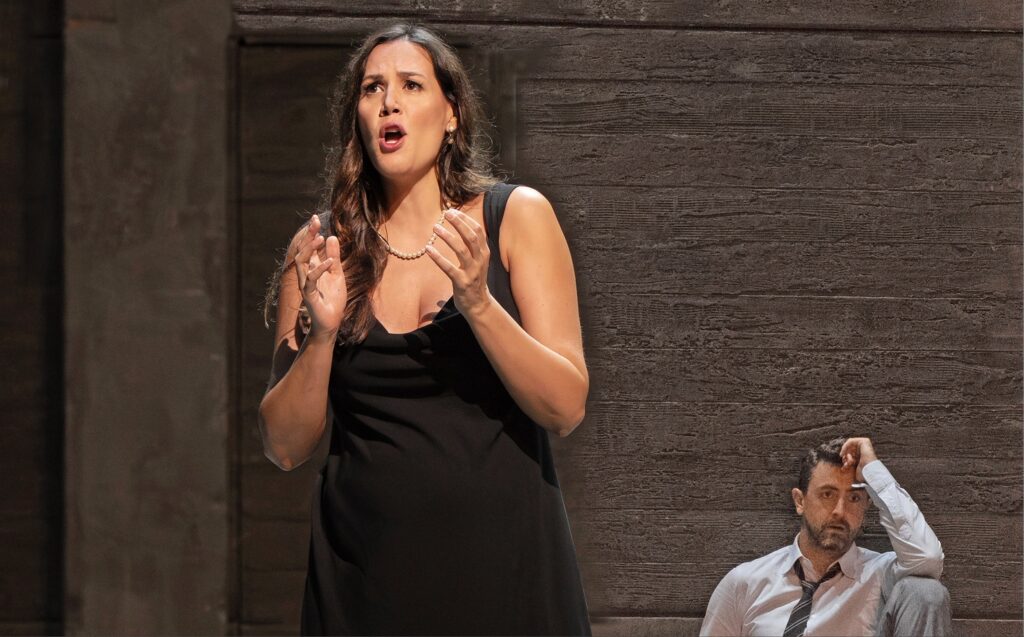
Soprano Federica Lombardi as Donna Anna showcased her voice as a masterpiece. Lombardi’s interpretation of Donna Elvira in past productions revealed her vocal palette and determination to suffice a vengeful character’s psychological state of mind. However, Lombardi’s voice as Donna Anna fits her tone’s robust and grounded technique that makes her vocally stand apart from most sopranos today. She is an extraordinarily full lyric soprano with vocal agility that reaches into her highest registers without compromise to her middle range and especially her lower resonance. This was heard predominantly from the start during her opening recitative, “Non sperar se non m’uccidi,” with Don Giovanni, Leporello and the Commendatore.
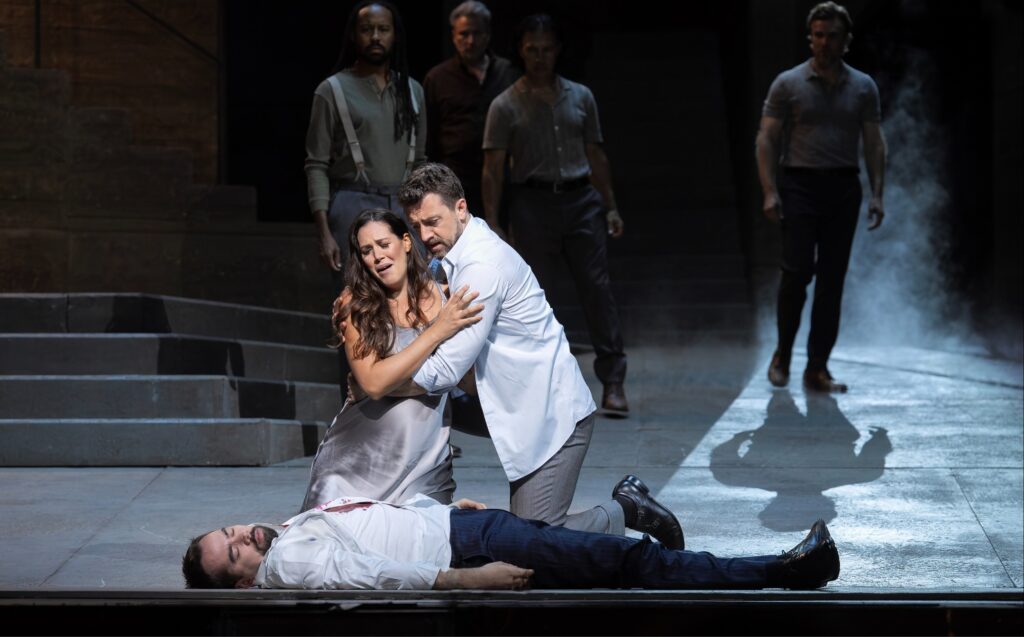
Lombardi’s recitatives with Ben Bliss as Don Ottavio, “Ah! del padre in periglio,” “Ma qual mai s’offre oh Dei,” and “Fuggi crudele fuggi,” featured her vocal power and capacity, resonating all throughout the Met’s hall. She transformed into a woman on fire in her rage as she sought justice for her father’s murder. This also illuminated her character’s clear lack of lasting interest in her lover, Don Ottavio, and this gave Ben Bliss the opportunity to act more desperate in his portrayal of an insecure person. The chemistry between both Lombardi and Bliss was palpable, it was also confusing, as this is the goal of Lorenzo Da Ponte’s libretto. What stood out the most between both singers was their firm grasp on the complexities in relationships and how everything is impermanent. The emptiness, as mentioned above, became increasingly more apparent. Jan Versweyveld’s beige colored architecture, enveloping the murder of Donna Anna’s father, started to cave in–reflecting a dizzying desperation.
Her aria “Or sai chi l’onore” was beautifully delivered and the orchestra’s string section sounded masterful alongside Lombardi’s ever-determined voice. Act two arias “Crudele? Ah! no mio bene” and “Non mi dir bell’idol mio,” emphasized her brilliant higher register and dynamics. Lombardi was masterful in this role.
(Photo: Ken Howard / Met Opera)
Ben Bliss as Don Ottavio was the perfect match for Lombardi’s vocal palette. His bright tenor uplifted her during even the most over-the-top dramatic moments. Bliss’ voice especially during his Act one aria “Dalla sua pace” and Act two aria “Il mio tesoro” resonated with unlimited potential. His legato floated into the heavenly abyss of somewhere beyond his circumstances stemming from unrequited love.
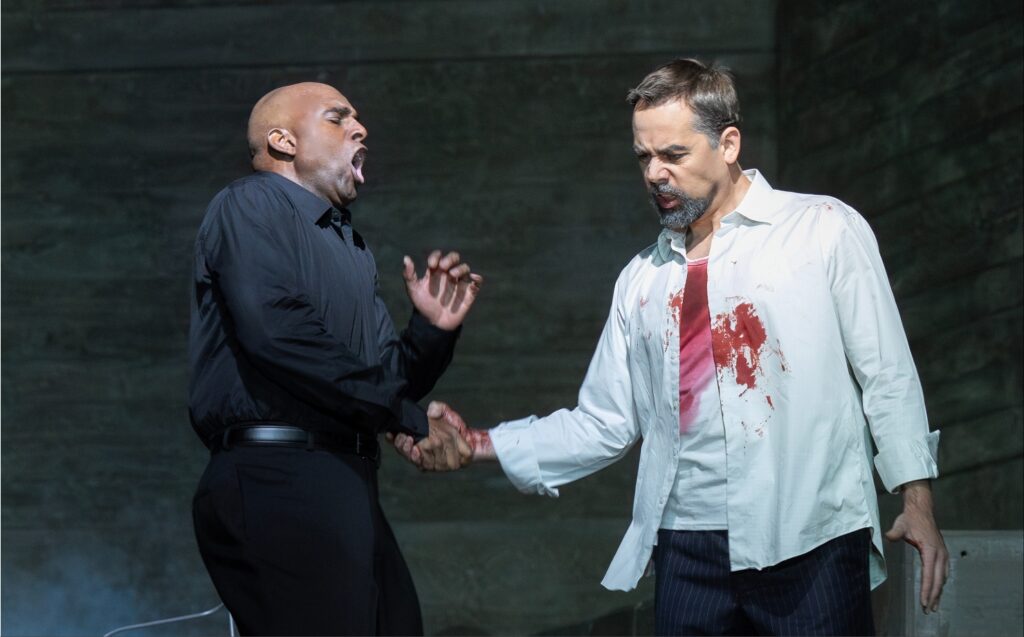
Adam Palka’s debut as the Commendatore was less intimidating than one usually expects from this role. Palka made the Commendatore more of a father-figure than an oversized monstrous statue seeking to devour Don Giovanni. His voice and acting revealed new tonal and nuanced character details than one might have imagined. This made the opera reveal a new layer of humanity and the complexities of human nature. It created extra awareness especially at the end when Don Giovanni (instead of coming face-to-face with a big scary statue) ultimately faced his own destructive path, leading him towards his own demise.
(Photo: Ken Howard / Met Opera)
Saving the Best for Last
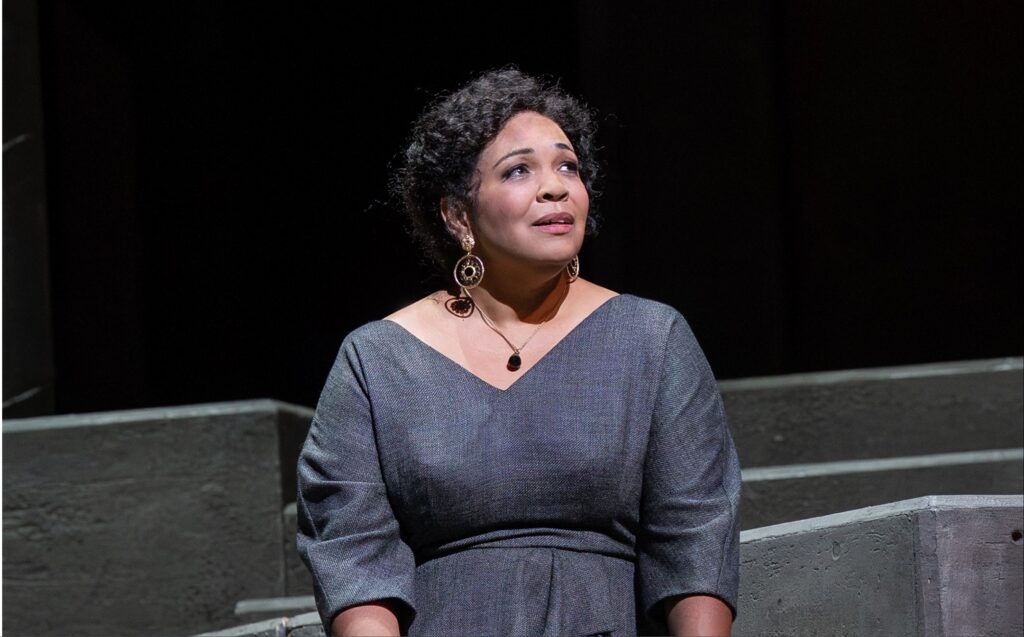
Soprano Janai Brugger as Donna Elvira gave a performance of her lifetime in this role. The audience absolutely loved every minute of her stage time and voice! Beginning with her Act one trio, “Ah! chi mi dice mai,” with Leporello and Don Giovanni, her voice resonated boldly into the night like a shooting star. The profound depth of resonance and full bodied palette was stunning! Her Act two recitative, “In quali eccessi o numi,” and aria, “Mi tradi quell’alma ingrata,” were absolutely exquisite! Her presence and voice put this cast lineup on another level all together. This was my favorite vocal performance of the opera and quite possibly to date. Brugger’s acting and singing is unmatched in this role. Her high notes flourished amid her turmoil and sadness. The orchestra and Nézet-Séguin handed her the reigns and she ran with it, surpassing anyone’s expectations. I really hope in my lifetime I get to see her perform Servilia’s aria from Mozart’s “La Clemenza di Tito.” Her voice gave me chills of excitement and true artistic delight as Elvira. Brava!
(Photo: Ken Howard / Met Opera)
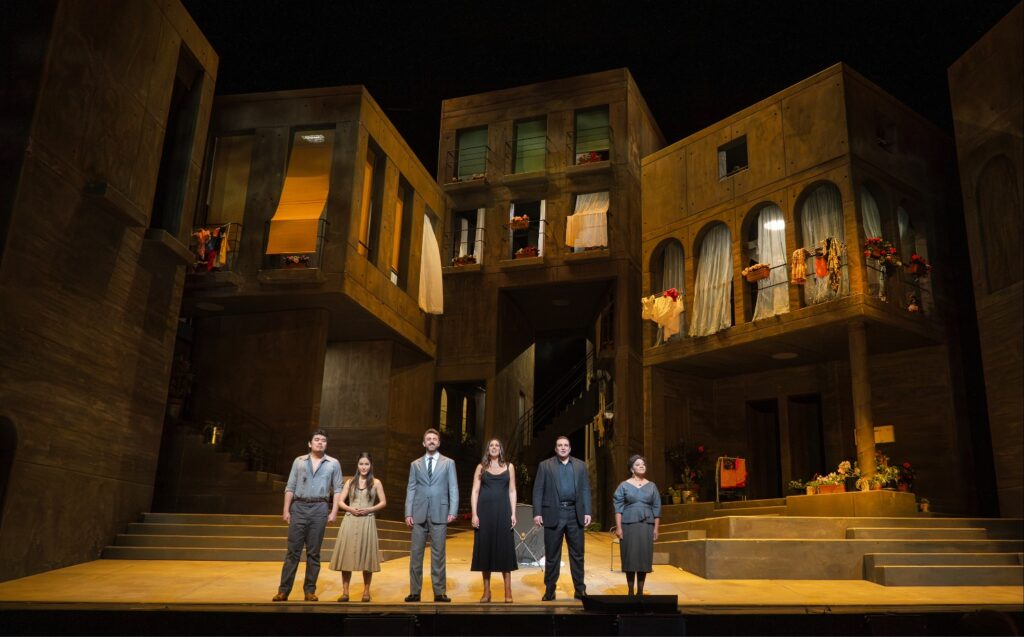
Hera Hyesang Park as Zerlina and William Guanbo Su as Masetto were fantastic in their roles as lovers about to be married. The pure joy and youthfulness that Park and Su brought to this production cut through the emptiness that filled the stage before them. Park’s voice resounded in its clarity and precision, especially during her arias “Batti Batti bel Masetto” and “Vedrai carino.” I was reminded of her performance as Pamina in Julie Taymour’s production of Mozart’s “The Magic Flute.” Park’s voice and presence on stage captivated the heart’s of listeners throughout the night.
William Guanbo Su’s performance was also exquisite as Masetto. I first reviewed him while he was still in school at Julliard and performed as the Commendatore in 2019. Experiencing him on the Met’s stage as Masetto felt like I was celebrating a dear friend’s performance. Su’s voice has exponentially grown in its resonance and agility. His costuming as the Commendatore at Juilliard was my favorite between the two roles. However, his voice as Masetto proved to be an intelligent role choice. The chemistry between Park and Su came across as two young lovers just having fun and getting caught up in the pleasures of new feelings and the blissful liberation of youth’s naiveté.
(Photo: Ken Howard / Met Opera)