Kissinger Sommer 2026 Review: Orfeo ed Euridice
By Mengguang Huang(Photo: Julia Milberger)
Any disappointments from the previous two nights were completely swept away in this grand finale. The final evening of the festival wrapped up with a performance full of genuine dramatic tension, keeping the audience completely hooked throughout. This revival of Bartoli’s Salzburg 2023 production is based on Gluck’s 1769 Parma version. Originally compressed into a single act for a royal wedding celebration, Parma version removes the repetitive pastoral choruses at the start and streamlines the underworld ballet sequences to leave a compact, 90-minute theatrical spine. Crucially, unlike the historical Parma staging with a happy finale for the royal court, this Salzburg production concludes in its tragic form. Plus, because Gluck shifted the role higher for the soprano castrato, it introduces bright florid passages and a higher vocal placement that perfectly fit a modern mezzo-soprano’s expressive toolkit.
Light & Costume
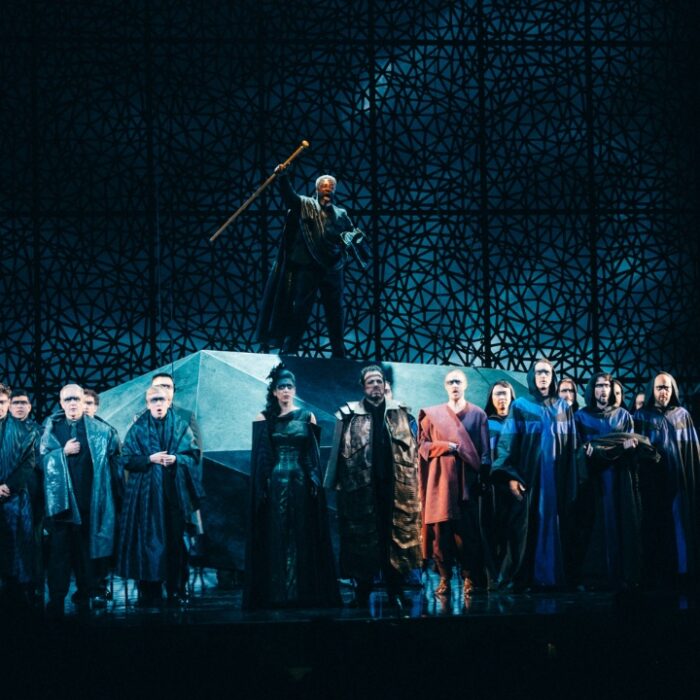
The production’s visual style is simple and highly efficient. The staging creates a clear psychological landscape using only lighting and a clear costume logic. The performance starts in darkness. The chorus and Bartoli, all dressed in somber black, hold flickering candles in a slow, sad funeral procession to mourn Euridice. Once Amore brings the promise of resurrection, the mood shifts as Orfeo prepares to enter the underworld. The cast changes into pure white clothes. The visual high point arrives during the descent into the underworld. Backed by the violent, wind-whipped playing of the orchestra, the stage lights create a blinding, terrifying scene that perfectly captures the horror of Hades.
Bartoli’s Orfeo
In comparison with the two previous evenings, this production proved that Cecilia Bartoli needs the full space of a complete opera to really trigger her creative inspiration and artistic potential. Her Orfeo was a portrait of raw, deeply human love. From her painful initial cries of her wife’s name to the deep ache of her loneliness, Bartoli gave the character a warm, realistic humanity. Her scenes with Amore were wonderfully alive, balancing skepticism with desperate hope.
When facing the terrifying spirits of the underworld, Bartoli chose a highly persuasive, patient vulnerability to beg for entry. The brilliance of her acting showed as her pleas were repeatedly and brutally cut short by the Furies, only for her to start again with heartbreaking sincerity. Upon entering the quiet Elysian Fields—now dressed in white—her lyrical tone turned beautiful and radiant as she searched for her wife.
The most gripping part of the evening was the long confrontation between the lovers. Bound by the gods’ cruel rule never to look back, Bartoli showed an incredible sense of self-restraint and pain. Her performance successfully showed a terrible contradiction: keeping her eyes away while trying to calm a wife who was growing increasingly insecure, impatient, and resentful. Bartoli’s body language tracked this internal struggle perfectly as she and Mélissa Petit moved across the stage in a tragic game of avoidance and pursuit. When her inner defenses finally broke down, her sudden glance at Euridice felt totally inevitable. This entire psychological progression was so genuinely portrayed that anyone in the audience could deeply relate to and share her agony. Throughout all this tension, Bartoli’s voice control was amazing, creating massive emotional impact with minimal, focused vocal effort.
Vocal Brilliance
Soprano Mélissa Petit convincingly handled the two roles of both Amore and Euridice. As Amore, she was full of spirit, playful, and bursting with life. She delivered the god’s proposal to Orfeo with a modern edge and a lot of psychological insight. Shifting roles in the final Act, her Euridice became a highly relatable portrait of human need. She clearly showed the simple, natural human desire to be reassured by a partner’s look, matching her great acting with a flexible, smooth vocal line.
The vocal ensemble Il Canto di Orfeo gave a solid and deeply moving performance. In the underworld scene, they drove the tempo faster than usual, bringing a scary sense of hostility and impatience to their refusal. Yet, when they finally handed Euridice back to Orfeo, their tone changed to pure care and tenderness. Most impressively, after Euridice’s sudden, heart-wrenching second death, the chorus used a beautiful pianissimo that brought the story to a quiet, tragic end.
Orchestral Colors & Sweet Farewell
Gianluca Capuano led Les Musiciens du Prince–Monaco with great energy and precision. The orchestra handled the score’s contrast perfectly. The strings shake with an anxious quality during Orfeo’s opening lament and bite hard into the heavy rhythms of Hades later. On the other hand, the transition into the Elysian Fields offers a serene pastoral landscape where the traverso flute and oboe take center stage, playing their timeless melodies with effortless beauty. The fortepiano accompaniment was another major highlight, weaving and connecting scenes with great elegance and theatrical momentum.
As the final notes faded, the solemn atmosphere quickly turned into a warm, relaxed gathering. The festival team surprised Bartoli onstage with a large, multi-tiered celebration cake. Completely at ease, the diva dipped her finger into the frosting for a quick taste before cutting the cake. It was a joyful, deeply human conclusion to a festival that ended at the peak of its musical and dramatic power.