Inspired by Mortier: The Ongoing & Long-Lasting Impact of the Pietrasanta in Concerto Festival
By Jennifer E. Pyron(Photo: Bernard Rosenberg)
The Pietrasanta in Concerto Festival combines a unique and distinctive, artist-centered, and community-driven approach to a classical music festival, in contrast with more traditional models. This philosophy extends to nurturing future talent through live performances and masterclasses in local venues to prioritize deep understanding and cultural immersion over superficial social media engagement and pre-planned repertoire that might limit a musician’s freedom while playing.
Founder, Artistic Director and violinist Michael Guttman told OperaWire, “The whole festival is about collaboration. It’s about putting everyone together. Almost all musicians who come here, I know them personally or I play with them, not from an agency. And sometimes I put people together that don’t know each other, but I know they will work well together because that’s my instinct and that’s my role also as Musical Director. This is also my imprint,” said Guttman.
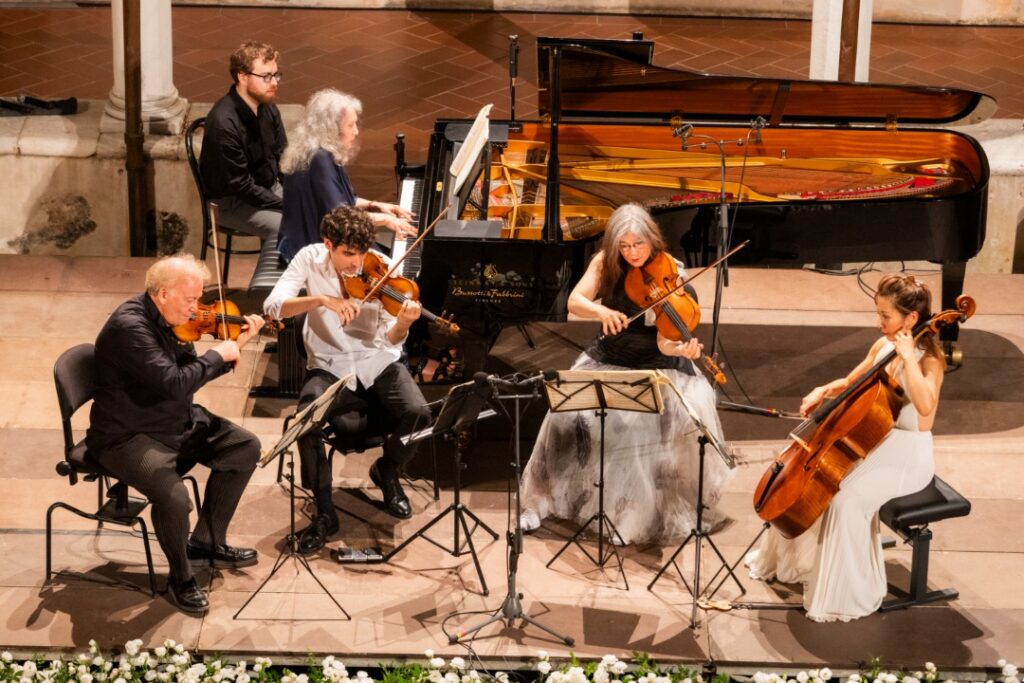
(Photo: Bernard Rosenberg)
Guttman’s philosophy is heavily inspired by his upbringing in Brussels, witnessing Gerard Mortier’s revolution in opera including contemporary staging, discovering talent on smaller budgets, and attracting younger audiences.
“I grew up in Brussels and witnessed the revolution in the opera world that Gerard Mortier, who then became director in Salzburg from 1990 to 2001, started with his contemporary staging and his ability to find fantastic voices on a lower budget because Brussels didn’t have the budget of the Met or Paris. And I think this became a trademark of Brussels. There is this Flemish influence and they are also very avant-garde in terms of music. In terms of staging, Mortier opened up what opera could be and grew the audience’s interest with younger generations. This inspired me quite a bit, to see somebody have an impact like this in a small country like Belgium and to be at the center of it. It’s something we were all proud of. He wasn’t mainstream with his ideals but he was a success because he took risks and had a unique perspective. It’s all about love in opera. There were also a lot of dance companies that participated during this time. In the 1990s, Brussels was also a major hub for contemporary dance including ensembles like Anne Teresa De Keersmaeker’s ‘Rosas.’ This movement began first with Maurice Béjart. I think he was the greatest genius, especially the way he choreographed ‘The Rite of Spring.’ I was greatly inspired by this movement. It left a lasting impression on me that I carry forward today,” said Guttman.
(Photo: Bernard Rosenberg)
Program Highlights
Flexibility is one of the main ingredients of this festival’s secret recipe for staying fresh and keeping audience members surprised every night. The performance schedule is printed nightly based on the decisions made that day.
“I like to keep the music feeling alive. The musicians get to show their best work in this way. We give the artist freedom to change,” said Guttman.
“It’s July in Italy. Everyone is on holiday from the moment they step off the plane. I like to give the musicians a certain amount of freedom if they feel that a last minute change in the program would be beneficial to the overall success of the evening performance.”
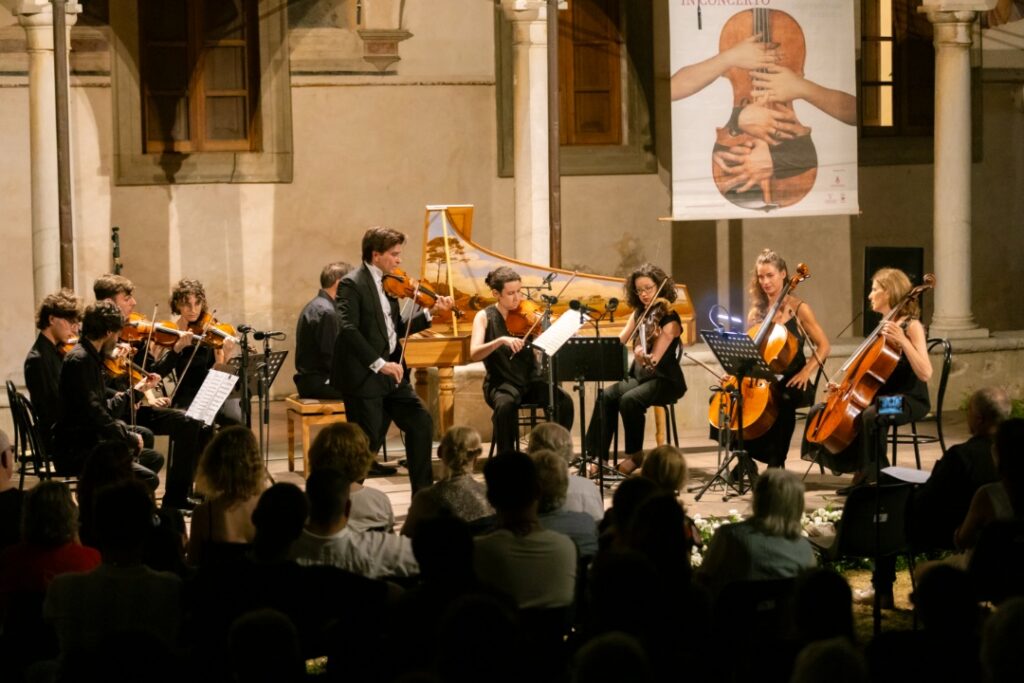
Most of the performances take place at the Chiostro Sant’ Agostino around 9 p.m. with locals and internationals coming through the area in the tradition of their summer holiday travels. OperaWire met with many in the audience who said they keep coming back because this festival feels like family.
(Photo: Bernard Rosenberg)
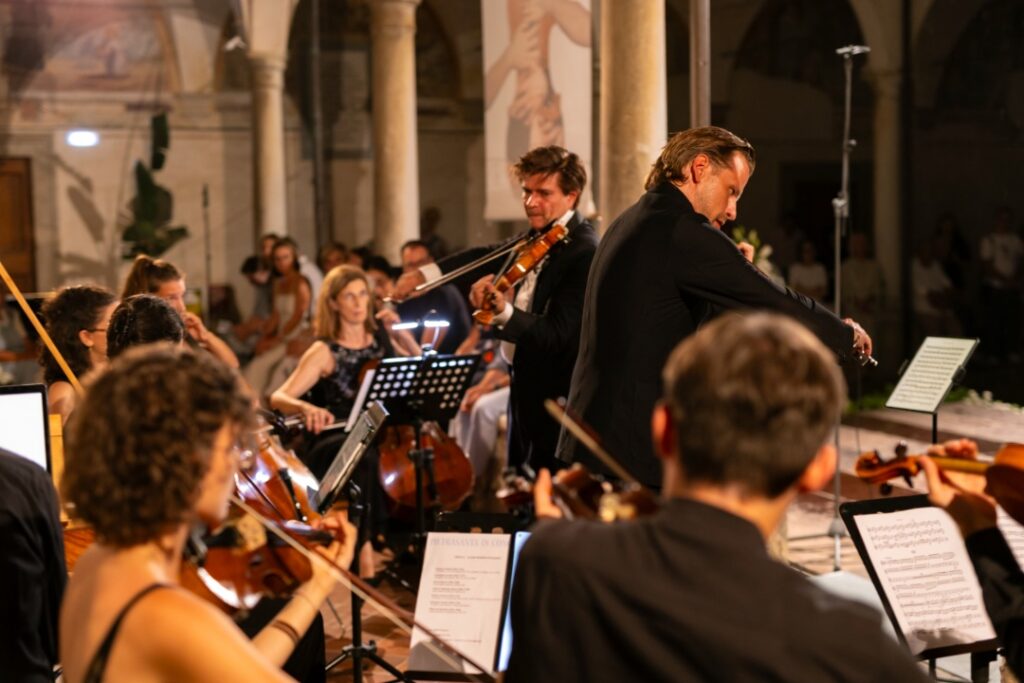
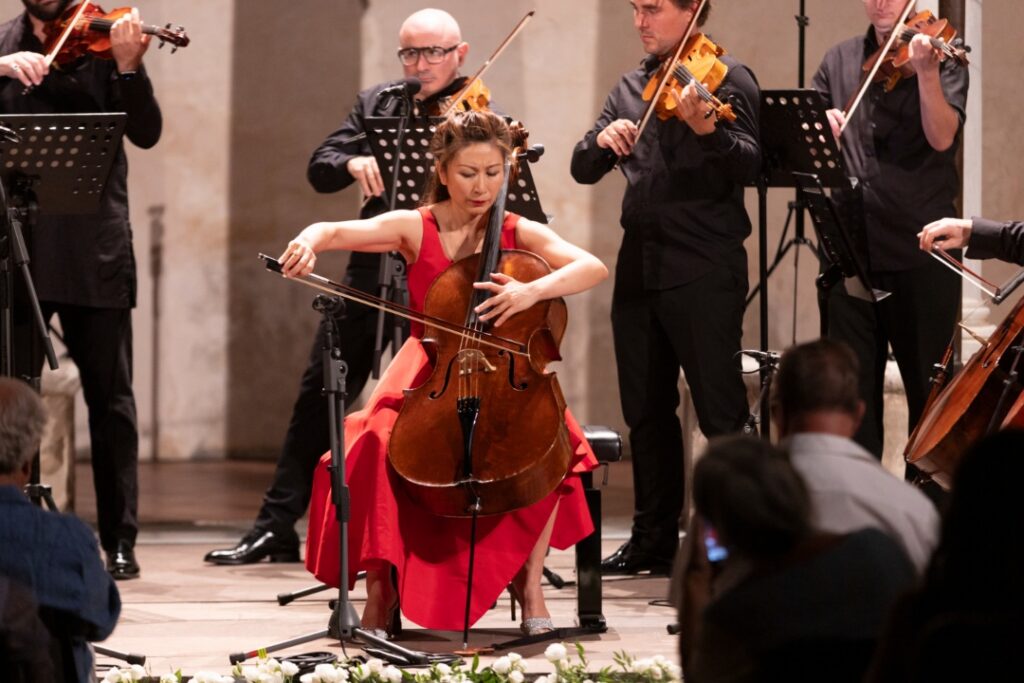
The repertoire of the festival’s program illuminates a combination of fluidity and technical vibrancy with its unique arrangements and collaborations. This year’s 20th anniversary festival highlights included “La Casa Stradivari di Cremona” featuring violinists Kirill Troussov and Fabrizio Von Arx with the Ensemble Amici di Stradivari coordinated by the Trio Debussy, “An Evening with Brahms” where Michael Guttman and his wife cellist Jing Zhao played alongside pianist José Gallardo and violist Pierre-Henri Xuereb, “Musical Anniversaries: Carl Maria von Weber and Benjamin Britten” showcasing clarinetist Pierre Génisson’s moving interpretations of Casal’s “El Cant dels Ocells (Song of the Birds)” and von Weber’s “Clarinet Quintet in B-Flat Major, Op. 34 (arranged by M. Villuendas)” which included Guttman, Zhao, and the Brussels Chamber Orchestra.
(Photo: Bernard Rosenberg)
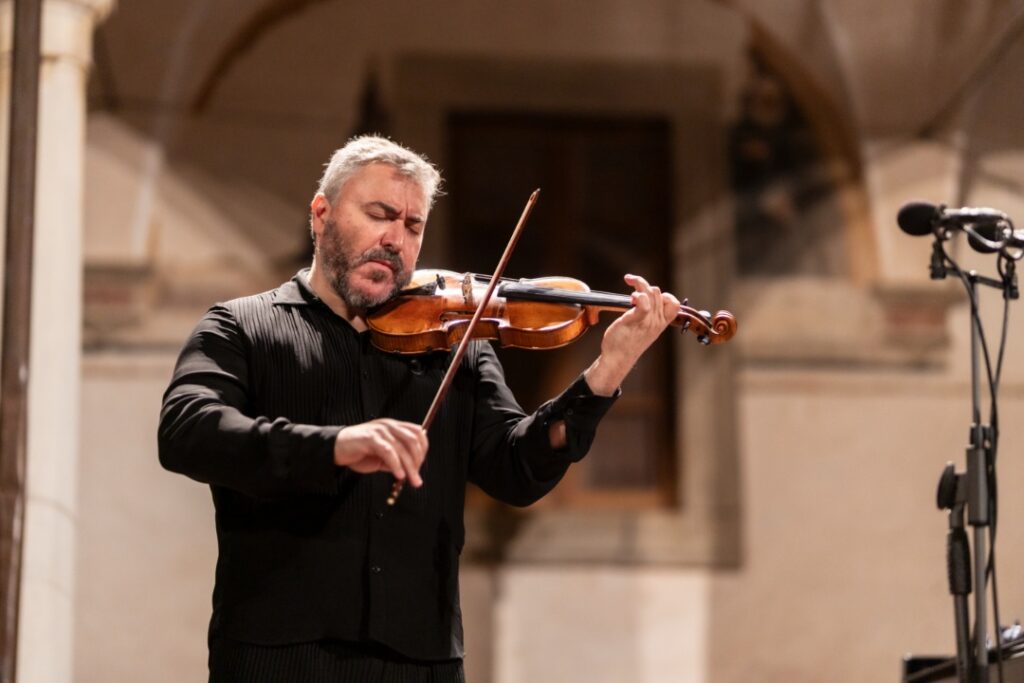
“Maxim Vengerov in Concert with Sergio Tiempo” was a climactic moment of the festival on day four with special performances of Beethoven’s “Sonata for Violin and Piano No. 4 in A minor, Op. 23,” Schubert’s “Sonata in A Major, D 574 ‘Grand Duo,’” Bach’s “Chaconne from Partita No. 2 in D minor, BMV 1004,” and Beethoven’s “Sonata for Violin and Piano No. 3 in E-flat Major, Op. 12.” Bach’s “Partita” was especially breath-taking. The entire audience was in awe of Vengerov’s interpretation.
Martha Agerich, the living legend herself, together with some of her close friends rounded out this year’s 20th anniversary celebration along with masterclass performances featuring young cellists and violinists from all over the world.
(Photo: Bernard Rosenberg)
Masterclasses in a Holistic Learning Environment
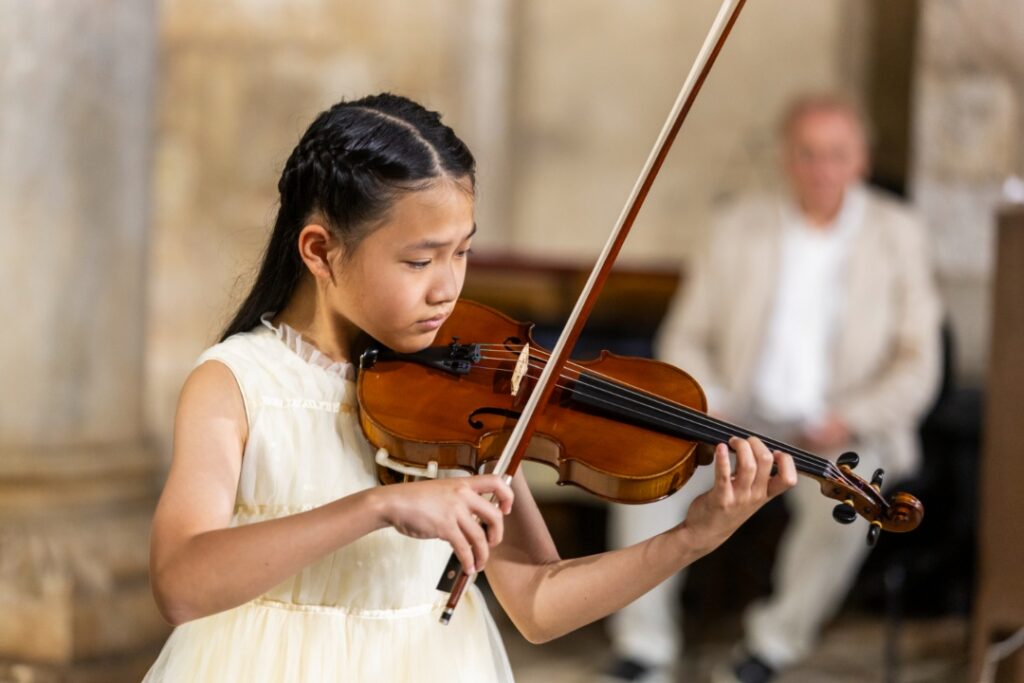
Cellist and co-founder Jing Zhao leads the festival’s masterclasses for young musicians, especially from Asia, providing them with more than just technical instruction; they get to experience diverse cultures, languages, and the joy of music in inspiring settings such as churches and art galleries.
OperaWire spoke with Zhao who emphasized the need for students to learn by actively listening in live settings in order to better understand the subtle technical nuances and hard-work it takes to be an accomplished artist.
(Photo: Bernard Rosenberg)
“Young musicians rely too heavily on social media (Instagram, YouTube) for learning, where ‘likes’ can overshadow true artistic merit. Without foundational knowledge, students lack the discernment to choose quality information from the vast online content, potentially following the ‘latest phenomena’ over revered masters (e.g., not knowing Gidon Kremer because he’s not on Instagram),” said Zhao.
Teachers perform at the festival and the students attend every concert to get real-life experiences and knowledge that will equip them for their own careers.
“Masterclasses encourage students to ‘open their eyes and ears’ to understand musical character (e.g., a ‘gypsy piece’ for Asian students) and to appreciate the dedication of musicians who perform live, even without air conditioning. Asian students often excel in technical perfection, while European students can offer inspiration and character. The masterclasses facilitate this valuable exchange,” explained Zhao.
The Pietrasanta Perspective
The atmosphere of Pietrasanta is like a Fellini film with every person in their own role, making the town’s rhythm feel alive and exciting. The local shops and contemporary art galleries invite one to explore the long-standing and enriching culture that shapes this area so neatly tucked in the northern coast of Tuscany, Italy.
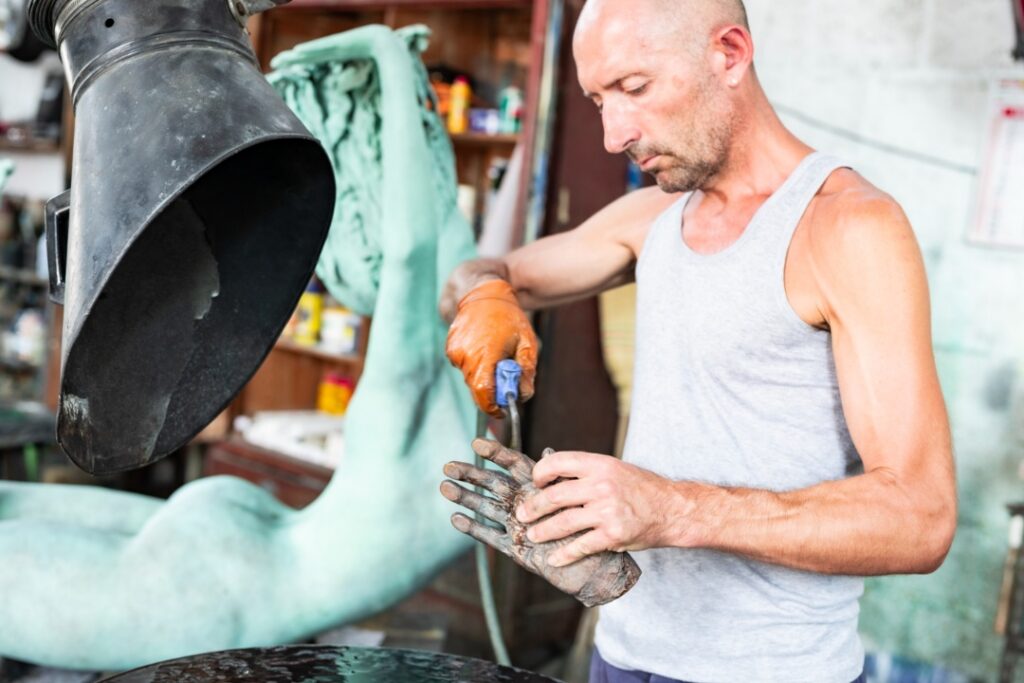
Pietrasanta is part of Versilia in the province of Lucca, on the last foothills of the Apuan Alps. From the Marina di Pietrasanta one can take a dip in the sea while looking back at the alps beautifully laden with white crests of marble. Carrara is just north and there are many sculptors who live in Pietrasanta and access the local stone and bronze for their factories nearby.
(Photo: Bernard Rosenberg)
The town’s Roman origins are still visible with part of the Roman wall overlooking the main piazza. At night, the wall is well-lit with bold colored lights that add drama and delight. During the day, one can visit the museums, such as Museo Padre Eugenio Barsanti, in the Piazza del Duomo and learn more about the history and artifacts that show the progression of the local way of life and artistic practices.
During OperaWire’s visit, Colombian sculptor Gustavo Vélez, who studied at Italy’s Lorenzo de’ Medici Art Institute and Pietrasanta workshops, had a site-wide exhibition across Pietrasanta’s highlighted areas of attraction. “The Dimensions of Equilibrium” included specific moments of perceptual reflection. A favorite of the local children especially, these large open-air marble, bronze and steel works invited one to interact and play. One could observe people peering inside of the cavernous folds, intermittently popping their heads out to see what was on the other side. At the same time, couples lounged back to take selfies with the smooth creamy ripples of the marble as the sunset’s soft pinks and purples hit it just right.
Pietrasanta is a magical place where one can take time to remember the simple acts of humanity and the beauty of art and nature in balance with life’s fullness. The festival’s combining of all these factors is reason enough for anyone to come visit and stay a while.
There are local hotels in the area where one can enjoy Pietrasanta at their own pace and walk to the Chiostro Sant’ Agostino for the festival’s evening concerts. Hotel Palazzo Guiscardo is a favorite with guests and visitors who enjoy the rotating contemporary art on display. The hotel owner’s, Federico Sorbo, sound advice about local excursions that one can do in a day, including the Cinque Terre, leaning tower of Pisa and Carrara day-trips to see the marble up close is very helpful. The hotel’s interior is rich with marble and thoughtful art moments that make one’s stay feel luxurious and chic.
(Photo: Bernard Rosenberg)
The Festival’s Bright Future
In celebrating the festival’s 20th anniversary this year, Guttman and Zhao are developing plans for the years that will come, incorporating vocal performances at the festival and involving more contemporary artists to showcase their work.
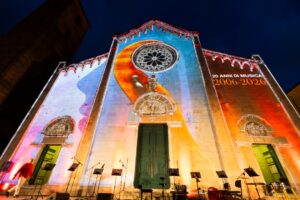
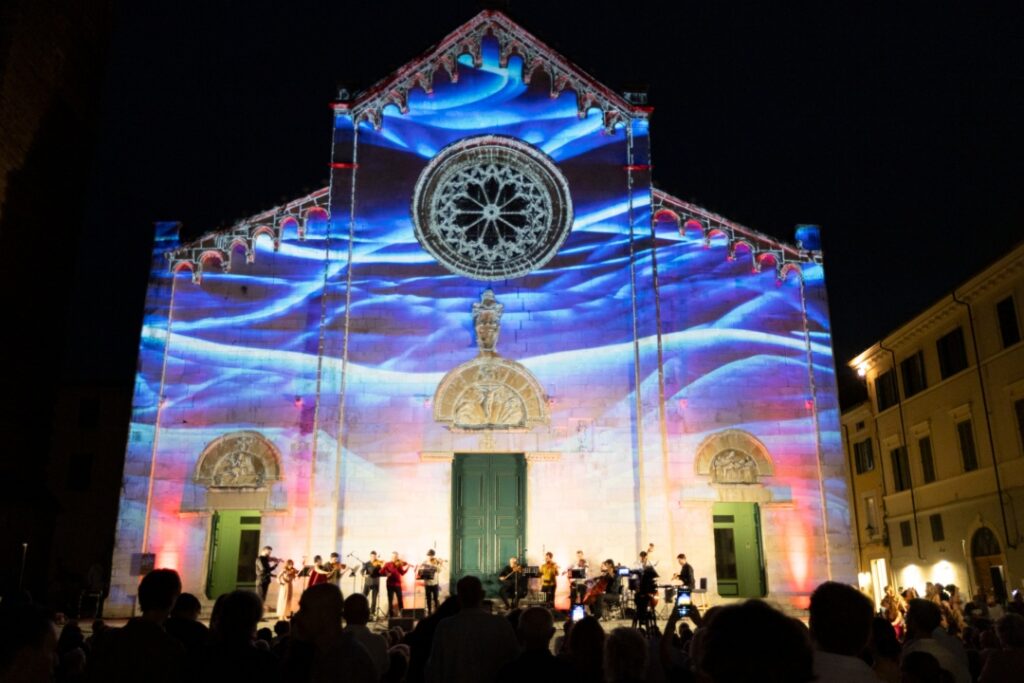
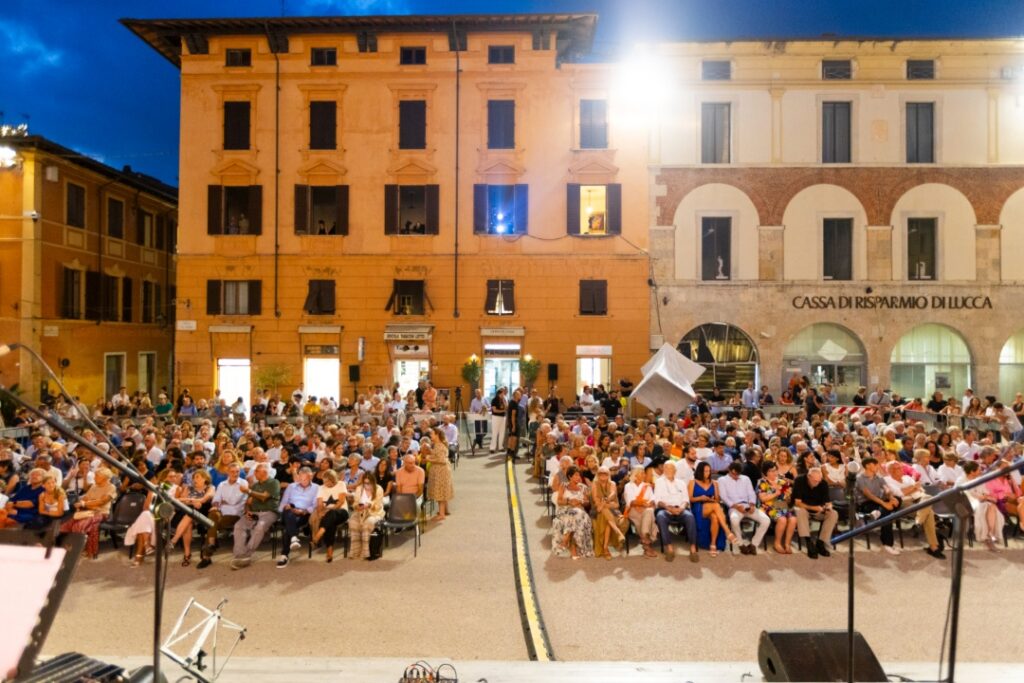
On the last night of OperaWire’s visit, the festival’s evening performance took place on the steps outside the Duomo di San Martino’s facade complete with visual art story-telling by Stefano Leone. The audience filled the entire piazza and applauded the mastery of the musicians combined with intelligent minimal visuals that supported the live music.
Pietrasanta in Concerto’s legacy as a festival that dares to dream, and takes action to make dreams possible for so many people, will continue to inspire musicians and artists around the world for generations to come.
(Photo: Bernard Rosenberg)
Categories
Special Features