Händel-Festspiele Halle 2026 Review: L’Allegro, il Penseroso ed il Moderato
By Mengguang Huang(Credit: Anna Kolata)
When Händel laid aside the nascent blueprint of “Messiah” in the freezing winter of 1740, he was chasing, as Charles Jennens noted, “something of a gayer turn.” That pivotal decision birthed “L’Allegro, il Penseroso ed il Moderato,” a narrative-free oratorio that treats music like a painter’s canvas.
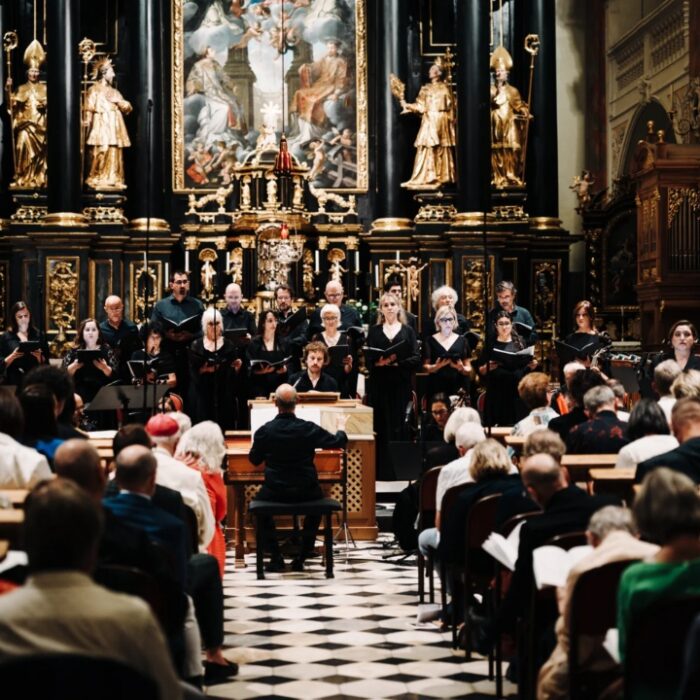
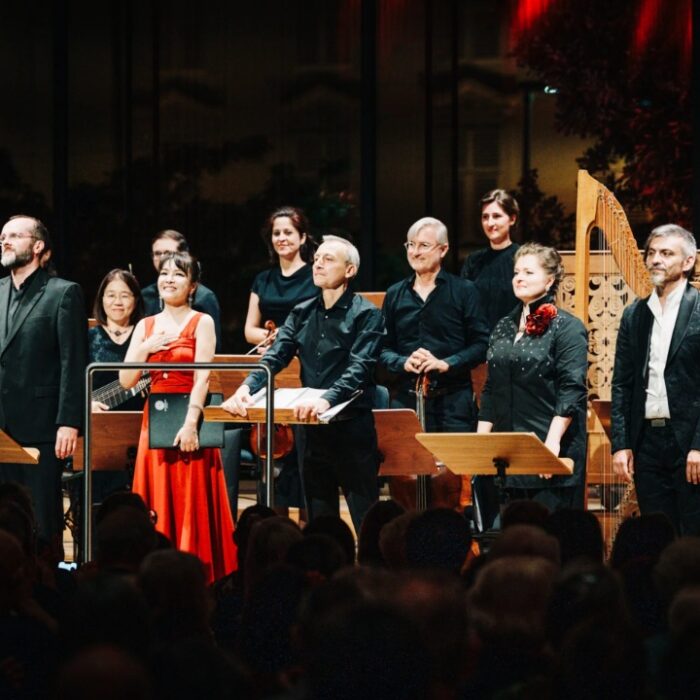
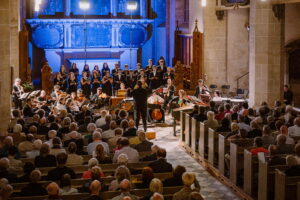
Performing in the austere yet acoustically challenging space of the Dom zu Halle, the production had to contend with an exceptionally long reverberation time. This immense swallow of church acoustics admittedly took a toll on the performance’s finer edges: the English diction of most soloists became difficult to discern, and the string articulation constantly suffered from a slight blur. Yet, the combined forces of the Nova Era Vocal Ensemble and Divino Sospiro, under Massimo Mazzeo, managed to pierce through the acoustic haze, profoundly conveying the subtle nuance of the text and the vibrant imagery of the score.
The vocalists brilliantly demonstrated that Händel’s dualities are not a rigid ideological split, but fluid emotional currents within the same human soul. Soprano Giulia Bolcato beautifully captured this psychological friction. In her vibrant rendering of “Mirth, admit me of thy crew,” her metallic high register and shimmering, bird-like agility felt like shafts of light, conveying a flying energy. Yet, proving that no soul is monochrome, Bolcato effortlessly pivoted in her later episodes to deliver a more comforting, golden voice. By juxtaposing this radiant warmth against the starker, introspective passages of the score, she mirrored the fluid structural contrasts that Jennens and Handel intended, keeping the audience’s empathy constantly engaged.
This organic shifting of temperaments found its spiritual anchor in soprano Valentina Varriale. Her performance of the breath-taking aria “Sweet bird, that shun’st the noise of folly” was a vivid demonstration in Baroque sensitivity. Varriale floated her long, sustained lines, while her exquisite dialogue with the solo flute achieved an illustrative excellence. Supported by the bassoon’s expressive foundation, her voice grew remarkably flexible in its high register, transforming this expensive aria into a piece of genuine spiritual zenith. This peak was later balanced by her reading of the tragic “But O, sad virgin;” here, over a delicate cello accompaniment, Varriale exercised a sublime long breath control, channeling a deeply sacred melancholy that went straight to the heart. An “Orpheus” moment in the whole oratorio.
The twilight and sacred core of this contemplative journey belonged to Candida Guida. In section nine’s accompagnato, “There, held in holy passion still,” her rich voice entered enveloped in an aura created by the strings; her superb vocal control instantly conjured a profound, sacred feeling. This early solemnity reached its ultimate fulfillment in section 32 with the invocation, “May at last my weary age.” Shifting into the exquisite realm of a chamber cantata, Guida’s voice dialogued purely with the austere pulse of a solo cello and harpsichord.
The male soloists provided the essential narrative drive and final philosophical resolution to this emotional tapestry. Bass-baritone Sergio Foresti delivered the rationalist text of Il Moderato with a warm, measured dignity, translating Jennens’ intellectual defense of the “golden mean” into an act of heartfelt human kindness.
Meanwhile, Tenor Benoit-Joseph Meier maintained his astonishingly energetic presence from his early entries—steering the audience from the whistling ploughman to the urban hum—before reaching the martial delivery in section 30, flanked by a distinctly Handelian flare of trumpets and timpani: the grand church organ formally entered the acoustic space, dramatically altering the evening’s weight.
This grandeur dissolved into the profound intimacy of section 33. Here, after Varriale broke the silence alone, the Nova Era Vocal Ensemble gradually joined her in this somber fugue. With the austere accompaniment of a chest organ, the performance achieved a devout, serious gravity that felt deeply inward and meditative.
The final resolution arrived in the final Part Three duet, “As steals the morn upon the night.” Here, Meier and Varriale intertwined their lines with a glossy beauty against the warm textures of the woodwinds. This, perhaps, was Handel’s deepest insight: that joy and melancholy are not opposites to be resolved, but companions to be held. Mazzeo’s reading understood this completely.