Festival Verdi 2026 Review: Alzira
Soprano Marta Torbidoni as Alzira Gives Compelling & Dramatic Performance
By Ossama el Naggar(Photo: Roberto Ricci – Festival Verdi)
A Colonial Tragedy Diminished by Melodrama
Giuseppe Verdi’s “Alzira,” premiered in Naples in 1845, has enjoyed a curious afterlife. The composer’s own alleged verdict, “questa è proprio brutta” (“this is really ugly”), has become almost more famous than the opera itself. His eighth stage work, and one of the least performed in his catalogue, has long been regarded as an unfortunate miscalculation. Yet its appearance at the Teatro Regio di Parma for the Festival Verdi offered an opportunity to reconsider a score whose reputation has perhaps obscured some genuine musical merits. Under James Conlon’s direction, the work (seen October 17) emerged as a more interesting musical proposition than its standing might suggest, even if Salvatore Cammarano’s dramatically deficient libretto failed to realize the full potential of its subject.
(Photo: Roberto Ricci – Festival Verdi)
The comparison with Verdi’s surrounding operas was inescapable. “Alzira” followed “Ernani” by barely a year and preceded “Macbeth” by two, yet the gulf between these works was considerable. The former’s impassioned theatricality and the latter’s psychological violence demonstrated how effectively Verdi could transform dramatic material into music of compelling urgency. “Alzira,” by contrast, remained unevenly constructed, its promising confrontations repeatedly undermined by abrupt transitions and a conclusion that demanded more psychological preparation than the libretto supplied.
The fundamental problem lay not in the choice of subject but in its adaptation. Voltaire’s “Alzire, ou les Américains” (1736) was an Enlightenment tragedy that questioned colonial domination, religious intolerance and the moral authority claimed by European conquerors. Cammarano retained the broad outline of this confrontation but reduced much of its intellectual complexity to the conventions of Italian melodrama. The struggle between the Spanish governor Gusmano and the Indigenous warrior Zamoro became entangled in a romantic rivalry, while Alzira, the woman both men desired, was too often relegated to the position of a prize contested by opposing powers.
(Photo: Roberto Ricci – Festival Verdi)
The result was a drama in which the political and philosophical implications of conquest remained insufficiently developed. The Spaniards’ professed Christianity sat uneasily beside their domination of Peru, while the resistance of the conquered population was presented principally through suffering and the desire for revenge. The potential for a more searching examination of oppression, complicity and the perpetuation of violence was evident, but the libretto seldom pursued it beyond the immediate requirements of the plot.
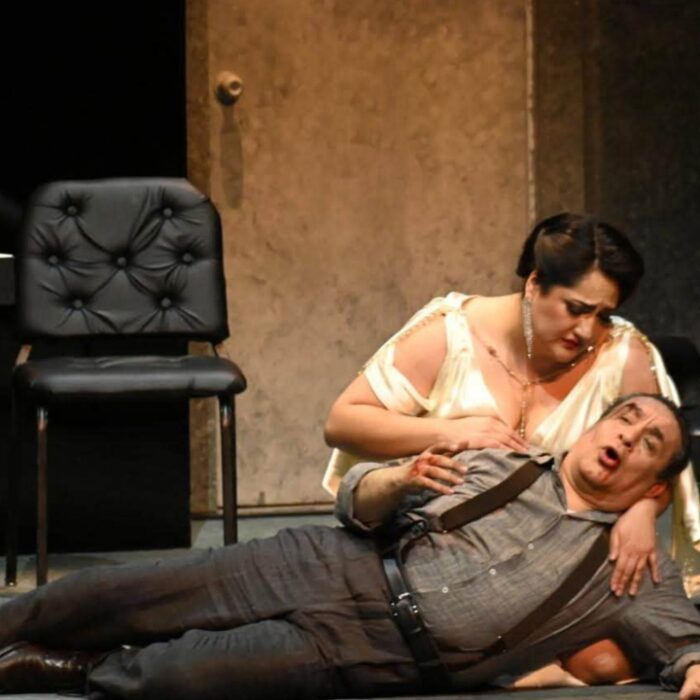
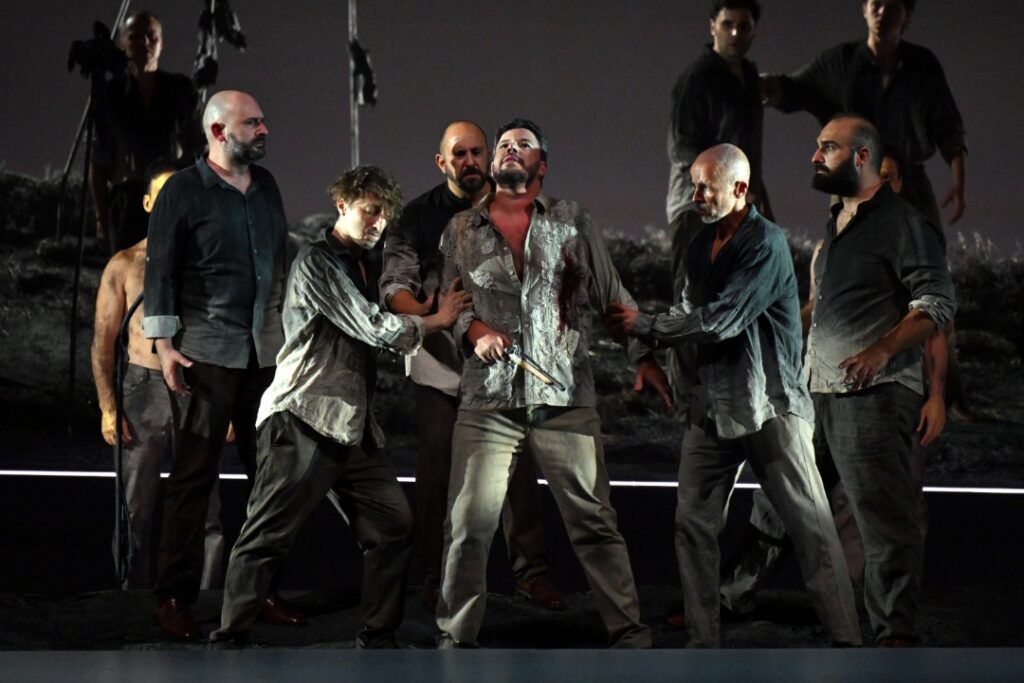
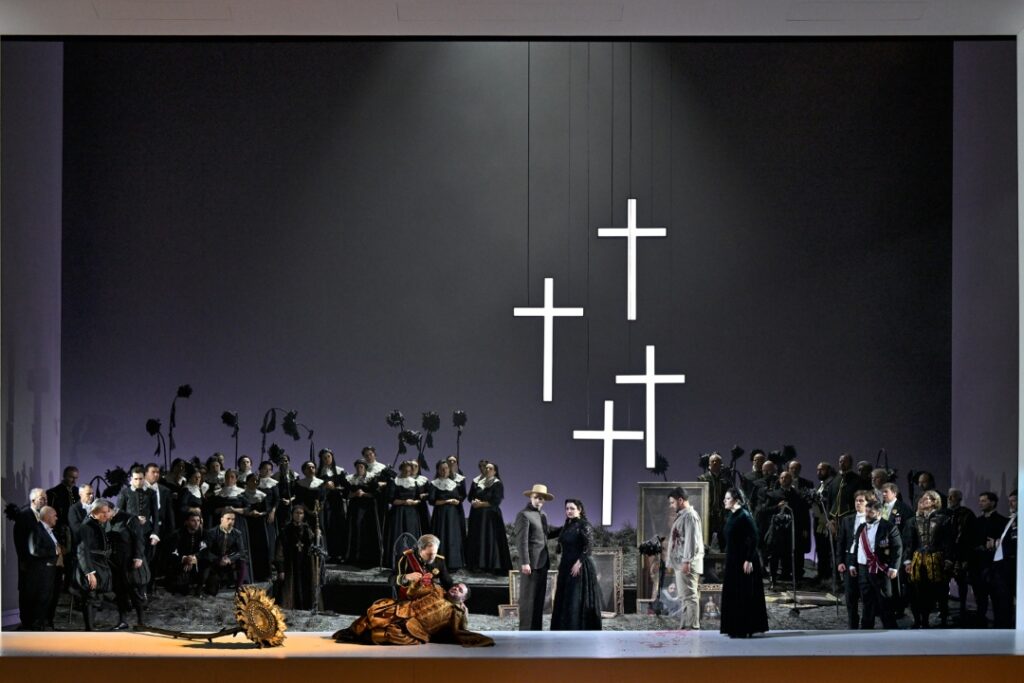
The most problematic instance was the finale. Gusmano, who had been portrayed as an authoritarian ruler and an implacable rival, forgave Zamoro after receiving a mortal wound, relinquished his claim to Alzira and blessed the lovers. The gesture was intended to transform the dying governor into an instrument of reconciliation. Yet his conversion seemed more expedient than earned, the consequence of a dramatic necessity rather than the culmination of a sustained moral struggle. This was further aggravated by a staging that Manuel Renga’s staging which rendered Gusmano even more detestable and immoral than he is in Cammarano’s libretto. Voltaire’s original play had also concluded with forgiveness, but its philosophical framework provided a context that the operatic adaptation substantially weakened.
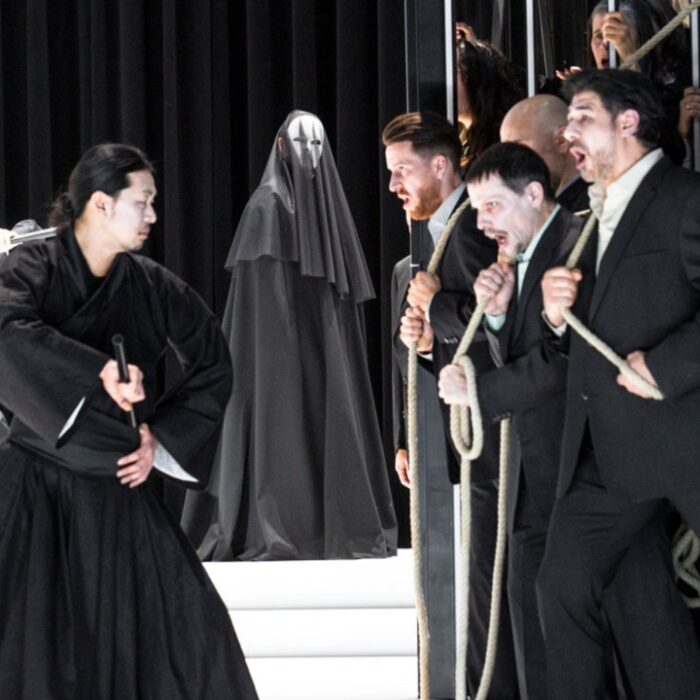
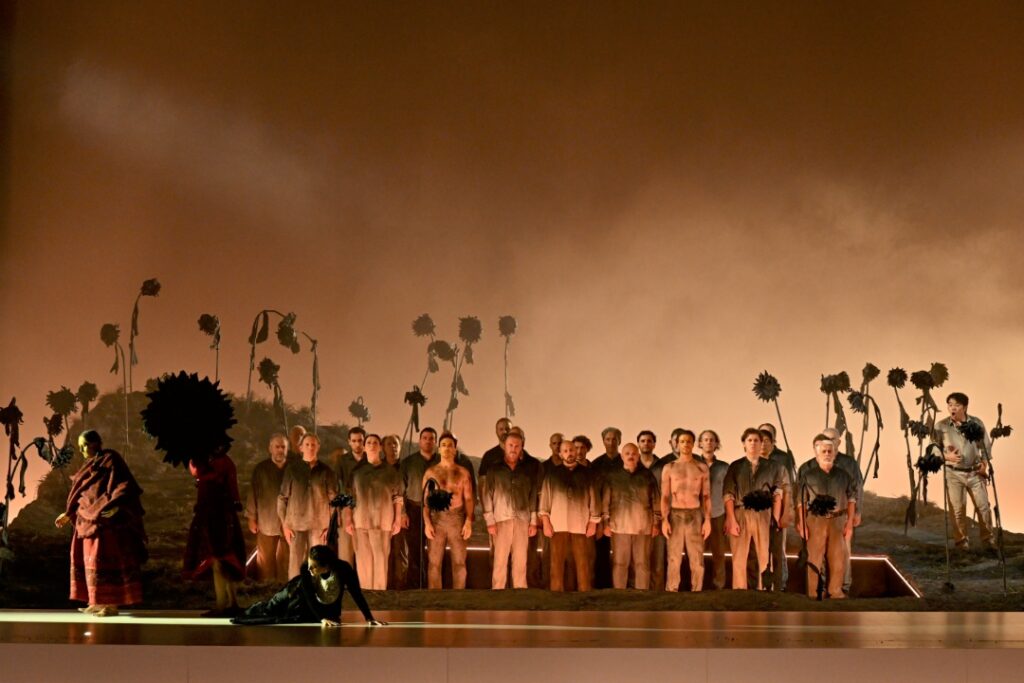
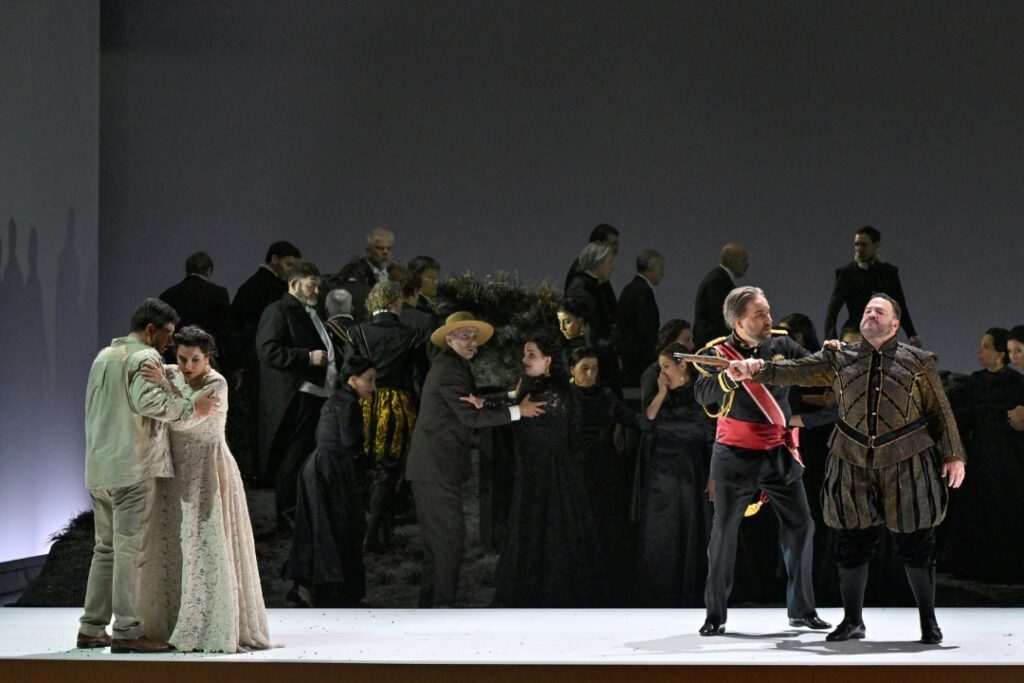
Renga sought to restore some of this missing dimension by approaching the work through the lens of colonial history and its continuing political implications. His production resisted the temptation to turn Peru into a picturesque exotic landscape, instead emphasizing the asymmetry of power between conquerors and conquered. A vast canvas depicting a scene from Hell, in the manner of the sixteenth-century Flemish master Pieter Bruegel the Elder, served as a backdrop at various moments. Its inclusion was particularly apt, evoking the suffering and torture inflicted upon the subjugated Incas by their Spanish conquerors.
(Photo: Roberto Ricci – Festival Verdi)
Both the Spanish rulers and the indigenous population were portrayed en deux temps, their costumes juxtaposing the period in which the opera was set with that of its composition. The natives appeared at times in appealing, stylized Inca attire and at others in nineteenth-century garb evocative of the Mexican Revolution. The Spaniards, meanwhile, alternated between the dress of sixteenth-century courtiers and that of nineteenth-century aristocrats, thereby establishing a visual dialogue between the historical period represented and the era in which the opera was written. Several paintings in the style of the Spanish Golden Age (Siglo de Oro) adorned Gusmano’s quarters, further reinforcing the production’s historical and aesthetic framework.
This visual conception combined elegance with a clearly articulated purpose. Its political intentions were commendable, as the juxtaposition of historical periods underscored the enduring structures of domination and oppression without sacrificing the production’s visual coherence.
Musical Highlights
Musically, Conlon provided the performance with a much-needed sense of direction. His reading brought out the score’s rhythmic vitality, orchestral color and theatrical impulses, revealing passages of considerable expressive force beneath its conventional architecture. The Filarmonica Arturo Toscanini offered effective support, and the choral contribution helped establish the collective dimension of the conflict. Conlon did not pretend that the score possessed the structural mastery of Verdi’s later operas; rather, he made a convincing case for its own particular qualities. At times, however, the pacing became overly expansive, especially in passages that would have benefited from greater forward momentum.
(Photo: Roberto Ricci – Festival Verdi)
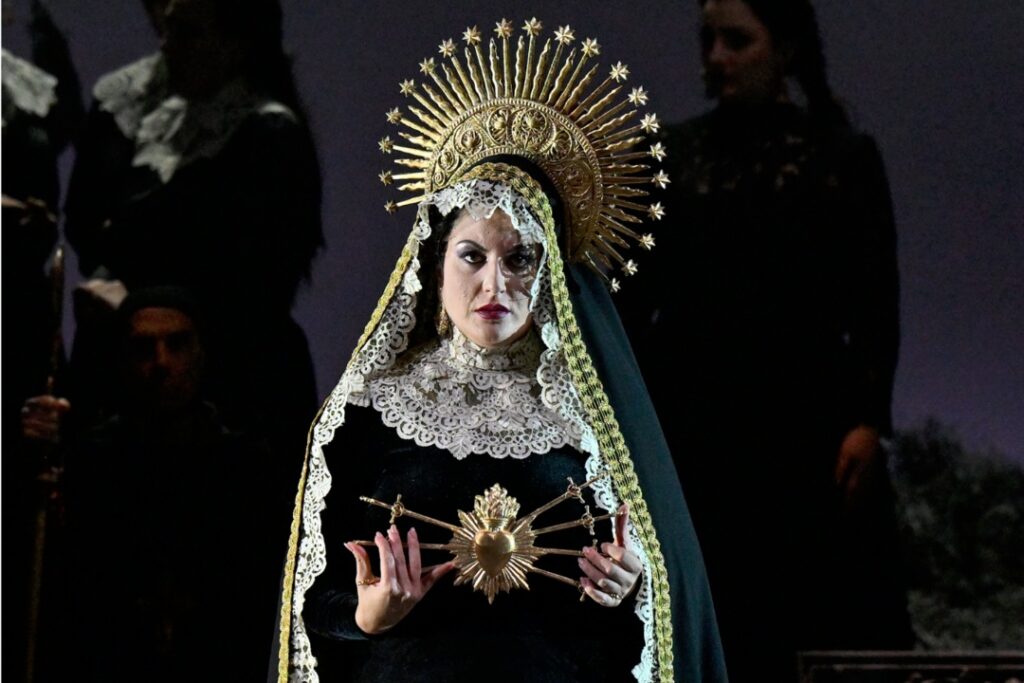
Marta Torbidoni as Alzira
The cast was led by Marta Torbidoni, whose stage presence made her the production’s most compelling singer. Her performance possessed an immediacy and dramatic authority that commanded attention. She conveyed Alzira’s predicament with considerable intensity. Yet the casting of so imposing a spinto soprano in a role more commonly associated with a lyric voice raised legitimate questions about vocal suitability. Having recently appeared as Abigaille in “Nabucco” at the Arena di Verona and as Lady Macbeth in “Macbeth” at Macerata the previous summer, Torbidoni brought a distinctly dramatic profile to the part. Her instrument was substantial, penetrating and naturally commanding, rather than the lighter, more pliant voice many listeners might expect of Alzira. The result was compelling in terms of personality and stage authority.
(Photo: Roberto Ricci – Festival Verdi)
Antonio Poli as Zamoro
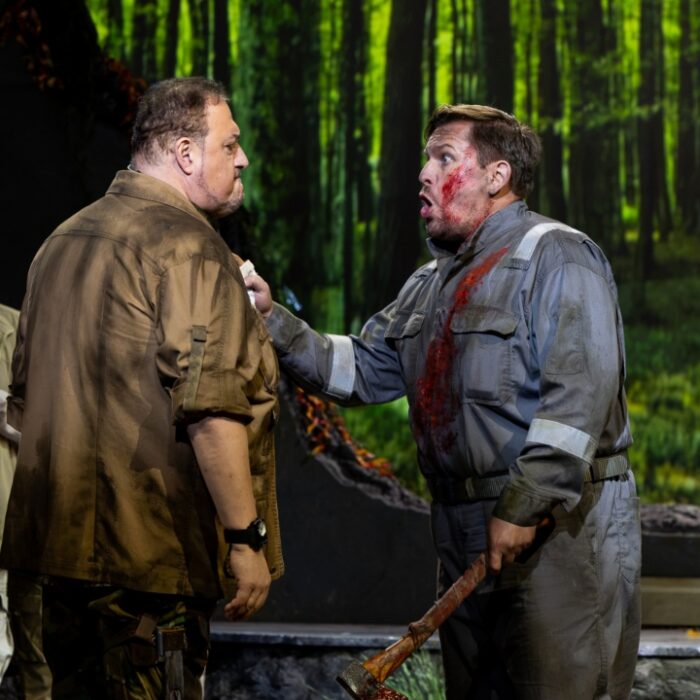
Having heard Antonio Poli as Manrico in “Il Trovatore” in Venice a few years ago and as Macduff in the aforementioned Macerata “Macbeth” last season, I regard him as a rising star on the Italian operatic scene. He brought ardor and a ringing tenor to Zamoro, imbuing the character with a persuasive blend of romantic intensity and defiance. His fresh lirico spinto tenor was a delight, endowed with brilliant squillo and an easy command of the upper register. His clear diction and direct approach suited the role’s uncomplicated emotional profile, even if the vocal writing did not always afford him the opportunity to develop a more nuanced characterization
More Illuminating Cast
Daniel Luis de Vicente offered an imposing Gusmano, though the sheer weight of his delivery occasionally substituted vocal force for psychological shading. His portrayal would have benefited from greater subtlety and psychological nuance, which might have lent the otherwise unconvincing finale a measure of credibility. Bass Alessio Cacciamani portraying Gusmano’s father Alvaro and the remaining cast contributed effectively to the ensemble.
Ultimately, Festival Verdi’s “Alzira” made a respectable case for the opera without overturning its reputation. Verdi’s score contained melodic appeal, dramatic energy and flashes of orchestral imagination, but the work’s larger weaknesses were rooted in the libretto’s failure to convert an intellectually ambitious source into a coherent theatrical experience. Renga’s production recovered some of the political urgency, while Conlon and the cast ensured that the music received serious and committed treatment.
The evening’s greatest achievement was therefore one of reconsideration rather than rehabilitation. “Alzira” did not suddenly emerge as a neglected masterpiece, but it proved more worthy of attention than Verdi’s dismissive remark might imply. Its shortcomings were real, and no staging could entirely repair them; nevertheless, this revival demonstrates why even an imperfect early work by a composer of Verdi’s stature deserves to be heard beyond the confines of historical curiosity.