Palacio de Bellas Artes 2026-27 Review: Tosca
Mexican Soprano Yunuet Laguna as Tosca Gives an Extraordinary Performance
By Bernardo Gaitan(Photo: © Arturo López / CNO / INBAL)
One of the greatest challenges facing a stage director presenting a new take on a classic such as “La bohème,” “La traviata” or “Il barbiere di Siviglia” is to find an idea or concept that neither distorts the story nor betrays the libretto, while also offering something innovative or daring enough to prevent the production from going unnoticed. This must be achieved regardless of the budget and the theater’s specific requirements.
Lombana’s New Production Details
Ópera de Bellas Artes entrusted Luis Miguel Lombana with a new production of “Tosca.” After dozens of performances of this Puccinian classic at the Palacio de Bellas Artes, the also actor opted for an approach that works in broad terms, although he never fully develops his concept. Lombana offers a quasi-traditional, minimalist staging, driven more by budgetary constraints than by artistic choice, in which he attempts to make the most of the available resources, achieving a result that barely rises above the acceptable. Rather than setting the action on a specific date in 1800, as explicitly indicated in Illica and Giacosa’s libretto and in Victorien Sardou’s extensively documented book, he places it in the 1920s.
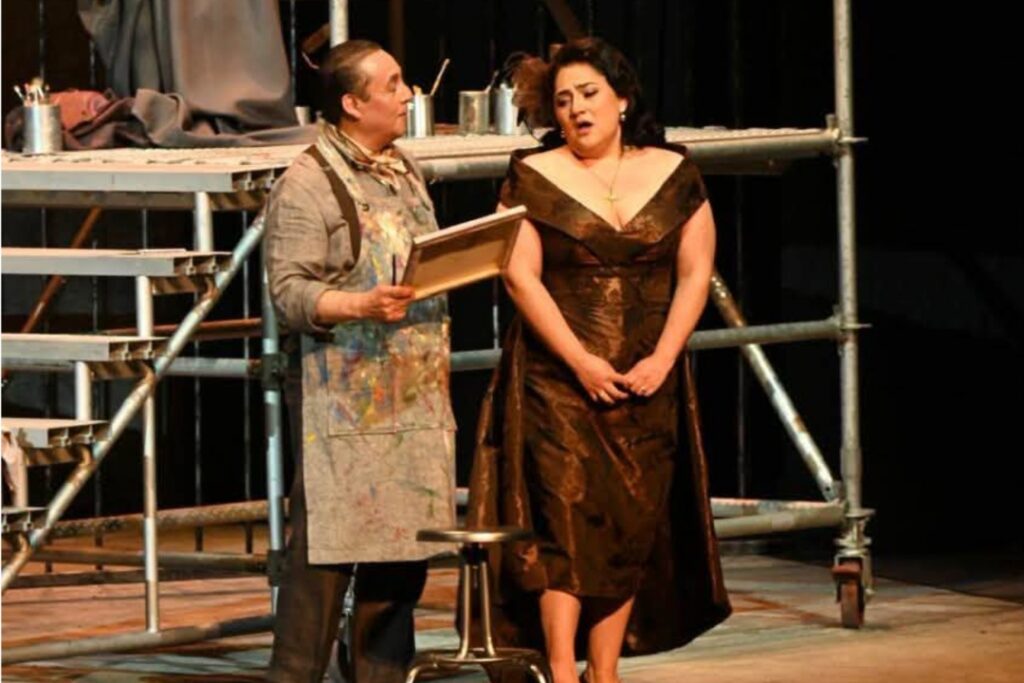
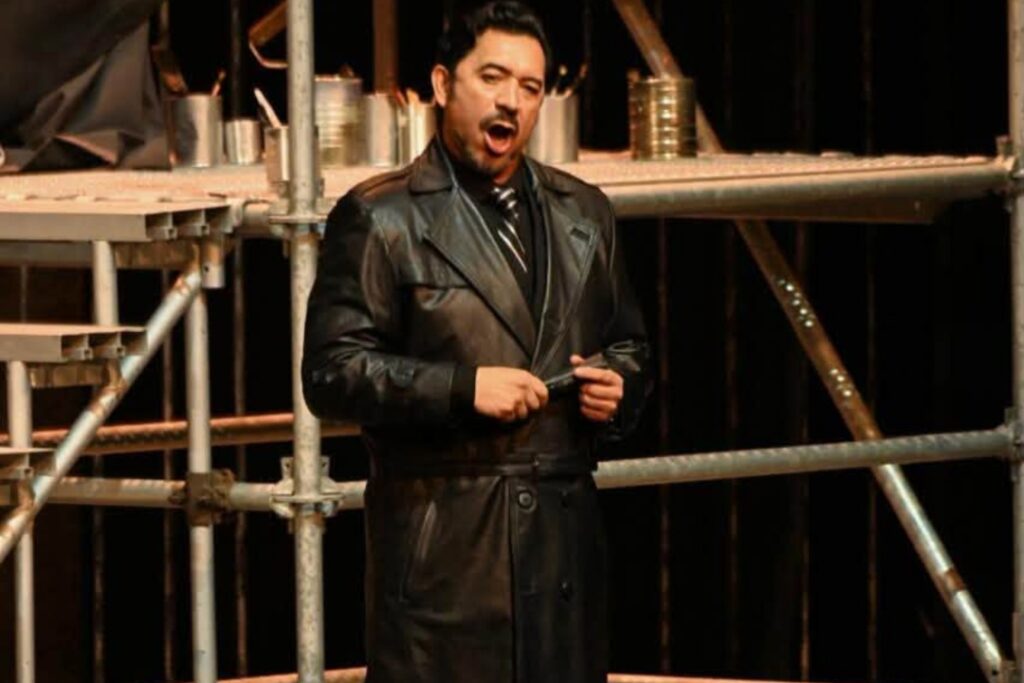
Working in close collaboration with Jerildy Bosch, the costume designer, she presents Scarpia and his henchmen as gangsters, wearing long trench coats in the style of Al Capone and dark suits. Cavaradossi, by contrast, is dressed anonymously, with no particular element identifying him with a specific period, apart from a beret in Act two. For Tosca, they provide a discreet brown dress for her first appearance and a far more evocative white dress for the final two Acts, complemented by an elegant white fur stole.
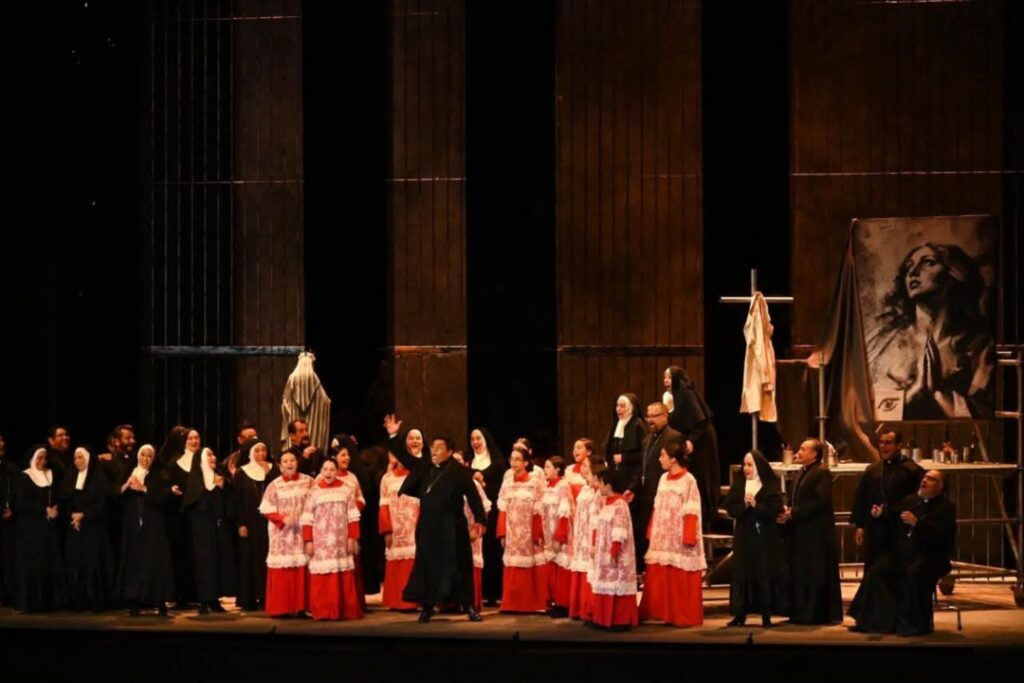
The set design and lighting by Jesús Hernández create a space that is sparsely furnished and highly contradictory. Act one takes place in a desperately poor church, which we recognize as such thanks to a statue of the Virgin Mary and a baptismal font. There, Cavaradossi also paints the Maddalena in black and white, an entirely untenable choice given that an entire duet revolves around Tosca’s black eyes and the Attavanti’s blue ones, not to mention that the famous aria “Recondita armonia” begins with Cavaradossi’s request to the Sacristan: “Dammi i colori” (give me the colors). It remains unclear whether this nonsensical monochrome approach reflects a deliberate choice by Lombana or reveals the regista’s lack of knowledge.
(Photo: © Arturo López / CNO / INBAL
As if this were not enough, in the opening duet between Tosca and Cavaradossi, Lombana exaggerates the heroine’s jealous nature to such an extent that the drama turns into comedy. Tosca’s jealousy is taken to such extremes that the scene provokes laughter from the audience, something hardly customary in any theater in the world when Tosca is performed. Far from being a tragedy with anything to laugh about, Lombana’s staging ends up eliciting bursts of laughter from the audience. Once again, the question arises: was this what the creative team intended? A disruptive and contradictory interpretation or, on the contrary, an idea that got out of hand, leaving the audience unable to grasp the meaning of the regia and ultimately laughing instead?
To this we must add the thoroughly dismal contribution of video designer Giselle Hauscarriaga, who introduces projections that are entirely out of place and devoid of meaning. One example is a set of windows that open and close as if by magic, but only in a single scene; in other words, the idea behind the animations is not developed recurrently throughout the opera. In Act two, images of virgins are projected, while at the end the faces of Cavaradossi and Scarpia appear facing each other in a still image as Tosca flees the scene. Act three, meanwhile, unfolds in the same stage space as Act one, but without the Virgin Mary and the baptismal font: the bars that previously represented the interior of the church’s chapels now stand for the cells of Castel Sant’Angelo. In any case, despite so many missteps, the production works both scenically and conceptually.
Illuminating Music & Vocal Performances
From the pit, the result is somewhat better, though not by much. Stefan Lano conducted a performance that was generally correct and academically sound. At times, he considerably slowed the tempi, presumably in pursuit of greater dramatic intensity, with positive results. The Boston-born conductor offered a technically correct reading of the work; there is little of significance to reproach him for on that front, since he adhered to what is written in the score. His interpretation, however, is cold and lacks the Italian melodramatic style required to approach Puccini properly. The almost poetic lyricism was also absent from his reading, compounded by the Orquesta del Teatro de Bellas Artes consistently embarrassing performance in the wind section, particularly in Act three. Curiously, in Act one the orchestra delivered a fairly respectable performance. Special mention must go to the percussion section.
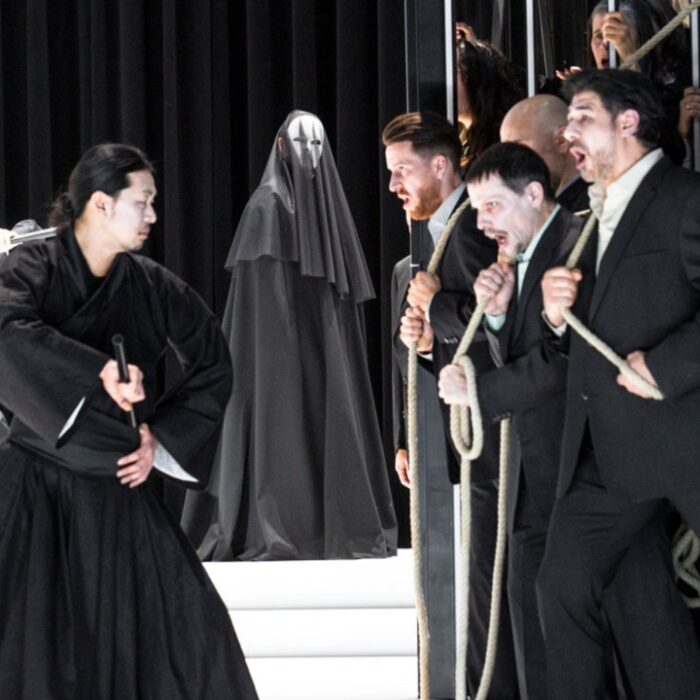
Lano’s control of volume was equally inconsistent, often covering the singers. In the choral passage “Sale, ascende l’uman cantico,” the off-stage chorus sang so loudly that it became impossible to hear what is happening on-stage. The theater’s chorus was also uneven and imprecise. Under the direction of Rodrigo Cadet, it delivered a “Te Deum” whose impact derived more from the sheer number of forceful, sonorous voices than from precision. Not to mention that they remained static throughout the entire, big number: a fault that lies with the regia, not with them.
(Photo: © Arturo López / CNO / INBAL)
Yunuet Laguna as Tosca
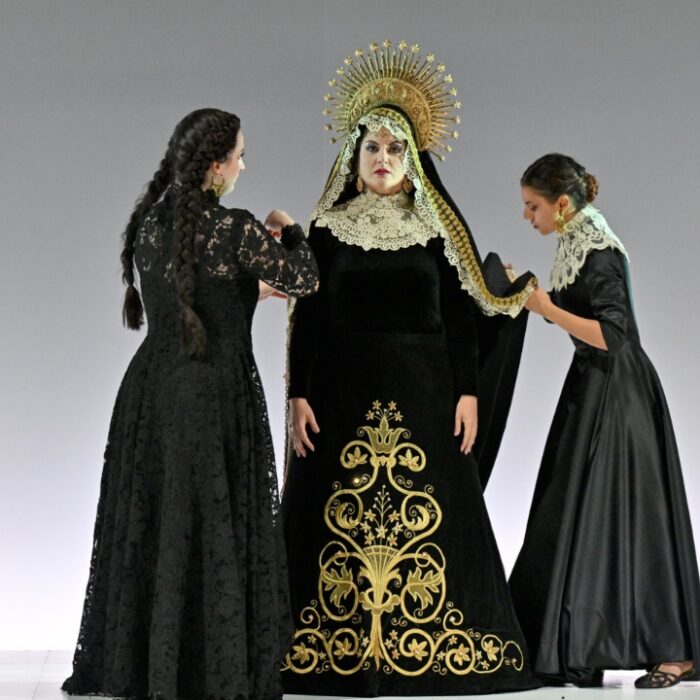
The artist who unquestionably carried not only the evening but the entire season, making this production worth seeing and remembering, is Yunuet Laguna. It hardly needs to be said that the Mexican soprano possesses immeasurable vocal talent. Her voice is beautiful, but what is truly praiseworthy is that she knows exactly what to do with it. Anyone familiar with the field of vocal pedagogy knows that large voices are the most difficult to tame and develop: singers often overindulge in volume, shouting indiscriminately to display their power. Laguna, by contrast, knows precisely what to do and when to do it. Naturally, when she needed to unleash her power, she did so without breaking a sweat, making the Palacio de Bellas Artes reverberate. Yet when she tackled a mezza di voce or a pianissimo, she not only executed them successfully but also knew exactly how to shape them. Her “Vissi d’arte” was truly a performance for the ages, brimming with emotion and drama. The moment that brought tears to the eyes, however, was the final phrase, “Ah, ah, perché me ne rimuneri così.” After a powerful B-flat that allowed her to unleash the full force of her voice, she ended with an E-flat in filato that gradually grew in a crescendo until it broke into sobs at the close of the aria. This is unquestionably a voice that deserves to be heard far more often, given its extraordinary technical and vocal capabilities.
(Photo: © Arturo López / CNO / INBAL)
More Stellar Cast Highlights
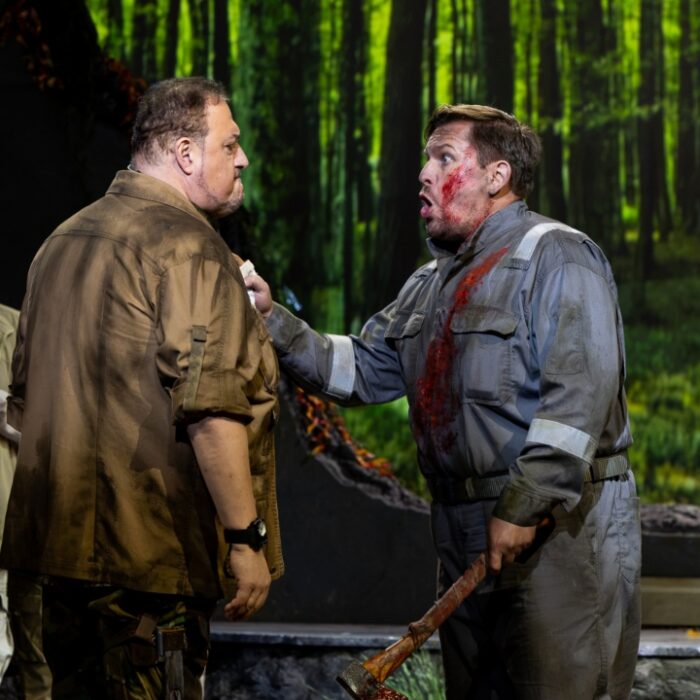
The soloists, by contrast, considerably improved matters. In the role of the evil Baron Scarpia, baritone Luis Ledesma created a richly characterized stage persona. His acting was impeccable: he exchanged knowing glances with his henchmen, flashed cynical smiles at Tosca and made his contempt for Cavaradossi unmistakable, confirming his stature as a fine actor. Endowed with a creamy, elegant vocal timbre, he nevertheless had limited vocal power and was at times virtually inaudible. He compensated for this lack of volume with his acting intensity and solid vocal skills.
Tenor Carlos Arturo Galván as Mario Cavaradossi more than met the demands of Puccini’s intense role. The Mexican tenor possessed a voice of imposing acoustic presence. His powerful instrument retained a squillo of remarkable beauty, unmistakably reminiscent of the golden age of opera, along with an elegant metallic timbre and enviable projection. His middle and upper registers were beautiful, although at times slightly disconnected. When he reached the high notes, however, he transformed completely, producing perfectly placed notes with enviable overtones and extraordinary beauty. He began by warming up with “Recondita armonia,” delivering a competent but cold performance, as though saving himself for what was to come. By the cry of “Vittoria, Vittoria!” he had hit his stride, and throughout the remainder of Act two and all of Act three he became a veritable war machine.
The bass José Luis Reynoso was equally effective. With a homogeneous voice and an elegant, cavernous timbre, he gave an excellent portrayal of Cesare Angelotti. Abel Pérez, meanwhile, created a very likable, good-natured and also funny Sacristan, a character worth remembering. The remaining roles were also effective both dramatically and vocally: Álvaro Anzaldo as Spoletta, Carlos Suárez as Sciarrone, César Becerra as the Jailer and Elizabeth Landa as the Shepherd Boy.
By contrast, the surtitles also left much to be desired, both in quantity and in the quality of the translation, which could may have confused audience members less familiar with the work. The simplistic adaptation, the “colorful” chiaroscuro, and the overacting ultimately contributed, unintentionally, a dose of humor to “Tosca” that Puccini, needless to say, never had in mind.