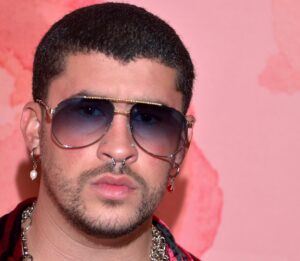
Editorial: What Bad Bunny’s Super Bowl Halftime Performance Means For Me As a Young, Latina Opera Singer
By Xochitl Hernández-
(Photo Credit : © Glenn Francis, www.PacificProDigital.com)
“You sing this piece very well and it is interesting, but not well-known. It’s risky to do this repertoire in a conservative industry that more likely favors the rep they will know and understand. Something they can compare it to.”
I’m hearing these words from a successful opera professional. This person is nice and I can tell is trying to acknowledge the uniqueness of my Spanglish aria by a Mexican American composer that I had just got done singing for the day’s competition. But it’s clear their newness to the piece whilst even commenting on my successful portrayal of the character, beautiful acting, and apt vocal technique was not enough to sway them away from their penchant for singing the classics by composers we opera aficionados all revere as founders of the art.
These are composers I truly love as much as any opera professional, and desire to sing for the rest of my days, but truthfully compare differently to how Mexican composers like Agustin Lara, Manuel Ponce, Salvador Moreno and other Latin American composers relate to me in my heritage.
I walk away from that feedback like I often do from industry leaders who have told me this comment many times before about my Spanish pieces or pieces by Latin American composers. They’re well-intentioned and I try my best to take it humbly and with understanding of certain points they make. But how I wish I could instead be applauded for singing pieces that say something about me as a Latina artist and me as a Spanish speaker rather than a “that’s great but…” and then turn towards fitting me in the typical opera box.
So when I saw Bad Bunny on the American stage of the Super Bowl LX halftime show, my feelings centered on empowerment and relief. Empowerment that another artist gets it and wants to celebrate who we are for the world to see. Relief for the breath I’ve been holding for my community while in this social climate.
It seems like everyday there’s a new report on clashes between Immigration and Customs Enforcement and citizens; plus daily reports of immigrants being detained and deported, a plethora I’ve seen in my hometown of Los Angeles, California. As tensions continue to erupt nationwide under the increase in ICE detainments, we continue to see Latinos, whether undocumented or legal American citizens, reportedly fearing for their lives with accounts of residents hesitant to leave their house, attend church, or even speak Spanish due to experiences of racial profiling.
In the midst of all of this, Bad Bunny delivered a performance that celebrated what thousands of Latin Americans have reportedly been feeling they have to hide: their identity.
There are about 68 million Latinos in the United States accounting for 1 in 5 Americans, according to Pew Research. The United Nations Economic Commission for Latin America and the Caribbean gathers Latin America and the Caribbean’s population exceeds 662 million. Not to mention the millions of Latinos living in Europe and Asian countries, totalling the exact number of Latinos worldwide as almost unfeasible. However, as the fastest growing ethnic population nationwide and one of the fastest growing worldwide, growth in the opera industry has followed much slower.
When I first started training classically at the age of 18, I felt foreign to this industry as someone completely unfamiliar to the classical world and unaware of role models I could relate to. Over the years, I have worked to become more familiar with the orchestras, opera houses, and conservatories that successfully grace all of Latin America and have come to be inspired by Latino singers, conductors and artists both young colleagues of mine and also those famously successful. Be that as it may, Opera America’s 2021 opera demographic report still found that 77 percent of administrative staff and 81 percent of opera industry leaders were white while the United State’s growing BIPOC community accounts for almost half of the population.
As a Chicana woman who comes from a family of Mexican immigrants and migrant farm workers, I may not be Puerto Rican, but I saw my grandparents in Bad Bunny’s opening scene of the sugar cane plantations synonymous to the 10-hour days of back-breaking work my abuelitos did in both Mexico and here on U.S. soil. I saw my elders from my own family, and the Afro-Latino community that became my own while living in Miami, in the scene where elders were playing dominoes. I saw the nod to Los Angeles Mexican taco culture with the appearance of Villas Tacos. And I saw myself as the child sleeping on the three chairs in the wedding scene, a universal Latino experience.
From the Puerto Rican and Mexican American boxers, the nail salon pop-up and a beautiful mixture of Latinos and Afro-Latinos dancing, every scene was a relatable experience that shaped mine and my community’s upbringings. Bad Bunny’s halftime extravaganza put the Latino diaspora on display. He featured violinists from the all-female Mariachi Divas playing to his hit “MONACO” conducted by Nicaraguan-Costa Rican Maestro Giancarlo Guerrero, the Coco Frío stand run by a Salvadorean immigrant woman, the iconic Toñita’s Caribbean Social Club, the Argentine production designers Frederico Laboreau and Maximiliano Pizzi, and the intro being shot in the Dominican Republic. It’s hard to name all the ways Bad Bunny’s performance represented countless nuanced Latino experiences. But if we have a hard time naming all the ways he represented us, perhaps a good save is when he brought out every flag in the Americas at the cue of his “God Bless, America,” reminding us that America is more than a country but an entire continent booming with diversity and culture.
I think people get scared of the word “political,” perhaps because they think it means taking a knowledgeable stance on every political issue as if one is a politician themselves. But to say something was “political” simply means providing commentary or impact on society and human interest topics.
Bad Bunny’s performance was that. Simply because of the joy and power of music. Was that not also the case with every great classical composer?
Verdi’s operas provided great Italian patriotism and unification, especially powerful in calling for freedom under Austrian rule which led authorities to strictly censor “Nabucco’s” “Va, pensiero,” a chorus that Italians rallied around as an unofficial national anthem for independence. Mozart’s comedy “Le nozze di Figaro” is based on a play that criticized aristocracy and helped cement anti-bougeroise sentiment for the French Revolution. Bizet’s “Carmen” was considered so radical and scandalous for its depiction of working-class women and the power struggle of class and gender that Bizet died believing it was a failure. More recent examples out of many are Anthony Davis’s “The Life and Times of Malcolm X,” John Adams’s “Nixon in China” and Jose “Pepe” Martinez’s mariachi opera “Cruzar la Cara de la Luna.”
Bad Bunny’s utilization of music sampling and lyrics is synonymous with that of some of our most adored opera composers. Puccini’s use of church music in the “Te Deum” of “Tosca’s” Act one in addition to arias throughout the work such as “Vittoria! Vittoria!” mirrors the political struggle of the Napoleonic wars battling between revolutionaries and monarchical rule partnered with the Catholic Church. Similarly, Bad Bunny’s hit “Tití Me Preguntó,”or “Auntie Asked Me,” while an infectious dance beat, actually communicates a deeper issue in society– the encouragement of over-sexualization and womanizing behavior often perpetuated unknowingly and jokingly by the older generation asking boys “do you have a lot of girlfriends,” as quoted in the song’s famous lyrics. When the song’s narrator grows older, he wrestles with “I’d like to fall in love, but I can’t” and then his aunt wonders why he struggles to settle down.
Music borrowed from other cultures is also prominent amongst opera’s exoticism; a fitting example being the chromatic instrumentation in attempts to evoke a middle eastern atmosphere in “Mon cœur s’ouvre à ta voix” from “Samson et Dalila,” which takes place in a Philistine Biblical story. “Carmen” aficionados can recognize the haunting motif throughout the opera, an omen to Carmen’s tragic fate. Likewise, Bad Bunny utilizes motifs and music sampled from Puerto Rican and other Latin greats. An example being “Un Verano en Nueva York” by El Gran Combo de Puerto Rico sampled in Bad Bunny’s “Nuevayol” which introduces the listener to his groundbreaking album “DeBí TiRaR MáS FOToS” (DtMF), a simultaneous love letter and critical historical account of his native land. Even his songs with the best beats reveal the hundreds of layers of societal struggles and history in the Latino diaspora, as some of our favorite arias also reveal layers of political critique and societal catharsis.
In the same way Haydn mentored and inspired both Mozart and Beethoven, Tchaikovsky mentored Rachmaninoff, and Brahms practically helped launch Dvořák’s career, Bad Bunny paid tribute to Celia Cruz and godfathers of reggaeton like Don Omar, Tego Calderon and arguably the most famous, Daddy Yankee, in a roughly 24-second mashup of iconic songs that played as he kicked open the casita door, symbolizing the music that “opened doors” for his to flourish.
It was these Latin and non-classical artists out of hundreds I grew up listening to that also opened the doors for me into classical music. How? Because loving this music and growing up in a household shaped by my culture’s diverse musical genres, showed me how passionate I was about music, and how I could not not sing. This is how I ended up declaring a major in music my freshman year of college and accidentally started singing opera through the classical curriculum. The rest is history.
Here are five lessons I learned as an artist through Bad Bunny’s performance; lessons I think we all can take into our industry.
1. It doesn’t matter what language you are performing in. Anyone can understand so long as two things are in place: you do your job at communicating the story effectively and the audience is willing to listen.
Bad Bunny performed almost entirely in Spanish. However, even those who didn’t speak Spanish can understand the overarching message he was trying to present as it was clearly a celebration of Latino heritage, unity and love. We may not know every single word he said, but he knew; and he knew exactly the message he was trying to convey.
As opera singers, the audience may not catch or even know every word we sing, nor the language the opera is in, but if we know every word and the exact story we are trying to tell, so will our audience.
Despite Bad Bunny’s resounding applause worldwide, plenty of naysayers still didn’t get it. Even his message of love, unity and inclusion still did not garner joy from every single viewer which goes to show that no matter how talented you are, how hard you work, how loving you try to be, there will always be a naysayer who perhaps in truth already decided not to like you.
2. Details in storytelling and artistic identity matter.
Every detail was thought out with great consideration in Bad Bunny’s performance. From wearing “Ocasio” on the back of his jacket as a tribute to his mother’s family name, the number 64 for his late uncle, the colors of the set and costumes, the list could truly go on. The point being that every detail was deeply symbolic, each telling a story of its own, adding to the greater story told in the entirety of the performance.
That is what we must think about, to the best of our control, for our own artistry. With the tens of thousands of talented artists worldwide, what is it that sets one person apart from the other? I think one of the answers to that is the unique story our own special artistry has to say. We can tell that story and each find our own unique artistic identity based on our backgrounds, families, upbringings, cultures, passions, and specific skills that make us different from the singers next to us. Exemplifying that in the everyday details such as our costumes, recital dresses, concert attire, repertoire we sing, recital curation, colors on our website, and projects we work on can all be carefully thought out to tell those stories of who we are and what story we want the world to hear. Each of us has something special to give, it’s just about discovering what that is.
3. Working one’s craft is a lifetime process and often success comes slowly.
Before Bad Bunny won his historical Grammy as the first all-Spanish album for Album of the Year, headlined the Super Bowl, and became one of the most streamed artists worldwide consistently for the past few years, he was bagging groceries in Puerto Rico and uploading self-produced music on SoundCloud. Bad Bunny’s story reminds us he’s been on the music scene for more than the past decade.
I first became a fan of his at the end of 2016 and it has been a great privilege and learning lesson for me as an artist to witness how his sound and artistic brand has evolved over the years. Just like the operatic voice and career ages like fine wine, Bad Bunny’s career is frankly no different. His story is one of consistent dedication and reinvention despite setbacks and even when only a couple people were listening.
4. Be proud of who you are and where you come from, loudly.
Bad Bunny proudly paid tribute to his Puerto Rican roots and language. He did not water it down and neither should we. He’s not singing in a language other than the one he produces his music in nor making his art more palatable to what critics wanted. Bad Bunny is fully him. Fully Puerto Rican. Fully Spanish-speaking. Likewise, we wouldn’t traditionally be asked to sing an aria in an English translation if originally in another language just so that the audience could understand. So why should he?
His cultural joy was not overtly political but a beautiful celebration of a people who have historically suffered colonization, racism, and marginalization, yet rise again anyway. In that way, dancing, singing, and loudly lavishing in culture in the middle of societal upheaval shows that this love is a statement of revolution and belonging.
This reminds me of when bell hooks says “Every time you reclaim your language, your dress, your traditions – you are dismantling the lie that you must become someone else to succeed.”
5. Music is one of the most powerful entities we have in society.
It does not matter what language you speak, where you come from, what your background is, or what culture you belong to, music, regardless of its language or genre, is meant to be enjoyed by everyone. Lady Gaga, an Italian-American, English singing pop-singer, successfully paid homage to Latino music in her guest appearance as the salsa band played on and a Latino wedding danced around, showing that everyone is invited to the fiesta, carne asada, or in this case – a halftime show.
How many times have we as opera professionals been told, “opera is dying,” or “I don’t know opera but I enjoy it when I see it,” countless times? Music has played a role in every international historical event. Rock and soul unified white and black people in segregated dance floors in 1960s America. Many Mexican corridos tell historical accounts of the Mexican Revolution. Salsa and merengue were genres that acted as resistance to regimes and the upper class in the Caribbean. I could go on.
The great opera and classical music composers knew the power of music too and also used their music to go against societal structures or as acts of political resistance. We too as opera artists must show the world that opera, whether composed centuries ago or today, has timeless stories we can always relate to.
Bad Buny’s music is enjoyed by non-Spanish speakers worldwide, as they are simply infected by the bomba and plena percussion, the dembow rhythms, and the salsa instrumentations that tell a history of revolution and culture that far surpasses words. In the same way, opera is not dying. We just need to remind audiences it’s music for them to enjoy too.
So in the same way Bad Bunny continued to perform and exist loudly as a Spanish-speaking, reggaeton, Puerto Rican artist; I too will continue to perform and exist loudly as a young Latina opera singer. Yes, I will continue to sing classics from Mozart, Bizet, and Strauss, and in fact need to as part of my dedication to this craft. But my dedication includes expanding opera as well, something these composers were also dedicated to. It means I will especially continue to sing my arias from Spanish operas and other works by Latin American composers again and again and again. And that’s just the beginning.