The Sixth Sense of the Opera Audience: How We Know When a Performance Is Real
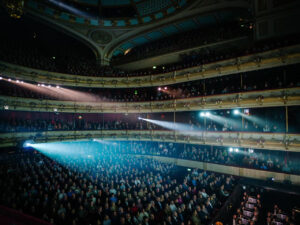
By Dr. Zoran MilosevicI have often been struck by how suddenly an opera audience can erupt. Not a polite swell of applause, but an immediate, collective response, as if the entire hall had agreed in advance. No signal is given, no delay occurs; it happens after a phrase, a held note, sometimes even a silence. What fascinates me is not simply that audiences react, but that they react together.
The audience is always mixed. Some listeners are musically trained, others are not. Some know the score intimately, others are hearing the opera for the first time. Yet in certain moments they respond as one body. On other evenings the opposite occurs. The singing may be competent, the notes secure, the orchestra disciplined, nothing obviously wrong. Still, the hall remains cool and the applause feels polite rather than inevitable. One leaves with the sense that something essential failed to connect.
This shared reaction, whether enthusiastic or restrained, suggests that listeners are responding to something deeper than knowledge or taste. Most people are not consciously evaluating legato, vowel alignment, breath support, or resonance strategies. They are not diagnosing passaggi or technical refinements. Nevertheless, when these things are absent, they feel the absence immediately. The audience does not hear technique itself; it hears the consequences of technique.
When the legato breaks, the musical line feels emotionally interrupted. When vowels lose focus, colour and meaning thin out. When breath is unstable, tension creeps into the sound. When the voice seems manufactured rather than lived, something rings false. Listeners may not name any of this, yet they sense that nothing meaningful is being carried through the phrase.
This is why competent singing can still feel strangely empty. Accuracy alone is not enough. A performance may be correct in every measurable respect and yet fail to move us, because correctness does not create continuity or direction. Phrases occur, but they do not grow. Emotion is indicated rather than experienced. The audience remains respectful, but not involved.
Great singing feels different in a way that is surprisingly easy to recognise. The sound seems to flow without interruption, one phrase leading naturally to the next. There is a sense of inevitability, as though events could not unfold otherwise. The singer appears less concerned with producing sound than with communicating something urgent. Technique disappears into intention, and the listener forgets about singing altogether.
What exactly are listeners responding to in such moments? The answer is surprisingly concrete.
They respond to continuity of line, first of all — the sense that the sound flows without visible effort, that breath and phrase belong to the same impulse. A well-sustained legato gives the impression not merely of smoothness, but of thought carried through time. The emotion does not restart with each note; it develops.
They respond to color and resonance. Certain voices seem to “carry” effortlessly into the hall, even when they are not especially loud. The sound has focus and ring; it reaches the listener without force. One might speak technically of resonance or formant energy, but to the ear it simply feels present and alive, as though the voice were already in the room rather than being pushed toward it.
They respond, too, to nuance. Small inflections of vowel, slight variations of dynamic, a softening or darkening of timbre can suggest intention far more strongly than volume ever could. Such details create specificity: this word matters more than the next, this moment has weight. Without them, everything lies on the same emotional plane.
Confidence also plays its part. Not bravado, but ease. When a singer appears comfortable inside the voice, the audience relaxes with them. When the singer seems to struggle, to push or manufacture sound, listeners feel that tension almost physically. They begin to worry rather than to listen.
None of these elements are spectacular on their own. Yet together they create a powerful impression of inevitability, a sense that nothing is accidental and nothing forced. The performance feels lived rather than executed. At that point the audience stops evaluating and simply follows.
Musical education plays a smaller role in this process than one might expect. Opera does not move us because we understand how it is done; it moves us because we recognise when it is real. Human beings are highly sensitive to ease versus strain, to continuity versus fragmentation, to genuine commitment versus display. These sensitivities are older than music itself. Opera simply magnifies them.
The art form is uniquely suited to provoke such responses. The human voice operates under extreme physical demand, in real time, unamplified, with no possibility of correction. Everything is exposed. When breath, sound, text, and emotional intention align, the alignment is felt instinctively throughout the hall. Listeners lean forward together. When that alignment is missing, they withdraw just as quickly.
The audience, in other words, is not punishing imperfection. It is responding to distance. When a performance truly connects, people do not agree intellectually; they recognise something shared and immediate. That collective recognition — more than virtuosity or volume — remains one of opera’s quiet miracles.
Categories
Special Features