Bayerische Staatsoper 2025-26 Review: Macbeth
Regietheater at its Least Illuminating
By Ossama el Naggar(Photo: Geoffroy Schied)
Such an inspired work ought to offer fertile ground for a stage director. Yet Martin Cicvák’s production, now almost two decades old, remains a striking example of Regietheater at its least illuminating. Whatever power it may once have possessed to scandalize has long since dissipated, leaving only a succession of provocations that obscure rather than deepen Shakespeare’s tragedy. Martin Zehetgruber’s bleak, cavernous sets effectively evoke a world emptied of moral light, but they serve a concept that ultimately substitutes sensationalism for psychological insight.
The production (seen July 2) is built around the descending ceiling of a cave, first encountered during Macbeth’s meeting with the witches. As the ceiling progressively lowered throughout the evening, it externalized Macbeth’s growing moral and psychological entrapment, while intermittent fumes rising from beneath suggested an infernal landscape from which there could be no escape. The symbolism was clear, perhaps too insistently so, leaving little room for dramatic ambiguity or interpretative nuance.
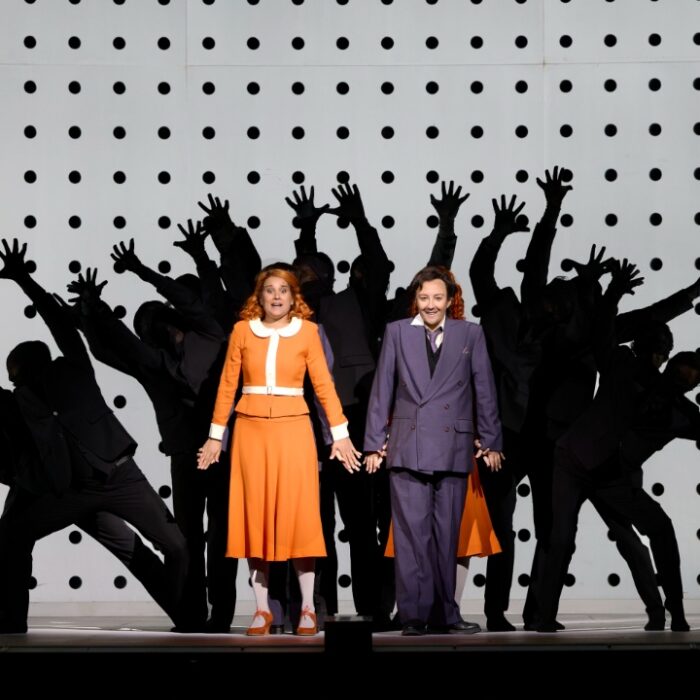
The witches themselves emerged from a tent, evidently conceived as the physical manifestation of Macbeth’s subconscious, an image that consequently dominated every subsequent scene until his death. More perplexing was Cicvák’s decision to represent the witches as six immaculately dressed blond children, while the actual chorus remained invisible. Presumably intended to create unsettling cognitive dissonance, the device never acquired convincing dramatic meaning, remaining an arbitrary theatrical conceit rather than an illuminating reinterpretation.
Elsewhere, provocation repeatedly supplanted dramaturgy. The opening of the third act, with members of the chorus disrobing to urinate and defecate while the children collected the excrement in metal bowls from which Macbeth subsequently drank, exemplified a directorial aesthetic that mistook transgression for insight. Rather than intensifying the opera’s atmosphere of moral corruption, such imagery merely distracted from Verdi’s musical and dramatic architecture.
The fourth act proved similarly problematic. During “Patria oppressa,” one of Verdi’s most profoundly compassionate choral laments, the stage resembled an exercise in theatrical extremity: naked, inverted bodies rotated above the stage while the chorus evoked concentration camp prisoners, and Macduff delivered “O figli miei” in chains, directly contradicting both libretto and dramatic logic. Verdi’s extraordinary music requires little visual amplification; Cicvák’s relentless pursuit of shock merely diminishes its emotional impact.
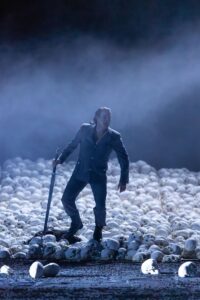
Most disappointing was the treatment of Lady Macbeth’s Sleepwalking Scene. Verdi and his librettists conceived one of nineteenth-century opera’s supreme studies in psychological disintegration, illuminated only by a candle. Here, Lady Macbeth wandered across an illuminated field of skulls, nervously attempting to light a cigarette before disappearing into an anonymous crowd. The carefully calibrated tension between darkness, guilt and madness evaporates, replaced by gestures that feel theatrically arbitrary and dramatically superficial.
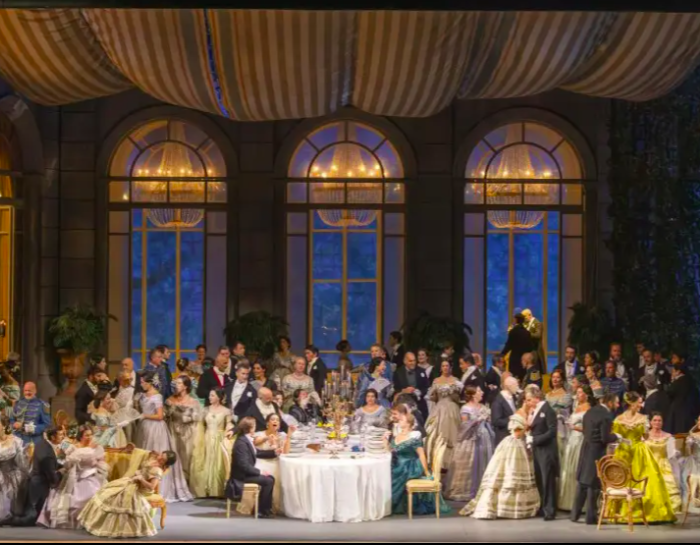
Not every idea misfired. The enormous crystal chandelier functioned as an effective visual metaphor for royal authority, descending ominously after Duncan’s murder to suggest the crushing psychological weight of Macbeth’s crime. Likewise, the banquet scene acquired some theatrical force as the masked courtiers gradually disrobed while Macbeth’s public disintegration exposed the moral emptiness underpinning his kingship. These isolated moments, however, remained exceptions within a production whose dramaturgical coherence rarely matched its visual ambition.
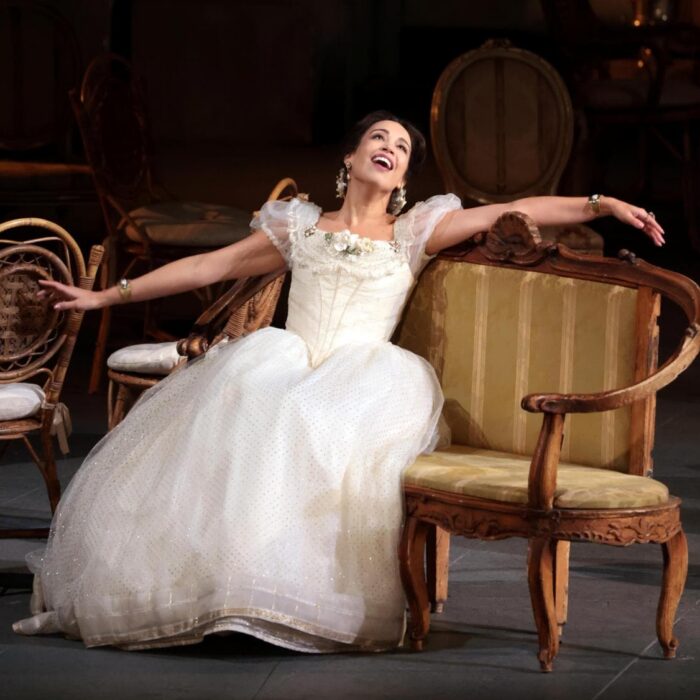
Whether traditionally or experimentally staged, Macbeth ultimately stands or falls with its two protagonists. Asmik Grigorian is an artist of extraordinary musical intelligence, formidable dramatic instincts and magnetic stage presence. Yet Lady Macbeth remains fundamentally outside the natural territory of her voice. Verdi famously requested “una voce brutta,” seeking not ugliness in itself but a timbre capable of embodying cruelty, ambition and moral corruption. Grigorian’s luminous lyric soprano, for all its expressive refinement, resists such transformation. The Letter Scene lacked the venomous authority and incisive verbal inflection that establish Lady Macbeth as the opera’s dominant dramatic force, while the vocal line remained consistently beautiful where Verdi often demands something harsher, more unsettling.
Her Sleepwalking Scene proved considerably more persuasive. Here, Grigorian charted Lady Macbeth’s psychological collapse with compelling dramatic conviction, coloring the vocal line with increasing fragility and exhaustion. Yet even in madness, the voice retained its innate radiance; the metallic edge, almost expressionistic in quality, that gives Verdi’s writing its terrifying emotional immediacy never fully emerged.
Gerald Finley approached Macbeth from an altogether different perspective. His baritone lacks opulent, bronze-colored sonority. Yet Macbeth rewards psychological insight at least as much as vocal amplitude, and few contemporary singing actors penetrate the character’s inner contradictions with Finley’s intelligence. His gradual transformation from reluctant usurper to haunted tyrant was meticulously observed, each phrase carefully weighted to reveal the character’s mounting isolation. “Pietà, rispetto, amore” emerged as the emotional culmination of the evening, sung with affecting introspection rather than grandiose heroism.
Roberto Tagliavini proved the evening’s outstanding vocal achievement. His beautifully focused bass, impeccable legato and exemplary Italian diction endowed Banco with uncommon nobility and moral authority. Few performances succeed in making Banco the opera’s most memorable vocal presence; that this one did speaks equally to Tagliavini’s artistry and to the unevenness of the principal casting.
Andrei Danilov offered an admirable Macduff, combining an attractive lyric tenor with ringing upper notes and exceptionally clear diction. His “Ah, la paterna mano” was phrased with genuine pathos, avoiding sentimentality while convincingly projecting grief transformed into righteous resolve.
In the small role of the Lady-in-Waiting, Nontobeko Bhengu made an unusually strong impression through her poised stage presence and warm, focused singing, lending unexpected dramatic weight to the Sleepwalking Scene.
In the pit, Andrea Battistoni emerged as the evening’s principal architect. Conducting with remarkable theatrical instinct, he emphasized the score’s extraordinary continuity and dramatic momentum, revealing how Macbeth anticipates the mature Verdi of the great middle-period masterpieces. Rather than allowing the music to lapse into the formulaic rhythmic patterns characteristic of some early Verdi, Battistoni shaped long orchestral paragraphs with impressive flexibility, maintaining inexorable dramatic tension while remaining consistently attentive to the singers.
His reading was notable for its finely judged orchestral balances. Brass and percussion projected menace without overwhelming the vocal lines, while woodwind colors subtly illuminated the opera’s psychological undercurrents. Although the string section occasionally lacked tonal refinement, Battistoni compensated through rhythmic vitality and an acute sense of Verdian theatre. Particularly impressive was his handling of transitions, ensuring that individual numbers emerged organically from the unfolding drama rather than as isolated set pieces. His pacing of “Ora di morte” exemplified this architectural vision.
Christoph Heil prepared the Bayerisches Staatsopernchor with customary distinction. In an opera where the chorus functions as both Greek chorus and active participant in the drama, the ensemble sang with tremendous discipline and dramatic urgency. The men’s chorus was especially impressive, producing a sonorous, incisive sound of remarkable unanimity, while the women contributed ample power despite occasionally blurred diction.
Despite Battistoni’s distinguished musical direction and several excellent individual performances, Cicvák’s production remains an object lesson in how directorial excess can undermine one of Verdi’s greatest dramatic achievements. A tragedy of profound psychological complexity deserves illumination rather than sensationalism. This staging offers the latter in abundance, but precious little of the former. It is, regrettably, a Macbeth one leaves relieved rather than enriched.