CD Review: Hyperbaroq’s ‘Tripudiis Sonis Variis’ on Earshift Music
By Jennifer E. PyronWhy Baroque? Why now?
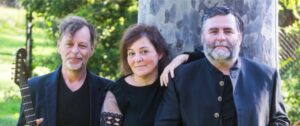
A trio of award-winning musicians – Ilaria Crociani (voice), Mirko Guerrini (piano, soprano sax, duduk, Chinese flute, chalumeau, moseño, sound art), and Stephen Magnusson (electric guitar, Moog guitar) – from Australia’s jazz and improvised music scene embark on a musical journey together as Hyperbaroq in their album “Tripudiis Sonis Variis.”
Says Crociani, “What I’ve discovered is that baroque music has an astounding capacity to move human emotions, now as much as it did centuries ago. It’s about how the music is built, but just as much about listening awareness. Listening, in that deep sense, is really at the centre of what we do.”
The album explores various points of the baroque repertoire. What stands out the most is how seamlessly the trio interprets each piece using their free-jazz and improvisational lens. Their unique touch adds volumes to these meaningful works and leaves a lasting impression for listeners to ponder.
“Stella Caeli Extirpavit” opens the album with an experimental reimagining of an anonymous composition from the 14th century. Magnusson builds ison while playing a Moog guitar, and one is immediately enchanted by the ostinato of Gregorian chant. This track is ambitious in its attempt to connect the ancient to the contemporary – setting the tone for this album’s unique blend of enriching and interesting tonalities.
Alessandro Scarlatti’s “O Cessate Di Piagarmi” (1683) from “Il Pompeo” features Magnusson’s classical guitar, Crociani’s voice, and Guerrini’s saxophone for a combined performance that takes listeners on a dreamy sound journey of improvisational bliss. The tempo is relaxed and Crociani’s voice is naturally hers as she leans into Nicolò Minato’s text, illuminating the vocal line with gentleness and care. Guerrini’s saxophone improvises the vocal line for a solo free-jazz moment in the middle, which only adds to the brilliancy of this trio’s ability to reimagine baroque in the 21st century.
Claudio Monteverdi’s “Lamento Della Ninfa” (1638) with libretto by Ottavio Rinuccini begins with an electronic improvisation that sets a cinematic tone for this piece – an alternate universe. Crociani’s voice is the throughline that realizes the text while the electronics create a bed of sound to hold her. The wash of electric guitar opens the imaginative door for free-jazz to be the main focal point.
Antonio Cesti’s “Disserratevi Abissi” (1655) with libretto by Giovanni Filippo Apolloni illuminates the trio’s exciting jazz flare. The musicians immerse themselves in the music and take their time enjoying the dramatic harmonies and possibilities of Cesti’s composition.
Barbara Strozzi’s “Che Si Può Fare” (1644) with libretto by Gaudenzio Brunacci dives head-first into the subtle expressions and emotionality of Strozzi’s composition. Crociani’s Italian diction is perfect and her deep understanding of the text adds a personal, reflective touch to it all. This is a brilliant nod to Strozzi’s genius, especially as the only female composer on this record. The duduk is an interesting combination with Crociani’s voice, delivering this work’s intense underlying meanings.
Henry Purcell’s “Music for a While” (1692) features the trio’s buoyant expressiveness as Crociani’s voice navigates John Dryden’s text. The album notes explain how this track resonates with the musicians and their choice to include it: “Despite the modern textures surrounding it, we play this piece almost exactly as Purcell wrote it. The song delivers the ancient idea of music as medicine – a concept of music therapy for mental and physical wellbeing that goes as far back as Pythagoras. With its central message that ‘music shall all your cares beguile,’ the piece acts as a spell cast to soothe and trick the mind out of its grief. It required very little from us beyond trust, so we deliberately stepped back here, letting a three-hundred-year-old melody do exactly what it was designed to do: heal.”
Giacomo Carissimi’s “No No Non Si Speri” (circa 1664) was the trio’s initial inspiration behind this entire project. Says Crociani, “Late one night during Melbourne’s Covid lockdown, after a walk in the fog, we sat at the piano with this cantata, having just heard a recording of it by Teresa Berganza. Something about it would not let us go. ‘Leave every hope. Hope is dead:’ four-hundred-year-old lyrics describing exactly what the world, and we too, were experiencing during the pandemic. Six years later, Stephen’s playing here is some of the most beautiful on the record, and the chalumeau pulls us back centuries while sitting completely at home in this context.”
Raffaello Rontani’s “Caldi Sospiri” (1622) features Guerrini’s soprano sax during an uplifting moment that makes this piece feel quasi bossa nova. This track is refreshing in the line up.
Martim Codax’s “Ay Ondas Que Eu Vim Veer” illuminates Crociani’s expressive vocals paired with minimal electronics for an ethereal interpretation.
Robert Johnson’s “Have You Seen But A White Lily Grow” (1616) closes out the album with Ben Jonson’s text reflecting on true love as nature’s purest form.