Théâtre des Champs-Elysées 2025-26 Review: La Damnation de Faust
By Andréas Rey(Photo: © Vincent Pontet)
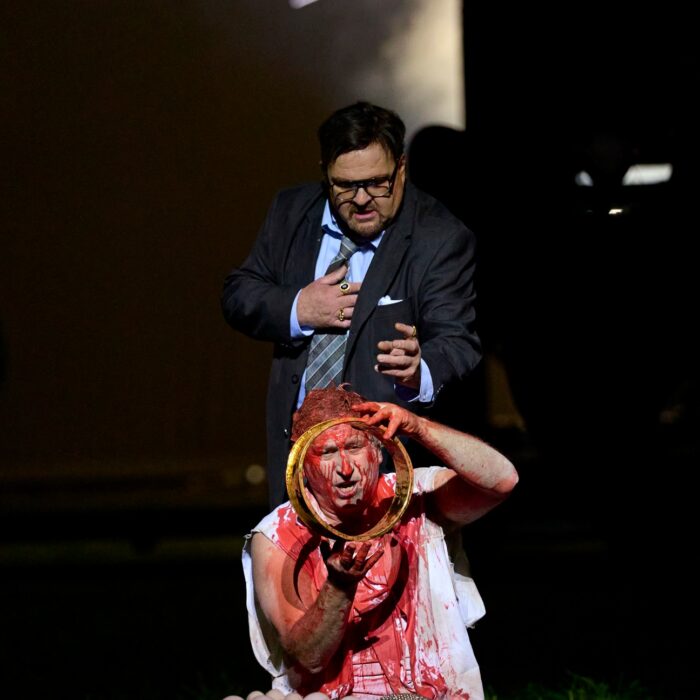
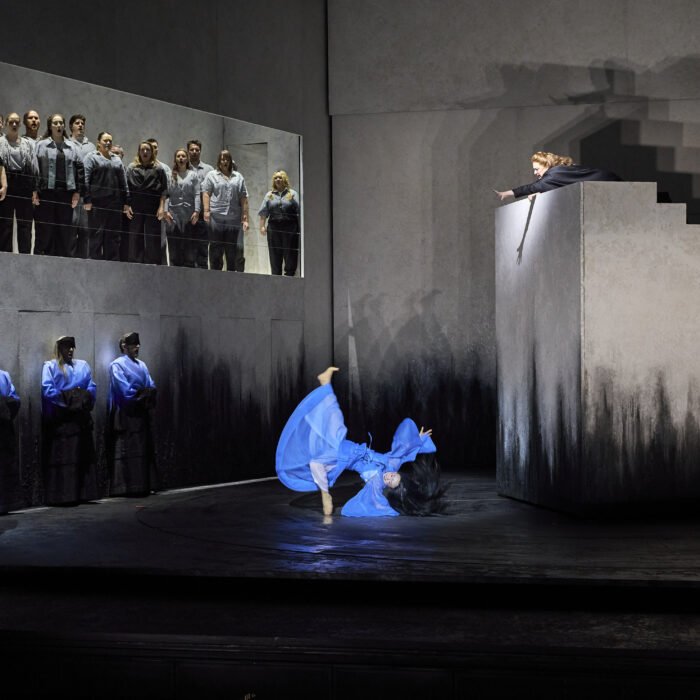
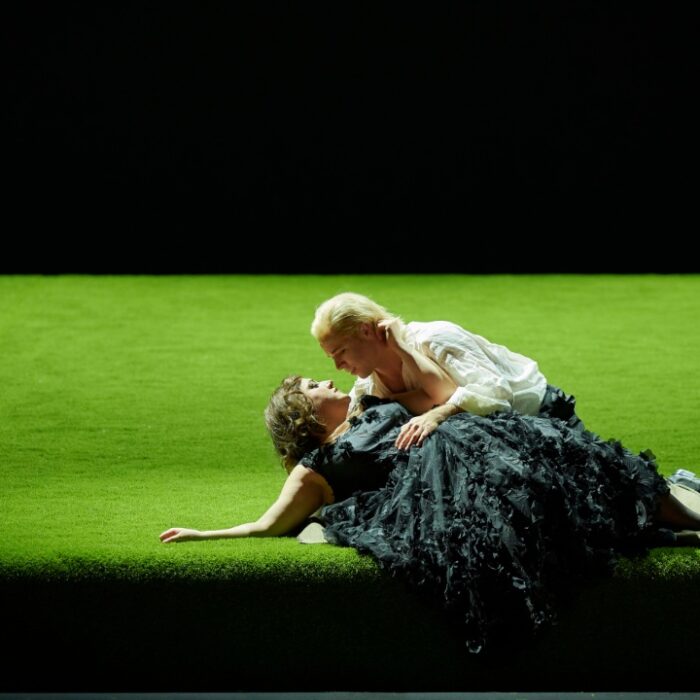
From November 3 to 15, the Théâtre des Champs-Elysées presented Berlioz’s “La Damnation de Faust” with the Orchestre Les Siècle—formerly conducted by François-Xavier Roth and now under the baton of Jakob Lehmann—in a production by Silvia Costa. Staging is perhaps a big word, given the minimal effort that went into it. Whether in terms of set design, direction of the actors, or even simply costumes and props, the audience was left with little to sustain them.
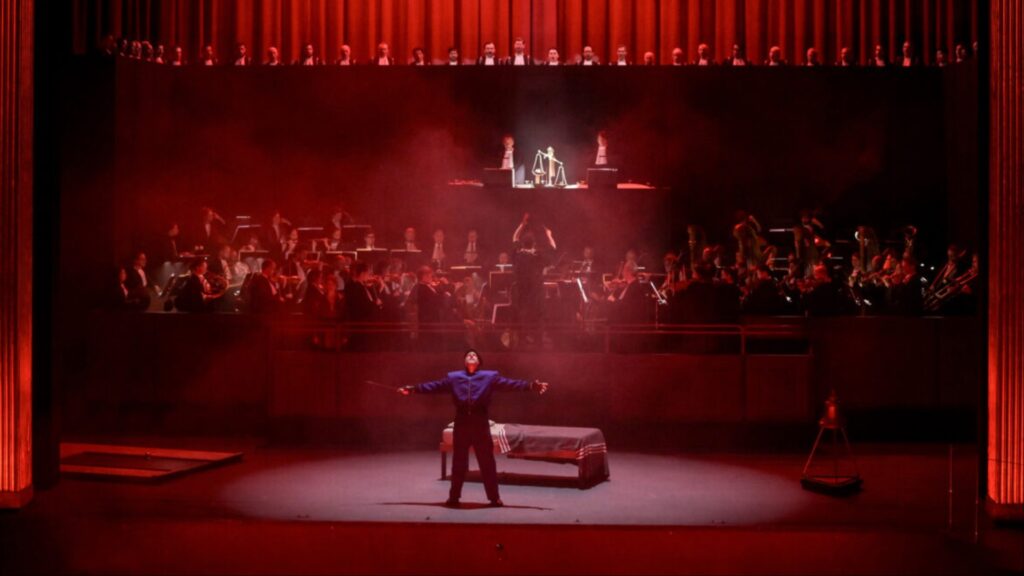
From a scenography perspective, a bed covered in stuffed animals, a children’s kitchen, a few boxes in the first part, and in the second, even more economical, a bed and the orchestra at the back of the stage serve as the set. As for the costumes, they come from the performers’ wardrobes. Faust is dressed like a teenager, even though, according to Goethe, he is a respected scholar, philosopher, and bourgeois. Mephisto, in his blue overalls with epaulettes, is a construction worker from the 1980s, and Marguerite is a young woman in an almost gauze-like dress. A minor incongruity is the makeup worn by the children and Thomas Dolié as Brander during the tavern scene, which made them look like Quark and Ferranginar from Star Trek, without this resemblance being explained. The staging is ridiculous at best, such as the opening scene in which Faust wakes up in his bed surrounded by stuffed animals before putting on a Mickey Mouse mask, and at worst completely lacking in dimension and inspiration, such as the scene of the gallop to hell, in which Faust is in the orchestra pit using the music stands as fans, and where nothing is frightening. Ultimately, this staging lacks understanding, vision, and embodiment.
And what about the voices…
The young tenor Petr Nekoranec, replacing star tenor Benjamin Bernheim as Faust, has a very difficult task here. His career would have been launched if he had been able to carry off the role, but it has to be said that he fell short. Admittedly, he had good vocal projection and a strong texture without being too imposing, but from the very first aria, “Le viel hiver a fait place au printemps” (“The old winter gave way to spring”), his vibrato and accent interfered with his intelligibility. They remained with him until the end of the opera, which unfortunately became increasingly tiresome. And he failed to give the character any depth whatsoever. He remained in the posture of a child to whom Mephisto offers a trip, instead of the great scholar who gambles his soul with the devil.
Mezzo-soprano Victoria Karkacheva as Marguerite, whose tone pleasantly bordered on soprano, failed to truly embody the character. Her already thin role would have required a singer with greater nuances in her singing and more seductiveness. She too fundamentally lacked nuance and colour in her voice. When she performed “Autrefois un roi de Thulé” (“Long ago, there was a king in Thule”) or “D’amour l’ardente flamme” (“From love, the burning flame”), she lacked embodiment.
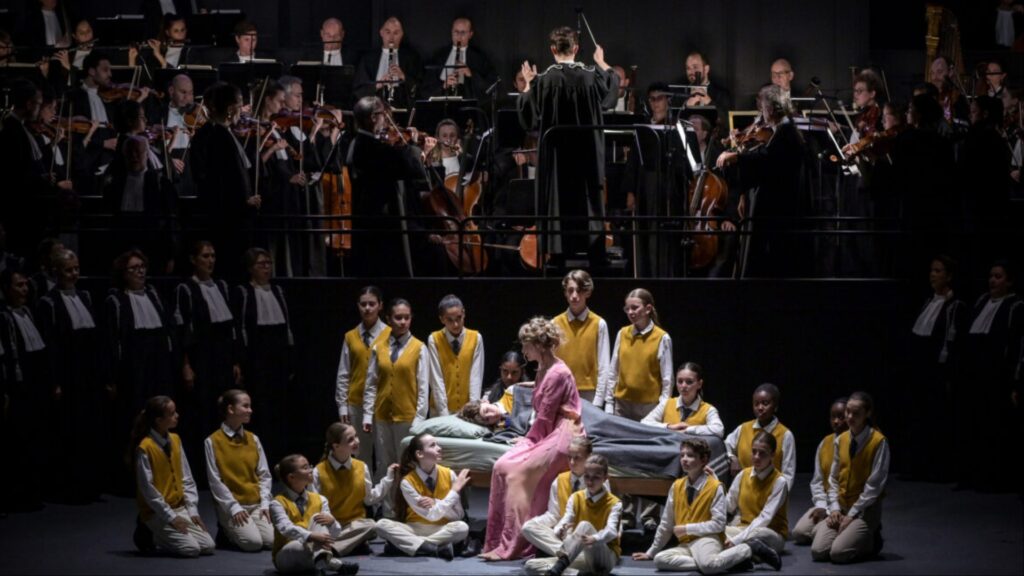
Bass-baritone Christian Van Horn‘s Mephisto had more experience and a little more substance in his role than his two doomed lovers. Although, he too was unable to mask the weakness of the staging and the lack of act managing from the stage director. On the other hand, the staging emphasized the dullness of his voice and the lack of color in his timbre. The “flea song,” for example, was completely uninteresting.
The performers fundamentally lacked feeling, colors, nuances and embodiment in their voices. They seemed as bored as the audience in this production.
If the performers are boring, what can be said about the orchestra. Rarely has an orchestra been so flat and unengaged, in a word, so uninspired as this one. All of Berlioz’s inventions, such as the fugal chorale of the drinkers, or the equal treatment of popular songs (Mephisto’s “flea song” or Marguerite’s “Autrefois un roi de Thulé,” for example) with the great classic music repertoire of the rest of the opera, became dull, banal and boring. There was no passion, no lyricism, nothing to which the heart can cling.
The tragedy of this production was that its lack of involvement highlighted the thinness of the libretto. This opera is more a musical reflection by Berlioz on the myth of Faust than the narrative of his Damnation. It is therefore not in, but from, the libretto that the charm must work, thanks to the music, that is to say, the orchestra and the voices. The thinness of the libretto should therefore have been compensated for by the performers, but they were all absent. A sort of plastic Berlioz, a Faust under cellophane…