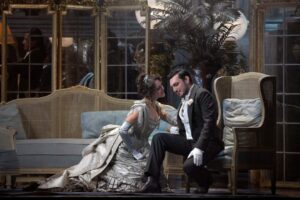
Teatro La Fenice 2026-27 Review: Fedora
By Dejan Vukosavljevic(Photo: © Michele Crosera)
Giordano’s “Fedora” might be emblematic of Verismo opera, even though it revolves around the Russian aristocracy rather than ordinary people, but it would be difficult to consider it a true masterpiece. Its plot is far from flawless, and the problems begin with Victorien Sardou’s play of the same name, which seems to have been written solely to showcase Sarah Bernhardt’s incomparable talent. The heroine is the prime mover – indeed, the only driving force – behind the entire storyline, which is set in 1881.
Princess Fedora Romazov vows to remain a virgin and avenge the violent death of her fiancé, who was murdered on the eve of their wedding in St Petersburg. She tracks down the assassin, Count Loris Ipanov, in Paris, conquist his heart and arranges for his arrest, but falls madly in love with him as soon as he provides evidence of the infidelity and baseness of the man she had adored and intended to marry (so much for her vow). Together, they move to her villa in Switzerland, where Loris discovers that one of Fedora’s letters, sent to Russia before she had learned the truth from him, had caused the deaths of his brother and mother, triggering thus her suicide.
Messy and implausible, the story does not become any less muddled in Arturo Colautti’s libretto. Nevertheless, Umberto Giordano was greatly inspired by it and succeeded in supporting it with a remarkably complex and engaging orchestral score. The vocal writing has its ups and downs, reaching some enthralling and deeply poignant heights at crucial moments, at least when entrusted to a proficient cast. Fortunately, that was precisely the case at Venice’s Teatro La Fenice. The opening night of the 2026-27 season had been called off due to a strike, so the first cast finally made its debut on Sunday, November 15.
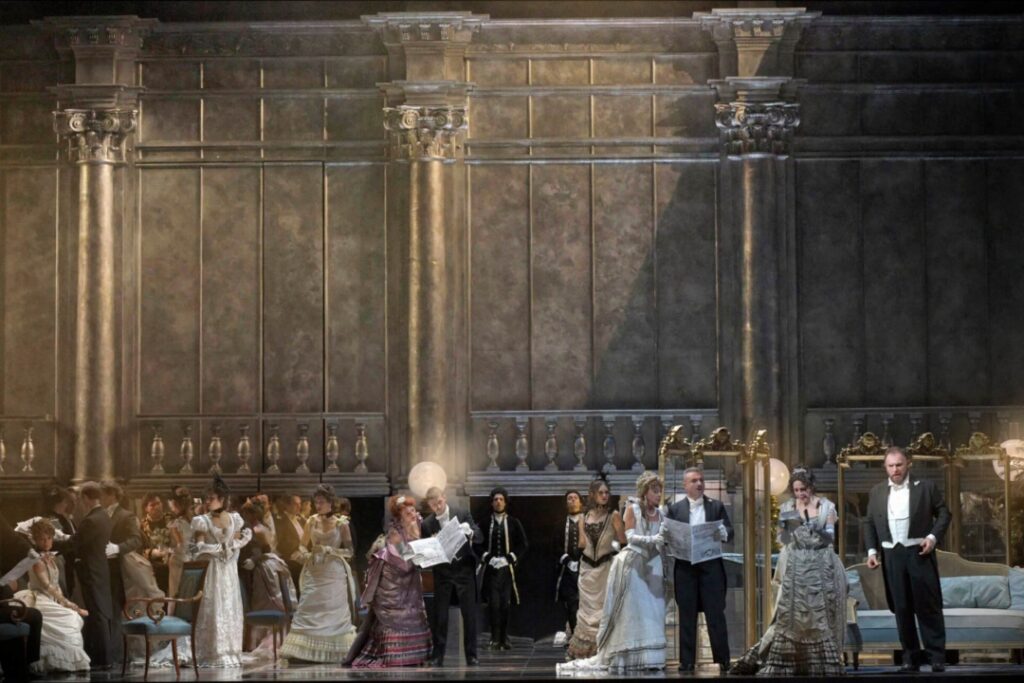
(Photo: © Michele Crosera)
Illuminating Performances
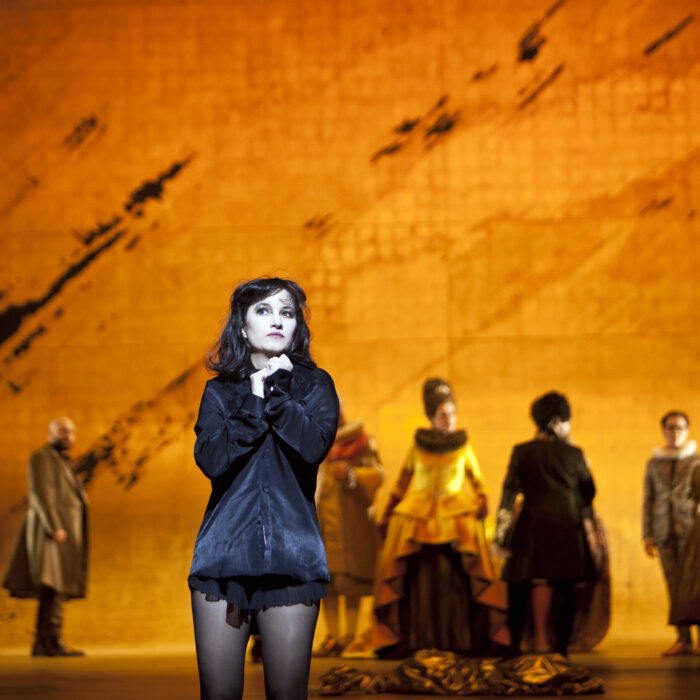
It is undoubtedly only right to begin with Maria Agresta‘s powerful performance. She may well be the Fedora of the moment: a refined actress, she succeeded in turning the improbable Princess into a believable woman, perhaps not particularly reasonable but certainly passionate, mercurial and ultimately doomed. Her portrayal was especially moving in the death scene. Her voice was equally penetrating and supple, endowed with beautifully focused chest notes of considerable dramatic impact in the parlando passages. Her upper register was solid and crystal-clear, enhanced by exquisitely spun tones, while her control of vocal production was close to perfection. Through her stage presence and musical artistry, Agresta simply dominated the show.
In another opera, one built around the tenor, much the same could probably be said of Vincenzo Costanzo. His Loris was at once a martyr-like and resolute figure, and he impeccably conveyed both sides of the character through his vocal and acting skills. Costanzo’s voice, like that of his stage partner, was free-flowing and resonant throughout the registers, equally incisive in its mellifluous and impassioned passages, and distinguished by a lush, enveloping timbre and remarkable expressive intensity.
Although Ekaterina Bakanova‘s Countess Olga Sukarev initially came across as somewhat subdued, she gradually grew into the role, ultimately delivering a truly delightful portrayal of the frivolous and charming young lady, while baritone Simone Piazzola was an outstanding performer as De Siriex. Worthy of mention among the remaining cast members are Chiara Brunello (Dimitri and the Savoyard boy), Carmine Riccio (Desiré and Rouvel) and Fabrizio Brancaccio (the coachman Cirillo).
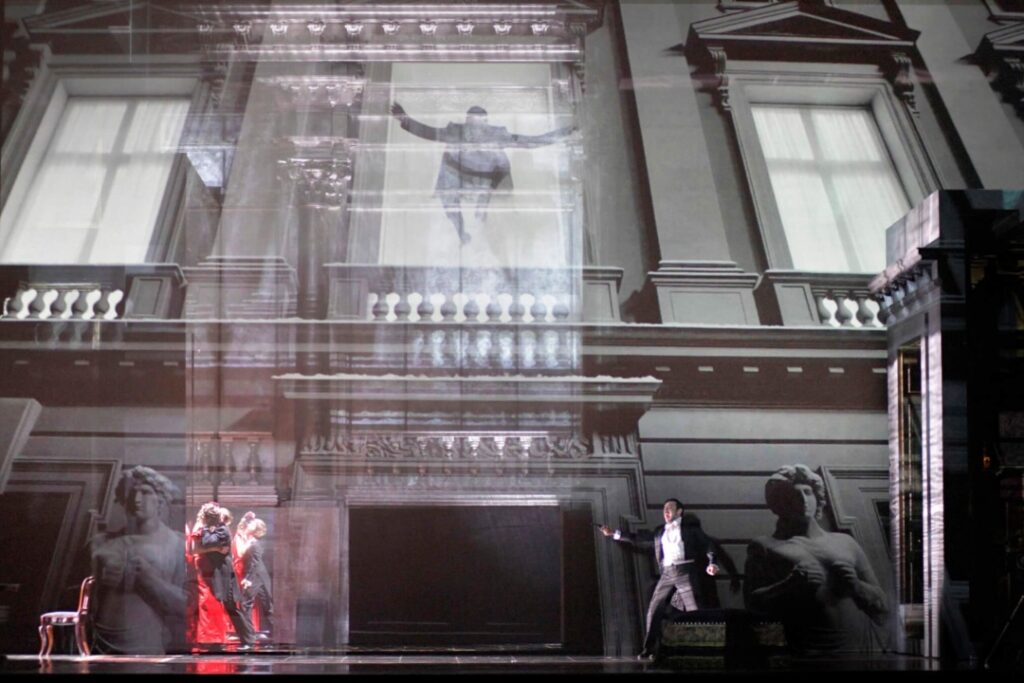
(Photo: © Michele Crosera)
Musical & Production Highlights
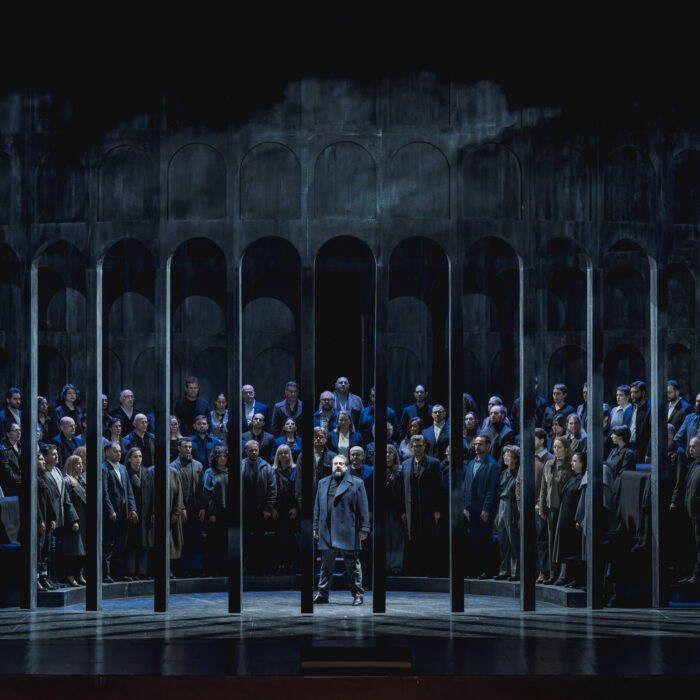
On the podium, Maestro Donato Renzetti was a meticulous interpreter of the demanding score, unfailingly attentive to phrasing and dynamic nuances while maintaining impeccable coordination between the pit and the stage. He brought out every detail suggested by the composer without compromising the compactness of the musical architecture. The Teatro La Fenice Orchestra was in splendid form, remarkably sensitive and dedicated, and particularly adept at blending the symphonic elements with the melodramatic and purely operatic dimensions of the score. The chorus, prepared by Elena Pierini, also made a highly appreciated contribution.
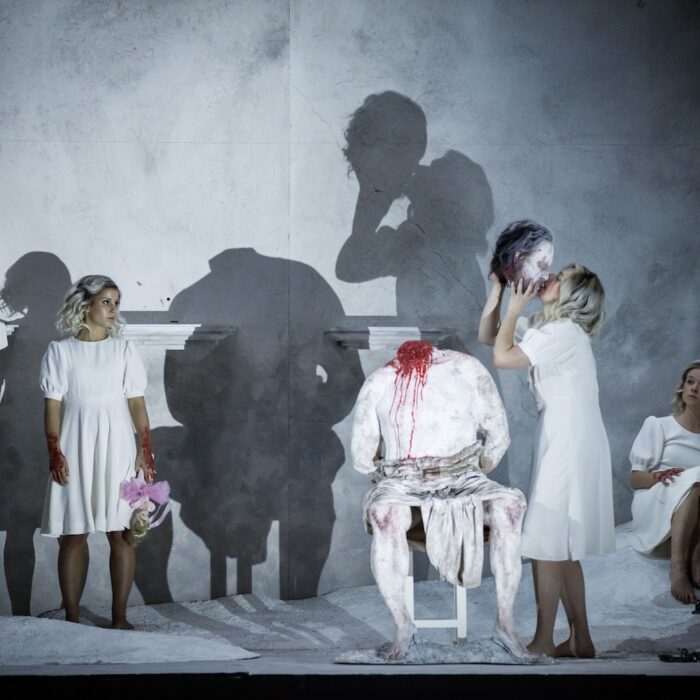
Such a compelling musical dimension deserves an equally evocative visual framework, and Hugo de Ana, with his well-established artistic excellence, is certainly a guarantee of that. Faithful to the original period setting, his masterful staging nonetheless radiates freshness and charm. His set and costume designs are every bit as impressive as his direction, contributing to an exceptionally harmonious overall effect. Michele Innocente’s video projections make the plot easier to follow, while Valerio Alfieri’s lighting design provides the final emotional touch to the production.