Teatro alla Scala 2025-2026 Review: Nabucodonosor
By Bernardo Gaitan(Credit: Brescia e Amisano © Teatro alla Scala)
A dark chapter in Giuseppe Verdi’s life came to an end with the success of “Nabucodonosor” at La Scala in 1842. During the preceding decade, between 1832 and 1842, Verdi had been rejected by the Milan Conservatory; his sister Giuseppa died, followed by his daughter Virginia just fourteen months old, his son Icilio eighteen months old, and finally his wife Margherita Barezzi. Added to these personal tragedies was the failure of his first two operas at La Scala. Yet the Bear of Busseto did not give up, nor did La Scala’s superintendent, who recognized Verdi’s enormous potential. Despite the indifference of both audiences and critics toward “Oberto, Conte di San Bonifacio” and the failure of “Un giorno di regno,” he commissioned the composer to write a third opera: “Nabucodonosor.” From that point on, the story is well known. Verdi achieved immediate fame and would later write to Giulio Ricordi: “with this opera, it can truly be said that my artistic career began”
It would be difficult to imagine a more meaningful title for Riccardo Chailly’s farewell as Music Director of La Scala. The Milanese maestro’s relationship with the early Verdi has long been well known: a constant passion for recovering original versions in order to restore both theatrical vitality and historical authenticity. The true focal point of the performance was undoubtedly Chailly himself. His reading displayed solidity, experience, and unquestionable clarity. The conducting balanced energy and refinement with remarkable naturalness: the large ensemble scenes were sculpted with meticulous precision, while the lyrical passages breathed an intense and carefully measured melancholy. The overture already served as a statement of intent, for everything heard there found its reflection throughout the remainder of the performance: incisive rhythms, strette, cabalettas, and concertati emerged with exemplary clarity. The ever-reliable Orchestra of La Scala responded with a compact, expansive sound of almost symphonic proportions, always attentive to the conductor’s demands. As has often been the case in his productions, the seventy-three-year-old maestro also chose to restore the “Divertissements” composed by Verdi for the Brussels version of 1848. From both a historical and musical perspective, this decision is unquestionably fascinating, as these pages reveal a refined Verdi influenced by the French school, yet still marked by evident bel canto reminiscences.
Few operas assign such a decisive role to the chorus. In “Nabucodonosor,” the chorus is truly another protagonist in the drama. The result at La Scala was, as usual, outstanding thanks to the large and accomplished Chorus of La Scala, impeccably prepared by Alberto Malazzi. The rhythmic precision and dynamic variety were particularly impressive. The immortal “Va, pensiero, sull’ali dorate” achieved genuine emotional impact. In Italy, this choral page carries a double meaning: beyond representing the lament of the Hebrew people subjected to Babylonian rule within the plot, it also symbolizes the spirit of the Risorgimento, as many Italians saw in Verdi’s story a reflection of their own condition under Austrian domination. This chorus might almost be described as an unofficial national anthem.
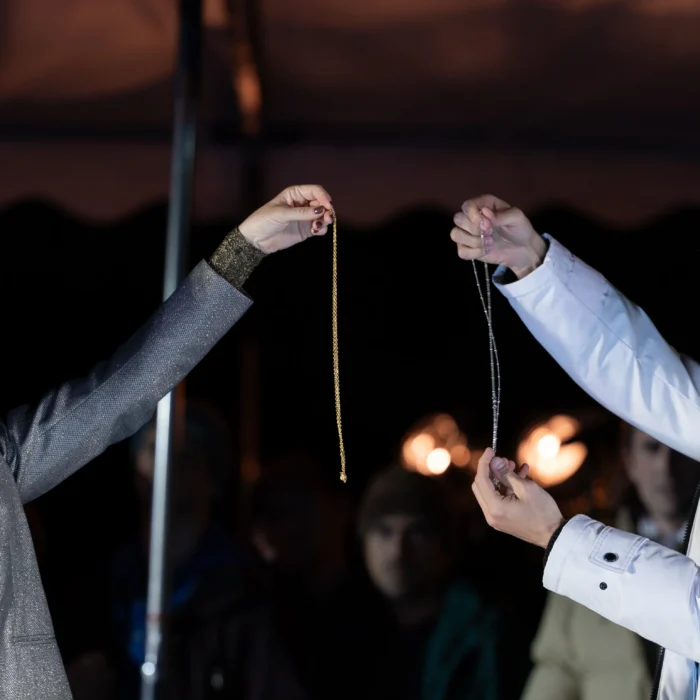
Alessandro Talevi’s production matched the musical quality, though through a highly spectacular and overtly symbolic visual language. Making his La Scala debut, the Johannesburg-born director created a visually rich spectacle, supported by evident psychological work on the characters that provided a strong theatrical dimension. Numerous striking effects appeared throughout the performance: the monumental entrance of Nabucodonosor aboard a chariot drawn by gigantic horses, the image of the king suspended in midair as if in a dream vision, and above all the final scene of Abigaille, who does not simply die but is literally consumed by fire, devoured by her own destiny. Much of the success of this new production rests precisely on the creative team that supported the director.
Gary McCann designed both the sets and costumes, creating two clearly contrasting visual worlds. On one side, the Hebrew people are gathered beneath a gigantic suspended structure evoking the ruined dome of the Roman Pantheon. In contrast, Babylon emerges as a world dominated by towers, stairways, and rigorous geometries. The costumes are probably among the production’s greatest achievements: the Hebrews are immersed in a palette of muted, dusty colors, while the Babylonians burst forth in a rich chromatic display based on uniforms of gold, red, and black. Marco Giusti’s elaborate lighting design contributed significant symbolic impact. Moments such as the endings of the second and third acts revealed careful visual planning, highlighting the protagonists within the choral masses through the intelligent use of overhead lighting.
Vocally, however, the results were considerably more uneven. A major disappointment was Dmitri Platanias in the title role. Although regarded as a specialist in the Verdi repertoire, the Greek baritone delivered an uninspiring Nabucodonosor, with limited dramatic resources and evident vocal shortcomings. The voice of fifteen years ago seems far removed from what remains today: the timbre has lost much of its appeal, and the upper register presents obvious difficulties. While the instrument still retains volume, the emission sounds open, and the higher he sings, the more throaty the production becomes. The middle register remains healthy and pleasant. Although no indisposition was announced, it was evident that the voice was not at its best. As the performance progressed, his singing appeared increasingly strained; by the time he reached “Dio di Giuda!,” he passed almost unnoticed due to a particularly flat interpretation, while the cabaletta “O prodi miei, seguitemi” revealed numerous technical problems that unfortunately culminated in a cracked final high note.
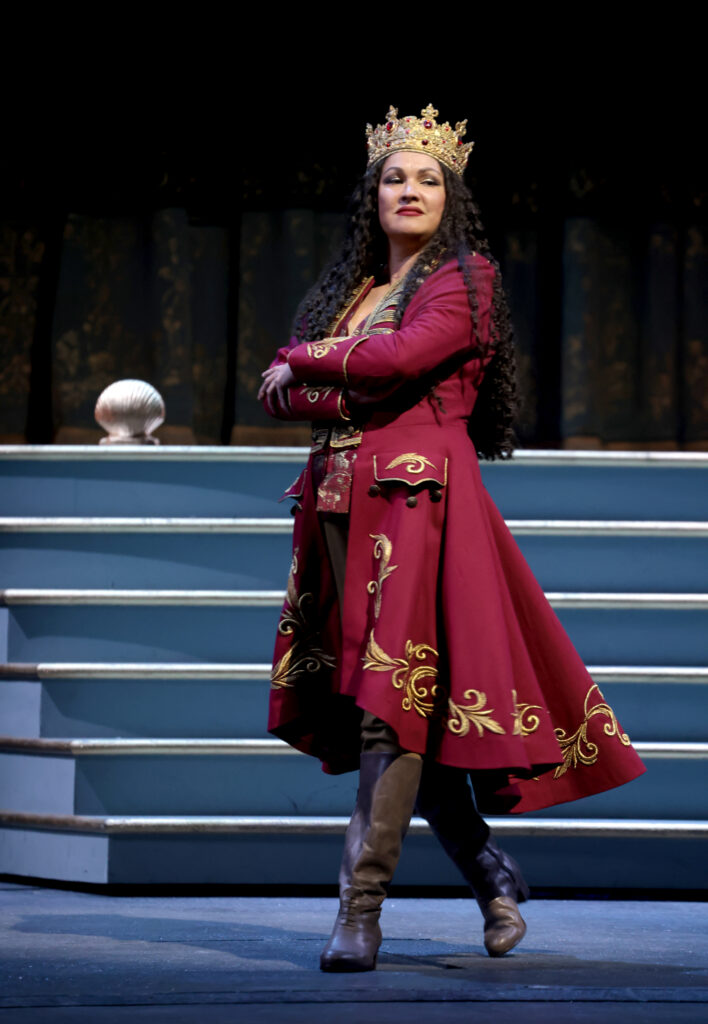
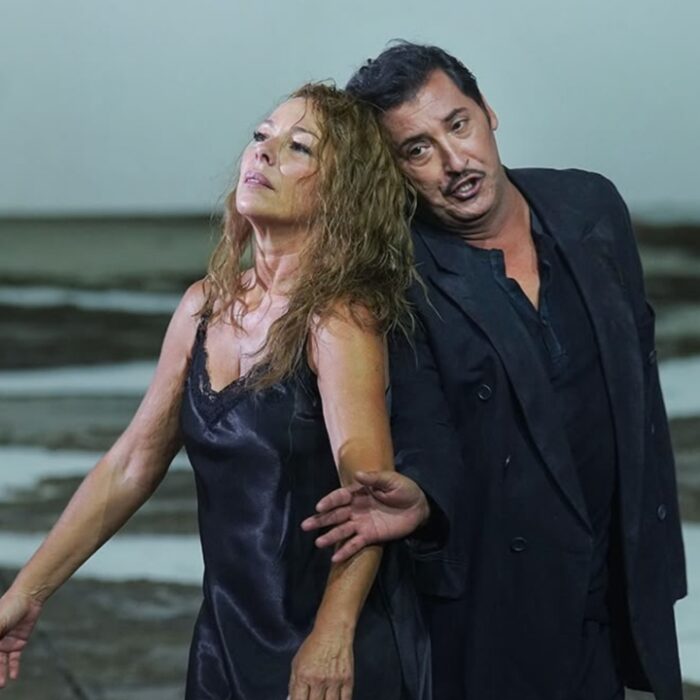
The situation was entirely different for Anna Netrebko in the immensely demanding role of Abigaille. The soprano’s musical intelligence and vast theatrical experience were evident throughout the evening. The aria “Anch’io dischiuso un giorno” emerged with exceptionally elegant phrasing and a cadenza of the highest level, demonstrating remarkable technical security, particularly through carefully crafted top notes and an admirable pianissimo. The death scene also became one of the most intense moments of the evening, both for its dramatic power and musicality, as she dominated the stage with complete naturalness.
Francesco Meli delivered a solid and high-level Ismaele. Despite a tendency to remain between forte and fortissimo, the tenor’s voice projected effortlessly through the large ensemble scenes. The instrument’s brilliance sounded radiant and secure, while his musicality and elegant phrasing contributed to a thoroughly convincing interpretation. Bass Simon Lim proved extremely effective as Zaccaria. His legato and phrasing remain fully intact, and he also offered a strong stage performance. He possesses a solid dramatic presence, creating a priest who is credible in every gesture and every word.
Veronica Simeoni also made a very positive impression as Fenena. The mezzo-soprano’s interpretation was marked by elegance, emotional intensity, and an expressive sincerity capable of giving the character a prominence often denied to her. Yongheng Dong, Haiyang Guo, and Laura Lolita Perešivana were all correct and perfectly integrated into the ensemble in the supporting roles.
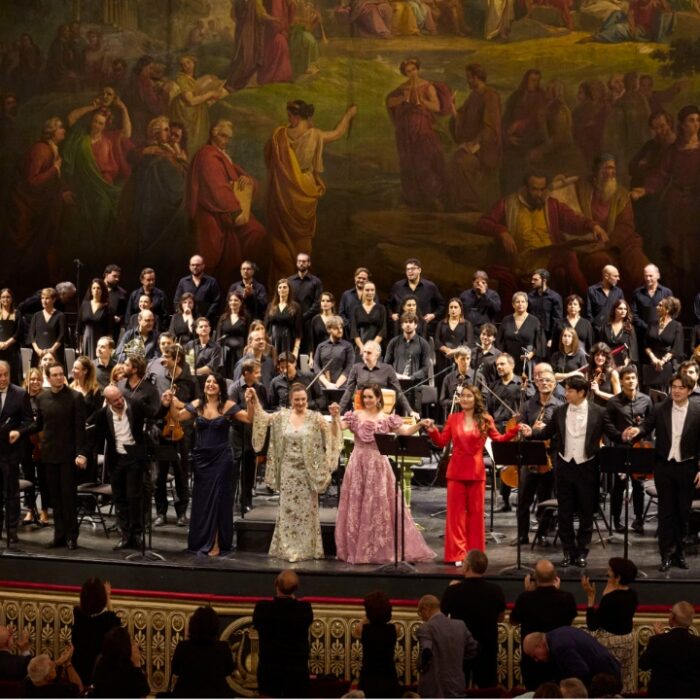
At the end of the performance, the expected ovations arrived for the principal artists and, above all, for Riccardo Chailly. Beyond the artistic outcome, the evening inevitably took on the character of a farewell. Chailly leaves the position he had held at the head of La Scala since 2015 with a title that belongs deeply to him, and the Milanese audience responded with a heartfelt demonstration of affection. A perfect example came during the technical pause between the third and fourth acts, when a spontaneous cry rang out from the loggione: following an emotional “Grazie maestro!,” the entire theater erupted into applause for the conductor, who, visibly moved, acknowledged the audience’s warm and spontaneous tribute.