Salzburg Whitsun Festival 2026 Review: Ciao, Bella Ciao
Davide Livermore’s New Production Offers a Mise en Abyme of Cecilia Bartoli
By Philippe Branche(Photo: SF / Monika Rittershaus)
Leaving enthusiastically the Grosses Festspielhaus and walking through the beautiful streets of Salzburg after the performance, I found myself asking a simple question: what exactly had I just seen? It was certainly not an opera, nor a recital, nor even a traditional gala. Instead, it felt like something far rarer: a living retrospective in which Cecilia Bartoli herself guided the audience through her memories. In “Ciao, Bella Ciao,” created to celebrate her 60th birthday at the Salzburg Whitsun Festival, Bartoli offered a live portrait of herself.
Davide Livermore’s Dynamic Mise en Abyme
Directed by Davide Livermore, the production followed Bartoli through a series of memories inspired by her life and career. Travel provided the evening’s central theme. Bartoli’s well-known fear of flying became a recurring comic motif, leading to imaginary voyages across oceans by ship and across continents by train.
The production used a journalist character that interviewed Bartoli live on stage. The resulting mise en abyme—an artist reflecting on her own life, then playing the answers before an audience—provided an efficient way to avoid succession of memories. The interview format created natural pauses between scenes and gave the evening a clear structure.
The evening frequently blurred the boundaries between reality and fiction. Archival footage showed a nineteen-year-old Bartoli appearing on Italian television in Rome, creating a dialogue between the young Cecilia Bartoli at the beginning of her career and the star standing on stage. The autobiographical parts often proved the evening’s greatest strength. Bartoli recalled learning to sing in her family’s kitchen, long before international fame. The presence of her mother in the audience and in the show created one of the evening’s memorable moments: the producer inserted an extract of her mom singing, which created a huge applause.
Music Choices: A Quarrel of the Ancients & the Moderns
Musically, the program reflected Bartoli’s refusal to respect conventions. Bellini stood alongside popular songs, film references, Flamenco dance sequences, and comic sketches. One moment the audience was immersed in bel canto, the next it found itself transported into the worlds of “The Sound of Music” or “Titanic.” Some may object, but Bartoli clearly did not care.
Another one of the evening’s most memorable moments came with Bellini’s “Casta Diva.” Framed by imagery of the moon, the aria provided a welcomed moment of opera amid the production’s relentless movement. Here, for a few minutes, the Broadway show stopped and the focus returned to the qualities that made Bartoli famous: expressive phrasing and a natural ability to communicate emotion. Another thoughtful moment was the performance of “Bella Ciao.” This was connected to memories of her grandfather returning from war, the famous Italian resistance song carried a deeper meaning. At a time when questions of democracy and extremism once again occupy public debate across Europe and in the world, its anti-fascist message felt particularly relevant.
A Partial Portrait of Cecilia Bartoli
Yet for a production presented as an intimate self-portrait, one element felt surprisingly absent: vulnerability. Autobiographical works are often at their most compelling when they reveal not only triumphs, but also doubts and failures. Here, Bartoli offered very few weaknesses, apart from her childhood, where she disliked certain aspects of her religious education. Curiously, for a two-hour self-portrait, Bartoli revealed little of her true self. The audience encountered an almost flawless artist and the beloved festival director. What remained unclear were the struggles that inevitably came with such an extraordinary career. The result was less a confession than a carefully curated image, one that inspires admiration but limits personal connection with the artist. We came out not really knowing who she was as a person, but convinced that she was a star.
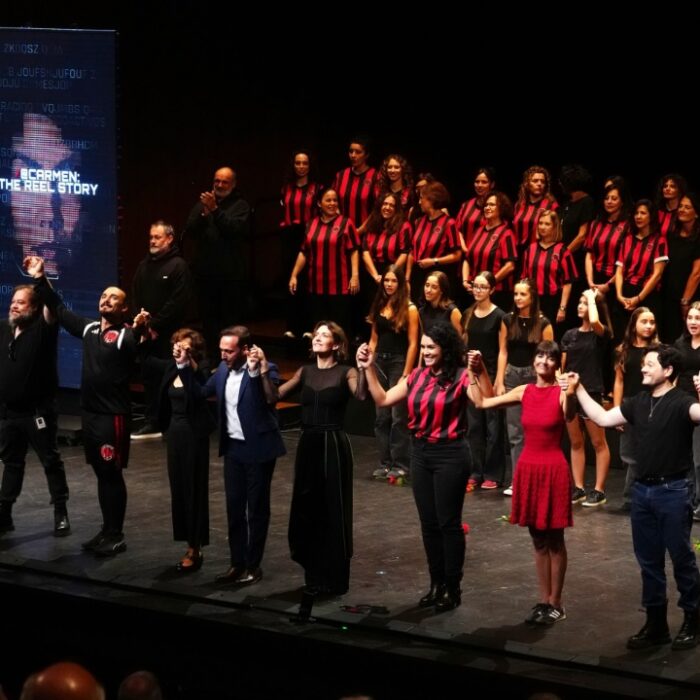
Overall, the production felt closer to a Broadway show than an opera gala, blending video, popular culture, dance and music into a fast-moving and fun theatrical experience. The standing ovation that closed the evening was therefore not only a tribute to an exceptional career, but also to an artist who at 60 years old continues to innovate.