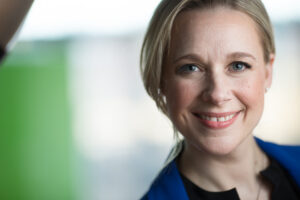
Q & A: Suzanne Nance on Becoming Wexford Festival Opera’s New CEO
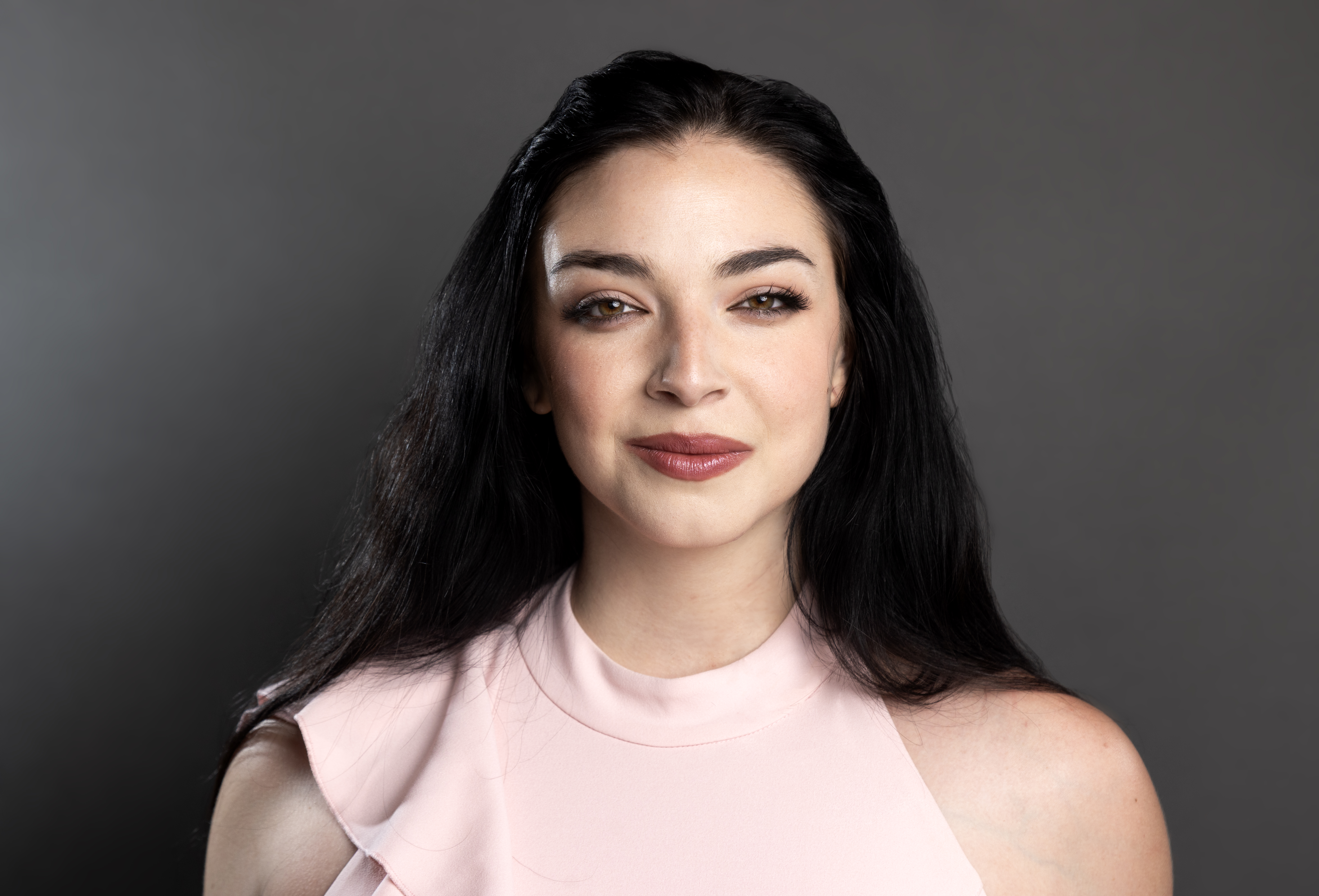
By Alan Neilson(Photo: AJ Coots)
When I was asked to interview Wexford Festival Opera’s new CEO, Suzanne Nance, my thoughts immediately turned to balance sheets, profit forecasts, marketing campaigns, contracts, fundraising and staffing issues. I must admit that it did little to set the pulse racing. However, it turned out be a very different experience than expected.
While such issues were touched upon, almost tangentially, the interview never strayed very far from music, opera and theater. Nance, as it turned out is a professionally trained opera singer whose career path has taken her from the stage to management via a substantial period in radio. Music is as central to her life now as it was when she performed opera roles that ranged from baroque to contemporary.
When she talked about the issues that appear to fascinate CEOs across the world, she always brought them back to Wexford, to opera and to her love of music. Time and time again, she refers to the central importance of the quality of the art that she is determined to uphold and that has been a characteristic of the Wexford Festival Opera since its founding 75 years ago.
OperaWire: What is your musical background?
Suzanne Nance: I love music. In fact, I started out as a singer. The household I grew up in was full of music and storytelling. We also listened to classical music, but this was something we discovered together; it was new to all of us. I didn’t discover opera, however, until I was at Syracuse University in New York. I was 17 at the time. Obviously, I had heard Pavarotti and Caruso and some of the greats, but not opera as such. That came when my teacher handed me the libretto of Puccini’s “Gianni Schicchi,” and I remember climbing under this stairwell in the school of music and reading it. I started to imagine all the characters. It made me laugh and cry; it was a very moving experience. I had fallen in love! I called my mother and told her I had met the most incredible man: Giacomo Puccini. I then started on a path of discovery, and I fell head over heels in love with Bach, Mozart, Dvorak and many others.
OW: Are you still in love with Puccini?
SN: I am. You never forget your first love! No one tells the human story as well as Puccini.
Recently, we did a concert in Dublin. You know the type of concert in which we sing all the hits. The idea was to have a lovely dinner and then bring the audience together with a night of opera. We called it ‘Bella Notte.’ When I looked around the room, I could tell that half the audience were opera diehards and half had rarely or never seen an opera before in their lives. We had some super singers that evening, and they came out one after another, and it just got better and better as they tried to outdo each other. It was magical. At the end of the evening, we decided to put on the first act of “La Bohème.” In my short introduction I decided to tell them the story. Some of the audience were so moved by it that they were weeping. At the end of the concert, a woman came up to me and said, “Opera has always been my husband John’s thing. But when I heard them sing tonight, I grabbed his hand and said ‘Let’s grow old together and listen to opera.'” I thought, Great, I will see you in Wexford!
OW: So with your musical background, what made you transfer into the non-musical side of the business?
SN: What attracted me to radio was the thought of being able to reach more people simply by picking up the microphone and sharing great music with them.
It was a very rewarding experience, but it was hard work, even relentless at times. Eventually, I ended up in Aspen on public radio. At that time, I was also singing as well, which was great because this is where I got to work in contemporary opera.
OW: Do you consider contemporary opera to be your area of speciality?
SN: Yes, I would say that. I spent most of my time chewing on a modern opera with my focus on American opera. I also loved performing baroque opera. In fact, I find the links between baroque and contemporary opera to be very close.
I love exploring new repertoire, which is possible when doing contemporary works and also when singing operas from the baroque period, which may not have been performed for over 300 years. In fact, one of the reasons I was drawn to Wexford was that they focus on neglected and forgotten works, which in some ways is like presenting new operas. I am very happy that Wexford commissions new works as well.
OW: Returning to your career path, what happened that took you out of music and into administration and management?
SN: Firstly, I want to say that I feel that I am still working with music, even if I am not creating or performing. I love being a sounding board for Rosetta Cucchi, Wexford’s artistic director.
So, after working on public radio in Aspen, I moved on to produce radio and television at Maine Public, and then became the voice of the internationally syndicated Lyric Opera of Chicago broadcasts series. It was at All Classical Radio in Portland, Oregon, where I was to spend ten years first as VP of Programming, then as its CEO. It was a really exciting experience, and even today I find it interesting to watch a programmer at work.You have to ask yourself questions that relate to the entire experience so that audiences can be taken on a meaningful journey. It is not just about the individual pieces you are offering but how they will fit together.
Obviously my role as a Executive Director atWexford Festival Opera has many different and varied responsibilities, but they are not detached from the music and the art that we create at Wexford. During my years in radio, I had to become familiar with how to negotiate contracts and how to market pieces, how to welcome audiences, and create meaningful experiences. I like to think that I was very successful in building the profile of All Classical Radio. We climbed to be the number one in terms of market share for classical radio stations in the United States. We built a new media arts center with a performance hall. For me, it was like a dream in which I realized everything I wanted from a job.
OW: What made you choose Wexford as a career move?
SN: The world changes and opera changes, and at this moment in time there are a lot of things changing, and this creates opportunities, including in opera. We now have possibilities to tell stories in bold, new ways, and this is something that exists in the DNA of the Wexford Festival. This was one of the things that immediately sprung to my mind when I saw the job at Wexford posted.
At the time, I knew of Wexford, but I had never sung in Wexford and had never been to Wexford, but I knew about the institution. I knew it was a festival that was established and grew against all odds in a beautiful town, in a beautiful country. It was something that I wanted to be involved in, particularly in its close links with the community. I knew that the WFO was embedded deeply within the community; it belongs to the community. I liked the fact that it has had an economic and cultural impact on the town for over 75 years. I thought: that is what I want to experience; that is where my heart beats.
The Wexford Festival is an opera company with an incredible global outreach: last year it had an audience from over 30 countries – from Syria, Germany, Hong Kong, and many more. That was something that really appealed to me.
OW: Do you miss anything about giving up your career as a singer?
SN: I do. Every once in a while, I find my way to the piano, and I will sing with my husband, who is an incredible harpsichordist. It is something that I really enjoy. I think if you are made to do it, you have to do it. So yes, I continue singing, but not on stage.
OW: I admit that I have always thought of the CEO as being detached from the artistic side of the company. You certainly do not fit this profile. How does your musical background help you perform your role?
SN: I believe it is beneficial both for me and the festival if I know the music. It means I can relate to the artistic side of the company and the audiences, who have come to Wexford especially to see and hear the opera.
However, I think it is important that in certain respects my role should remain distinct and that it does not overlap with the artistic director’s. I should not be getting in the way of programming. My job is to do the fundraising, understand the numbers, and so on.
Nevertheless, in Wexford’s case, as with many other opera companies, it helps to have a CEO who knows the day-to-day mechanics of getting a show on to the stage. They need to be aware, for example, of how illnesses can affect the cast and how they can be supported, or what the backstage team needs in order to do their jobs effectively, and what is necessary to keep up with technological developments. I have lived it as an artist, so I can relate to these problems. Ultimately, it is my responsibility to ensure everything is operating correctly. I must provide the right environment, where everyone feels secure and certain that they are in a strong position to perform their roles, which is to make great art and to take the audience on a memorable journey. So yes, I really believe it is important to have a CEO with a musical and artistic background.
OW: Would you intervene in artistic decisions if you thought that they were not going to work?
SN: Yes, although I would try not to do that.
I want to take the success story that is Wexford Festival Opera forward while also maintaining its Irish identity. I am fully aware that I am American, but I would intervene to protect its unique Irish perspective. It is something that I am very mindful of, and it is one of the reasons that I now live in Wexford.
However, I am also acutely aware, thanks to my career in radio, that everything has a shelf life. Just because we have done something for six years, doesn’t mean we have to keep doing it! Change can be a positive force. On the other hand, if there exists a mission with a clear vision that produces high-quality art, which we believe in, then we will continue as we are.
There have been occasions when I have made suggestions to Rosetta. Sometimes she agrees with me, and at other times she does not. And that is how it should be; it is a healthy relationship; she is the artistic director, and I respect that.
OW: When you arrived at Wexford, was there anything that you were determined to improve?
SN: Mainly structural concerns. We have had 75 years of incredible commitment from the people working here and from the local community. We have over 400 local volunteers and the most dedicated staff I have ever worked with in my entire life. The fact is that the Wexford Festival is now a big event comprising over 75 performances in 17 days. It never stops. It just keeps going. There is no downtime. This can give rise to an attitude that this is how we do things and it has always worked. By coming from the outside with different perspectives, I can see immediately what a great institution WFO has become; however, I can also see structures that should be introduced that will ensure the festival’s long-term future. For example, simple things, such as when do we start looking at the program book, or more complex issues like fundraising or our approach to working with international collaborators.
OW: When you finish your tenure at Wexford, how will you judge if it has been a success?
For me, success would be leaving Wexford Festival Opera in a more artistically adventurous position: a place where opera and other art forms collide and mingle, and artists are given the freedom and time to experiment together to make something we haven’t seen before.
I would like it to become more financially resilient and even more deeply connected to its incredible community. My main aim, however, will always be to ensure that Wexford remains fearless in its mission and continues to present work of the highest quality.
OW: If you had the opportunity to put on any opera at the Wexford Festival Opera that you think should be better known, what would it be?
SN: I would like to commission an opera by Caroline Shaw. She is a fantastic cerebral composer that transcends genres, and she is a natural-born storyteller, into which she incorporates electronic music. She is also a very kind person and loves music. Her work tends to be understated, but it is also very theatrical, and I would like to see a work by her on an opera stage.