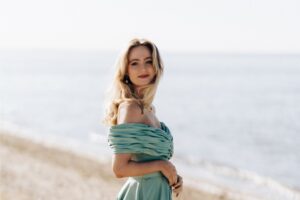
Q & A: Soprano Stephanie Hershaw on Singing for ‘Amadeus’ & Preparing for Vache Baroque’s Semi-Opera of ‘The Tempest’
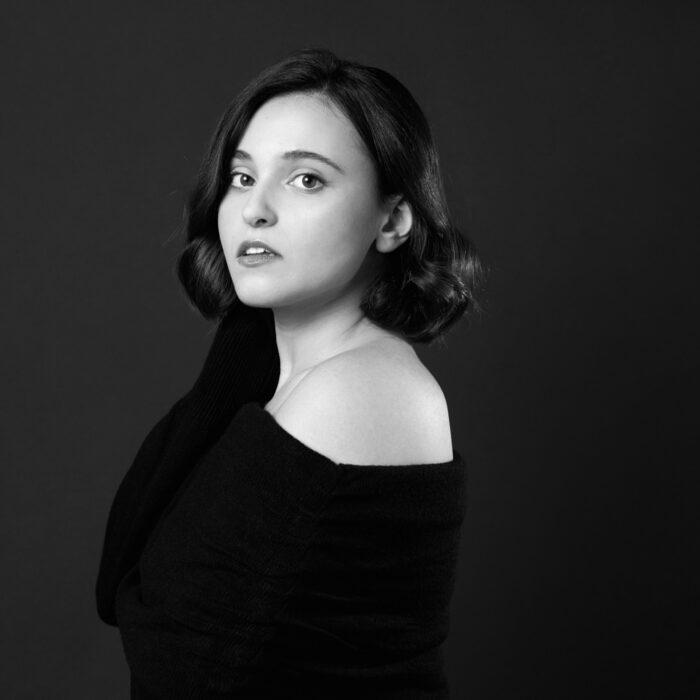
By Jennifer E. Pyron(Photo: Viktoria Orel)
Experimental operatic powerhouse Vache Baroque has cast Stephanie Hershaw in the role of the spirit Ariel in a new production of Shakespeare’s “The Tempest” — a “semi-opera” in partnership with multi award-winning theater group Out of Chaos and soundscape artist Dan Samsa. Paul O’Mahony (artistic director of Out of Chaos) and Vache Baroque’s co-founding music director Jonathan Darbourne have created “The Tempest” in the spirit of Thomas Shadwell’s semi-operatic version of 1674 with music by Purcell, Locke, Humfrey, Marais, Couperin, and more.
OperaWire visits with Hershaw to learn more.
OperaWire: How has singing the voice of Aloysia Weber for Sky TV’s “Amadeus” prepared you for this hybrid semi-opera production of Shakespeare’s play?
Stephanie Hershaw: “The Tempest,” in Shakespeare’s original, included Ariel’s song “Full Fathom Five” set to music by Robert Johnson in 1611 — so we know that the spirit shapeshifted from actor to singer.
Every project I’m involved in informs my artistry in some way and helps me learn and grow. I think having many strings to your bow is really important in this career, particularly in the UK, where there isn’t the same volume of opera work that you might find in countries such as Germany (where I am currently a member of the soloist ensemble at the Oldenburg State Theatre). Working across different mediums has made me much more adaptable.
Being involved with television productions such as “Rick Stein’s Cornwall” on BBC Two and “Amadeus” on Sky TV requires a very different kind of performance from theater. The camera can pick up tiny details, whereas onstage you’re communicating to an audience at a distance. Each experience teaches you something about presence, communication, and storytelling, and I think all of those skills ultimately feed back into each other.
The variety is stimulating for me. I love that my career doesn’t have to exist within one particular box. I can be singing, acting, working on camera, or exploring something completely different, and each experience brings something new that I can take to the next project. I think that’s particularly relevant to “The Tempest” at Vache. It’s theater, music, and storytelling all at once. So perhaps all of those different strands of my career have been quietly preparing me for this role. It’s been a chance to bring together so many different aspects of what I love about performing and, ultimately, to discover what it means to be a singing actor.
OW: “Amadeus” is a great example of classical music being made more accessible. How does this production of “The Tempest” also achieve that?
SH: I believe that Vache Baroque producing “The Tempest” as a semi-opera makes it incredibly accessible. It opens the door to people who may never have seen a full opera or a full Shakespeare play, since it brings those two worlds together in a really natural way. The storytelling is always at the forefront, so you don’t need to know the conventions of either art form to understand what is happening emotionally. At its heart, it’s a story about power, forgiveness, love, freedom, and what it means to let go.
Beyond that, this production creates a soundscape in which the music and text interweave seamlessly. Hopefully, that makes the music feel less intimidating for audiences who might not usually go to the opera, while still giving people who love opera and Shakespeare something really rich to engage with.
OW: Has your musical theater upbringing had an impact on your approach to bridging the gap between sung and spoken word?
SH: I have a background in musical theater as well as classical music, but I didn’t anticipate just how helpful this would be when I started work on Vache Baroque’s “The Tempest.” My musical theater training has particularly influenced the way I think about stage presence, storytelling, and the importance of text. In musical theater, words are so much at the forefront that it has really fed into the way I’ve approached this more operatic role. Rather than relying primarily on the music to convey the emotion, I’m much more conscious of the verbal nuances involved in telling the story and communicating the character.
In the role of Ariel, music and words have equal prominence and meld into one another. It’s really important for me to create the right balance between those musical and theatrical elements of the performance. I love the technical and musical demands of opera singing, but here I’m equally motivated by what’s happening dramatically in a scene and how I can make the audience feel that. Often, I move directly from speaking Shakespeare to singing, and it’s been fascinating to realize how instinctive it is for the spoken voice to develop into the sung voice.
Ariel is a fascinating character who is everywhere and anywhere. Because Ariel is a spirit who doesn’t belong to one world, there are almost no limits to what the character can be.
This makes it feel particularly appropriate that Ariel switches constantly between speech and song. While I’m enjoying it, it also has its challenges. Shakespeare’s language is so rich and precise, but singing brings an entirely different set of demands. As I’ve worked to discover where those two worlds meet, I’ve learned so much from the process, both as a singer and as an actor.
As soon as I was offered the role of Ariel, I reached out to Michael Corbidge, an Associate of the Royal Shakespeare Company, who has been fundamental in this journey. It has been such a wonderful discovery, and a real process of finding my voice in a completely new way. Michael had me running up and down the beach, throwing pebbles into the sea and exploring Shakespeare physically and instinctively. It was totally transformative.
OW: How have you found working with director Paul O’Mahony and the Out of Chaos theater company alongside the cast of opera singers and musicians?
SH: Working with Paul and Out of Chaos has been a great experience. The actors bring so much into the room, and I’m learning an enormous amount from them. Being surrounded by actors has also given me the confidence to really put myself out there, offer new ideas and give 110 percent. There’s a wonderful freedom in the way actors approach a rehearsal room. They’re constantly experimenting, trying things, making bold choices, and responding to what is happening around them. As opera singers – and I can certainly speak for myself here – we can sometimes feel as though we’re in a bit of a box. A coach once said to me that it’s all too easy for opera singers to feel as if we’re “walking larynxes” (park and bark!) which has always stuck with me!
Of course, there are practical differences. Singers have to think about breath, vocal technique, projection, and the physical demands of producing the music, whereas actors have much more freedom to let the body respond instinctively. But rather than experiencing that as a conflict, I’ve found those differences really stimulating. I’m learning how to inhabit the character more physically while still looking after the voice. The process has been a voyage of discovery of my own limits and capabilities.
OW: What do you want the audience to take away from these performances?
SH: I would love the audience to feel completely enchanted – to experience a real sense of escape from everyday life and be transported into the magical, unpredictable world of “The Tempest.” There’s something particularly special about experiencing the show by the lake on a summer evening, surrounded by nature. The setting itself feels almost like part of Prospero’s island. There’s water, sky, darkness, the sounds of the natural world – all of which can become part of the atmosphere of the performance.
I hope the audience can forget the outside world for a while and feel – like us – as though they’ve stepped into Prospero’s island: somewhere mysterious, beautiful, strange, and full of possibility. “The Tempest” is such a dreamlike story, and I think encountering it outdoors allows that quality to become even more powerful. Ultimately, I’d like people to leave feeling that they’ve been immersed in the world we’ve created rather than simply sitting there as spectators. If we can create a little bit of magic and give people the chance to escape for a few hours, that would be wonderful.