High Stakes – Ran Arthur Braun on Creating Operatic Evolution by Causing a Revolution
By Mike Hardy(Photo: Ksenia Shaushyshvili)
Opera has no shortage of drama or tension. But pyrotechnics, explosions, intense fights and aerobatics are chiefly the domain of the cinematic action movie, not the opera stage.
But one man is hell bent on changing all that.
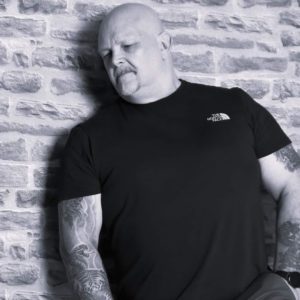
Ran Arthur Braun is one of the world’s most sought-after stunt coordinators and live action designers. He has worked on more than 400 live productions and has been involved with most leading opera houses and festivals in the world.
Multiple award winning, he specializes in large-scale events, managing action actors for films, television and the theatre, including Hollywood, Amazon Prime and Lucas Films among many others.
Despite being a renowned action director, he is fully conversant with the artistic realms of opera.
“I started as a performer myself. I started piano and singing and I was acting in the military. I graduated as a classical singer. And then did stage management and set design, lights and everything. But always the fighting was part of my being. And as a performer, I thought well, I’m not Brad Pitt and I’m not Marlon Brando, but I can fight. Maybe I should invest in something else? And then quickly, I had the luxury to have generous teachers. Generous in the sense that unlike most teachers that actually teach the basics for two, three years, and then you become an instructor of basic stage combat performer. They said to me: Your eye is different. We would like to invest a little bit in you. So, I invested more in aerial work, underwater scuba diving, rigging, pyrotechnic, gadgets, the whole thing, protection gear, inventing new systems for rigging, for protection, all my own stuff with a fresh approach and a vision and belief that less is not more; MORE is more,” said Braun.
Scuba diving? I asked him. What on earth use is scuba diving on an opera stage?
“Oh, I had a ‘Carmen’ once who was drowned rather than the usual stabbing or strangling, and she had to lay motionless in the water for some time so was fed air via diving equipment!” he responded enthusiastically.
“Oh wow — I saw that production,” she said, speaking from Madrid during her days off between performances.
“I would definitely struggle not to panic in that situation — I have a little fear of diving — but it looked incredible. And if I were offered that production, I would accept the challenge without hesitation. I’ve already been involved in some pretty intense stunts while performing Carmen — baseball bats, violent strangulations. When I was a student, I walked on stilts and even tried to learn how to do a fire show. I definitely want to keep improving my skills so that one day I can do all the tricks myself,” said Akhmetshina.
“I first met Ran when I was a young artist at the Royal Ballet and Opera, where he was our stage-fight and action coach, and I thought he was amazing. He has all these incredible ideas — he’s a bit crazy, but that’s cool, because I’m a bit crazy too! Last summer, I saw an epic production — unfortunately only online — where Ran was the stunt coordinator for ‘The Flying Dutchman’ at Oper im Steinbruch. In that production, he set a stunt performer on fire while flying down from the cliff as the character Senta. I asked him if one day we might have the chance to do something like that in one of our shows — because I would love to do it myself, and I’m ready to go through the training for it. Ran is one of the best in the opera industry today at creating bold, exciting stage fights and effects without ever harming the quality of the singing. He works from the artist’s abilities and still makes everything look real and safe, which is essential. Our time working together was exciting and I can’t wait for many more,” said Akhmetshina.
I pointed out to Ran, spectacular as it all sounds, most opera singers just prefer to sing and maybe act, and not get too involved in dramatic, physical, potentially dangerous stuff.
“It’s changing. It’s not enough just to be able to sing these days,” said Braun.
“It’s about the versatility. Can you act? Can you dance? Can you juggle? Can you sing while flying? What kind of other things can you do? And not forgetting, can you fight? Since the pandemic we are competing with all kinds of networks. It might be the social networks or Netflix, Amazon etc. And the level of amount of information that people get is faster, more intense, and so are the expectations. So, in order for them to leave their phones down, we need to provide them with something that cannot be achieved by watching their phones. It needs to be bigger than life, more than just traditional opera. Live performance is not edited; it is a hugely immersive experience. One can smell the flames, not only feel the heat! One can sense the danger and surrender to the music,” said Braun.
Rather than disclose reluctant artists, Ran singles out in particular one singer who subscribes fully to his ideas and who was most enthusiastic in bringing to the stage his vision.
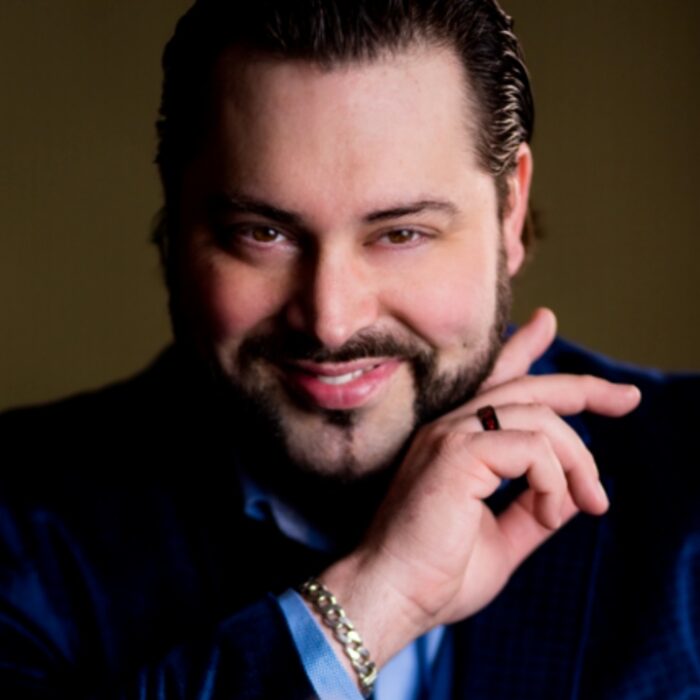
“Freddie de Tommaso was a dream to work with. I worked with him when he was Casio in an ‘Otello’ production. We had this 50 seconds sword fight in the beginning in the original production. I told him: OK, I’m going to go slow with you, and he said, It’s OK, I’ve got it. What do you mean you’ve got it? I said. OK, show me what you got. And he was like, bang! Quick as a flash, he definitely had it! Freddie is the real deal. He has the voice but also he is able to outperform, movement wise, many others,” said Braun.
“Yes, there are artists who want only to stand and sing, but the problem with that is very simple: You join the game or the game will say goodbye. It doesn’t matter how beautiful your voice is. It doesn’t matter, in the sense that , if you haven’t got the voice, you would not even be on stage – so that’s a given. There is always someone who is cheaper than you and better than you. So, one needs to invest time in additional engaging crafts. I aim to create operatic evolution by causing a revolution. And I believe if you don’t join this, you will be left behind because there’s no way back now that it’s being introduced as a possibility, and singers prove to be the new Gladiators. Whoever doesn’t go with it looks archaic, and you cannot compete with the budgets that Zeffirelli had,” said Braun.
Perhaps unsurprisingly, the man Braun holds in such high esteem, Freddie de Tommaso himself certainly had no issue with his ethos.
“Yeah, I agree, Ran is absolutely right in that we need to make opera look exciting and appealing to encourage the public to keep coming back,” he told me from Valenica where he is currently performing.
“He does really cool stuff. So obviously I did ‘Otello’ and then he managed the physical stuff in the ‘Norma,’ at the Theater an der Wien that we did earlier this year and it was really good, really good. It didn’t need to be the biggest fight or physical scene, but what we did do was really strong. But obviously, it is tricky because to be able to sing well, you need your heart rate to be low, you can’t be panting. So, it needs to be a balance. If you’re not doing any singing, then have fun. Make it look amazing. Sure, if you’re about to have to sing something then it can be very difficult because of course you don’t want to be out there doing anything too strenuous. But Ran is never going to make you do that because he understands. For example, in ‘Norma ‘when we were doing a few physical bits he was like, is that fine Fred? And I was like, yeah absolutely. I’ve got about eight minutes until I need to sing so that’s completely fine; in eight minutes my heart rate will come right down it won’t be any problem at all,” said de Tommaso.
Something definitely guaranteed to get one’s heart rate up are the dramatic infernos and pyrotechnics Ran employs.
“I work a lot with fire-related stunts,” said Braun. “That’s my biggest call at the moment in the industry, every time an inferno or blaze is required, its: All right, let’s call the madman! And I get to set things on fire, in many different ways. I’m trying to be original with my approach to that. So now I’m currently working at Teatro alla Scala, where two stunt women perform full body burns, as stunt doubles,” said Braun.
I suggested to him that surely, many houses don’t quite share his enthusiasm for such effects?
“There was a show that I did where there was maybe 25 minutes of aerial work. Singers flying up 15 meters in the air, spinning, jumping, everything. The house didn’t believe in that. They said, it’s not Cirque du Soleil! But it won all the awards. It won awards and the singers produced amazing singing, upside down! They got glorified. With this reaction, came a change of heart! Which is something I can also appreciate, as relationships grow and perspective allow us to see things differently. It’s because the aerobatics idea added magic. Don’t we all wish for that in our lives? Dreams?,” said Braun.
I asked him just how receptive opera houses are to his creative ideas.
“Well, in the upcoming seasons it’s pretty exciting times because I’m going to do Salzburg, Munich State Opera, Royal Opera , Amsterdam, Paris Opera, Berlin State Opera, La Scala, Vienna, Zurich Opera and several leading houses in the US. In many other places also, jointly with my team. I’m showing to the houses that, actually we can do like the movies, but as a real live event. And the opera already has its epic, grand elements. They already have an amazing set and orchestra and soundtrack better than any movie. So why don’t we take those elements of circus, martial arts, stance and technology to enhance the culture itself? So that was my voyage and still is,” said Braun.
I asked him what keeps him so obviously driven.
“I was fascinated with music from when I was five years of age. I had music. I was listening to an LP, ‘Mozart for kids.’ I said to my Mama: I can do what they do in this recording. ‘What do you mean?’ she would say. I have music. I have music in me. I know it. I want to make music. Which is when they sent me to be checked, and I ended up learning piano and singing. But I was wrong to think the music I had in me was my voice. I needed to express it in another way. I still think in terms of orchestration when I’m doing things; with counterpoint orchestration, leading leitmotifs, phrasing, it’s all structured from music. And that allows me to make more complex work, because it has a thorough structure that I have felt since being five, so it’s not something that I need to think of. It’s something that I live with and that’s something that cannot be explained when it’s your second nature,” said Braun.
I asked him what he sees as the next development in his journey.
“You know, so what is next? Is that I have no idea. I’m just very curious about many things. And I am always adding to my knowledge. I’m just curious about how to make the next opera more attractive. I’ve done so many productions to date. You want to know my favorite? I think that I love every production that I start. I’m falling in love with the production I will work on next. That’s the best production. It’s the one that I have not done yet. With the people around me. Quentin Tarantino is an idol of mine. He said: You know, as a director, I don’t need to know how to edit. I don’t need to know how to act. But one needs to have the vision and the skills to put a bunch of very good people around them, who know how to share this vision and dream and translate ideas into reality,” said Braun.
“Basically, when people ask me why I create these things for the singers to perform, my motto is: Because we can. In the past, I didn’t know if they could or not. Probably, potentially, yes. But they never dared to try. So, my answer, when people ask why maybe the singers have to fly is, because they can. Because they can. We want to do a fairy tale. Opera is a fairy tale for adults. I have a child who is eight years old. And I want to show him the movie, ‘The Never Ending Story,’ because it tells everything about how I see life. When you stop having fantasies and dreams, that’s the end of our world,” said Braun.
Categories
Interviews