Q & A: Music Worcester’s Chris Shepard & Friends on THE COMPLETE BACH
By Afton Markay(Photo credit: Wright & Mazzucco)
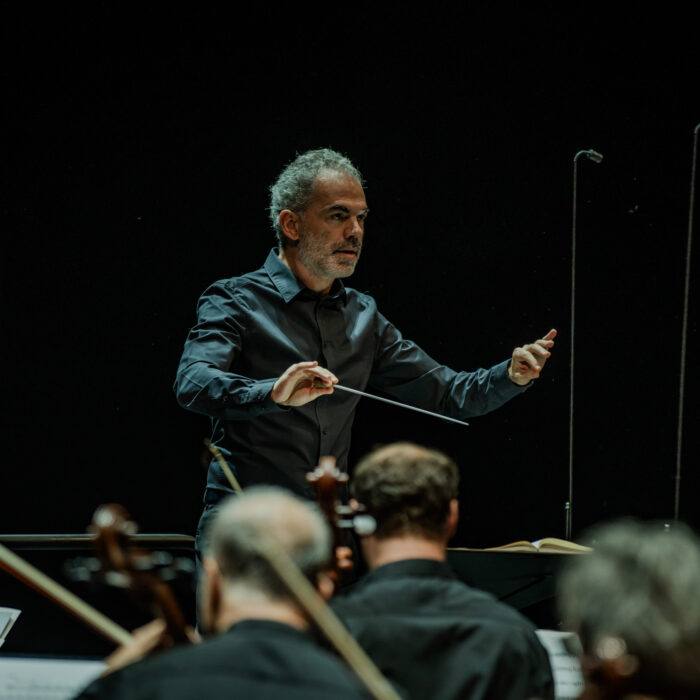
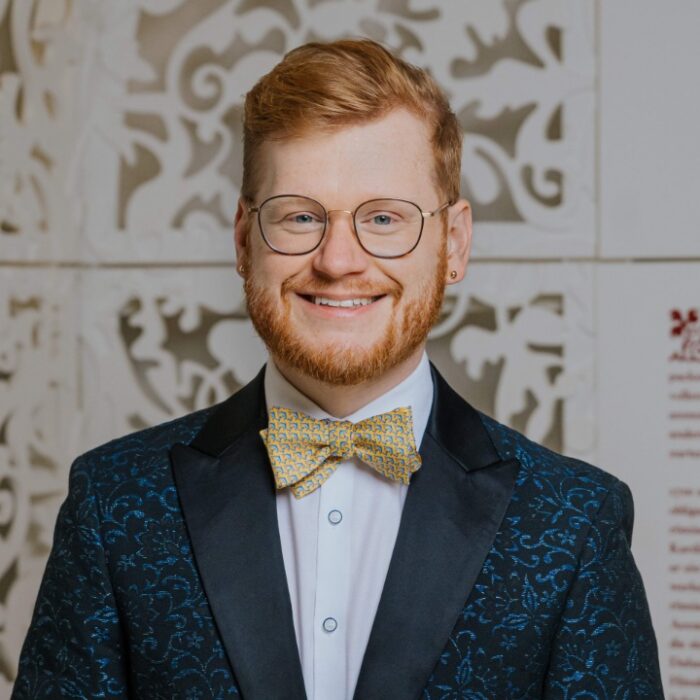
As the third year of BACHtoberfest approaches, Artistic Director of The Worcester Chorus and THE COMPLETE BACH Chris Shepard, pianist Simone Dinnerstein, and BACHtoberfest Choir member, Dana Lauducci spoke with OperaWire about this audacious project.
THE COMPLETE BACH, Music Worcester’s 11-year project to present all of the known works of J. S. Bach live features the annual BACHtoberfest each October. Along with instrumental concerts and educational events is the BACHtoberfest choir which features around 150 singers from across the country. The mix of professional and non-professional singers join for a long weekend to rehearse and perform a selection of Bach’s cantatas.
The conversation below explores the impetus for THE COMPLETE BACH, the logistics of a project of this size, and includes a healthy dose of “‘nerding out” over Bach.
OperaWire: What sparked the idea for THE COMPLETE BACH?
Chris Shepard: So our Executive Director, Adrien Finlay, came to me and said, “How would you like to repeat the project you did in Sydney? In Sydney, we (Sydneian Bach Choir and Orchestra) did all of Bach’s choral cantatas–all 142 of them. And I was just so stunned at the thought that this could happen, but I went away for a day, like literally a day, and after I thought, “I think that’s played out. I think there are a lot of people now who have done the complete cantatas.” So I came back to him (Finlay) and said, I think, as crazy as it is, the way to get noticed is to do everything. And I didn’t even know then that we would be the first to present everything live. Netherlands Bach Society has been doing “All of Bach,” but particularly because of COVID, it had to do some in recording. So that’s the wild thing is that he dared me and then I dared him and, you, here we are two years in.
OW: Simone, how did you get involved?
Simone Dinnerstein: I was the first artist in residence for Music Worcester and I really developed a very strong tie with that whole community and did lots of really interesting projects. That’s where I met Chris, because we collaborated on the Beethoven “Choral Fantasy.” And meeting him has, frankly, it changed my life. So I think that having Chris support me in my own Bach journey, and encourage me to conduct a choir, it’s like that’s been a dream of mine for years and years, and he made it a reality.
OW: How do you program something this big?
CS: What I didn’t quite realize is just how much of Bach’s output is vocal–more than half, which is crazy. That’s actually the hardest part of the whole process. The rest of it is that’s seven concerts a year already, and then the other three are keyboard, two are chamber, and one are the concertos. I will tell you, in terms of how the sausage is made, the organ repertoire is really tricky. Pianists have the inventions, the English suites, French suites, and so on, so it’s actually easy to say, I need somebody for book one of “The Well Tempered Clavier” and someone for “The Goldberg Variations.” But the organ repertoire, it is so hard because they’re all three minute pieces that you sort of have to figure out how to group together, and typically organists have some in the repertoire, but not all of them. But as people hear about it, we are getting calls from agents and managers asking about what pieces we need. But then the problem is that with one piano concert a year, one concerto concert a year, all of a sudden, we are having to say to really great musicians: Yes, we’d like you, but we can’t have you for another five years. Which is really a little awkward. And then the other thing, for some people booking that far in advance is better. So as somebody who would prefer to just wave my arms and put programs together, I must say that part of the project has been a challenge for me. And luckily, Adrian is really great at that sort of stuff.
OW: How far out have you planned concerts?
CS: For example, I know what cantatas the BACHtoberfest choir will do, but what it is settled into is that we work on the current and the next season at the same time. If we get too far out, the variables change too much.
OW: What do you choose to focus on in rehearsal since there is such little time during BACHtoberfest?
SD: You know, we live in a world right now that is so influenced by pop music and music that has a constant beat and is in a constant loop. Our whole sense of time is so influenced by the kind of digital world that we live in. I think that’s affected how people sing and play Bach and my instinct is that that’s not actually inherent in the music. So, in the music, when it has those streams of 16th notes, why do they need to all be exactly the same? Like, I feel like there’s plenty of room for breathing, for shaping, for some of them going faster, and some of them going slower, and maybe if we thought about Bach a little bit more freely in this way that it actually does become physically more comfortable to sing or to play.
With Baroklyn, I like to have the musicians play to each other. So with the choir, I tried in certain parts to get them to actually look at each other and sing to each other, because I think that sometimes, the eye contact or even like your body looking at someone can change how you offer the music. It’s like a real give and take. There’s something kind of unnatural about kind of looking out this way. But, if they’re looking towards each other, then they can pass the music around, and that has led to lots of really interesting, lots of interesting interpretive changes. Also, I think with Bach, a lot of it is dance, too. I really think that there’s the feeling of steps, and so if people can feel a physical gesture with the music, that also really changes how everything sounds.
CS: Part of the process I just really love is the whole time I’m assessing and thinking, “How much detail can you go into?” It’s like being a good teacher; you can’t constantly pitch everything to the top 20% of the class. It’s just not fair to everybody else. So, I tell myself: Okay, I’m gonna stop and talk for a second, let them get their little break, and I’ll talk about how the piece is constructed. But then, I don’t go into too much detail because then I’ll lose them. So in a weird way, by the time the concert comes, for me, it’s just pure joy of making the music altogether.
SD: Chris, I think, because you have to convey everything so vividly that people respond. And you also have such a great way of with language, that I think being able to say something so succinctly that it gives an image so clear that people know. I think that singers are really led by imagery.
OW: Why do you think Bach’s music is still this popular for professionals and non-professionals?
SD:Because it’s awesome! I’ve been asked this question a lot, and it’s very, very hard to answer, but I think it is because of the complexity of the music. What’s driving the complexity is something that is so very human and very much living outside of a particular time and place. There’s something extreme, almost abstract in the writing, which lends itself to being heard in many, many different ways. I think a lot of other composers, their music is very much linked to not only a particular style of when they were alive, but also linked to a particular instrument or to a particular kind of tone. You know, if you think about, like the music of Brahms or Chopin or Prokofiev, like it was written specifically for a certain kind of physicality of an instrument or a voice. Bach’s music, he, while I say, it’s all written for the human voice, I think also, it’s not really written specifically for instruments. You know, he was constantly rewriting things, so that it would be for one instrument or another instrument. And because the music isn’t specifically tied to a physical sound, I think that that means it is free from a certain kind of constraint. And I feel that that really influences how people hear it.
Even in the music that doesn’t have text, which I find interesting because as a pianist, I don’t think about text, and also as somebody who’s not religious and didn’t grow up with any kind of religion, I certainly don’t think about the kind of text that Bach was thinking about. That whole world just doesn’t have any resonance to me. And yet, somehow or other, everything that he wrote has that underneath it. So, I would hope that the people attending this Bach marathon over the years will come out of it, realizing and feeling how the voice permeates everything.
CS: The universal appeal, I think, comes from the fact that he is the perfect balance between the heart and the head. So, if you just want to be moved by the music, you can be. But if you want to have your synapses fire from the complexity of the engine underneath it, that can happen too. And so it’ll hit each individual according to who they are. And I don’t think there’s a great deal of art that’s like that out there.
What I love is that the Romantics loved Bach, but the 20th century Modernists also loved Bach, but what’s interesting is they loved different repertoire. I just find that really fascinating that he speaks to both sides. He’s the apex.
OW: Why is it important to perform all of Bach’s music live?
CS: Not to make a pun on the Bach “Passions,” but in the end, yes, I’m a conductor, yes, I’ve read, I’d never say scholar, but let’s say a scholar in terms of what I’ve read. But do you know what I really am? I’m an Evangelist. I just want one by one, people to fall in love with the music of Bach. Sometimes it’ll be through making the music, sometimes it’ll be through making a connection. Like, it’s really wild when you see where Bach musically puts crosses in a number of movements in those passions. And once you know it, it’s like the Da Vinci Code and you want to see it everywhere.
OperaWire also spoke with BACHtoberfest choir member and first alto Dana Lauducci. Here, she shared her experiences with the BACHtoberfest choir.
OW: Please tell me about your choir experience.
Dana Lauducci: I have sung with the Masterwork Chorus, which is out of Chatham, New Jersey, for the past 28 years. Chris Shepard was our music director for nine of those years. I’m also Vice President of their Board of Trustees. So that is how I know Chris and coincidentally, this week I’m participating in the CONCORA Summer Festival that he’s conducting. And so what he does with this CONCORA Summer Festival, is we learn the three cantatas that the BACHtoberfest choir will be singing in October as well as some other pieces.
OW: Are you are professional choir singer?
DL: No, no, not at all. So, Masterworks is a vocational choir of about 100 singers. We perform annually at Carnegie Hall, in addition to lots of other New Jersey venues.
OW: How did you get involved with the BACHtoberfest choir then?
DL: When THE COMPLETE BACH project came together via Chris, we knew about it and many of us still really hold a close affinity for him and wanted to continue that relationship, so that’s when several of us were like: Well, of course we will go. That is a no brainer!
So, this is going to be the third year of it, but for the past two years, we’ve had about 16 to 18 Masterwork folks come up for the BACHtoberfest weekend and the full experience. We all rent Airbnbs together and just sort of immerse ourselves in the whole experience.
OW: Had you done much Bach before joining the BACHtoberfest choir?
DL: Because Chris Shepard was our director and is a Bach scholar, we definitely did some works, but we didn’t solely focus on Bach. But now, because of the CONCORA Summer Festival I really do feel like I have a much more in depth knowledge and understanding of how Bach works and writes and, the vocal intonation and all the little detailing stuff that Chris teaches us every single day in rehearsal.
That’s one of the things that I adore about Chris and the experience, it’s not just: we’re going to come here and we’re going to learn. It’s about the music and then we put on a concert. He really is so focused on the singer’s learning experience. His focus is not just to make sure that we learn these particular few cantatas and perform them on Sunday, he wants us to really understand and go forward with the music.
OW: Has this experience helped you with singing works by other composers?
DL: Absolutely! Obviously, The BACHtober fest stuff is just gonna be Bach, but what we’re doing this week (at CONCORA Summer Festival) is Bach, plus other things that were influenced by him. So a lot of what he’s teaching us about Bach specifically does parallel some of these works that are by other composers, as well. And, I go to these rehearsals with Chris in any sort of setting, and I come out of it with so much additional knowledge and background, and that’s sort of his genius. He’s not just teaching notes to learn a song, he is there to pass along all this that he has accumulated over the many years of his own experience with Bach. Passing it along makes us all better singers and musicians and musicologists in general. Even those of us who are not professional musicians, just listening, it helps you listen and appreciate whatever you hear on the radio, on NPR or whatever. I come out of every rehearsal with Chris Shepard feeling like I just attended a college level seminar, and I just got a little smarter.
OW: Do you plan to keep going through THE COMPLETE BACH?
DL: Oh, 100%! You know, these past two years have been such a special experience–musically, socially, enjoying Worcester. When we are there every October, downtown is always just buzzing. You know, there’s people everywhere and so many events going on.
OW: Is there a piece that you’re looking forward to performing?
DL: The one that is my personal favorite is what we’re doing this week, which is “Wie schön leuchtet der Morgenstern,” BWV 1. I’m really looking forward to being able to do again in October.
OW: What advice would you give to someone thinking about joining the BACHtoberfest choir?
DL: Again, there’s a big social component. We have a big post concert dinner for all BACHtoberfest singers. So just the bonding with the other singers is so much fun. It’s such a special experience, for sure.
I would say for folks that are considering doing this, just like bathe yourself in Bach. Go to everything! Go to the other vocal performances, the instrumental performances, the pre-concert lectures, attend everything. You will come out of the experience learning so much.
Read Related Stories