Q & A: Marina Rebeka & Ludovic Tézier on Recording ‘Simon Boccanegra’ & Debuting ‘Nabucco’

By Francisco SalazarMarina Rebeka and Ludovic Tézier need little introduction. Simply put, they are two of the most important Verdi singers of our time.
The two have sung several of the composer’s works, with Rebeka becoming the go-to soprano of the composer’s early works requiring Bel Canto agility, while Tézier has dominated many of the composer’s most dramatic operas. Recently they made their role debuts in “Nabucco” at the Teatro San Carlo and are in the midst of promoting their new “Simon Boccanegra” recording for Prima Classic, Rebeka’s record label.
OperaWire spoke with to both artists about “Nabucco,” the process of recording “Simon Boccanegra,” and why recordings are important.
OperaWire: Both of you recently made your debuts in “Nabucco,” Marina as Abigaille and Ludovic in the title role. Why was it the right time to debut these roles?
Marina Rebeka: Circumstances are very important. Extremely important. I mean, for me, it was very important where, with whom, who’s conducting and what are the circumstances. I mean, Napoli is a big challenge because so many operas were written here and the people know the traditions and everything. But it was also very important that Ludo comes, like me, from Bel Canto, not from this Puccini style. We have the same type of vocal past and it was very important that Riccardo Frizza also comes from Bel Canto. So we talk the same language because the approach that we were looking for is not only just another “Nabucco,” but it’s “Nabucco.” It’s Abigaile, who was written for Giuseppina Strepponi, who had the technique of singing the dramatic bel canto and who had these two types of voices, but came from the Bel Cantistic approach.
With this role you have to measure and be very, very wise. And it’s the same when you should sing it. So we have this great, amazing cast. I love working with Ludo. It’s like being with family. And Riccardo Frizza is great. And the opera house, we know very well and we did “Simone [Boccanegra]” here and we like working here. So the circumstances were good.
Ludovic Tezier: Well, exactly the same. I was refusing “Nabucco” for many years because of my inner schedule. And then, of course, it’s quite tempting, actually, to sing this part, because it’s a beautiful part, and then in such beautiful condition, surrounded by friends.
When San Carlo asked us, right after “Simone,” that we recorded here, to do a new challenge, I said yes, because of the team. Being an ex-rugby player, a very bad one by the way, I kept from this very short time in my life, the spirit of a team. A team of friends wins at the end. This was probably the best moment and best condition for me to start this part.
OW: Where do these roles fit within the Verdi works that you guys have already done? Ludovic, you’re very well-known for your dramatic Verdi and Marina, you’ve done many of the earlier works that require coloratura.
MR: I mean Abigaille is higher and smaller than “Les vêpres siciliennes.” It’s like Lucrezia Contarini of “I Due Foscari” that I have done already. I think it’s even smaller. So it’s the question of beating the ghosts of the past. You have so many of those ghosts like Ghena [Dimitrova] singing it and in the end I was listening to very old recordings because I thought not everybody was singing it that way.
For example, Santuzza was considered to be a spinto and not an obligatory dramatic who is singing Turandot.
With Abigaille you have to have clear coloratura, very good tops, and decent bottoms. But it has to have a measure. And that’s what I found with [Miriam] Pirazzini and with [Renata] Scotto. And I know people say it’s not the voice for the role. But I’m the same voice type as Scotto was. And Scotto has a fantastic recording with [Riccardo] Muti. So that’s how I see it.
LT: I think the roles were pretty much spoiled by the fact that the opera has been done on impressive stagings and was mounted on big stages like Verona or a kind of open air space. And of course in those conditions you have to have quite a dramatic voice to fulfill the part. And so we got accustomed to listen to those huge dramatic voices in this repertoire.
Ghena was quite amazing actually because she could not only sing loud, but beautifully under the respective vocalism. But it’s quite rare and I’d rather get back to the original format of the parts because music first before the voice and when you have both, like Marina, then you have the voice and the musical skills and the ability to do all the vocalism that Verdi beautifully wrote for La Strepponi.
And on my side to sing it on stage and not open air, it also allows me to give more colors and to get even more into this father soul that Verdi was craving all along his long career. I’ve done many, many Verdi fathers. This is another one. So it’s very much linked to the others, “Rigoletto,” for example, or even “Traviata,” but also very much linked to “Macbeth.” If you listen to many musical moments, vocal moments, but also some dramatic moments in “Nabucco,” you already have some “Macbeth” in it.
OW: Speaking of Father-Daughter relationships in Verdi, you guys just released a new recording of “Simon Boccanegra.” Marina, why was this the next work you wanted to do with Prima Classic?
MR: It’s the circumstances. Because to find the right circumstances to record an opera is very hard. Before we did studio recordings. “Pirata” was created during COVID time when everybody was sitting one meter away from each other. We were all closing theaters and we had all that time because there were no performances, nothing was going on.
“Traviata” was my pure wish, because before leaving it, I wanted to leave it integral and everything. “Norma” was another thing, which was the first time the new critical edition with the old variations that I wrote was recorded. But in all those circumstances, you have to imagine, I’m working triple because I’m singing, I’m organizing recording sessions, I’m organizing travel, hotels, talking to agents about the fees and everything. It’s an incredible amount.
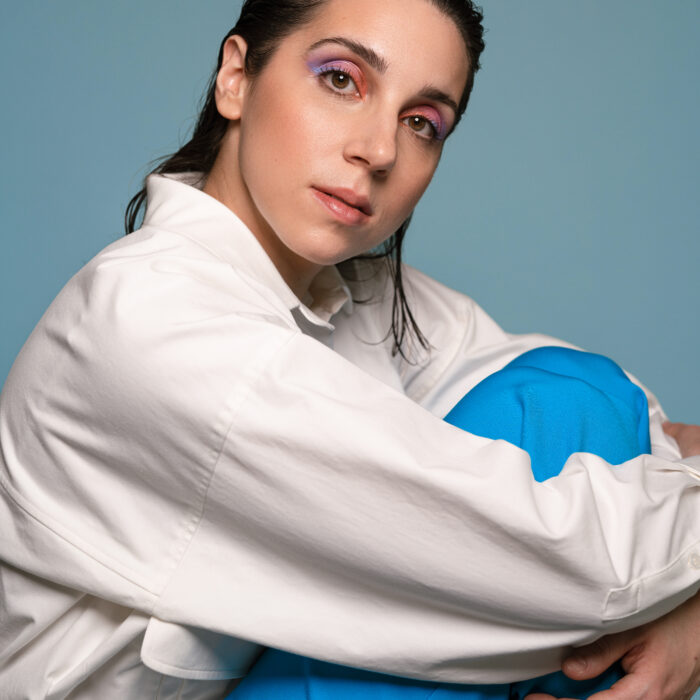
Even taking pictures. I took the picture of the “Simon Boccanegra” cover. I’ve done a lot of that and honestly, I said maybe it’s time that we concentrate on a good live recording. When I say good, I mean that we have at least two shows and we have lots of takes of all the rehearsals, that we have a lot of material to choose from. Studio recordings are just becoming incredibly expensive and the people who want to invest in opera recordings are very little and sponsors, unfortunately, are fewer.
But we love this art, so we are doing it with all our love and our passion in all the possible ways. So here Napoli came with this amazing cast and they said, “Look, you can record if you want.” And obviously we said, “Yeah, we want to.”
It’s not a critical edition, it’s not something that Prima Classic usually does, but it has good singing with a good cast and a lot of post production and that is already something very important.
OW: Ludovic, you have such expansive recording history but this is your first “Simon Boccanegra.” Tell me about this role and your history with it.
LT: Well, this is a very fascinating role. I was listening to the part very much earlier than I think I was able to sing it. And a bit like “Rigoletto,” for example, I was just listening when I was kid. And somehow when you are listening to this part and then you become a singer, the part is already somehow there because there is a small corner in your head that is dedicated whether to “Rigoletto” or whatever. And Simone was one of those parts. So it was very good for me to start. And you know, this is very special because it’s such an emotional part.
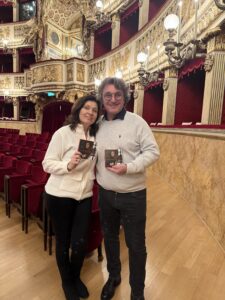
Then to make a recording of it, I’m very much happy to have done this because again, and it means to me very much it was surrounded by friends. I had the chance to sing along with Marina, which is very important and meaningful to me. And then it’s a beautiful souvenir that we have in common. It’s not about the mystical beauty of my voice. You know, I don’t care about that. I’m not especially a fan of Ludovic Tezier, but I’m very much fan of Marina Rebeka.
And for my ego, it’s quite important. I did mean only having my name on the another beautiful photo that she did of myself, but also to share music with her and with beautiful colleagues and of course to have this souvenir of it on the recording. That’s quite interesting. I mean, because it is not only a picture of me on the booklet, but a picture of a musical moment, mostly a live moment.
OW: What were the biggest challenges of this recording?
MR: It was sometimes very difficult. We’re a team of two. Anete was dealing with the orchestra and I was dealing with all the singers. And there were those moments in Simone which are, you know, timeless. And every evening they were different and I was sitting there. “Which one should I choose? All of them were great.” I have to choose one and I hate to do that. But it’s very interesting. There were hours and a very long post-production.
LT: Those were alternative takes. They want to say yes to one and say no to the other. And I appreciated not to be involved in this. It would have been terrible to me.
OW: What do you guys remember about the performances? What were some of the special moments while you guys were recording and performing these work?
MR: It was concert version, so I remember we had very intense rehearsals because we had like three days of rehearsals and immediately the show. Something like that.
LT: It was exhausting. I think Marina and I are not easy to exhaust. Sometimes when you are tired, I mean, not overtired because if you are, you cannot sing anymore. But when you are tired somehow, it helps me forget at the end that I was doing a recording which is very much important. If you think every second, there is a take on this, somehow you put a pause on your interpretation. It can be quite dangerous. So once you’re tired, somehow you let it go. And some magical moment can come out of it. I think the concert and the finale of the first concert was quite amazing. I think the whole atmosphere was really in it.
MR: The public went crazy. It was a huge, huge success.
LT: It was very emotional. I don’t like the word performer, it sounds ugly to me. We are not performers. We are singers who are artists and we try to create. I like very much the two words instead of performance, “recitatione” in Italiano and “présentation,” which is very much a sacred word in French, the same as a German. “Simone” has nothing to do with the performance. It is a true “représentation.” And I think the public received it really well and it was really strong.
OW: What is the feeling of knowing you’re doing a recording and also singing for an audience?
MR: Actually in the recording, we had a big discussion if to leave the applause or not. And in the end we decided to take them away because then people would think they just recorded the show and then they printed it. That is not true because there is a lot of work behind it.
LT: When we were rehearsing, we were doing takes to secure some moments for sure. So you have to be very clear. You have to be very clean, too. But then during the two shows, we are you just singing for the public and you just have this small weird thing between you and the public that you call a microphone. But this is just recording during the performance.
And we were not singing for the mic. So that’s why being tired helps. Because when you are tired, you don’t even see the mic. Somehow you just let it go and you don’t get worried about any special note that you have to be cleaner than the one before.
MR: Also because we were walking on stage and standing, there are some particularities about the sound that you will hear because we were moving.
LT: It was a true show. There is a live quality that is so important.
OW: What does an opera recording mean to you?
MR: It’s a photograph of the voice. You take a photo and then you look at it and you say, “oh, I remember that day. I remember how it was.” And that’s the same. You record the voice in that moment and it doesn’t matter what happens after. You can go into that moment and see how the voice and the performance and the personality was in that moment. And I think it’s an extremely important thing to leave a legacy for the future generation.
LT: That is also quite important. I mean, not only for legacy, but also to exist and I mean to exist out of the opera house. A recording is pretty much fantastic in this respect, because I know there are a lot of people who just cannot afford to get into a house, whether they are stuck at home for health reason or whether they cannot afford to buy a seat at an opera house. And the recording is an excellent way to communicate with them.
But then you could ask, why not a DVD? It’s different because when you listen to recordings you leave it to your own mind. You can imagine your own set. And by the way, sometimes it’s better to imagine your own set and not to see several sets. And it’s freeing the imagination. I think it’s very good. I like very much to listen to recordings for this reason and also of course to take a picture of what we could do in our generation. I think it’s a good challenge and it’s a good way to keep opera alive.
MR: Then don’t forget there are some people who just bought their copy of “Simon Boccanera” from South America, who could potentially not be able to come to Europe and never even permit themselves to come to Europe. But they want to stay in tune with us, with what is going on in Europe and what we’re doing. They see us on Instagram, but they want to hear what we’re doing.
LT: I could even add something because if you talk about Chile, Argentina or those countries are shaped in these cultural voices and music. I know an association trying to help to raise interest for opera in Africa. And it works. But there are few opera houses in Africa. So how could they listen to opera, for example? Nowadays Marina and I are as well as several others at the peak of our career. So of course, I mean, young people are very much interested in the people we are now and we want to communicate with those people.
So if we don’t give them the possibility to listen to what we can do, then how do we inspire them? So that is why recordings are very important.
OW: We have spoken about the importance of recordings and keeping the art form alive. We are in the midst of a digital age with live streams and HD. Is Prima Classic interested in DVD or Blu-Ray Recordings? And how do you view these types of recordings?
MR: No to DVD and Blu-Ray. Don’t forget one interesting fact. When you go to the opera house and the singer sings to you, what happens is that our voice vibrates in the air. And that air goes to you and goes through your body. So in a certain sense, opera is the sound therapy. More exclusive is what is born in that moment is dying in that moment. So you’re living that moment right there. And that’s the most exciting thing. Recording is great. It’s like a photograph which you sometimes see and you say, “wow, this sunset, it’s so amazing. I made a picture.” But the picture is never like that. Or you take a picture of something that in reality looks okay, but in the picture it looks good. So it’s never really true. And nothing ever will substitute a real show. Nevertheless, the recordings are extremely important. And I mean, as we were talking, why CDs? Because CDs work on your brain and you are the master of what you want to see.
When we record, we have to express the emotion. That is why sometimes it’s so important not to cut breath. Because that breath expresses without singing. Before singing, the breath gives you a lot of emotion or after you finish. And there are some things which you can catch only in recordings. So there are plus and there are minuses. But I still say nothing compares to the real performance.
LT: I’m very much involved into the sound. When I was 10-years-old, I was building my own loudspeaker. And actually if you go to HD etc, how many people have devices at home to listen to the true HD they are buying or they are paying for. So I think there is a scale. If you want to keep people in touch with opera, it’s much better to do an artistic product instead of a flat, from an artistic point of view, product with a super HD quality. Once you listen to a very good CD, a very good recording, it’s fair enough for most of the people. And I’m not defending myself saying that because I pretend to have a device can almost recreate something live at all. I’ve done it.
I mean, it’s great if you have HD artists somehow, if you don’t, I mean, just put nice music on your auto radio. So I think sound is very important. But the real stuff that is on the CD or in every recording is what is the most important thing.
If you listen to old jazz recording with Miles Davis, et cetera, they did not record in HD, but we can hear it. I know probably we will hear it in 50 years, 100 years. That’s what we were meant to do during a recording.
OW: What is next for Prima Classic and what would you like to record next?
MR: I just recorded “Lucrezia Borgia” in Sevilla. So now I have a year to work on it. Because I’m multitasking, I do not have a deadline. I cannot do the post production while I do “Nabucco,” study “Medée,” because I’m making another recording now in February but that will be for Bru Zane. That will be a new critical edition of “Medee,” recitatives written last by Cherubini for Falcon, never recorded before. So I have to learn that and record that. After then I have to prepare my recital for La Scala.
So I have to see when I can edit and when I learn. So next will be “Borgia” and then will be “Medée” coming out. And then we have few projects. But opera is still our main objective because it’s the most complex art form and the most difficult to produce.
But we have 100 other artists, which is amazing. We have so many interesting projects coming up also with some singers and some great sopranos.
OW: Ludovic, you have “Un Ballo in Maschera” at the Paris Opera coming up. What are you looking forward to with that production?
LT: You know, it was a staging I created years ago. And it’ll be fun to do it again in my way and see how I changed. I move differently with age. But my voice has also developed in a better direction. And I love this part very much. Renato is quite a crazy part. It’s two baritones in one. If you listen to the first two acts, it is sort of lyrical good baritone. And then suddenly he is kind of monster because of his crisis with his wife. So it’s always a nice challenge. And of course it has one of the most beautiful arias written for baritone. “Eri Tu” is a present.