Opéra Royal de Versailles: Atys
Tenor Matthew Newlin as Atys Gives Outstanding Performance Alongside Stellar Cast
By Ossama el Naggar(Photo: Baptiste Lacaze)
Lully’s “Atys” is said to have been Louis XIV’s favorite opera. Using a libretto by Philippe Quinault (1635-1688), “Atys” is based on the story of Attis from Ovid’s “Metamorphoses.” In the original story, Atys/Attis is a handsome Phrygian youth beloved by the goddess Cybèle. She demands his absolute fidelity but he betrays her with a nymph. As punishment, she drove him mad and he castrated himself under a pine tree. In Quinault’s libretto, the story is embellished, making the nymph into Atys’s childhood friend Sangaride, who’s chosen by Célénus, King of Phrygia, to be his bride. The reticent maiden loves the celibate priest. The handsome Atys promises to help, and as priest of Cybèle, he orders the wedding to be cancelled. King Célénus and Cybèle are both furious and vow vengeance. The cruel goddess makes Atys see Sangaride as a threatening monster and he kills her. When he realizes what he’s done, he kills himself. To memorialize him, Cybèle transforms him into a pine tree.
Quinault’s story is certainly more dramatic and decidedly more operatic than the original myth. From the moment of its premiere at the chateau of Saint‑Germain‑en‑Laye in 1676, “Atys” was a huge success. Alas, less than a century later, Lully and most French baroque operas fell out of favour. But thanks to the endeavours of the American-born French conductor William Christie, founder of the baroque ensemble Les Arts Florissants, “Atys” was revived in 1986 and 1987 for Lully’s tricentenary (1632-1687). Since then, other conductors, such as Christophe Rousset and Leonardo García Alarcón, have championed the work.
Production Details
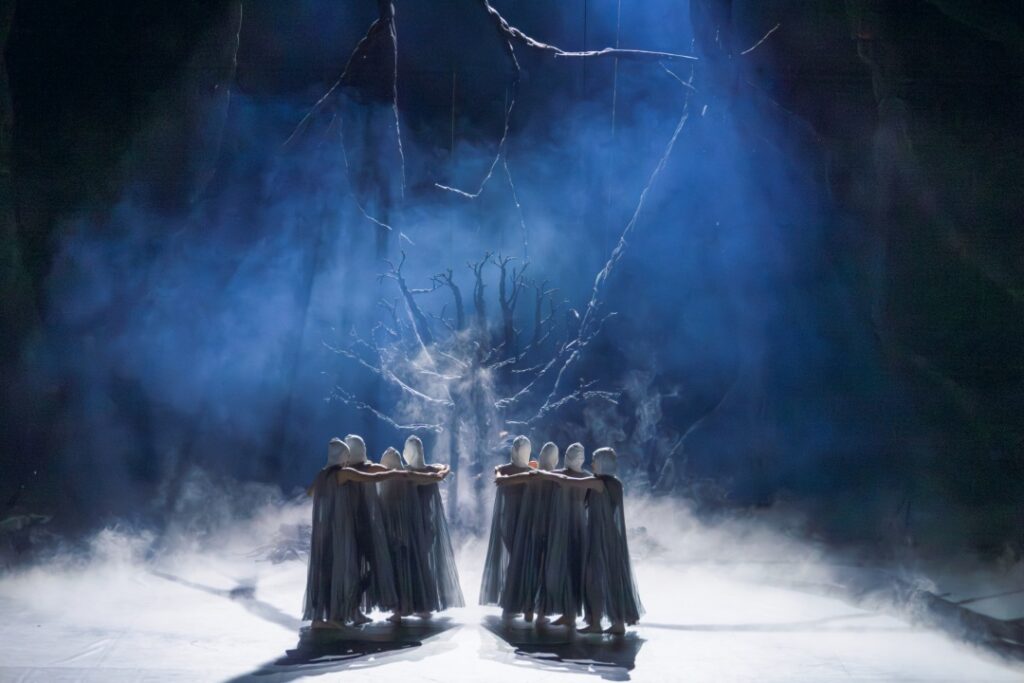
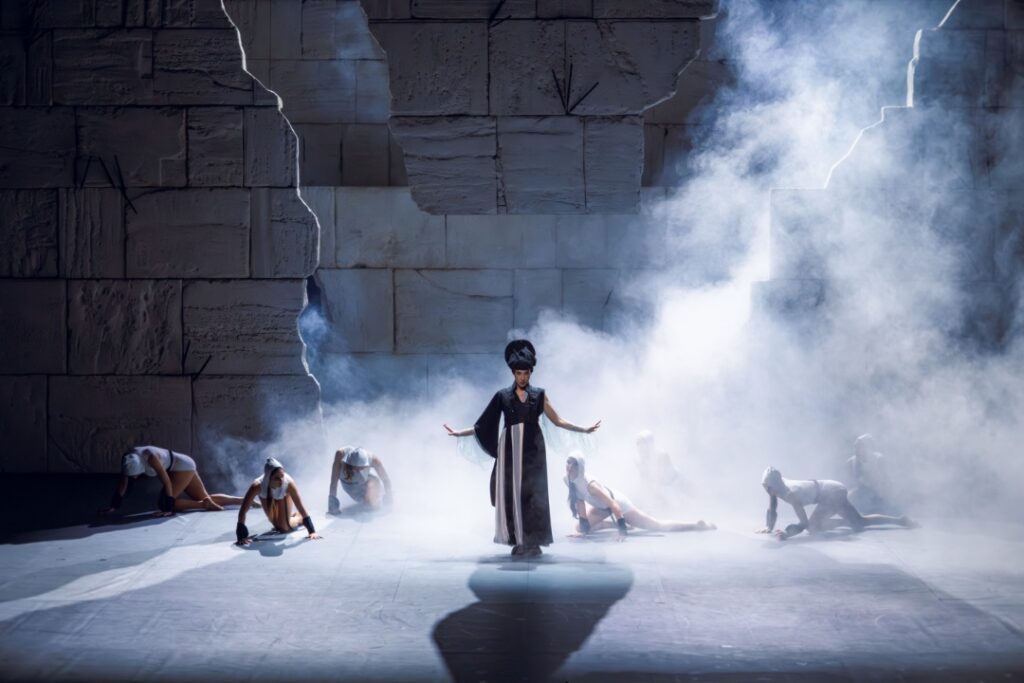
The present production emanates from Geneva, where it was received warmly by a public eager to discover neglected French works from the Baroque era. The innovation here in this production is the felicitous fusing of opera and dance, which is very much in the spirit of the Sun King. When it premiered in Geneva in 2022, it was France’s Angelin Preljocaj’s first venture into opera. Given the splendid result, one hopes many more operas will be staged by this brilliant choreographer in this spirit. All major characters are given dance alter egos who – without being intrusive – dance in parallel to the action. The dance sequences are not mere elegant movements performed during the orchestral segments but are an integral part of the opera.
(Photo: Baptiste Lacaze)
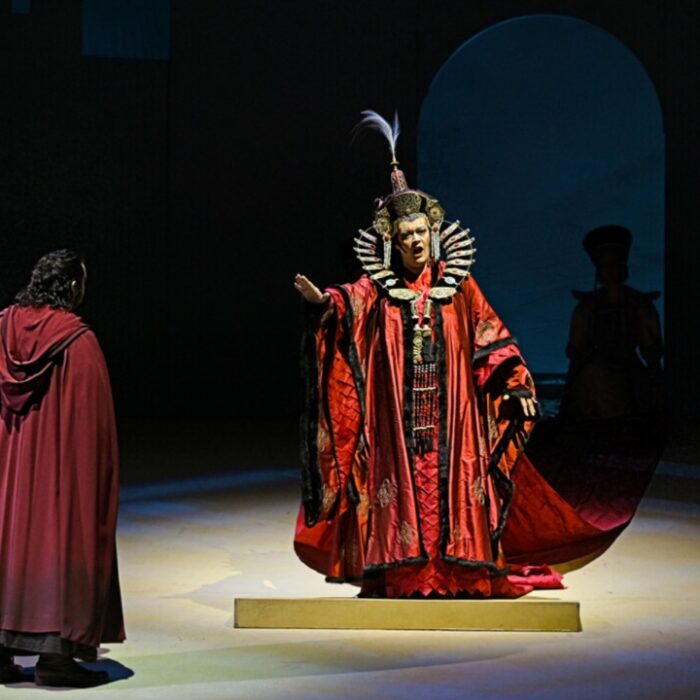
Likewise, Prune Nourry’s sets were most effective; they reflected the mental state of the characters. At the opening of the opera, white walls shake and split open with cracks evoking the upcoming turbulence in the protagonist’s life. The pièce de résistance was the giant pine tree in the finale; shaped as a human skeleton, it rivaled the best of film director Tim Burton. Jeanne Vicérial’s costumes were simple, appropriate for the bucolic setting. Rather than skimpy Grecian garb, she opted for fetching long robes of Japanese inspiration for the notables and King Célénus.
Musical Highlights
Argentine early music specialist Leonardo García Alarcón is a breath of fresh air that has made baroque music in Europe, especially in France, more splendid. Alarcón’s conducting is so refined, without being precious, that the relatively lengthy work (three and a half hours) passed like a breeze. Of course, the harmony between the excellent singers, the musicians of Alarcón’s ensemble, La Cappella Mediterranea, are the key to this excellence. Moreover, the breathtaking location, Versailles’s Opéra Royal is magical and contributed to the enjoyment of the opera.
(Photo: Baptiste Lacaze)
More than all these wonderful aspects of the production (as seen on January 27), the leading three singers were the best part of the performance. Portuguese light lyric soprano Ana Quintans’ delicate soprano was perfect for the role of Sangaride, ethereal, self-doubting and fragile. Her languorous laments were truly affecting, thanks to her excellent acting and clear diction. Italian mezzo Giuseppina Bridelli was the cruel goddess Cybèle. From her entry on the stage, Bridelli’s stage presence was overwhelming; worthy of a queen or a goddess. Portraying a baroque archetype of the spurned lover, she was terrifying in several scenes. Endowed with a captivating distinct timbre, she almost stole the show.
Matthew Newlin, portraying the title role, was a force of nature. This American tenor is truly amazing. It is hard to conceive of such immense talent in one artist; a versatile singer, a talented actor and a linguist, Newlin impressed me the first time I heard him as Matteo in Madrid in Christof Loy’s production of Strauss’s “Arabella”in 2023. He displayed perfect German diction, exceptional acting and singing. At the time, I was impressed by the nobility he exuded in both manner and expression. Moreover, he had charisma in spades.
One year later, I was astounded by his Don José in “Carmen” in Berlin. This young lyric tenor managed to impress in the heavier role. Once again, his diction, this time in French, was amazingly good.
I was further surprised this summer when I heard Newlin in minor roles in “Parsifal,” “Die Meistersinger von Nürnberg” and “Tristan und Isolde.” For someone who sings leading roles to take on much smaller ones at the temple of Wagnerian singing indicates either an ambitious tenor looking decades ahead or a curious mind; both rare and laudable attributes.
Surprisingly, this Illinois native sang the title role in the present performance and have yet to digest that it was possible for a singer to be so versatile. Singing French baroque and Wagner and endowed with perfect diction in both French and German. I urgently need to hear him in Italian!