Q & A: Saioa Hernández on her Metropolitan Opera Debut & Singing ‘Tosca’
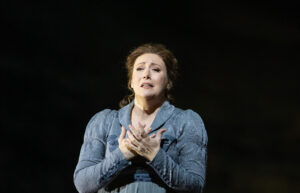
By Francisco Salazar(Credit: Marty Sohl / Met Opera)
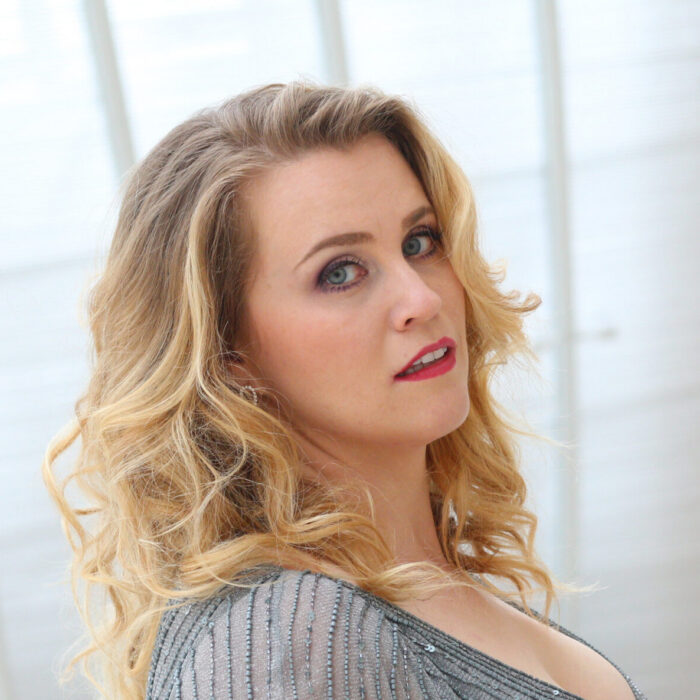
Saioa Hernández has been dominating the international scene since her 2018 debut at the Teatro alla Scala where she was handpicked by Riccardo Chailly to open a new production of “Attila.” That production and the endorsement of Monserrat Caballé, naming Hernández one of the major voices in the world, led her to gain the attention of such theater as the Royal Opera, Teatro Real de Madrid, and Gran Teatre del Liceu to the Wiener Staatsoper, Bayerische Staatsoper, and Deutsche Oper Berlin.
Today she is regarded as one of the most renowned dramatic sopranos of her generation and has gained acclaim for her roles as Tosca, Abigaille, Turandot, Maddalena, La Gioconda, Lady Macbeth and Norma, to name a few.
Now she is finally arriving at the Metropolitan Opera in her long-delayed debut in her signature Tosca. OperaWire spoke to Hernández about this major milestone and why Tosca is the perfect role for this debut.
OperaWire: This is your Metropolitan Opera debut. What does this moment mean to you?
OW: You have performed in many of the world’s leading opera houses. How does this debut compare to others?
SH: I think it comes at a very interesting moment in my career. After many years of work, traveling, performing in different theatres and developing my artistic identity, I arrive here with a much clearer understanding of who I am as an artist, of my strengths and also of my limits. Every theatre has its own personality, its own history and its own energy. The Met is obviously a very special place, and I’m enjoying not only being on stage but also getting to know the people who work here and experiencing the atmosphere of New York. I haven’t had much time to explore the city during the rehearsals but I have more free days during the performance period. I’ll definitely need to come back to visit!
OW: Tosca is one of your signature roles. What makes this character so special for you, and how has your interpretation evolved over the years?
SH: Tosca is a role I have grown with over the years. I’ve had the opportunity to sing her in some wonderful theatres, including La Scala, the Paris Opera, Vienna, Munich, Berlin, Verona and now the Metropolitan Opera. What I love about this role is that it brings together so many different aspects of my voice and my personality as an artist. It requires great dramatic intensity, but also elegance, lyrical expression and a great deal of vocal control. And Tosca is much more than a dramatic character. She is passionate, jealous, generous, vulnerable, sometimes even funny. She has so many contradictions, and I think that is what makes her so human. As the years go by, I discover new details and different shades in her personality. I don’t think you ever finish discovering a role like this.
OW: What are the greatest challenges of singing Tosca, and do you have a favorite moment in the opera?
SH: Tosca is demanding on every level: vocally, physically and emotionally. One of the biggest challenges is finding the right balance between the dramatic intensity of the character and the freedom of the voice. You have to give everything emotionally without losing the technical control and the musical line. I particularly love the second act. For me, it is almost a psychological duel between Tosca and Scarpia. There is so much tension, so many changes in the relationship between them, and every gesture and every word matters. And then, of course, there is the third act, with that iconic moment at the end. I won’t give anything away for those who haven’t seen this production! And I also love singing “Vissi d’arte,” because it is one of those moments when Tosca becomes completely vulnerable and we see her most intimate side.
OW: You are performing in David McVicar’s production. What do you particularly like about this staging?
SH: I think it is a very intelligent, detailed and cinematic production. Everything has a purpose: the movements, the looks, the distances between the characters. It gives you a very clear framework, but at the same time it leaves you room to develop your own interpretation. I also want to mention Sarah Meyers, who has done a fantastic job restaging the production. She has managed to preserve all the details and the spirit of the original staging while keeping it alive and making it work with the artists who are performing it today. That is not always an easy task, and I think she has done it wonderfully.
OW: You are working with conductor Oksana Lyniv. How would you describe your musical collaboration with her?
SH: It’s been a great collaboration. Puccini’s orchestra is almost another character in the opera, so the communication between the stage and the pit is essential. You need to find the right balance, to listen to each other and to breathe together. I think it is important to remember that when artists come together for a production, everyone brings their own experience, musical background and artistic identity. We all have ideas and interpretations, and that is a very positive thing. For me, the most interesting part of collaboration is precisely that dialogue: listening, respecting each other and finding a common direction in order to serve the music and the drama. It’s about teamwork, not about everyone having to think exactly the same way.
OW: You share the stage with Quinn Kelsey as Scarpia and Seokjong Baek as Cavaradossi. How has that experience been?
SH: They are both fantastic artists, and I feel very lucky to share the stage with them. Quinn Kelsey is a magnificent Scarpia. He has an impressive voice and an enormous stage presence, and he creates a very complex and disturbing character. The second act becomes a real chess game between us, and having a colleague with that level of artistry makes the dramatic exchange incredibly exciting.
Seokjong Baek is also a wonderful artist. He has a beautiful voice, a very special lyrical quality and great sensitivity. His Cavaradossi has a real nobility and humanity that I find very moving. When you work with colleagues of this level, there is a great deal of mutual trust and generosity. You can really listen to one another and react in the moment. That is what makes performing opera so special: it is a collective art form, and the result depends on everyone bringing their very best to the stage.
OW: As you continue to make important debuts, how do you approach this profession after so many years?
SH: I have always tried to focus on the work, on the roles and on the opportunities that came along. Of course, some moments become important milestones. Opening the season at La Scala in 2018 with “Attila,” and then as “Tosca,” as the first Spanish soprano to do so, was certainly one of them. But I have never seen any theatre as the final destination. Every experience is part of a much longer journey. This profession is extraordinary, but it is also very demanding. It allows you to travel, discover different cultures, meet wonderful artists and live experiences that very few people have the opportunity to enjoy. But behind all that there are many hours of study, airports, hotels, time away from home and a great deal of uncertainty. I think one of the most important things is not to lose the ability to enjoy it all. To remain curious, to keep feeling emotionally connected to the music and to the theatre, and to remember why you chose this profession in the first place: because you love music and you love being on stage. At this point in my career, I feel very fortunate. I’m surrounded by wonderful people, I’m discovering a new theatre like the Met and a new audience, and I’m sharing the stage with fantastic colleagues. I don’t feel that I have to prove anything. I simply want to be present, enjoy this moment and give the very best of myself. Being here, singing “Tosca” at the Metropolitan Opera, is like a gift for me, and I’m very happy to be part of this theatre’s long artistic history.