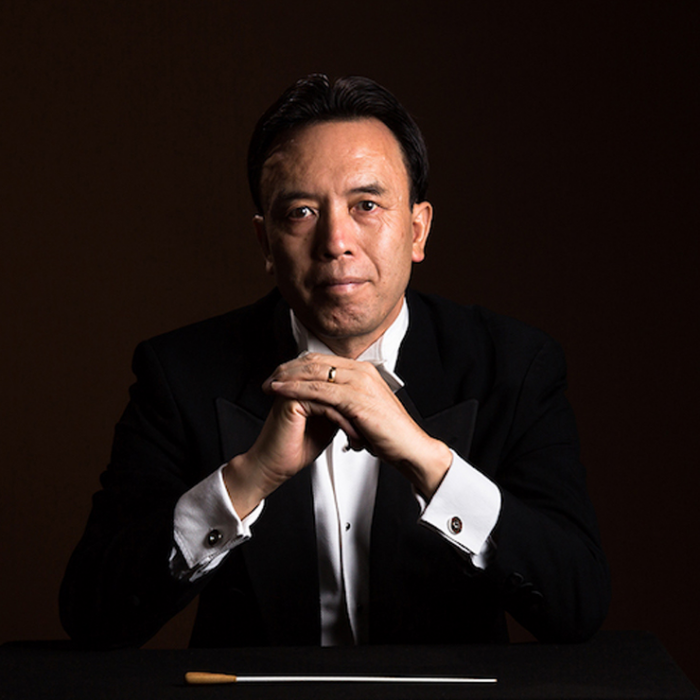
Q & A: Jorge de León on ‘Manon Lescaut,’ the Canary Islands & Opera’s Human Values
By Galina AltmanSpanish tenor Jorge de León is one of the leading Spanish interpreters of the dramatic tenor repertoire, known for his powerful voice and stage presence. Born in Santa Cruz de Tenerife and named an Honorary Son of the City of San Cristóbal de La Laguna in 2017, he has performed at major international opera houses in roles including Canio in “Pagliacci,” Don José in “Carmen,” Pinkerton in “Madama Butterfly,” and Des Grieux in Puccini’s “Manon Lescaut.” He is currently appearing at the Teatro Real in Carlos Wagner’s production of “Manon Lescaut.”
Jorge shares with OperaWire his views on “Manon Lescaut,” the cultural identity of the Canary Islands, working with contemporary stage directors, and the human values he believes opera continues to communicate today.
OperaWire: Verismo demands an enormous emotional intensity, but Spain has its own duende: that fire, that passion. As a Canary Islander, do you bring that Spanish temperament to Puccini’s music and to Des Grieux’s emotional turmoil?
Jorge de León: There is something very interesting here. We are in the Mediterranean, so Spain and Italy are almost brothers. We intuitively understand each other’s musical emotions.
In the past, the main means of communication between countries was the sea and ships, not airplanes as it is today. Maritime routes connected all the ports of the Mediterranean. There was a very close relationship between them, and that is why our way of understanding the world is very, very similar.
And then there are the Canary Islands. After the conquest of the Americas, the Canaries became a transit bridge between Europe and the Americas. European culture, including artists and theater companies traveling to the Americas, passed through the islands, which were the last maritime port on the journey there and back.
Artists, like other travelers, would stay for a week or two, and opera and zarzuela productions would also be performed there for weeks at a time. This gave local audiences the opportunity to hear great singers in their own theaters.
That is why the Canary Islands have played such an important role in connecting singers and musical cultures on both sides of the Atlantic and across both continents.
Canarians are universal. We can sing Cuban, Argentine, or Mexican music and, at the same time, sing opera and zarzuela.
One of the great representatives of our culture was Alfredo Kraus, one of the greatest lyric tenors of the 20th century, who was born in Las Palmas. And, as you know, he even had a German surname. His story also reflects that mixture of cultures and, in a sense, the islands’ openness to the world.
The Canaries were a place of transit, a portal, a meeting point where every culture and every country left its mark. We still have that character today because the islands remain an international destination where many foreigners live.
There is seasonal tourism: Finns come, Germans come, and there is also domestic tourism. But regardless of the season, the Canary Islands always seem to be in spring. There is this feeling of renewal.
The French composer Camille Saint-Saëns even used to retreat to Gran Canaria to write, enjoying a pleasant and peaceful climate where nobody would disturb him with public debates or the obligations of social life.
In Santa María de Guía, he literally hid among the banana plantations, living alone in a house and composing. All of Europe was looking for the maestro, and he was there enjoying the sea, nature, the character of the Canary Islands, that sunny character and that light.
So I think a Canary Island singer or performer naturally brings passion, romanticism, and sunlight to opera because all of that is part of who we are.
OW: That sounds romantic and sunny. Thank you for such an interesting story.
Now, if we look at Des Grieux, whom you are currently performing at the Teatro Real, as a flesh-and-blood person rather than a cliché, how do you see him? What makes his obsession understandable and contemporary for today’s audience?
JD: We are talking about a young man whose hormones are completely out of control. He is 16!
OW: But in Puccini’s time, young men were already considered adults at 20. Did people mature earlier then?
JD: I still think he had not really experienced life yet. Sixteen is sixteen.
Of course, there were children who started working at nine, but Des Grieux is a student and probably comes from a different social class.
Perhaps the mentality was more adult, but the hormones were still those of an adolescent. His emotional reactions were therefore still very close to adolescence.
Young men and women were already looking for love and for someone with whom to share their lives, because society had different values and a different way of thinking.
Then comes love at first sight. Although, of course, at first it is not love but fascination. He is fascinated, enchanted. He does not know this girl, but his body is already reacting chemically to the passion he feels for her.
And he begins living with a girl who is also going through a natural hormonal maturation. From a very young age, she begins to experience an enormous desire.
Normally, when parents saw something like that, they would decide to send the girl to a convent to calm her down. At the time, religion was considered a way to contain and educate a person, teaching them to control themselves rather than allowing nature to take its course.
It is a huge contradiction. Today we can look at it more freely, but they could not.
OW: Yes, although our own era is not exactly characterized by very liberal attitudes either, especially toward women.
JD: Exactly. Now imagine the 18th or even 19th century. A woman could be called a witch or a criminal, or even burned at the stake. Better to send her to a convent to calm the passions burning inside her.
But she was thinking about nothing except what her body was demanding.
And this conflict between Des Grieux and Manon is very important onstage. Why? Because we have all fallen in love with someone and been told, “Don’t get involved with him because he…”
But desperate stories, impossible relationships, and people who are outside the ordinary are precisely the ones that attract us most.
His desire to save her, to pull her out of the abyss of evil, is also completely natural.
It is like when your mother tells you, “I don’t want you going out with that boy.” You go straight to that boy, the one who behaves the worst, the craziest one, because he has caught your attention.
And then comes, “I want to spend my whole life with you,” and the romance begins.
In Puccini, we have a romance. In Massenet, Manon is different. Puccini makes her more earthly, more modern, freer, and more courageous in the way she lives her passions. She is more curious about life.
In Puccini, everything she encounters is connected to intensely passionate, sensual relationships.
OW: In this opera, I have always felt that the music is much more powerful than the text. It is emotion from the very first note.
JD: Absolutely. And that gives even greater force to what happens onstage and captures the audience’s attention much more strongly.
It is like a horror movie. As long as there is no music, we are not afraid. The composer knows us perfectly because he writes his music for us.
OW: And what about stage directors? Today, directors sometimes radically reinterpret classical operas. Do contemporary productions help reveal the psychology of the characters and engage audiences, or would you prefer a more traditional approach?
JD: I prefer a traditional approach. Of course, I am not closed to new proposals, but I need to understand clearly what the director is trying to express.
If I do not understand it, I can never communicate it to the audience, either as an actor or as a character. If I do understand it, then yes: let’s go ahead, take the risk, and see whether the audience understands it.
Communication can become a problem because mutual understanding and interaction require enormous work, not only onstage.
I usually study the work from a classical perspective as well, and I do not automatically look for other paths. So I want to understand alternative interpretations and the reasoning behind them. Otherwise, the audience will not understand them either, because the artist is the person interacting directly with the audience, and that requires enormous concentration.
If the artist does not understand the concept, the staging disappears. And that is sad for everyone: the director, the audience, the artists, and the entire team.
What do I ask of a director, or what do I want from a new contemporary interpretation? Respect the music. Respect the composer. Do not distract the audience at the wrong moment.
For example, if there is an aria or duet that is crucial to understanding the work, there should not be noise or another visual action competing for the audience’s attention.
As an interpreter, I also sincerely want to contribute something new, my own grain of sand, my individuality.
But it should always be in the service of the masterpiece and the music, never at their expense.
OW: So is it important for an opera stage director to have musical training in order to understand the music and the singer better, or is that not essential?
JD: Of course, it is better to understand music and how a theatrical and musical work is constructed. But you do not have to be a musician or a musicologist.
Many directors from theater and film have come, and continue to come, into opera. You simply have to be open-minded and willing to enter a world that is different from your own.
That is what happened to Puccini. He fell in love with cinema, which was still silent cinema at the time. He discovered this new world and tried to create opera with a cinematic rhythm, a cinematic feeling, the rhythm of the shot.
You could call “La fanciulla del West” the first Western, with dialogue and singing.
OW: So did silent cinema literally find a human voice for the first time in Puccini’s “La fanciulla del West?”
JD: Yes, while the rest of cinema was still silent on the screen. The cinematic Western came later, but Puccini already had that vision.
Look at “Madama Butterfly,” especially Act three, when Nagasaki begins to wake up: the sounds of the street, the bird, the conversations. Through the music, the scene becomes almost cinematic.
You need an open mind and a capacity for perception, in this case on the part of the composer.
And if you simply try to put cinema or classical theater inside opera, you run into a wall, especially because of rhythm.
Music has its own structure. There is a pause, but it is not a pause you can simply insert because you feel like it. In spoken theater, a chair and an actor sitting in it can create a scene without anyone saying anything.
In musical theater, that is impossible because the music has its own structure and is itself a fundamental part of the scene.
Silence in dramatic theater and silence or a pause in musical theater are completely different things.
OW: And the “Manon Lescaut” we are seeing now at the Teatro Real, in Carlos Wagner’s production, does it speak more about love or about the psychology of the characters?
JD: This production respects Puccini’s conception quite closely.
As I said at the press conference, we approach the opera through a story that Des Grieux tells to another person. That is a very important point, and I will explain why.
Do you know the game of telephone?
OW: More or less.
JD: Imagine four people sitting together. I tell one person something, that person tells the next, and so on. What does the last person hear?
Something completely different, because the information has been distorted as it passes from one person to another, acquiring new nuances along the way.
This story comes from Des Grieux, who is telling his story with Manon. We have Des Grieux’s truth.
And in life, I think there are three truths: Des Grieux’s truth, Manon’s truth, and the truth, meaning the real story seen from the outside.
Especially because this is a love story…
OW: The same thing happens in a war: one side has its truth, the other has its truth, and then there is the truth, the story as it actually happened. Here, we are missing Manon’s perspective.
JD: But what happens? We feel our own human truth, and everyone in the audience or onstage can imagine anything about Manon because she hardly ever communicates her own point of view. The same thing happens, for example, in “La Traviata.”
OW: So is this the male gaze in opera? In my opinion, in literature, only Leo Tolstoy, in “Anna Karenina,” managed to feel and convey a woman’s story, her state of mind, and her emotions, rather than simply the way a man sees her.
JD: Or like in the film “What Women Want.” I can imagine what it is like, but I cannot actually feel it.
The same thing happens with Des Grieux. Sometimes he understands her and sometimes he does not. That is why he gets angry.
And he wants to save her: “Come with me, leave everything behind, I will make you happy.” But he does not understand how to do it or what she actually needs.
Human relationships…
Returning to the question of the production, Carlos Wagner plays with all of this and gives particular importance to Manon. There is a feminist dimension to it.
The director tries to show the audience that she is a young woman, that she takes some things superficially and others very seriously.
And she makes mistakes. Because being human means making mistakes. In love, too.
When I read Prévost’s novel and then the libretto with my wife, she became extremely angry with Des Grieux.
OW: Oh, that is interesting.
JD: Why, right? Of course, I asked her.
She said she would talk to him like this: “This is doing you no good. Get out of this toxic relationship.”
Her version is that he suffered terribly fighting for this love. Too much.
So both onstage and in the novel, there is everything: psychology, love, human relationships.
It is one of the few operas in which there is not really a love triangle. We obviously do not count Geronte, because this is not about love.
The genuine emotional relationship exists only between two people.
Manon’s brother uses her to get money, and in his view, that is the best life she deserves.
Geronte uses her to dress her elegantly and show off his wealth, influence, and trophy.
And she cannot return to her family because they will send her to a convent.
That is her entire range of options, her entire social elevator.
And she thinks, “I will go with my brother and live a full life. I will enjoy myself, make money, do whatever I want, be free…”
All of that is wrong, of course, but at least it is an option for her.
And then Des Grieux appears.
OW: A sad contradiction, really: the broken telephone and the broken social elevator.
JD: You were asking me about the relevance of these characters today, especially Manon.
I think it is even more difficult today. There are fewer values, everything is increasingly open and explicit, and social media transmits everything, the entire spectrum of what is good and bad.
It is a cynical era in which it is even harder for parents to raise a child.
Educational values are about having guidance and an example: “Do I drink this or not? Do I do this or not?”
“Would my father tell me, ‘Follow this path’? Did my mother explain what was good for me and what was bad for me?”
When you are with a group of friends and they offer you drugs, your values are what tell you, “No, no, thank you.”
But what makes you consider trying them?
Of course, you can try. Life is an adventure.
The first time you kiss someone, the first time you drink alcohol, the first time you have sex, and so on. All of these experiences make you reflect on the values you were taught.
Because you have no experience yet and you can easily lose your way, sometimes with physical consequences.
Everything has consequences, and if you do something wrong, you will have to pay for it. Always.
And now, may I ask you a question?
What do you think is better: if you love someone, should that person be exclusively with you, or do you love them so much that if they are happy, you let them be happy, with you or without you?
OW: In my opinion, if you love someone so much that you see they will be unhappy with you and happy with someone else, I would probably let them go.
JD: For me, that is the greatest test of true love.
The other thing is possessive love. It is the love of “With me and only me!” like Don José in “Carmen.”
“Either with me or with no one.” That is not love. Or, well, it is toxic love, not constructive or inspiring love.
OW: That is philosophical.
JD: I have sung Pinkerton, Don José, and Canio in “Pagliacci,” where I either kill or am killed.
As a person, when I analyze a character, I suffer. And I learn.
I am Pinkerton when I sing at the end, “Butterfly, Butterfly…” I cannot look at the scene in which she kills herself in front of her child. Otherwise, I would not be able to sing.
Of course, there are comic operas that entertain us and dramatic operas. But all of them contain educational values.
“Turandot,” for example. There is something in “Turandot” that particularly interests me: the people.
The opera shows us how a crowd can behave.
“Gira la cote, gira la cote!” (“Turn the sharpening stone, sharpen the blade!”) They, the crowd, want to see heads being cut off.
It is useful to look at ourselves from the outside, don’t you think?
OW: You have performed so many characters, including some that make you suffer as a person. Is there a dream role, or perhaps simply a role you would like to enjoy, now or in the future?
JD: My dream role… I think it is, little by little, everything I have sung.
I have lived and carried on my skin, in my body, every character I have studied, learned, and performed.
The leading role of my life is the sum of all the characters I have brought to life.
I have performed so many characters, and every one of them, without exception, has shaped and completed the collage of my personality.
My artistic life is precisely that collage of works.
For me, opera is like a time machine. It transports us to another era, another way of thinking. And it does so with live sound, without amplification.
OW: Why is live sound so important?
JD: Because your voice alone has to travel over an orchestra of 80 musicians.
You need a vocal technique that allows you to rise above an orchestra of 80 musicians and a huge orchestra pit.
And you sing without amplification, without a microphone. Of course, the theater’s acoustics help us.
But the audience hears the human voice. And this is not simply about “hearing beautiful singing.” It is a human conversation. A conversation between people.
When you go to a musical, everything is amplified, everything is electronic, there is a lot of noise and many special effects. It is a huge spectacle.
But opera, even before cinema existed, was already a synthesis of all the arts and technologies: literature, dramaturgy, theater, music, dance, fashion, costume, makeup.
Wagner called it Gesamtkunstwerk: a synthesis of all the arts, not simply a sum of them.
OW: The contemporary world is going through very difficult and complex times. What do you think opera is trying to say to the world today? What is its central message?
JD: That is a beautiful question. Thank you very much.
Opera has enormous power to address the present through fiction. Opera is not real: its characters and stories are human myths.
But returning to Don José: he kills Carmen, and that is terrible. Anyone who leaves a performance of “Carmen” should, above all, say, “This is terrible.”
What does opera teach us? That killing is wrong, even in the name of love.
Or take Puccini’s “Madama Butterfly,” with its extraordinarily emotional music, after which you leave the theater in tears.
Suicide, sex tourism, people suffering, children suffering. These things still happen today.
That is why opera continues to work as a way of making people see, with their own eyes, the harm they can cause without thinking about the consequences of their actions.
It will always teach and educate.
And if someone encounters something like this in real life, they may no longer accept it because they have seen an opera and that opera has awakened something inside them.
Nobody travels to Thailand with the explicit intention of engaging in sex tourism. In principle, you may simply go to have fun in a place where everything seems easy in exchange for money.
And you may not know or think about what the people you are paying for entertainment are going through.
You simply take advantage of their situation because you have money.
That is wrong. It is repulsive.
OW: Those who pay for it may believe that it is perfectly acceptable for them.
JD: Precisely. Culture should teach you to recognize when something is wrong, when you are causing pain, and when other people are suffering.
And if someone goes to see “Madama Butterfly” and is not moved, does not cry, does not find the tragedy difficult to watch, how can you tell that person, “Do not do this”? Who else can?
So opera is a permanent lesson in life for contemporary human beings.
Let us learn from it. It never supports or encourages evil or violence. It shows them and confronts them.
And we absorb that message alongside the pure aesthetic pleasure of great music, theatrical grandeur, and the work of the artists onstage.
Opera is a protest against war, hatred, and death. Against violence and the murder of women.
And if, after a performance, people say, “How terrible, how terrible,” it means they understand that this cannot be done.
Categories
Interviews
Stories you may also like…
Q & A: Baritone César San Martín on the Emotional Power of Zarzuela, Returning to “La Verbena de la Paloma” & the Global Nostalgia for Our Roots

Q & A: Mezzo-Soprano Anita Rachvelishvili on Returning to Her Path, NYC, Teaching & The Importance of the Greek National Opera