Baltic Opera Festival 2026 Review: Die Walküre
Tomasz Konieczny Anchors a Thoughtful Reading of Wagner’s Drama of Power and Collapse
By Zenaida des Aubris(Photo: Krzysztof Mystkowski/ Baltic Opera Festival)
Richard Wagner’s “Die Walküre” unfolds in a world governed by contracts, power structures, and inherited systems of control. Yet beneath its mythological surface lies a drama about the moment when those systems begin to fail. In John Fulljames’s production, presented at the Forest Opera in Sopot as a co-production of the Royal Danish Theatre and the Greek National Opera, that collapse felt strikingly contemporary.
Opening the fourth Baltic Opera Festival, founded by Tomasz Konieczny in 2023, “Die Walküre” proved an ideal centerpiece for a festival devoted to myths and stories that shape collective identity. Wagner’s opera is ultimately less concerned with gods and heroes than with the narratives societies construct to justify authority. What happens when those narratives no longer persuade is the question at the heart of both the work and this production.
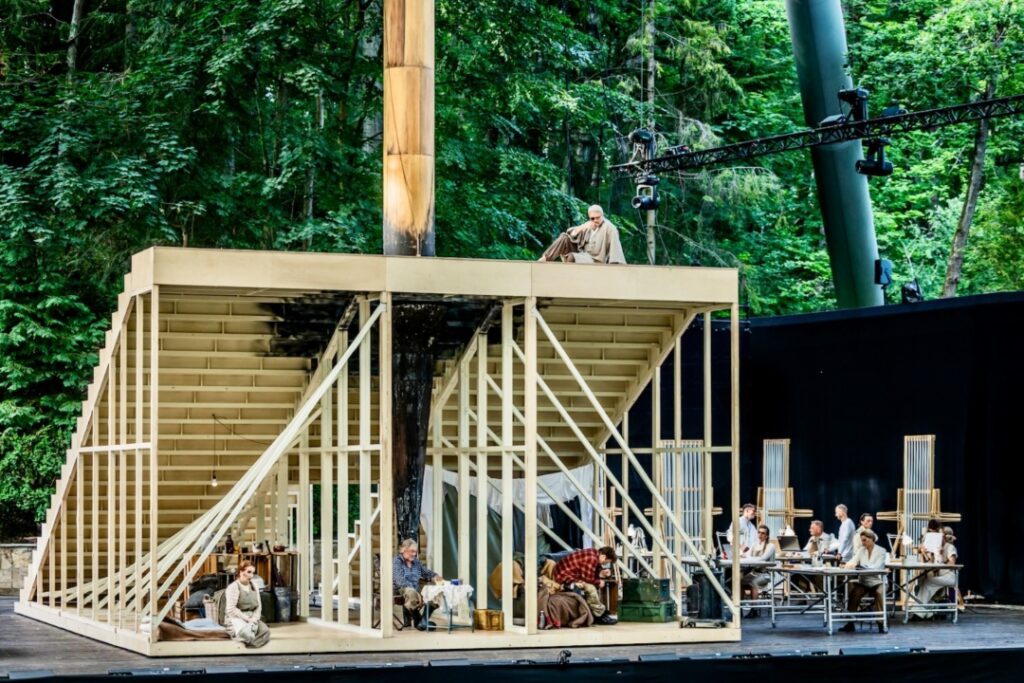
The Forest Opera remains one of the festival’s greatest strengths. Surrounded by towering trees, the open-air venue provides a natural setting that enriches Wagner’s mythology without requiring much theatrical embellishment. The surrounding woodland became an extension of the drama itself, blurring the boundaries between civilization and nature, law and instinct. Even intermittent rain contributed unexpectedly to the atmosphere, with the music of the rain drops on the fiberglass roofing adding a layer of elemental presence to an already immersive evening.
(Photo: Krzysztof Mystkowski/ Baltic Opera Festival)
Production Details
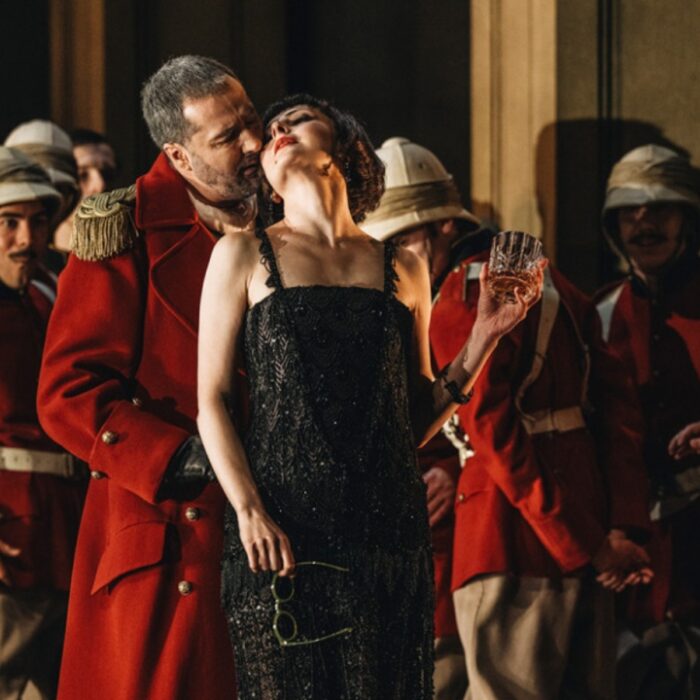
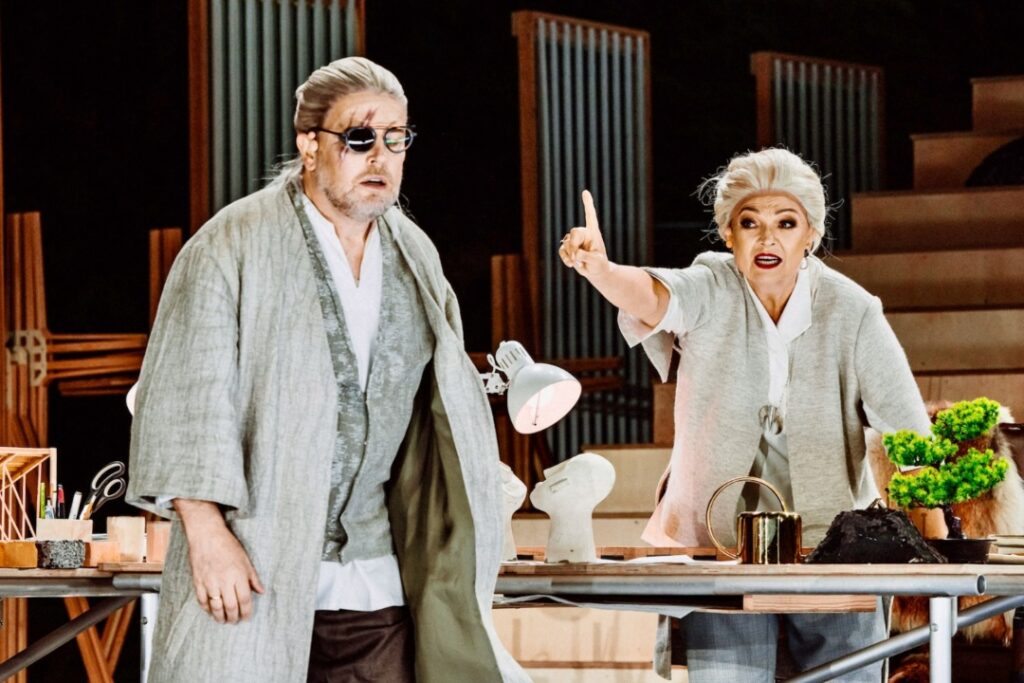
Originally created for Copenhagen, Fulljames’s staging relocates the action to a contemporary design studio. Wotan is no longer simply ruler of the gods but an architect of reality itself, a figure whose authority derives from his ability to shape and control the world around him. His daughters function as collaborators, sketching plans, drafting futures, and attempting to impose order upon chaos.
The concept illuminates one of Wagner’s central paradoxes. Wotan seeks absolute control but becomes trapped by the very structures he has created. In this reading, the gods are undone not by external enemies but by the internal contradictions of their own system. The production consequently shifts attention away from mythology toward the fragility of institutions and the limits of political power.
(Photo: Krzysztof Mystkowski/ Baltic Opera Festival)
Not every aspect of the staging proved equally persuasive. The recurring imagery of drafting, planning, and redesigning occasionally became overly literal, underlining ideas that Wagner’s drama already communicates with greater subtlety.
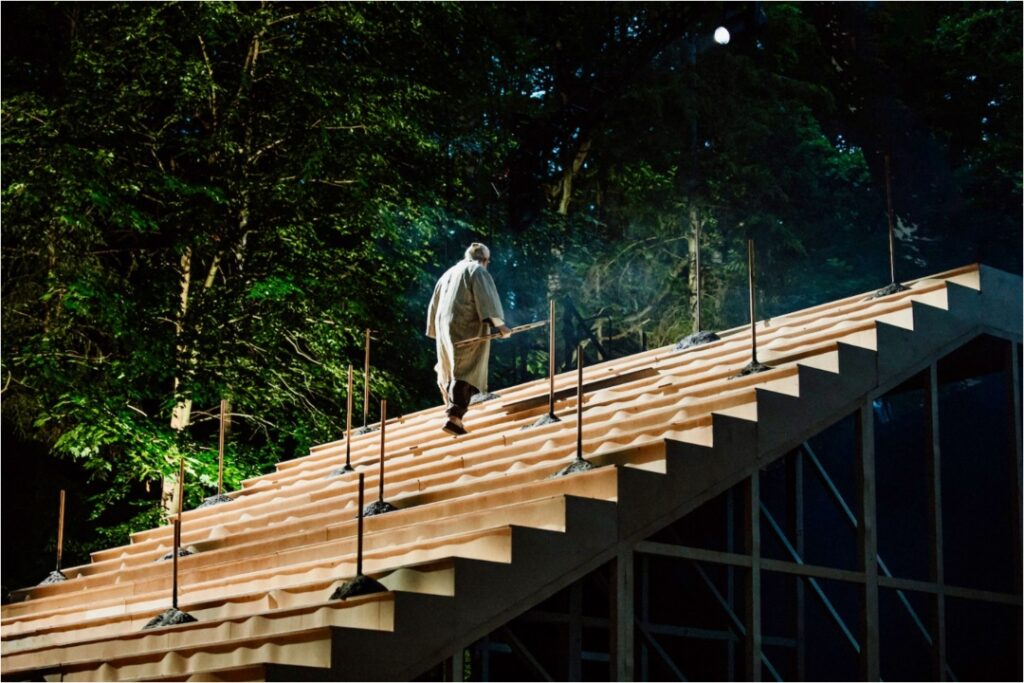
Tom Scutt’s set design served the production exceptionally well. A revolving staircase structure enabled fluid transitions between intimate encounters and larger tableaux while maintaining visual clarity throughout the evening. The most striking image arrived in Act three, when the design-office environment gave way to a monumental arrangement of a wooden staircase. Rising against the backdrop of the forest, the structure suggested both aspiration and collapse, a civilization literally climbing toward its own destruction.
Illuminating Performances
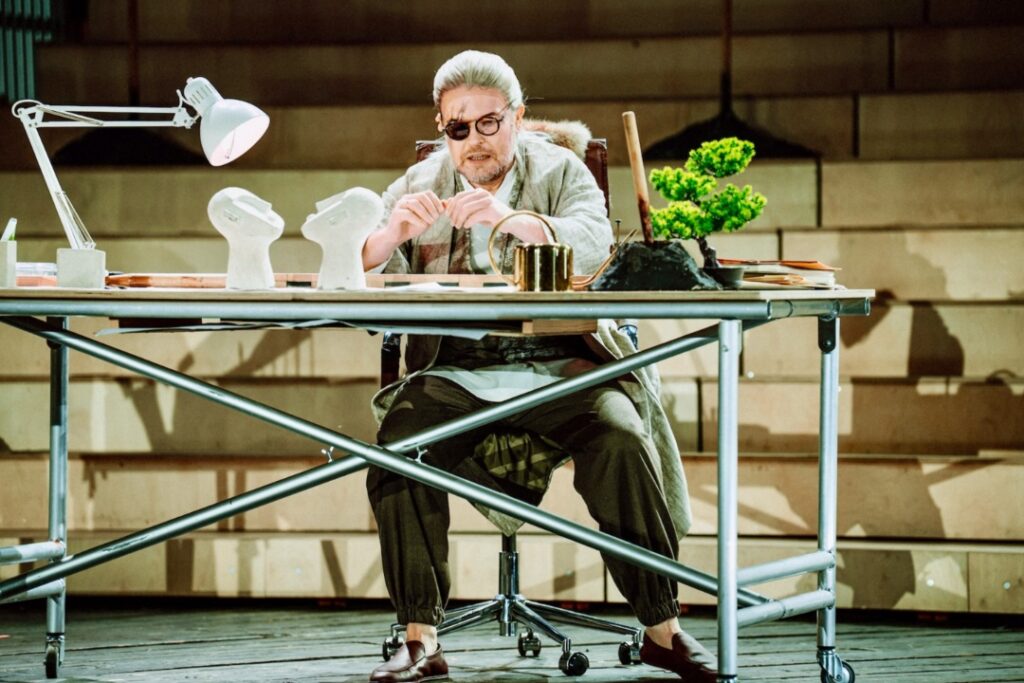
At the center of the performance stood Konieczny’s Wotan. Having lived with the role for many years, the Polish bass-baritone approached the character less as a mythological deity than as a deeply flawed political leader confronting the failure of his own project.
(Photo: Krzysztof Mystkowski/ Baltic Opera Festival)
Konieczny belongs to the German tradition of text-centered Wagner singing, where verbal expression may take precedence over vocal beauty. His portrayal unfolded through sharply etched contrasts of color and dynamics. Moments of introspection gave way suddenly to anger, only to retreat into exhaustion and resignation. There were passages in which tonal polish and legato yielded to dramatic emphasis, but the characterization remained emotionally compelling throughout. His Wotan emerged as a ruler witnessing the collapse of the very order he had spent a lifetime constructing.
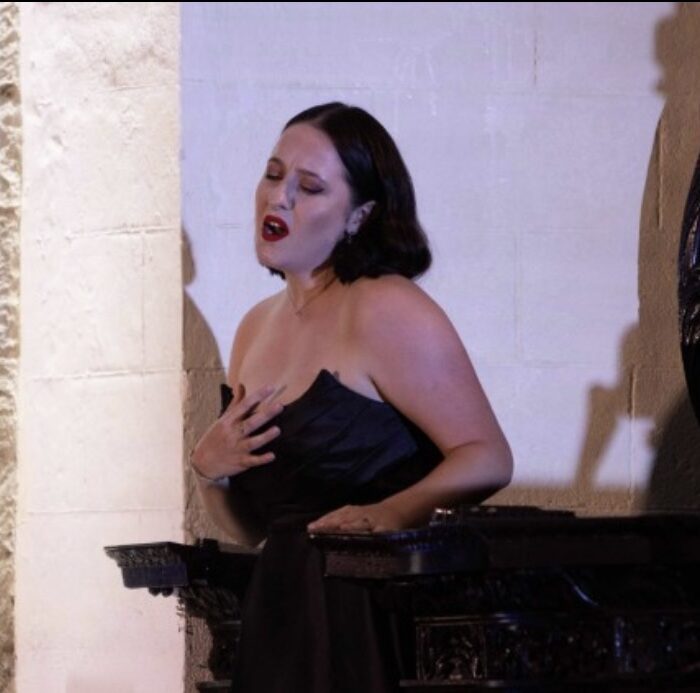
Making her role debut, Małgorzata Walewska brought authority and conviction to Fricka. Rather than portraying the goddess merely as an aggrieved wife, she emphasized Fricka’s role as guardian of law and social order. Her focused mezzo-soprano carried impressive weight throughout the confrontation scene with Wotan. While the characterization occasionally leaned toward overt indignation, Walewska was most effective when allowing Fricka’s certainty and psychological superiority to speak for themselves. Her victory felt inevitable long before Wotan finally capitulated.
(Photo: Krzysztof Mystkowski/ Baltic Opera Festival)
More Cast Highlights
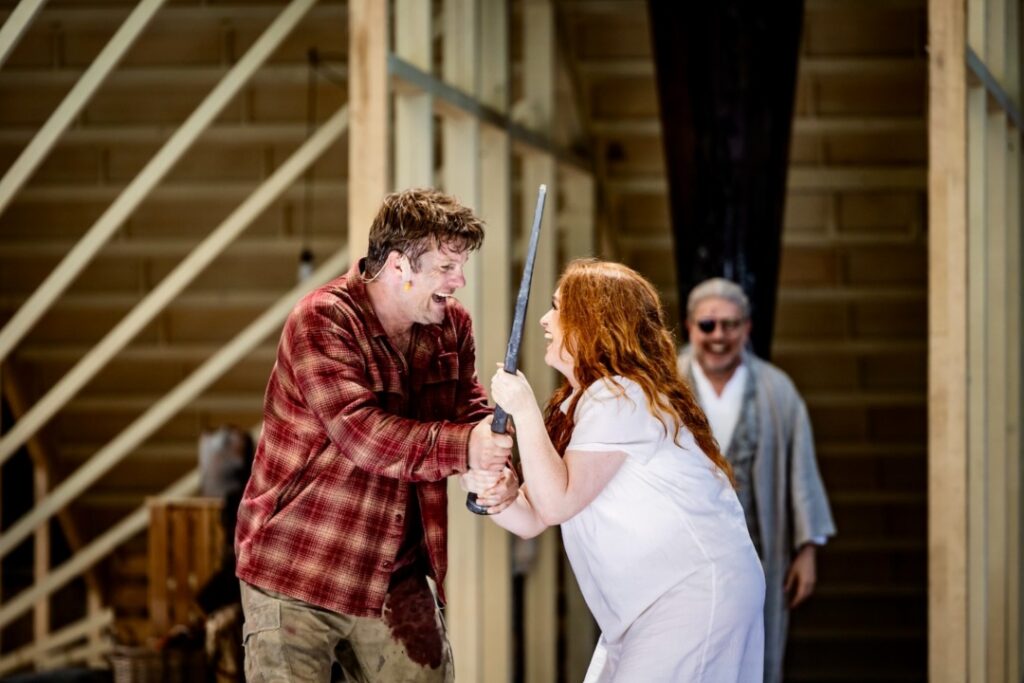
The emotional heart of “Die Walküre” remains the relationship between Siegmund and Sieglinde, and both protagonists delivered strong performances.
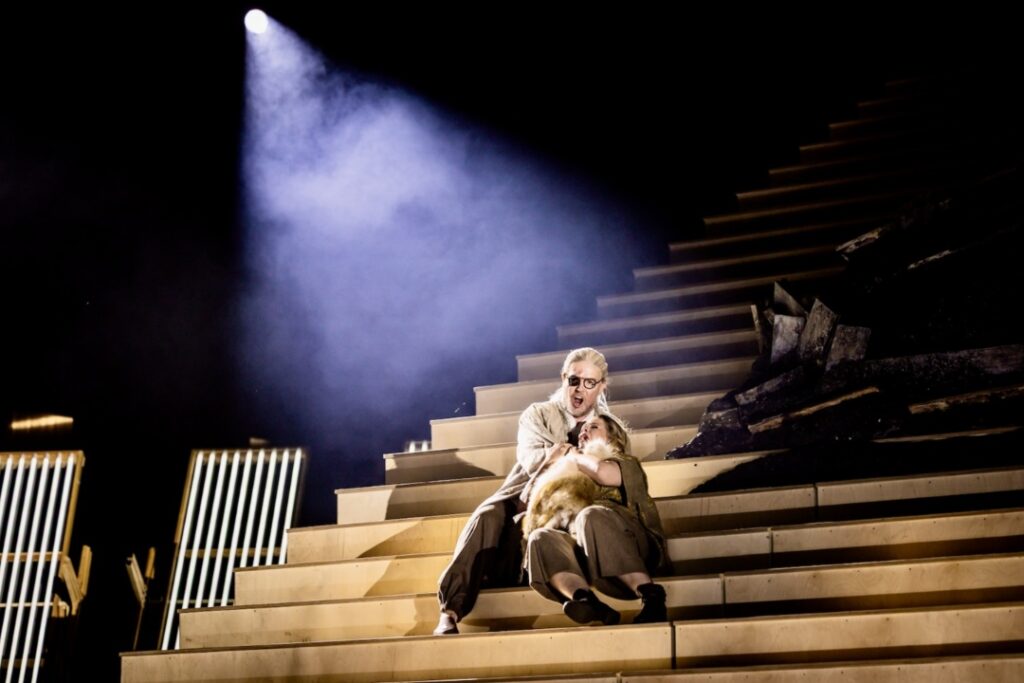
Making her role debut, Izabela Matuła delivered one of the evening’s most accomplished portrayals as Sieglinde. Her soprano combined warmth, lyricism, and dramatic power in equal measure. She charted the character’s journey from oppression to self-discovery with conviction and emotional truth. Wagner’s expansive vocal lines flowed naturally, never losing their urgency or expressive purpose.
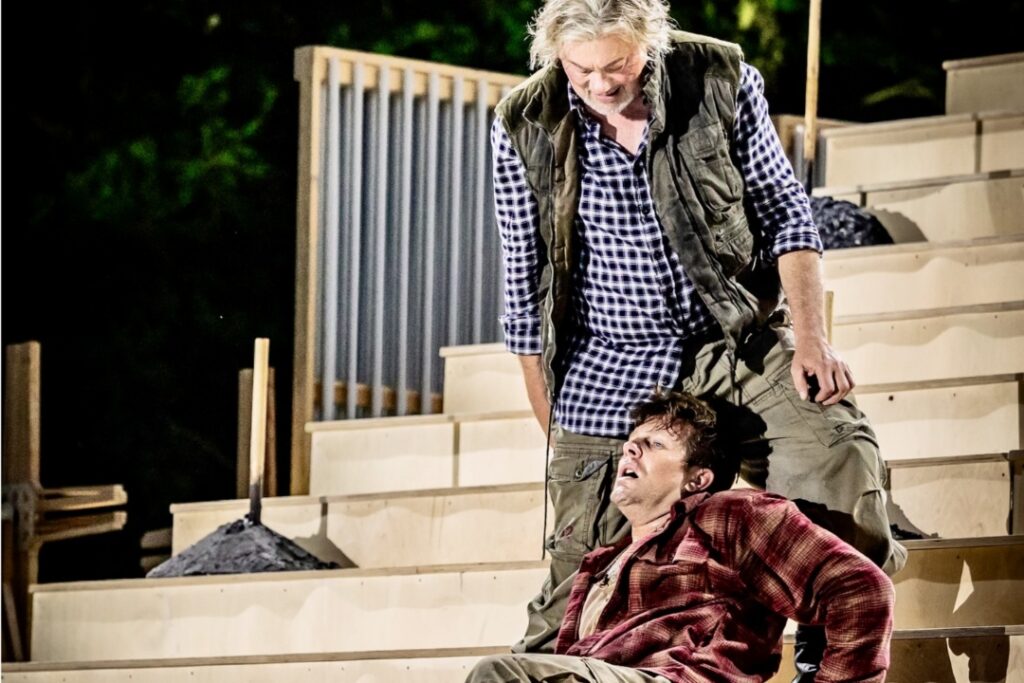
Opposite her, Stanislas de Barbeyrac offered a thoughtful and intelligent Siegmund. His tenor possessed an unusually dark coloration, lending the character an appealing sense of vulnerability. Rather than treating the heroic passages as vocal showpieces, he allowed them to emerge organically from the drama. The cries of “Wälse!” became expressions of desperation and self-recognition rather than displays of vocal prowess. A touch more verbal incisiveness and risk-taking at climactic moments would have strengthened the portrayal further, but the overall performance remained highly convincing.
(Photo: Krzysztof Mystkowski/ Baltic Opera Festival)
René Pape brought characteristic authority to Hunding. Avoiding caricature, he portrayed the character as a man whose menace derives from absolute certainty in his own righteousness. His dark bass remained instantly recognizable, and his relatively brief appearances left a lasting impression.
The evening’s disappointment came from Stéphanie Müther’s Brünnhilde. While she projected commitment and intelligence as an actress, the role’s heavier demands exposed limitations in vocal amplitude and focus. The upper register occasionally sounded effortful, and the character’s transformation from obedient Valkyrie to compassionate rebel never achieved the emotional inevitability that makes the role so moving. Surrounded by particularly strong colleagues, Müther struggled to command the stage with comparable authority.
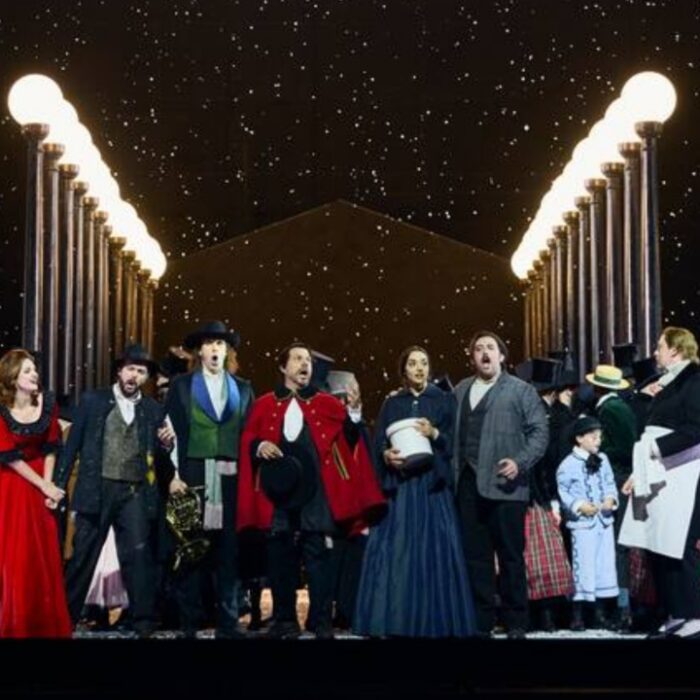
The Valkyrie ensemble sang with discipline and cohesion. Yet the famous Ride of the Valkyries never entirely achieved the exhilarating sense of abandon that can make the scene overwhelming. The performance remained accurate and polished, but it lacked a degree of elemental ferocity.
(Photo: Krzysztof Mystkowski/ Baltic Opera Festival)
Musical Details
In the pit, Axel Kober led the combined forces of the Baltic Opera Orchestra and the Myroslav Skoryk Lviv National Philharmonic Symphony Orchestra with admirable control and structural clarity.
Kober shaped Wagner’s vast musical architecture with patience and momentum, maintaining a careful balance between orchestral power and vocal needs. Important instrumental details emerged clearly without sacrificing dramatic flow. One occasionally wished for greater volatility and danger in the score’s climactic passages, but the overall achievement remained substantial. The orchestra responded with commitment and precision throughout.
As darkness settled over the Forest Opera and rain intermittently struck the tented roof, Wagner’s drama acquired an almost ritual intensity. The near-capacity audience remained fully engaged despite the weather, a testament both to the quality of the performance and to Wagner’s enduring appeal.
(Photo: Krzysztof Mystkowski/ Baltic Opera Festival)
Fulljames’s production does not offer a radical reinvention of “Die Walküre.” Instead, it presents a thoughtful examination of power, responsibility, and institutional collapse, illuminating the opera’s continuing relevance without distorting its emotional core. While certain directorial ideas occasionally felt over-explained, the production succeeded in demonstrating how Wagner’s gods resemble modern leaders trapped within systems of their own making.
Presented as part of the international celebrations marking the 150th anniversary of the first complete Ring cycle, this “Die Walküre” never felt commemorative or museum-like. It spoke directly to contemporary concerns, reminding audiences that myths survive not because they preserve the past, but because they continue to explain the present.