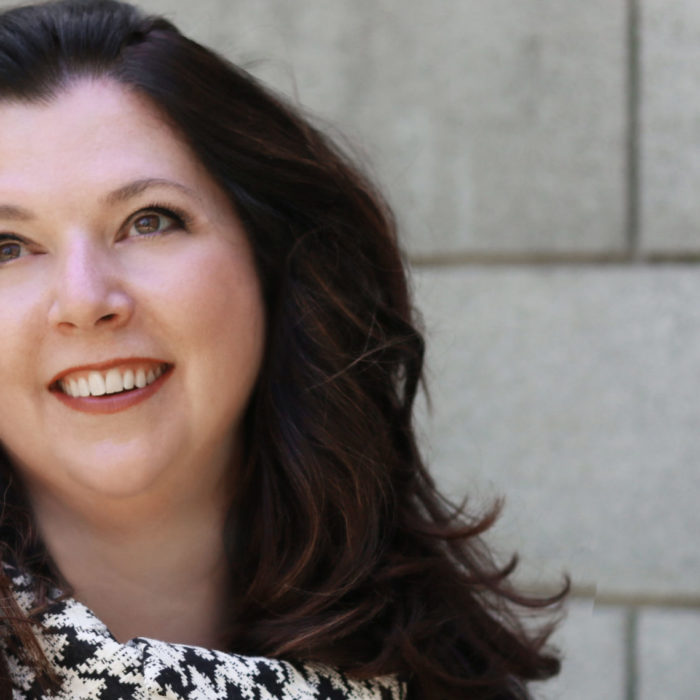
Q & A: Ilanah Lobel-Torres on What Inspires Her Most as an Opera Singer
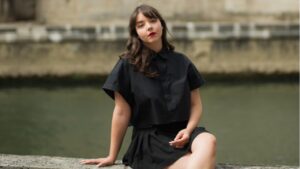
By Mike Hardy(Photo: Angéline Moizard)
As a young singer from New York, Ilanah Lobel-Torres never imagined that a few bars of music in a supporting role at Opéra national de Paris’s 2021-22 production of “Le Nozze di Figaro” would mark the beginning of a transformative artistic journey.
Three years later, the American soprano—now a cherished alumna of the company’s academy and a versatile artist praised for her lyrical warmth and dramatic openness—returns to the same production of Mozart’s masterpiece, not as an unnamed “donna” or ensemble voice, but as Susanna, the role she once dreamed of singing from the wings.
Born and raised in Brooklyn, Lobel-Torres trained for 11 years with the Brooklyn Youth Chorus before attending New England Conservatory, where she discovered her passion for opera. After joining the Paris Opera’s young artist program in 2019, she quickly established herself in repertoire ranging from Mozart to Puccini, even as she navigated and overcame a life-threatening cancer diagnosis early in her career.
OperaWire spoke with her from her home in Paris about her upcoming debut, the profound personal history she carries into this moment, and why performing Susanna on the stage that helped shape her feels both like a homecoming and a breakthrough.
OperaWire: Hello Ilanah, thank you for speaking with OperaWire. I know singing has been a part of your life since you were very small and that singing was something you always knew you were destined to do, just not necessarily as an opera singer. Tell me how it came about that you were persuaded to actually go into the opera industry.
Ilanah Lobel-Torres: Yeah, I mean, When I was around, probably, three or four years old, I was singing constantly in my house, and so my mom was like: “I have to put her in singing lessons.” She found the Brooklyn Youth Chorus, which I joined when I was about six, and was a member of for 11 years. It’s an incredible company that taught me everything. I took piano lessons, voice lessons as well as music theory lessons. During those first several years in my voice lessons, I was definitely less interested in the classical music aspect of it all and so my teacher at the time, Michelle Rosen, would balance it out. If I learned one classical song or aria then I could also work on a musical theatre piece. Sort of a kind of reward system: “If you learn this classical piece, then you can sing that song from “Wicked” that you love so much,” that kind of thing. And so, I’ve always sung classical music. I guess I didn’t think about picking a niche as a singer. I was always just doing a little bit of everything: a little jazz, a little classical, contemporary classical, some opera, everything. I went to a performing arts middle school, shout out M.S. 51, and then went to LaGuardia for high school. And again, there you sing mostly classical music then by junior year, you have one semester of getting to do more musical theater things. And so, when it came time to apply for colleges, I sort of just cast a wide net. At the time, I really wanted to go to Berklee because I wanted to be a pop-star but I had also gotten into a number of conservatories for opera.
Basically my teachers at LaGuardia had a meeting, sat me down and said: “You need to go to a conservatory. We think you have something really special in your voice and you really should pursue opera.”
So, I took their advice and went to New England Conservatory.
And then, by the end of my freshman year at NEC, I was hooked. I was hooked. I was sold. I felt there was just something that happened to me when I was singing operatic repertoire that fulfilled something deep that I wasn’t getting elsewhere. Even though I had been singing classical music my whole life, my knowledge of opera was very minimal, I was probably the singer who knew the least about opera and opera singers in my class. Being in a conservatory environment and getting more exposure changed everything. It was so beautiful. Opera is the pinnacle of emotional expression and I deeply connected with that. I was like: “Oh, if that’s what it means to be an opera singer, then I’m down, that sounds good to me.”
OW: You’re preparing for your debut as Susanna in “The Marriage of Figaro” at Opéra de Paris, but I see that you have been in this production not once but twice before. Tell me a little of its history in your life.
ILT: Yes!!! This has been the most exciting time preparing to debut Susanna but what makes debuting the role even more special is that I get to do it at Opéra de Paris which is my true artistic home. The cherry on top is that this production by Netia Jones has been a part of my life for the past three and a half years. In the 2021-22 season, I was cast in the creation of Netia Jones’ “Le Nozze di Figaro” with Gustavo Dudamel conducting. I was one of the “due donne” and I had like less than two minutes of singing time. But for me, it was just: “yay I’m going to be on stage!” I remember soaking up every single second and thinking, “Oh my God, if I could sing Susanna one day like that, that would be it. Then I would know I made it.”
Then, the following season, which was my first season as a freelancer, they brought the production back and this time, I was offered the role of Barbarina. So, I sort of graduated to the next role and that was my first ever guest contract. I took it very seriously, and how incredible it was to then be a part of the process again with Netia and be more utilized, especially since the creation of the show the previous season took place at the height of covid. Cut to me finding out the production was coming back again for the 2025-26 season and that they were going to offer me the role of Susanna…. In the same production… It really was a ‘pinch me’ moment to the biggest degree. Because just three years after debuting as the tiniest little role in the opera, one of the very first roles that I’d ever done on the main stage, I am now singing the lead role in that same production that I helped create. It was also a testament for me to remember that if you show up, do the work and really trust the process, dreams do come true!
OW: You say Opéra national de Paris is your “artistic home.” What makes you feel that way?
ILT: I started at Opéra national de Paris as a young artist in 2019. After my first season, I was unfortunately diagnosed with cancer and had to return to the states for chemotherapy treatment. The idea of returning to Paris was truly the light at the end of the tunnel throughout my treatment. The house was extremely caring and supportive of me when I was sick, which is something that I will never, ever forget for as long as I live. I remember them saying to me, “whenever you are ready to come back, there is a place for you.” I think one of the hardest things about being a singer, especially being a young lyric soprano, is that there are what sometimes feels like millions of us and we can be so easily replaced… Having that humanity, that support from Opéra de Paris, was invaluable to me, and it makes this monumental debut as Susanna at Opéra Garnier even more important and profound in my life. Of course, the role is fantastic, and I hope to sing it in many other houses as I continue my career but being able to debut this in Paris where I really feel like I’m home, where I grew up, where I really became a full artist, where I’ve been nurtured, supported and lifted up to have this kind of moment here… It’s just priceless. It is really so special because in this industry, I find that it is super rare to have people who are so “in your corner” in this way.
OW: When you developed cancer, I can fully understand the concerns you had, obviously, with regards to your career, but I would imagine that once you discovered the true extent and seriousness of your illness, then you and your family’s initial response to this must have been, am I going to survive this?
ILT: Yes. I mean, thinking about it now, it almost seems even more insane than it was in the time because I still can’t believe that it happened. But I think so much of what got me through that period was thinking,: “Okay, I have this career waiting for me.”
And when I said to my family I was going to be going back to Paris for the following season I know they were thinking that I probably wasn’t. It was a huge, serious illness. But in my mind, I was just like: “No, I know I’m going back and that’s it.” Now, I’m almost five years in remission, I’m getting a scan in a couple of weeks, but once I get that scan, then I can say that I’m officially cured, which is what happens at the five year mark. I look forward to that day. I’m scared, but I’m excited.
OW: So, after “Figaro,” what’s next for you?
ILT: It is quite a busy season at Opéra de Paris for me actually! After Figaro, I am singing Waldvogel in “Siegfried,” my first Wagner opera, which will be very exciting because they’re doing the full ring cycle here. I’m definitely excited because it’s a completely different world than what I’m used to, but I know it’s going to be an incredible experience. After that, I’m covering Micaëla in “Carmen,” singing Miss Schlesen in a new production of “Satyagraha” and finishing out the season as Clorinda in “Cenerentola.” Lots of different styles of repertoire which is just the way I like it!
OW: What is in the future for you? What would be your dream roles?
ILT: This is my last season as a member of the ensemble in Paris which is bittersweet but I am so looking forward to discovering new countries, cities and opera houses over these next seasons as a freelancer again.
In terms of dream roles… There are so many! If I really had to pick just one, it would probably be Mimì in “La Bohème.” Oh, Puccini for me, is the greatest composer of all time. I think the reason that I love Puccini, and I love singing Puccini so much, is because the reason that I have pursued being an opera singer is because I love being able to express emotion through singing. That’s when I truly feel the most in the flow state or get the most gratification. It’s when I sing something that means so much. I covered Musetta this season, and “Boheme,” my god, I can listen to that music every single day for the rest of my life. He really just knew how to put human emotion on the page. So, for me, there’s nothing better than having the opportunity to take that emotion and give it all on stage. That is for me the crème de la crème. It’s all I want to do. So, I feel like Mimì, for me, would have to be it. I feel like I would just fall into that role with everything I had, there’s so much to give in that character and the music is so hauntingly beautiful.
OW: Who inspires you?
ILT: My top two at the moment would have to be Nadine Sierra and Asmik Grigorian. Nadine is someone that I listen to and consider the pinnacle of technique. For me, she’s sort of the golden standard that we’re all trying to get to at some point. Asmik to me is probably the most inspiring singing actress of our time. I got to cover her as Lauretta in “Gianni Schicchi,” and sang with her in “Il Tabarro” and Suor Angelica in Christof Loy’s production of “Il Trittico” at Opéra de Paris last season and I think it was one of the most transformative productions of my life. She is a walking masterclass in being artistically vulnerable and really giving everything you have in your soul to the audience. I am sure that her Suor Angelica will go down in history.
From the past, Maria Callas, always. I think Callas more for her bravery in the way she sung. She really took so many risks, she was so much more concerned about telling the story and being authentic in the emotions and what they should sound like in your voice, rather than the need to sing technically perfect. And that’s a huge inspiration for me as well, because I think that acting is just as important in singing. For me, the point of opera is to express emotion, like I’ve already said a couple of times, but, you know, people come to see opera because they want that human connection. They want to feel that things they have felt in their lives are being mirrored back to them to some extent. And Callas just sort of, she gives it to you. She gives you her heart on a platter.
Stories you may also like…
Q & A: Julia Muzychenko-Greenhalgh on Her Work as Juliette for Teatro Real’s ‘Roméo et Juliette’ & Her Dream Roles
Q & A: G. Phillip Shoultz, III Artistic Director, Educator, and Pastoral Musician on ‘Sing Democracy 250’