Teatro Nuovo 2026 Review: Il Turco in Italia
By Francisco SalazarAfter “Il Turco in Italia” premiered in New York in 1826, the work has rarely been performed with some productions at the New York City Opera and the Juilliard School. However, in Europe it has been revived to great acclaim at many of the most prestigious theaters in the world including the Teatro alla Scala, Royal Opera House, and Teatro Real, bringing some of the great sopranos to conquer the role of Fiorilla.
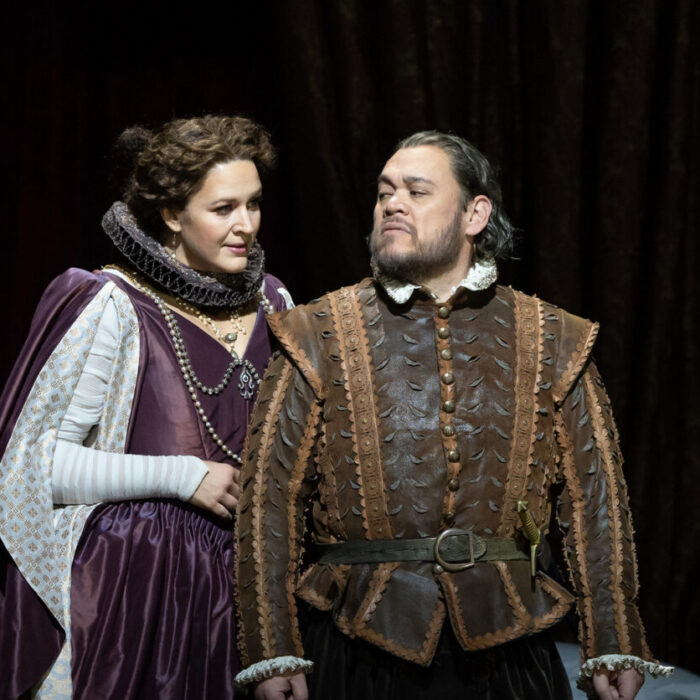
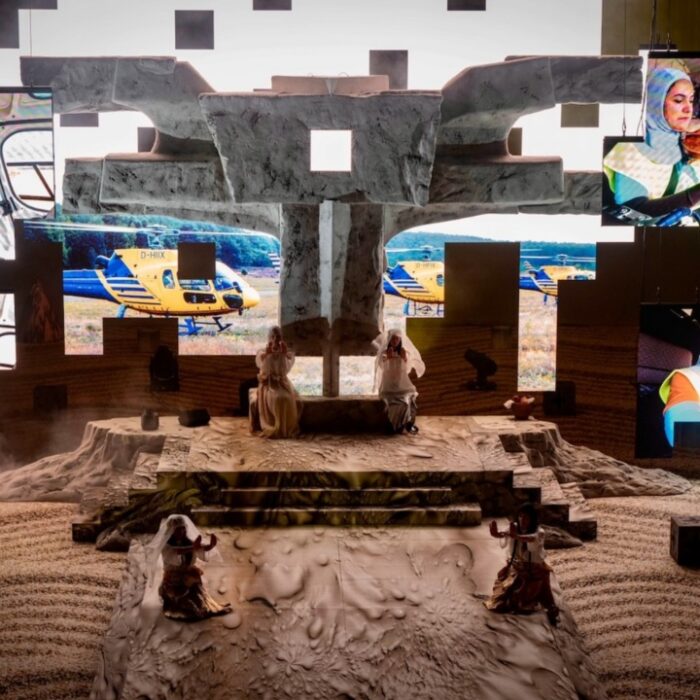
In 2026, 200 years after its New York premiere, Teatro Nuovo brought the work back for a semi-staged production with projections by Adam J. Thompson. The result was a hilarious evening that saw two performers rise above the rest.
“Il Turco in Italia” premiered in 1814, two years before Rossini’s masterwork “Il Barbiere di Siviglia” and it is clear that the structure used for the former work was eventually used for “Il Barbiere” and improved upon. Nevertheless, “Il Turco” finds its charm in Fiorilla and Geronio’s duet, Fiorilla’s two arias, and Geronio’s Act two aria. There are also some fantastic ensembles that end each act as well as a virtuosic bass-baritone duet and a trio between tenor and bass-baritone. Perhaps the second act can get a little long, especially with three arias in a row and little variation in the form. But overall, it is easy to see why sopranos love to perform this work as it gives the diva a meaty and playful role filled with depth.
The Two Stars
In the role of Fiorilla, Kresley Figueroa made her company debut with Teatro Nuovo and performed her first ever Rossini role. The lyric soprano’s performance felt like that of a Rossini veteran, showcasing agile movement and incredible comic timing. Vocally, Figueroa was impressive from her entrance aria, “Non si da follia maggiore,” where she showcased a lighter sound with virtuosic florid runs and a handle on the stylistic ritardandos that brought out some lyrical lines. But it was in her second aria, “Squallida veste e bruna” in Act two that showcased the wide color palette of her voice. She opened the aria portion with a fuller lyric timbre and emphasized her gorgeous legato line mixed with coloratura phrases. Her top notes in the final cadenza of the aria gleamed with power. Then in the cavatina portion, “Caro padre, madre amata,” Figueroa relished her high notes and the extended lines, showcasing varying dynamics and control in her middle voice alongside strong breath support. The repeat saw the soprano display agility in her variations as she ascended into her higher range and then went into a gutsy chest voice. Each variation saw her ascend to higher portions of her voice as she dispatched the roulades with ease, ending the piece with a thrilling high note.
The second stand out of the evening was Mattia Venni as Don Geronio. The Italian bass-baritone has all the great characteristics of a buffo bass-baritone, including an agile stage presence that moves about the stage with ease, impeccable diction, and an immaculate patter. This was best displayed in his Act two aria, “Ah se nel Mondo,” where Venni displayed his desperation for getting his wife back while singing with clear articulation. He never missed a single word and sped up the tempo as the aria reached its climax. His Act one aria, “Vado in Traccia d’una zingra” also brought out Venni’s booming sound while also showcasing delicacy in his lyrical lines.
He also stood out in the trio in Act one with the Don Narciso and Selim and in the Act two bass-baritone duet with Selim, his voice always bursting with energy and expressive enunciation.
But it was in the Act one duet, “No mia vita, mio tesoro” with Fiorilla, that both Venni and Figueroa stopped the show with their chemistry and comic timing, playing off one another like two expert comics making you forget you were watching a semi-staged production. Figueroa brought out Fiorilla’s flirtatious wit, while Venni desperately chased after her. Their voices blended perfectly with the soprano’s timbre singing each roulade and legato line unfazed, while Venni contrasted her smoky sound with his accented notes. Hopefully we’ll get to see these two reunite in a completely staged production of the work.
Solid Support
Bass Vincent Graña performed the role of Selim with panache and a rich bass. His entrance aria, “Bella Italia alfin ti miro” was sung with authority as he crescendoed from a piano sound to a fortissimo on the first phrase and later caressed each line with accurate coloratura and a rich timbre. If sometimes his stage presence seemed to be timid, he eventually got comfortable strutting through stage as he sang the Act one trio and the quartet. His duets with Figueroa were genuinely comic with each playing off each other and vocally matching one another with their staccato lines and their rapid fire coloratura.
The role of Prosdocimo was portrayed by Hans Tashjian. The bass-baritone, while taking some time to warm up vocally, eventually displayed a round sound in his recitative passages and ensembles. His facial expressions were at times comic and at times scheming but ultimately effective for the work.
In the role of Don Narciso, tenor Max Alexander Cook brought out a bright ardent sound in his middle voice and virtuosic coloratura and patter in his ensemble work. That was also best displayed in his two arias “Perche mai se son tradito” and “Tu seconda il mio disegno” where the tenor shone with his smooth legato lines connecting each phrase with warmth. It was in his higher range where things were a little shaky with the notes sounding a bit raspy and lacking clarity. But his coloratura lines during his Act two aria “Tu seconda il mio disegno” were dispatched with sharpness and virtuosity.
In the role of Albazar, David Freides sang his aria “Ah! Sarebbe troppo dolce” with a suave tone and impeccable coloratura while Sabatina Mauro displayed a gutsy mezzo with fierce low notes and an appealing upper range. Her scene at the end of Act one was hilarious as she went one on one with Figueroa. In the ensembles, Mauro’s voice also rang over the chorus, showing promise. Hopefully Mauro gets to shine in a bigger and more developed role in the future with the company.
One of the interesting things of Teatro Nuovo is aways to approach the music as if it would have been played in the period. The orchestra was led by the concert master Elisa Citterio. The result was a well-paced orchestra that easily created the Rossini crescendo to great effect, especially during the concertatos at the end of Act one and two and the famed overture. The cello recitative was also commendable as it accompanied the singers to perfection as the instrument resonated throughout the auditorium. One of the most refreshing parts of this performance was that unlike some of the previous Teatro Nuovo performances, where variations and coloratura can sound exhausting and a times forced, every decision instrumentally and vocally sounded organic and refreshing.
Overall, this may not be Rossini’s greatest work, but it does deserve re-evaluation and in the hands of Figueroa and Venni, it’s worth taking the ride.