Teatro Municipale di Piacenza 2025-26 Review: Cronaca di un amore: Callas e Pasolini
By Bernardo Gaitan(Photo: Gianni Cravedi)
One of the most renowned figures in the world of opera is Maria Callas, not only because of her career marked by dramatic highs and lows, but also due to the relentless gossip surrounding her professional, and above all personal life, as well as the many theories surrounding her death in 1977. Countless multimedia works have explored different aspects of her life, some leaning toward documentary portraiture, others decidedly more fictionalized. The second operatic work commissioned for composer Davide Tramontano, by the Teatro Municipale di Piacenza and co-produced with the Teatro Comunale di Bologna and the Fondazione Haydn di Bolzano e Trento, focuses precisely on a specific chapter of the soprano’s life.
World Premiere Production Details
On the final weekend of March, the world premiere of “Cronaca di un amore: Callas e Pasolini” took place. This work does not present itself as a strictly biographical opera, but rather as an investigation into a particular episode: the encounter between Callas and a key figure in her life, Pier Paolo Pasolini, specifically during the filming of “Medea” in 1969. From this starting point, Tramontano uses Alberto Mattioli’s libretto to construct a dramaturgy that deliberately avoids chronological development, instead focusing on the intensity of a relationship as improbable as it is profoundly stimulating. As the title itself suggests, it is a (cronaca) “chronicle,” in which Mattioli reconstructs a series of tableaux drawn from period sources, press articles, and firsthand testimonies of those who moved within the artists’ circle; and (di un amore) “of a love,” as the subtitle emphasizes, underscoring its improbable and ultimately impossible nature.
As Tramontano himself noted in an interview, the choice of subject stems from the need to find an unexplored perspective: not the myth of Pasolini or Callas, but their human dimension at a moment when their personal and artistic trajectories intersect without ever fully converging. The musical conception of the 26-year-old composer is grounded in a symphonic orchestral structure, where timbres and registers overlap and dissolve like layers of memory. Tramontano does not adopt a strictly atonal language, yet neither does he rely on recognizable melodies: his writing, markedly intellectual in character, is theoretically grounded and possesses a strong descriptive dimension. For the character of Maria, he provides a more lyrical and musically expressive dimension, rich in emotional content, while for Pasolini he favors a treatment closer to parlato, narrative and declamatory in nature. The work does not seek to explain their relationship, but rather to observe it through its fractures: the distance between two worlds–social/political, and emotional–that, despite their mutual attraction, remain irreconcilable. The result is a theatrical construct that oscillates between the historical and the imagined, drawing on documented episodes: memories from the film set, epistolary exchanges, yet articulated within an open structure, without any definitive conclusion regarding the possibility (or impossibility) of their love.
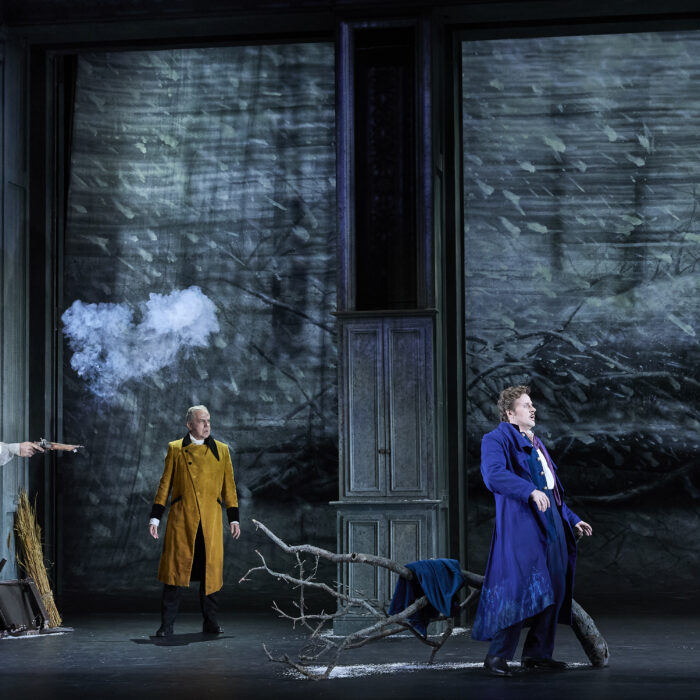
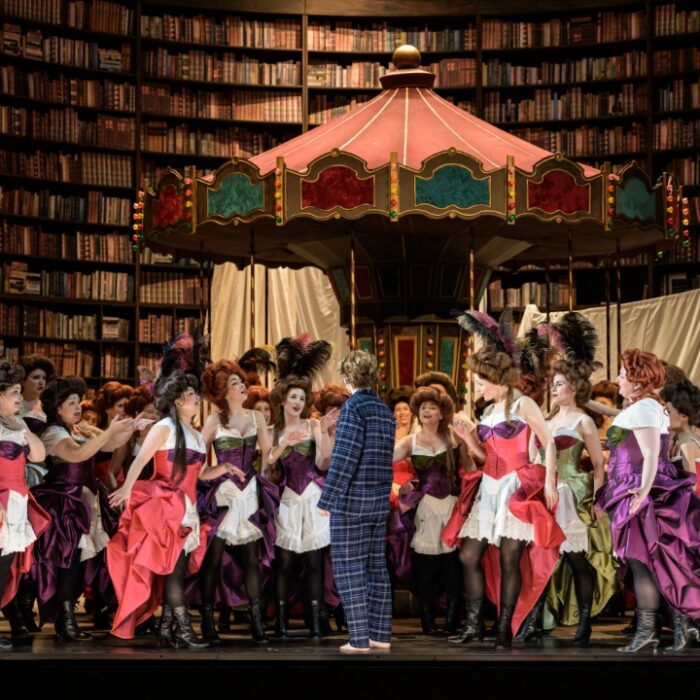
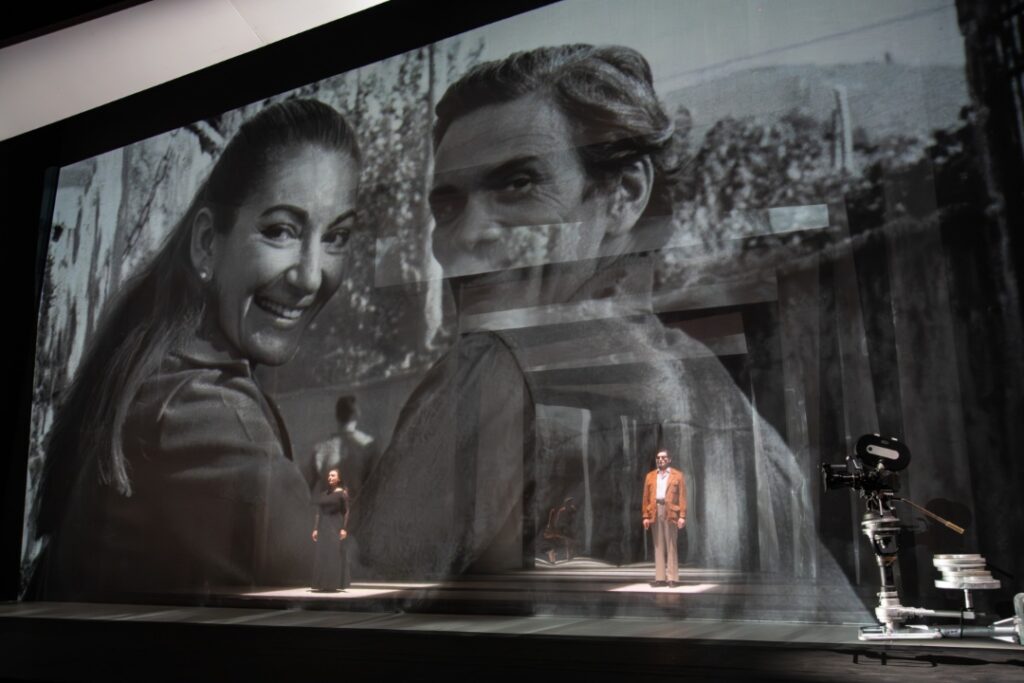
The staging by Davide Livermore and Mercedes Martini proved to be rich in acting, though visually more restrained than is typical of the regista; far from being a flaw, this sobriety reflects a coherent artistic choice, as the production does not aim to dazzle visually but rather to invite reflection on the protagonists’ complex emotional drama. Instead of a realistic reconstruction of the historical context, the direction creates what the directors themselves define as a “dreamlike immersion:” a space where the abstract and the recognizable coexist, and where characters exist simultaneously across different dimensions. Thus, room is made both for Callas “the diva” and Maria “the woman,” as well as for Pasolini “the intellectual” alongside Pier Paolo “the poet driven by a desperate need for love.” One of the most significant achievements of the directorial duo lies in the use of supernumeraries embodying the protagonists’ alter egos: duplicates, identically dressed, who move silently across the stage, suggesting that their identities and inner conflicts unfold on multiple simultaneous planes.
(Photo: Gianni Cravedi)
Eleonora Peronetti’s set design reinforces this reading through an abstract space in which surfaces and structures create a constant sense of instability. The use of audiovisual material by D-Wok is particularly effective: far from the usual spectacle associated with Livermore’s productions, the projected images–entirely composed of real photographs–function as traces of a story that are never fully reconstructed. The famous photograph of the kiss between Callas and Pasolini in Rome, does not appear as a fixed icon, but rather as a point of departure that expands the construction of the myth. Photographs from the filming of Medea further contextualize the opening of the work, where the well-known episode of Maria fainting during the shoot is recreated. Equally striking is the final scene, in which both characters compose a smiling image as the stage gradually darkens. The costumes by Anna Verde and the lighting design by Aldo Mantovani complete a scenic framework of notable internal coherence: sober, never invasive or caricatural, and always serving the emotional evolution of the characters.
(Photo: Gianni Cravedi)
Illuminating Music
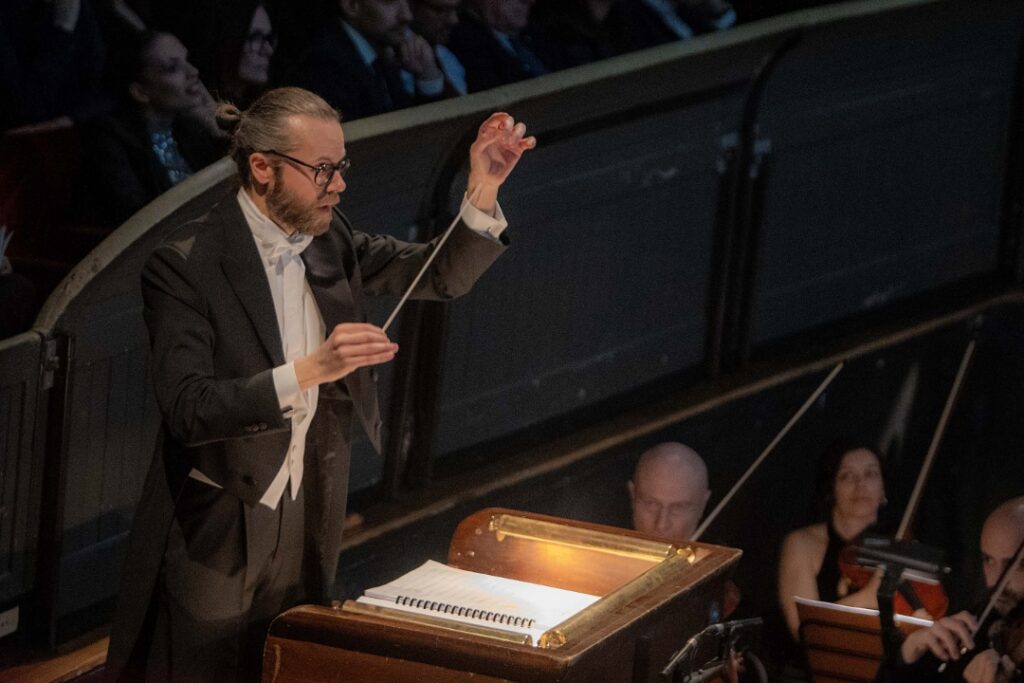
Musically, the overall impression, as the composer himself has noted, is one of constant tension. The musical direction of Enrico Lombardi proves decisive in maintaining the production’s overall balance. The conductor demonstrated a deep understanding of Tramontano’s musical ideas, highlighting the composer’s solid artistic maturity. Lombardi’s reading, refined and meticulous, articulated the complex orchestral texture with clarity while never losing dramatic momentum, maintaining a carefully calibrated dynamic balance in favor of the singers. Under his baton, the Orchestra Filarmonica Italiana responded with cohesion, precision, and sonic quality, sustaining a continuous and organic musical flow.
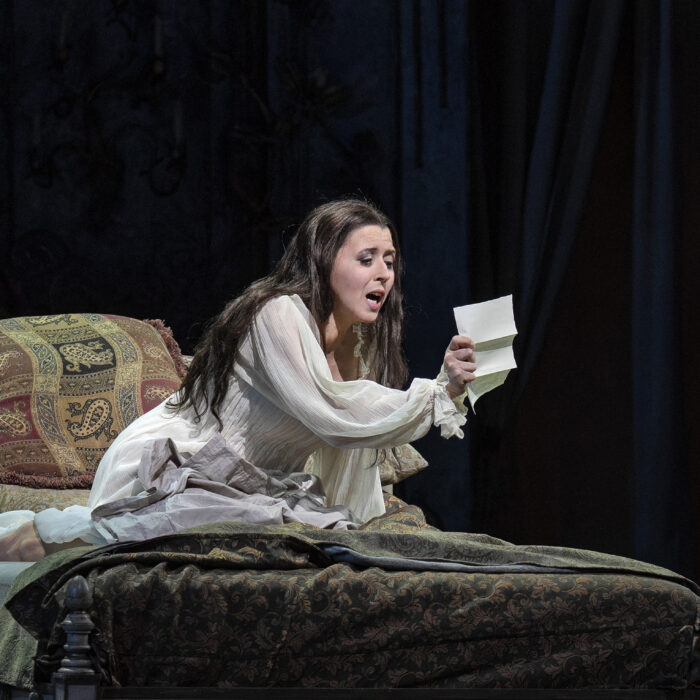
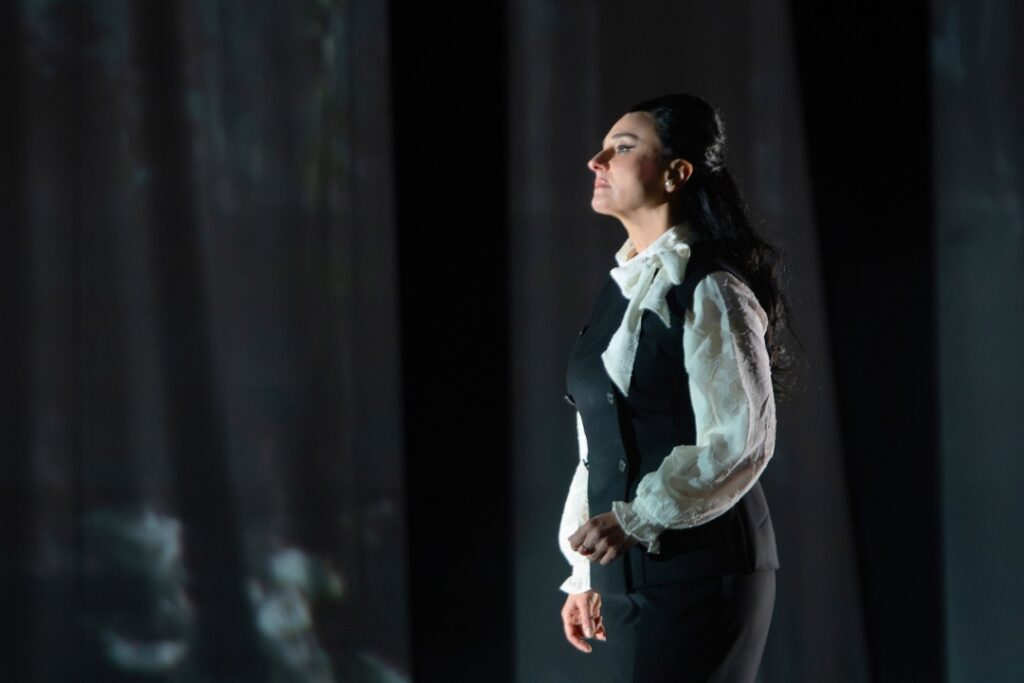
At the center of the performance is Carmela Remigio in the role of Maria Callas. The soprano consciously avoided any caricatural imitation of the historical figure, instead constructing a deeply human portrayal marked by fragility and despair. She did not seek to reproduce Callas’s timbre, but rather to restore her inner dimension. Her meticulous work on phrasing and text was supported by notable vocal power, resulting in a complex portrait in which the diva yields to the woman.
(Photo: Gianni Cravedi)
Baritone Bruno Taddia created a Pasolini of strong physical presence and considerable interpretative depth. Particularly noteworthy was his ability to integrate the character’s multiple facets without fragmenting them, allowing them to flow naturally into one another. The duets were especially effective, both with his lover–where the vocal line became more incisive–and with Maria, where a more exposed Pier Paolo emerged, revealing the character’s internal contradictions.
Tenor Didier Pieri convincingly shaped the figure of Ninetto Davoli, here referred to as “Il ragazzo” (the boy/the lover), endowing him with a clear stage presence and a solid vocal profile. His clean emission, consistent line, and especially vivid diction in Roman dialect contributed to defining a character essential to the dramatic balance, as he embodied Pasolini’s most immediate emotional conflict.
Meanwhile, soprano Caterina Meldolesi brought solidity and musicality to the role of “La Madre” (Pasolini’s mother). Though limited in scope, the character assumes significant symbolic weight within the dramatic structure. Her careful emission, precise phrasing, and clarity of diction combined with an effective stage presence.
Ultimately, “Cronaca di un amore: Callas e Pasolini” emerges as a work that offers no answers, but instead poses questions. Although Maria and Pier Paolo remained in contact over time without ever formalizing their relationship, the opera suggests that both are, in the end, condemned to solitude. They died not long apart, and the work seems to underscore this final awareness: the impossibility of a love that, precisely for that reason, finds its greatest expressive strength.