Oper Frankfurt 2026-27 Review: Ottone
By Mengguang Huang(Photo: Xiomara Bender)
Being one of his most fascinating works, Handel’s “Ottone” was famous in its day as a massive box-office hit. It also served as the vehicle for legendary singer Francesca Cuzzoni’s London debut. The famous story between her and Handel during the rehearsal is unforgettable. Yet today, it rarely gets the stage share awarded to “Giulio Cesare” or “Alcina.” To be sure, Frankfurt Opera’s continuous collaboration with Baroque specialist Václav Luks is eagerly anticipated. Yet while the evening demonstrated plenty of visual finesse, Jetske Mijnssen’s new production still left us with a slightly muted theatrical experience.
Jetske Mijnssen’s New Production
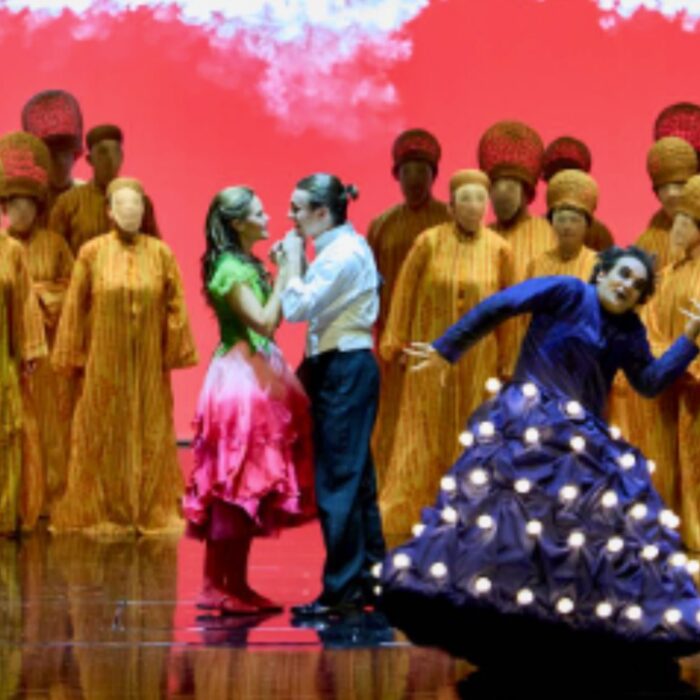
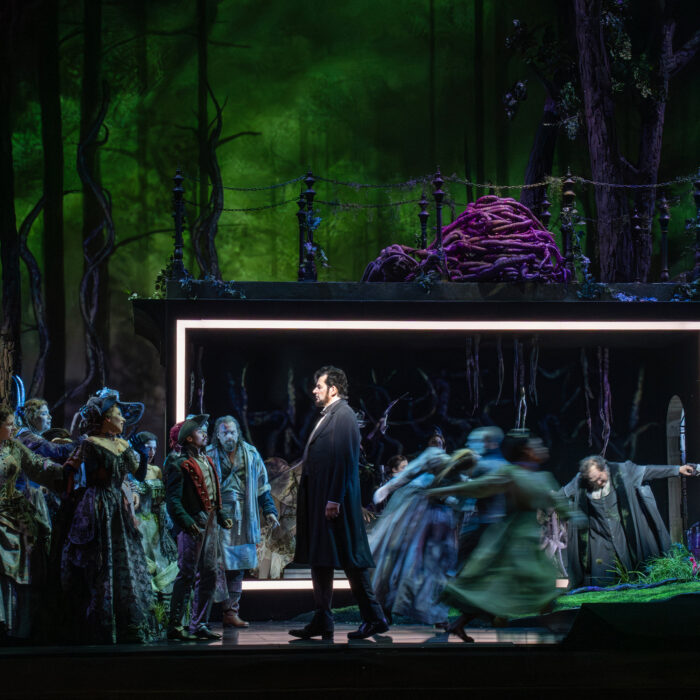
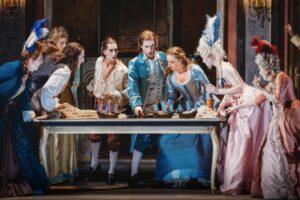
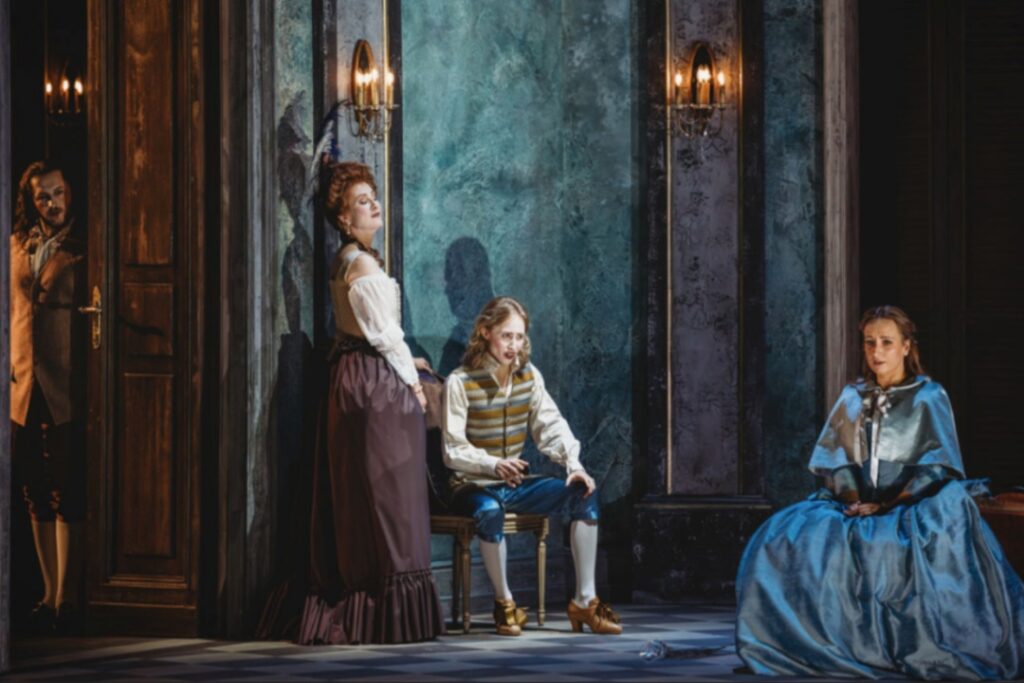
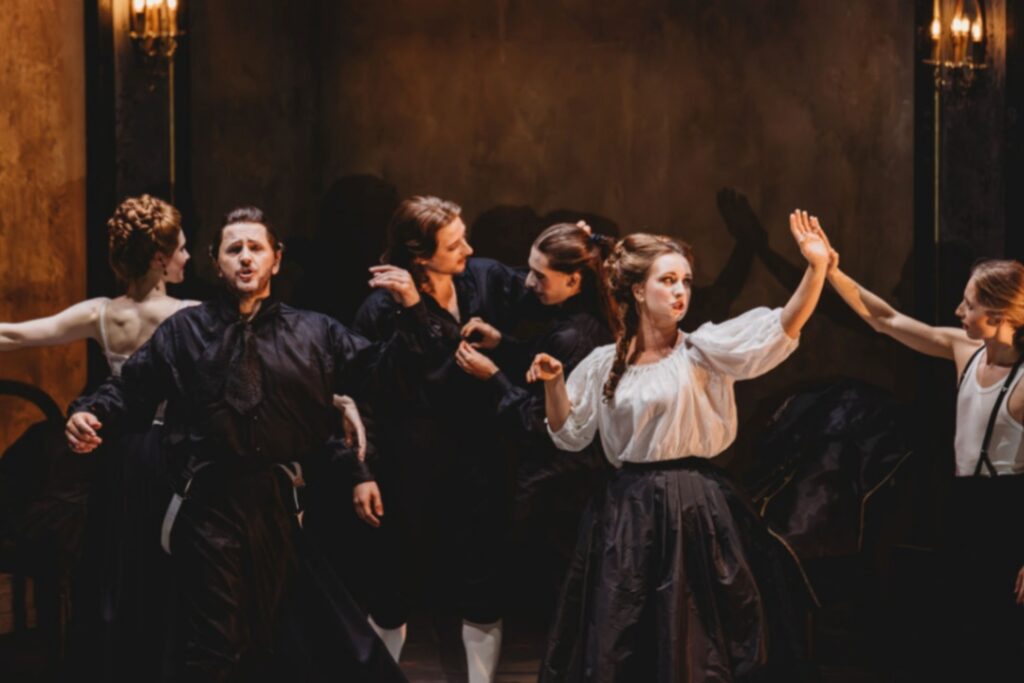
Here the primary artistic choice is to stage a grand dynastic drama as an interior noble family conflict. The monarchy marriage, battles, and escapes of the original libretto are all reframed. They are set within the rich Baroque rooms of high social class. Visually, it is undeniably impressive. The period costumes are lush, the transitions are creative, and the awesome dance choreography brings enormous joy to the audience. Compared with the much darker gothic production of the same opera, which was staged earlier this year in Magdeburg Telemann Festival, this Frankfurt production adds an unmistakable layer of formal etiquette.
The major reservation here is that this domestic approach might flatten the opera’s dramatic contrasts. By locking the action indoors, the friction between private courtly whispers and physical conflicts in wider landscapes outside, fades away.
Similarly, the title role Ottone loses some of his heroic stature. In the original plot, he appears more like a forgiving ruler. Here he is more like another well-to-do youth with easy access to luxury. When the production potentially turns Ottone more into just another courtly figure, it undermines his core character trait of being a truly sovereign capacity for mercy. Without that moral height, the ultimate pardon at the end feels unearned.
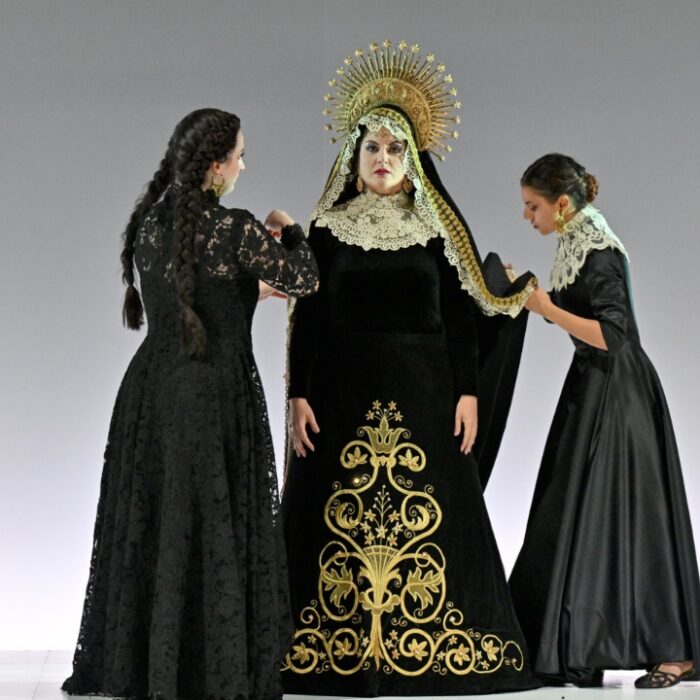
Some dramaturgy choices also blur narrative logic. For instance, during the opening scene, Adelberto takes advantage of Ottone’s supposed absence offstage to win Teofane’s heart. To do so, in this production he simply swaps clothes with the co-present Ottone right on stage. Similar puzzling moments take place during the ending scenes. While the black-clad Catholic solemn aesthetic aligns visually with Baroque religious rituals, it does not really fit with the joyful, forgiving mood of Handel’s closing chorus.
Illuminating Cast
Vocally, the cast delivers strong individual work within the director’s framework. As Ottone, countertenor Yuriy Mynenko sang with remarkable flexibility. For listeners familiar with his work, he gave another impressive performance with high quality. He might not possess a penetrating tone, but he projected effortlessly and showed off stunning crescendos in a few of his signature arias. His characterization of Ottone, as discussed before, may feel unconventional due to the staging concept, but his acting faithfully executed the vision.
(Photo: Xiomara Bender)
It is safe to say that soprano Monika Buczkowska-Ward as Teofane was the evening’s star. She seized opportunities to showcase her grace and acting skills, especially during the dance scenes. But what was more impressive, she built a genuinely full character. Her core dramatic arc, from simple romantic hope to doubt, and heartbreak caused by misunderstandings, all the way to the final reconciliation, was demonstrated in a natural way. Her voice covered a wide emotional spectrum, turning arguably the most famous aria of the opera, “Falsa immagine,” into a convincing portrait of despair.
Countertenor Iurii Iushkevich created a vivid Adelberto. One might loosely compare this role with the more corrupted Nerone in “Agrippina,” but here he brought out an aristocratic arrogance. He also showed an appetite for status. He sang with high technical refinement,with his voice providing a comforting companion to Mynenko’s softer voice.
Opposite Adelberto, mezzo-soprano Cecelia Hall’s Matilda felt probably closest to the original libretto setup. Her lingering love for a traitor might seem puzzling to modern audience, but her navigating between Gismonda and Ottone paid off in the end. Hall made Matilda’s struggle real, even evoking a touch of sympathy from the viewer.
Mezzo-soprano Paula Murrihy successfully portrayed a mother obsessed with her son’s future. While we certainly won’t expect an Agrippina-like political mind, her Gismonda felt somewhat one-dimensional. It reduced the character much to the simple motherly nagging. Her singing was solid, but for her key highlights, like the Act two closing duet with Matilda, lacked needed spark under cautious tempos assigned to them.
Baritone Jonas Müller rounded out the cast with a grounded performance as the pirate-king Emireno, contributing steady vocals despite the small role and Baroque identity-swap tropes, which can feel cliché today.
(Photo: Xiomara Bender)
The dancers delivered a memorable performance. It was visually gorgeous, and restrained in its proportions. In the first half, the bustling ensemble dancing worked effectively to heighten Teofane’s sense of alienation. The dancers gave deserved prominence to these sections that are not widely present in Handel’s scores, if compared with French baroque counterparts.
In the pit, Václav Luks conducted graceful playing from the Frankfurt Opern und Museumsorchester. Most of the lyrical arias were performed with high artistic refinement. However, quite a few fast-tempo arias stayed in safe tempo zone. The basso continuo also played too flat throughout, failing to enlighten most of the recitatives.
This “Ottone” is certainly a well-crafted production that deserves much credit for a lesser-known Handel opera. Yet for all its visual prettiness, the production largely ends up muting this grand opera’s theatrical pulse. It gives us plenty of visual elegance to admire, but not quite enough to resonate.