Obituary: Legendary Soprano Martina Arroyo Dies at 90
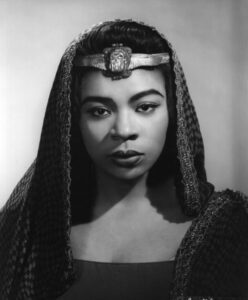
By Francisco SalazarLegendary soprano Martina Arroyo has died at the age of 90.
Born on Feb. 2, 1937 in Harlem, New York City, she was the youngest of two children born to Demetrio Arroyo and Lucille Washington. She was educated at nearby P.S. 170 and Junior High School 101 in the New York City Public Schools system and learned to play the piano as a child under her mother’s guidance. She also performed at the Baptist Temple Church in Harlem where she sang in the choir and later sang in the youth choir at Greater Calvary on 133rd street.
She became interested in the performing arts after attending several performances of Broadway shows during the 1940s and went on to take ballet classes.
Arroyo went on to attend Hunter College High School, a highly selective and competitive school for gifted students attached to Hunter College and graduated in 1953. She pursued further studies at Hunter College where she earned a Bachelor of Arts in Romance languages and decided to study languages so that she could better sing Italian in an opera career.
During her time at the college she participated in the Hunter College Opera Workshop and in May 1955 she starred in the premiere of Jan Meyerowitz’s “Bad Boys in School.”
As a teenager, Arroyo studied with Marinka Gurewich, but did not take her voice lessons seriously because there were no opportunities for black women. Gurewich eventually threatened to drop Arroyo and that made the soprano rethink her commitment to singing making her more serious about her studies.
While she studied singing she became a teacher of high-school literature and taught for one year at P.S 45 in the Bronx. She would eventually enroll in New York University pursing a master’s in comparative literature and continued to attend opera workshops at Hunter College.
While she loved to teach, she eventually decided to leave the position and take a job as a social worker at the East End Welfare Center. She would work there for two years.
In 1957, Arroyo made her debut at the Carnegie Recital Hall and was approached by concert manager Thea Dispeker. Dispeker would become Arroyo’s representative for decades.
That same year, she auditioned for the Metropolitan Opera but was not accepted. However, she rebounded in 1958 when she won the Metropolitan Opera Auditions of the Air and the competition provided a scholarship to the Met’s Kathryn Long School, where she studied drama with dramatic soprano and opera director Rose Landver. She also studied German, English diction, and fencing.
On Sept. 17, 1958, Arroyo made her operatic debut in Carnegie Hall performing the first Coryphaeus in the American premiere of Ildebrando Pizzetti’s “Murder in the Cathedral.” That was followed by performances as the Israelitish Woman in Handel’s “Judas Maccabaeus” with the Utah Symphony, which were recorded and released the following year on Westminster Records.
In 1959, Arroyo finally made her Met debut in the role of the Celestial Voice in Verdi’s “Don Carlo.” This was the beginning of what opera historian Clyde T. McCants described as her “first Met career” in which she played comprimario roles through 1962. However, she would return to the Met after a successful European career.
At the time the Met’s General Director Rudolf Bing advised the soprano to go to Europe because she would have better performance opportunities.
In 1959, she traveled to Europe for the first time on tour and in the 1960s she attempted to divide her time as a concert soprano in the United States and appearing in opera houses in Europe. In the United States, she would appear with the New York Philharmonic and at Carnegie Hall while in Europe she performed smaller parts, or in larger roles in obscure or avant-garde operas.
In 1963, her first major breakthrough came when she was offered a contract to join the Zurich Opera. She made her debut in the title role of Verdi’s “Aida” and remained a resident artist with the company until 1965.
The role of Aida would become a staple for Arroyo and would be the role she debuted with at the Hamburg State Opera in 1963 and at both the Deutsche Oper Berlin and the Vienna State Opera in 1964.
On Feb. 2, 1965, she got a phone call from Rudolf Bing asking her to step in for Birgit Nilsson for a performance of “Aida” at the Metropolitan Opera. Arroyo received an enthusiastic standing ovation from an audience that was disappointed that Nilsson had called sick and that led to a steady Met career.
She went on to perform 200 times at the Met in such roles as Elisabetta in “Don Carlo,” Amelia in Verdi’s “Un ballo in maschera,” Donna Anna in Mozart’s “Don Giovanni,” Lady Macbeth in Verdi’s “Macbeth,” Leonora in Verdi’s “La forza del destino,” Liù in Puccini’s “Turandot,” and the title roles in “La Gioconda” and “Tosca.”
However, after 1978, Arroyo’s appearances at the Met became infrequent due to small tumors pressing on her spine, which were making stage movement difficult and limited the roles she would play in the later part of her career. The death of her mother also brought personal struggles and Rudolph Bing’s departure from the Met brought many changes at the opera house which impacted casting choices and repertoire.
Her final appearance at the Met came in 1986 as “Aida.” She later returned in 2002 to host the finals concert of the Metropolitan Opera National Council Auditions.
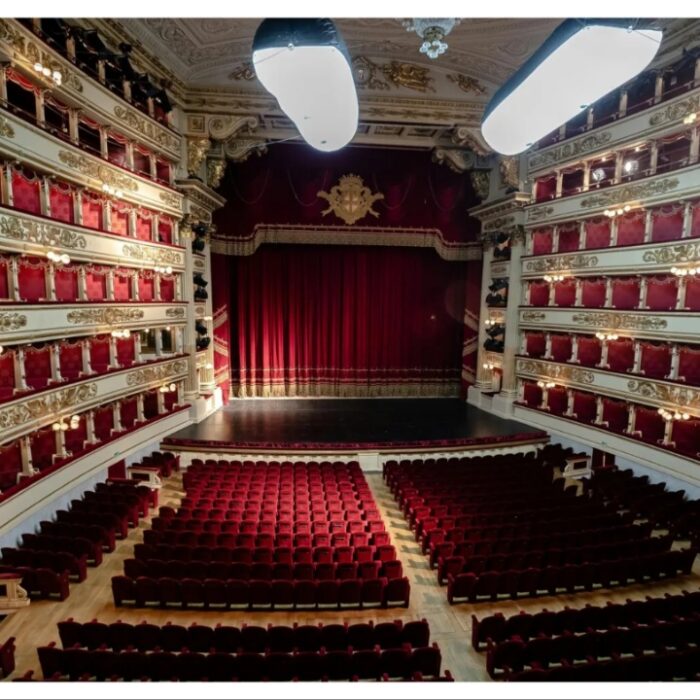
Outside of the Met, Arroyo performed at many of the greatest theaters in the world including the Royal Opera, Prague National Opera, Philadelphia Lyric Opera Company, San Francisco Opera, Lyric Opera of Chicago, Teatro alla Scala, Opéra National de Paris, Teatro Colón in Buenos Aires, Michigan Opera Theatre, Bavarian State Opera, Grand Theatre, Warsaw, the National Theatre in Belgrade, and the Staatsoper Stuttgart. She also performed with major orchestras and conductors.
In 1989, Arroyo announced her retirement from performance and her performances became less frequent. In 1991 she portrayed the title role in Puccini’s “Turandot” at the Staatstheater Kassel and performed in the world premiere of Leslie Adams’s “Blake” in 1991 with the composer specifically creating the role of Miranda for Arroyo.
Her vast repertoire included works by Verdi, Mascagni, Tchaikovsky, Wagner, Giordano, Puccini, Barber, Weber, Mozart, Bolcom, Schoenberg, and Stockhausen. Her concert repertoire was also enormous performing works by Strauss, Mendelssohn, Mahler, Rossini, and Handel.
Arroyo was a trailblazer having been the first black woman in the global history of opera to portray Elsa in Wagner’s “Lohengrin” when it was staged at the Met. She was also appointed to the board of the National Endowment for the Arts and taught at LSU, UCLA, University of Delaware, Wilberforce University, and the International Sommerakademie-Mozarteum in Salzburg. She was also part of the faculty of the Jacobs School of Music at Indiana University and achieved the title of Distinguished Professor before retiring as Distinguished Professor Emerita in May 2007.
She went on to found The Martina Arroyo Foundation in 2003, an organization dedicated to the development of emerging young opera singers. She also taught masterclasses, served as a jury member on numerous competitions, and served as a Trustee Emerita of the Hunter College Foundation.
She also served as a Board of Trustees of Carnegie Hall.
For her work in the arts, Arroyo was awarded an honorary doctorate by the City University of New York and inducted into the Academy of Vocal Arts’s Hall of Fame for Great American Opera Singers. She was also a recipient of a 2010 Opera Honors Award from the National Endowment for the Arts and received an induction into the American Classical Music Hall of Fame. She also received the Kennedy Center Honor.
The soprano left numerous recordings including “I vespri siciliani,” “Un ballo in maschera,” “La forza del destino” and “Aida,” among many others.
Categories
News