Early Opera Company 2025 Review: Acis and Galatea
By Mengguang HuangWhy do we still attend Baroque operas performed with minimal staging, centuries after their composition? The Early Opera Company offered a delightful answer, bringing Händel’s “Acis and Galatea” vividly to life in the Temple Church, London. The Romanesque arches and sturdy stonework lent both intimacy and a sense of historic gravitas, while the simple staging — trees near the altar suggesting Arcadian fields, and a life-sized sheep model behind the conductor — added a playful wink to the opera’s bucolic humor.
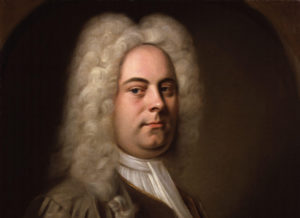
“Acis and Galatea” was commissioned in 1717-18 by James Brydges, 1st Duke of Chandos and Earl of Carnarvon, for his Cannons estate near London. Amid turmoil in London’s Italian opera scene, Brydges provided Händel with secure patronage, supporting his first English pastoral work, likely performed in summer 1718. Unlike the 1708 Neapolitan “Aci, Galatea e Polifemo,” the English version adds Damon and Coridon, shepherds who offer commentary and reflection. The libretto — probably by John Gay with contributions from Alexander Pope and John Hughes — draws on Dryden’s Ovid translation. Händel adapted the music for his English ensemble, emphasizing vocal interplay, colorful textures, and sharp dramatic contrasts.
The performance opened with Händel’s exuberant overture, a miniature tone poem in itself, evoking Arcadia’s pastoral idyll. Two flutes and playful strings set the scene with infectious energy, immediately situating the audience in a landscape of sunlit fields and gentle rivers. This sequence flowed seamlessly into the opening chorus, where the
ensemble captured the simple joy of pastoral life — dancers and shepherds alike — establishing a carefree mood that would be poignantly contrasted later. Early Opera Company founder and conductor Christian Curnyn’s tempi were lively yet precise, maintaining the clarity of counterpoint and giving space for the pastoral textures to shine.
Mary Bevan’s Galatea revealed remarkable psychological depth throughout the performance. Her opening aria, “Hush, ye pretty warbling choir!” glowed with a soprano both luminous and warmly expressive, perfectly attuned to Händel’s unusual tempo. The flutes mirrored her searching glances for Acis, their birdlike motifs intertwining with her vocal line. Through nuanced phrasing, Bevan conveyed longing and serenity in equal measure, embodying Galatea as both the heroine of romantic desire and a figure of natural grace.
Nick Pritchard’s Acis offered a complementary tenor brightness, particularly in “Where shall I seek the fair?” which combined lilting Siciliana rhythms with elegant French-inspired dance gestures. His duet with Bevan, which was based on the F# minor harpsichord suite’s gigue, exemplified Händel’s pastoral ideal: love elevated by music, harmonically rich yet rhythmically sprightly. Their chemistry was sincere, each ornament and phrasing choice enhancing the illusion of a young couple immersed in bliss, yet foreshadowing the tragic turn.
Edward Grint’s Polyphemus was a study in compelling characterization. His bass-baritone lent gravitas and humor in equal measure. Händel’s scoring — long Adagio lines, exaggerated leaps, humorous punctuated flourishes on high-pitched flutes — accentuated the giant’s clumsiness while maintaining musical integrity. Grint navigated these challenges with theatrical wit, ensuring the audience sensed both menace and absurdity, heightening the eventual tragic impact.
The English adaptation’s added shepherd confidants, Damon and Coridon, provided both dramatic and musical balance through their limited theater exposure in this work. Samuel Boden’s Damon offered sage counsel in “Consider, fond shepherd,” his tenor lines engaging in conversational interplay with oboe and violin, larghetto in character yet emotionally grounded. Coridon’s gentle urging to Polyphemus introduced a chivalric elegance into what might otherwise be a comic portrayal, highlighting Händel’s skill in contrasting styles within the same scene.
Händel’s counterpoint and chorale-style choruses heightened dramatic tension. The five-part “Must I my Acis still bemoan” foreshadowed death with striking harmonic shifts, contrasting with Galatea’s intimate mourning aria, where solo oboe and continuo created chamber-like intensity and deep emotional impact.
The climactic scene — the transformation of Acis into a river — was rendered with radiant orchestral color. Händel’s depiction of flowing water through intertwined flute and violin lines, coupled with the chorus’ celestial harmonies, created a sublime synthesis of myth and music. Bevan’s final lines, echoed in the closing chorus “Galatea, dry thy tears,” reinforced the enduring love of Acis and Galatea: the pastoral world restored yet transformed through tragedy and divine intervention.
Curnyn’s conducting unified the opera’s contrasting textures, from playful instrumental passages to somber laments, while balancing soloists and chorus. The basso continuo provided a resonant, steady foundation, lending the work structural solidity and allowing Händel’s English score to shine with both theatricality and refinement. Even when woodwind soloists stepped to the fore, they remained focused on their playing rather than indulging in superficial interplay with singers — a restraint well-suited to a piece originally conceived for private performance.
In sum, in the sober setting of Temple Church, this concert-style performance offered a vivid experience of Händel’s “Acis and Galatea.” While the original Cannons masque sponsored by James Brydges was lost to the collapse of the South Sea Company and the extravagance of his heir, the music itself survives with remarkable vitality. To paraphrase Damon, it seems that the pleasure of the plains was fleeting indeed — but here, centuries later, it is delightfully revived.